
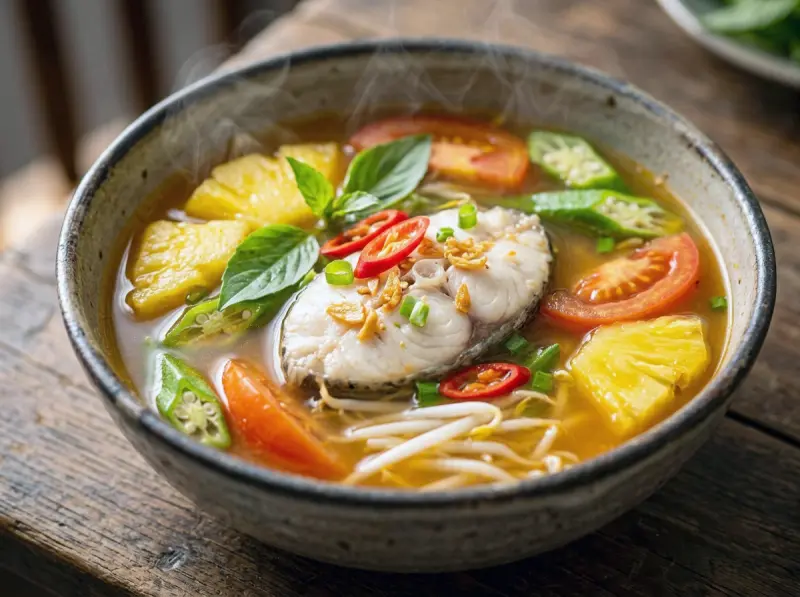
Canh Chua (Sopa Ácida vietnamita)
Una sopa ácida del sur de Vietnam, del delta del Mekong: un caldo a base de tamarindo equilibrado con la dulzura de la piña y el umami de la salsa de pescado, con rodajas de pescado o gambas, tomates, okra y brotes de soja, terminada con ajo frito crujiente y una corona de hierbas frescas. Lo que la define es la calibración precisa de cuatro sabores —ácido (tamarindo), dulce (piña), salado (salsa de pescado) y sabroso (el pescado)— en un caldo ligero pero de sabor profundo. El siluro es lo tradicional; también sirven el salmón, el pargo o la tilapia.
Ingredientes
- 600 gfiletes de siluro o pescado blanco firme
- 2 cdasalsa de pescado
- 3 cdaconcentrado de tamarindo o 40 g de bloque de tamarindo disuelto en 150 ml de agua caliente y colado
- 1.5 litrosagua o caldo ligero de pescado o pollo
- 200 gpiña fresca en trozos de 3 cm
- 2 tomates maduros en gajos gruesos
- 150 gokra partida en diagonal
- 150 gbrotes de soja
- 2 cdasalsa de pescado
- 1 cdaazúcar
- 4 dientesajo en láminas finas
- 3 cdaaceite neutro
- 1 puñado grande de hierba de arrozal (ngò ôm) o albahaca thai y cilantro combinados
- 2 chiles rojos frescos en rodajas, para servir
- 2 cebolletas en rodajas
Preparación
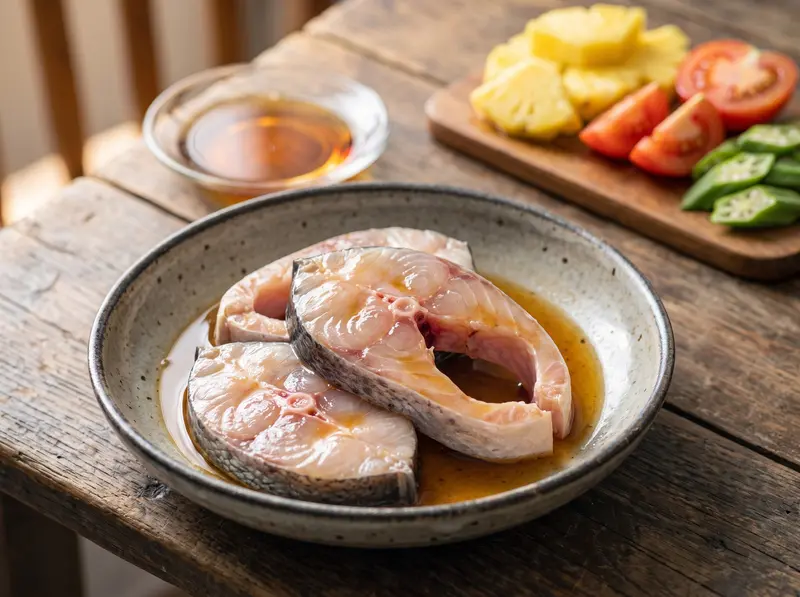
- Marinar el pescado. Unta las rodajas o trozos de pescado con 2 cucharadas de salsa de pescado y déjalos reposar 15 minutos (en la nevera si la cocina está caliente). La salsa de pescado sazona el pescado y ayuda a que no se deshaga al añadirlo al caldo.
- Hacer el ajo crujiente. Calienta el aceite en una sartén pequeña a fuego medio-bajo. Añade el ajo en láminas y fríelo con suavidad, removiendo a menudo, de 4 a 5 minutos, hasta que esté dorado y crujiente. Vigila con atención: el ajo pasa de dorado a amargo en segundos. Retíralo con una espumadera sobre papel de cocina y resérvalo. Deja el aceite de ajo en la sartén.
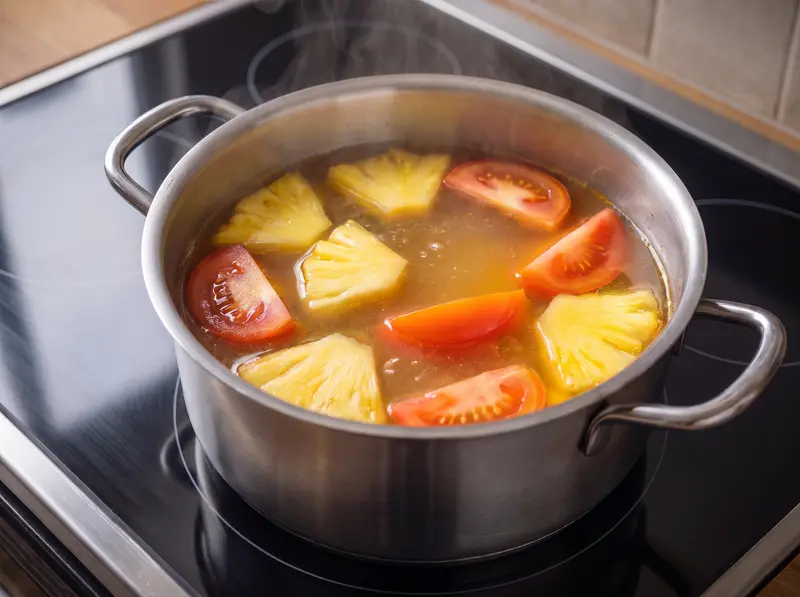
- Preparar el caldo. En una olla mediana, lleva a ebullición el caldo o el agua. Añade el concentrado de tamarindo y remueve hasta disolverlo. Incorpora los trozos de piña y los gajos de tomate. Añade las 2 cucharadas restantes de salsa de pescado y el azúcar. Prueba: el caldo ya debe tener una nota ácido-dulce clara. Ajusta con más tamarindo si queda suave, o con más azúcar si queda agudo. Cuece a fuego lento 5 minutos.
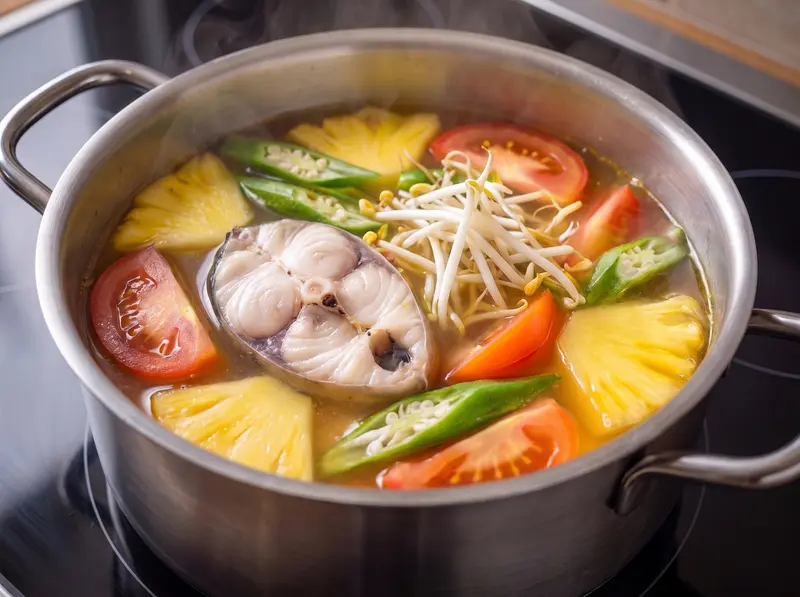
- Cocer el pescado y las verduras. Reduce a fuego lento. Añade con cuidado las rodajas de pescado marinadas — no remuevas, el pescado es delicado. Cuece suavemente 6-8 minutos hasta que la carne esté opaca y se deshaga en láminas al presionarla (63 °C junto al hueso). En los últimos 2 minutos añade la okra y luego los brotes de soja; deja que la sopa vuelva a hervir con fuerza, cuenta 30 segundos y apaga el fuego: los brotes quedan cocidos y apenas blandos.
- Terminar y servir. Reparte la sopa en cuencos hondos. Coloca un trozo de pescado en cada cuenco. Vierte sobre cada ración una cucharadita del aceite de ajo reservado. Esparce por encima el ajo crujiente. Añade las hierbas frescas (hierba de arrozal o albahaca thai y cilantro), los chiles en rodajas y las cebolletas en el último momento antes de servir: el calor de la sopa despierta su aroma. Sirve de inmediato con arroz blanco al vapor. Es tradicional poner al lado un cuenquito de salsa de pescado para sazonar al gusto.
Preguntas
El tamarindo es un fruto en vaina con una pulpa espesa, marrón oscuro, intensamente agridulce. Es el agente acidificante insustituible del canh chua. Formas: concentrado en tarro, bloque (remojar en agua caliente, exprimir y colar semillas y fibras), polvo o mezcla para sopa en sobres. Si no está disponible: una mezcla de zumo de lima con un poco de melaza de granada aproxima el color y algo de profundidad, pero el resultado será distinto. Si cocinas sin gluten, revisa las etiquetas de la mezcla de sopa de tamarindo y de la salsa de pescado.
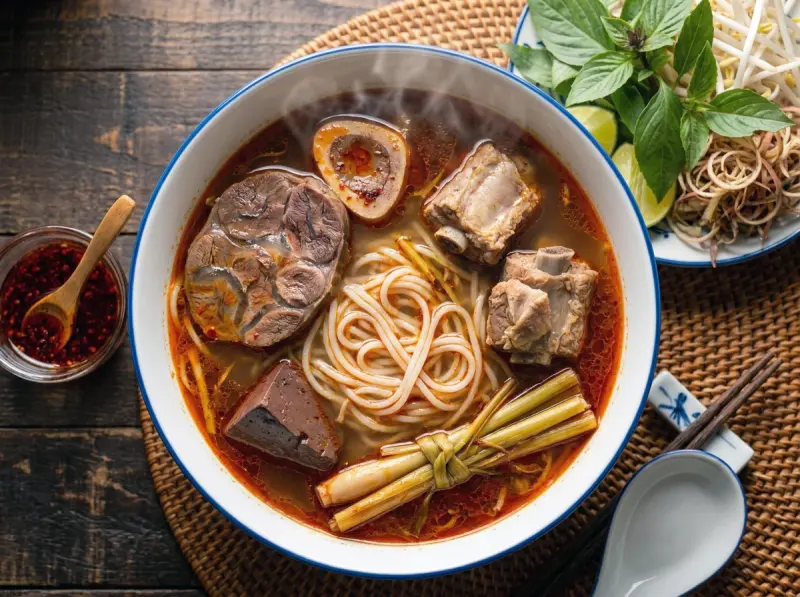
El siluro es tradicional en el delta del Mekong. Buenas alternativas: tilapia, pargo, salmón (marcar brevemente en el aceite de ajo antes). Las rodajas con hueso son preferibles a los filetes. Las gambas (Canh Chua Tôm) son igualmente populares: añadir gambas enteras con cáscara 3-4 min antes de servir. El tofu funciona para la versión vegetariana: tofu firme en dados, añadido con las verduras, y el caldo sazonado con sal en vez de salsa de pescado. Un equilibrio ácido-sabroso similar aparece en el bún bò Huế, otra sopa vietnamita.
Tradicional: bạc hà (tallo de taro), okra, brotes de soja (al final, hervidos 30 segundos), piña, tomates. Sustituciones: bạc hà → apio en diagonal. Okra → judías verdes. Los brotes son accesibles. La piña y los tomates son insustituibles para el equilibrio.
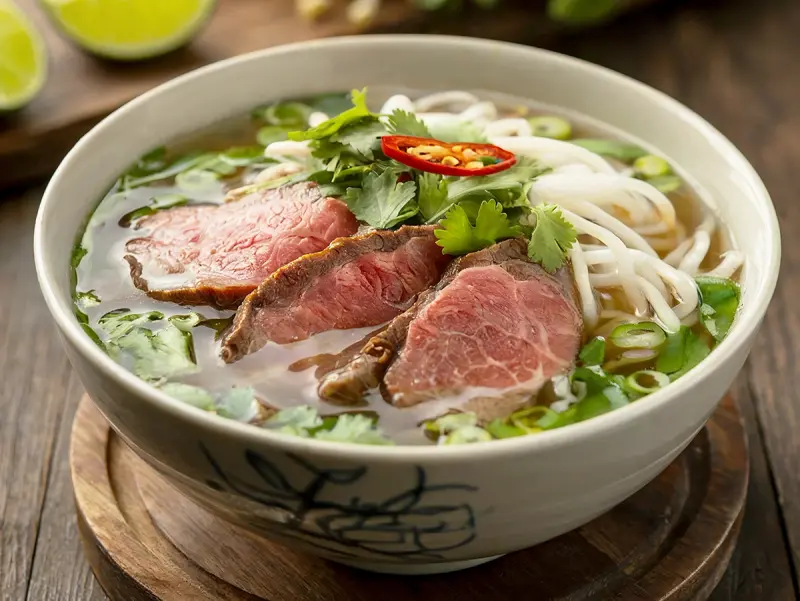
Las hierbas frescas se añaden en el último momento sobre el cuenco, no se cocinan en la olla. Las correctas: rau om (hierba de arrozal), ngo gai (culantro), albahaca thai. Fuera de Vietnam: albahaca thai + cilantro. El ajo crujiente va sobre el caldo y las hierbas encima. Estas mismas hierbas también rematan el phở bò, la otra gran sopa vietnamita.
Guardar el pescado separado del caldo y las verduras. El pescado que pasa la noche en el caldo se deshace por los ácidos del tamarindo y la piña. Conserva el caldo (con las verduras cocidas) y el pescado en recipientes tapados distintos en la nevera hasta 3 días. Para recalentar, lleva el caldo de nuevo a ebullición plena. Los brotes de soja se ablandan al recalentar: añade brotes frescos al caldo hirviendo y hiérvelos 30 segundos. Luego baja el fuego, añade el pescado y cuece a fuego lento 3 minutos hasta que esté bien caliente por dentro (74 °C). El ajo crujiente se hace siempre fresco.
Valora
Recetas en tu correo
Un correo a la semana: una receta elegida a tu gusto y lo nuevo del sitio. Puedes dejar de recibirlo con un clic.
De regalo: el libro de recetas de Sergei (e-book).
Al pulsar el botón aceptas la política de privacidad.
Cuéntanos qué te gusta cocinar (30 segundos) →Sigue explorando
Más platos del archivo — elegidos por su solapamiento con lo que estás cocinando ahora.
Únete a la conversación
Comentarios (2)
This soup taught me what Vietnamese cooking is really about: balancing sour, sweet, salty, and fresh in a single bowl. The tamarind provides the sour backbone, the pineapple adds sweet, fish sauce brings salt, and the herbs on top deliver freshness. Every component has a job. I add the fish last and cook it for exactly 3 minutes — any longer and it falls apart into the soup.
Diese Suppe ist mir zu sauer. Ich hab die angegebene Menge Tamarinde genommen und es war zu viel für meinen Geschmack. Nächstes Mal nehme ich die Hälfte. Ansonsten ist die Idee gut — Fisch mit Ananas und Tomaten in einer Suppe, das kenne ich aus keiner europäischen Küche. Man lernt nie aus.