
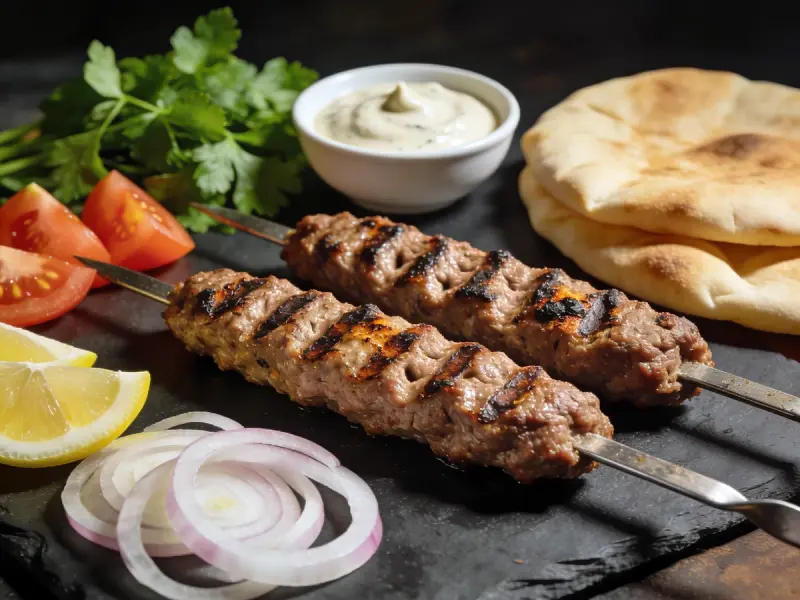
Brochetas de kofta kebab
El kofta kebab (kafta en el Líbano) es un plato libanés de cordero picado y sazonado —mezclado con cebolla rallada, perejil y especias cálidas, y luego prensado sobre brochetas planas de metal—. Pertenece a la rama de carne picada de la gran familia del kebab, presente desde Marruecos hasta Asia Central, distinta del shish kebab, que ensarta cubos enteros de carne marinada (la variante se explica en el consejo final). La kofta se asa a fuego directo alto, idealmente de carbón, hasta que queda tostada por fuera y apenas cocida por dentro. La técnica que separa una buena kofta de una que se desmorona es amasar la mezcla hasta que quede cohesiva y casi como una pasta, y exprimir por completo la cebolla rallada antes de incorporarla. La mezcla se enfría de 15 a 30 minutos antes de darle forma; si asas sobre carbón, deja tiempo extra para que las brasas se consuman hasta quedar cubiertas de ceniza blanca.
Ingredientes
- 500 gcordero
- 1 cebolla mediana
- 4 cdaperejil fresco de hoja plana muy finamente picado
- 1 cdtapimienta de Jamaica molida
- 0.5 cdtacanela molida
- 0.5 cdtacomino molido
- 0.5 cdtacilantro molido
- 0.25 cdtanuez moscada molida
- 1 cdtasal fina
- 0.5 cdtapimienta negra
- 1 cdaaceite de oliva
- 1 limón
- 4 cdasalsa de tahini o yogur con ajo
Preparación
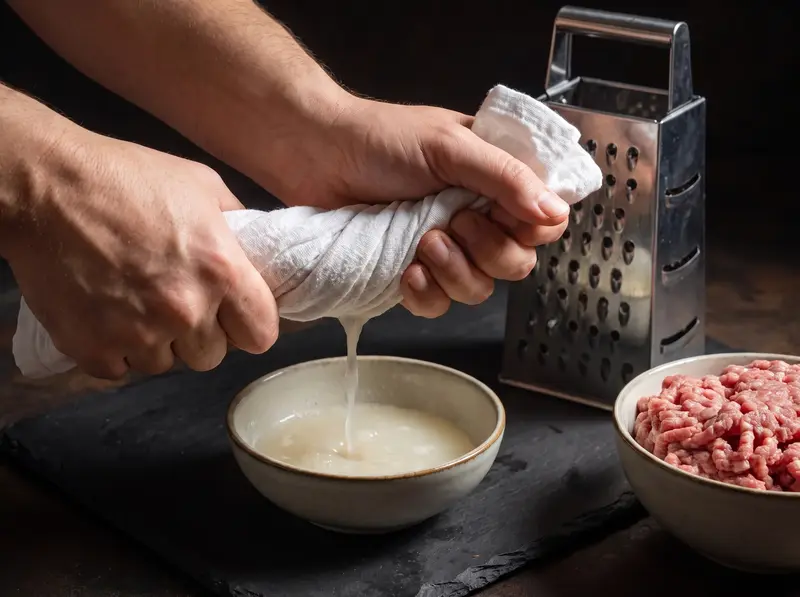
- Prepara la mezcla de kofta y refrigérala. Ralla la cebolla con un rallador de caja sobre un paño de cocina limpio. Recoge el paño y retuércelo con fuerza para exprimir todo el líquido: este paso no es negociable. La cebolla húmeda desprende vapor durante el asado y hace que la kofta se caiga de la brocheta. En un bol grande, mezcla la pulpa seca de cebolla con la carne picada, el perejil muy finamente picado, todas las especias (o 2 cucharaditas de mezcla libanesa de siete especias en lugar de las cinco especias molidas), la sal y la pimienta. Amasa con las manos de 3 a 4 minutos, hasta que la mezcla quede cohesiva, pegajosa y casi como una pasta. Debe mantenerse unida al apretarla en forma de bola. Usa brochetas de metal planas y anchas: en las redondas la carne gira al darles la vuelta. Refrigera la mezcla de 15 a 30 minutos; la grasa se endurece y ayuda a que la kofta se adhiera a la brocheta.
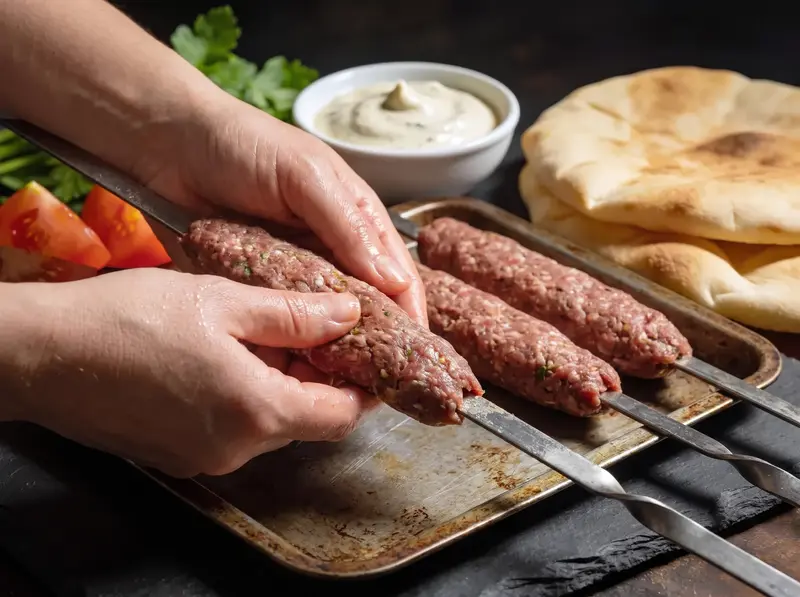
- Da forma sobre las brochetas. Divide la mezcla en 8 porciones iguales (unos 70 g cada una). Con las manos húmedas, toma una porción y presiónala alrededor de la mitad inferior de una brocheta plana de metal, dándole forma de cilindro de unos 2,5 cm de grosor y de 12 a 14 cm de largo. Presiona con firmeza para que no queden bolsas de aire: las bolsas de aire hacen que la kofta reviente en la parrilla. Con el pulgar y el índice, marca surcos transversales cada 2 cm: estas hendiduras aumentan la superficie que toca la parrilla y dan más tostado y sabor. Coloca las brochetas ya formadas en una bandeja forrada con papel de horno. Refrigera hasta que la parrilla esté lista.
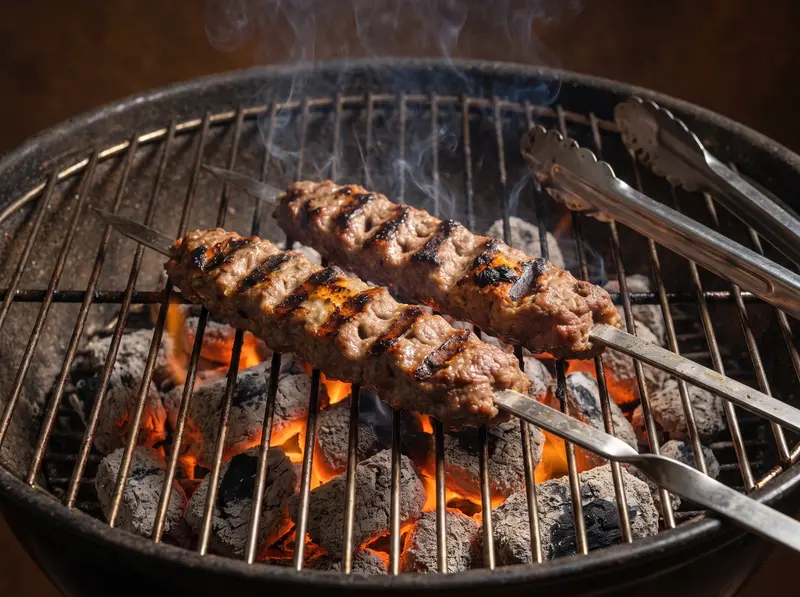
- Preparar la parrilla para calor directo alto. Carbón: llenar la chimenea, esperar a que se cubra de ceniza blanca y esperar 5 minutos más — las rejillas deben estar muy calientes. Gas: encender todos los quemadores al máximo durante 15 minutos y luego limpiar las rejillas. La kofta necesita calor directo fuerte, unos 230-260°C: acercar la palma de la mano a 5 cm de la rejilla, y si solo se aguanta 1-2 segundos, la parrilla está lista. Untar las rejillas con un papel de cocina empapado en aceite sujeto con pinzas. ¿Sin parrilla? Una sartén de hierro fundido bien curada sobre fuego alto, o el grill del horno a 250°C con las brochetas cerca de la resistencia, dan un resultado similar — usar los mismos tiempos del siguiente paso.
- Asa la kofta. Coloca las brochetas sobre las rejillas calientes y untadas. Pincélalas ligeramente con aceite de oliva. Asa de 4 a 5 minutos por el primer lado sin moverlas: la kofta debe formar costra antes de intentar darle la vuelta, o se rompe. Comprueba con cuidado: desliza una espátula fina bajo el borde de la kofta y, si se despega limpiamente, gira la brocheta 180° hacia el segundo lado. Asa de 3 a 4 minutos por el segundo lado. La kofta está lista cuando está firme y dorada por todos lados, con los bordes ligeramente tostados, el centro llega a 71°C y al cortar un trozo no se ve nada de rosa y suelta jugo claro. Retírala en cuanto llegue a ese punto: unos minutos de más y la kofta queda seca y arenosa.
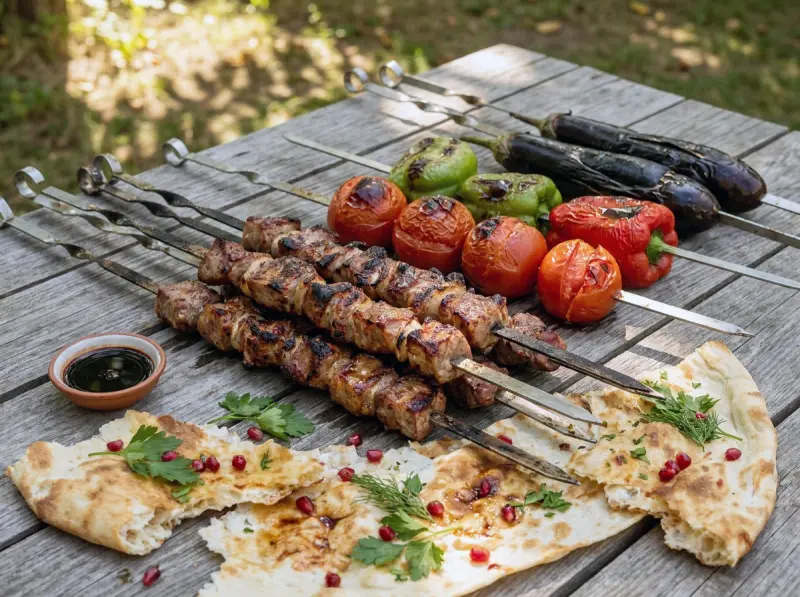
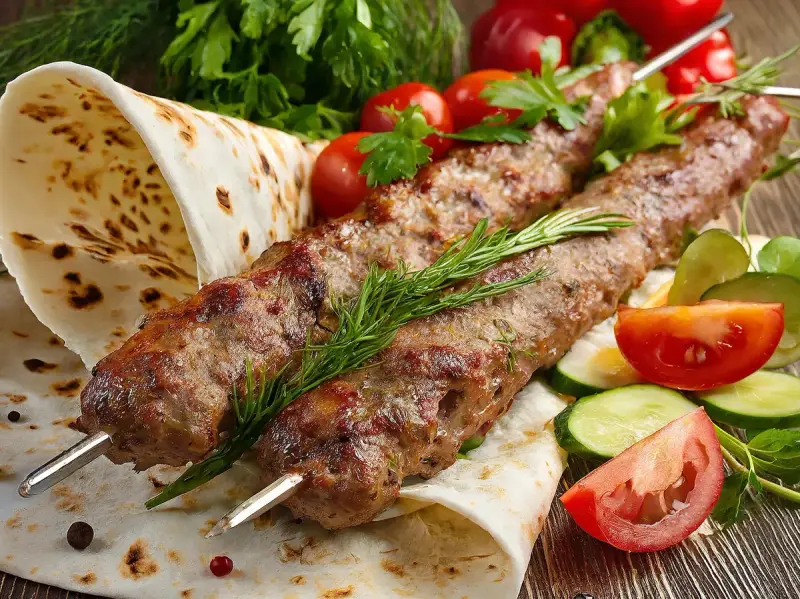
- Reposar y servir. Pasar a una fuente, reposar 3-5 minutos para que los jugos se redistribuyan. Exprimir el limón. Servir con pita caliente, salsa de tahini o yogur con ajo, tomates en rodajas, cebolla cruda, perejil y encurtidos. Según la tradición libanesa, la mesa completa se llama mashawi e incluye tomates asados y guindillas enteras asadas junto a la kofta.
Preguntas
Dos causas: cebolla no escurrida y amasado insuficiente. La cebolla cruda suelta vapor al calentarse empujando la carne desde dentro. El amasado insuficiente no activa las proteínas que ligan la carne. Amasar 3-4 min hasta pasta pegajosa. Siempre escurrir completamente la cebolla.
El baharat (en árabe: بَهَارَات, «especias») es la mezcla de especias fundamental de la cocina libanesa y levantina en general: suele combinar pimienta de Jamaica, pimienta negra, canela, cilantro, comino, clavo y nuez moscada en una mezcla cálida y ligeramente dulce. Esta receta enumera las especias por separado, con la pimienta de Jamaica molida como nota principal, para que controles tú mismo las proporciones. Si ya tienes un bote de baharat, usa 2 cucharaditas en lugar de la pimienta de Jamaica, la canela, el comino, el cilantro y la nuez moscada juntos. Sin ninguno de los dos, una mezcla de pimienta de Jamaica, canela y comino te acerca bastante al sabor real.
Kofta es de carne picada con especias moldeada en brocheta. Shish kebab son cubos enteros de carne marinada. Texturas distintas: kofta densa y suave con sabor a especias; shish jugoso con carácter del marinado. Esta tradición de asar carne en brochetas existe en muchas cocinas, desde el khorovats armenio hasta el shashlik ruso, cada uno con su propio corte, marinado y tipo de brasa.
Para kofta son obligatorias brochetas planas anchas de metal (2-3 cm). Las redondas permiten que la carne gire y se rompa. Las planas sujetan la kofta por dos lados. El metal además conduce calor al interior.
En Líbano — el mashawi completo: pita o pan plano caliente, cebolla blanca en juliana, tomates, perejil fresco, encurtidos, salsa de tahini o toum (salsa de ajo libanés), gajos de limón. En la tradición callejera la kofta se envuelve en pan plano.
Sigue explorando
Más platos del archivo — elegidos por su solapamiento con lo que estás cocinando ahora.
Recetas en tu correo
Un correo a la semana: una receta elegida a tu gusto y lo nuevo del sitio. Puedes dejar de recibirlo con un clic.
De regalo: el libro de recetas de Sergei (e-book).
Al pulsar el botón aceptas la política de privacidad.
Cuéntanos qué te gusta cocinar (30 segundos) →
Únete a la conversación
Comentarios
Aún no hay comentarios — ¡sé el primero!