
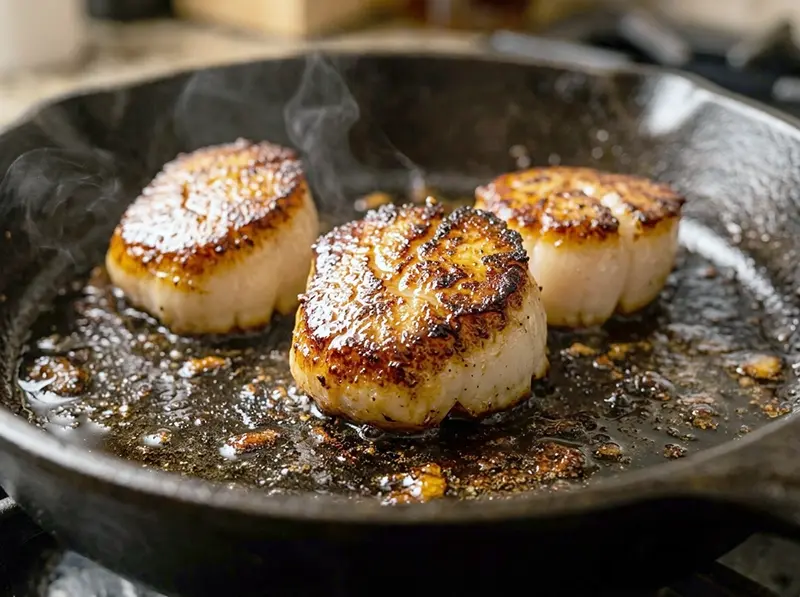
Vieiras con mantequilla de ajo
Grandes vieiras de mar marcadas en una sartén muy caliente hasta que estén doradas, luego acabadas con mantequilla de ajo, limón y hierbas frescas. Listas en unos 20 minutos. La costra es lo que las hace especiales — la humedad y una sartén fría son los dos enemigos.
Ingredientes
- 500 gvieiras grandes de mar, envasado en seco
- 2 cdasaceite neutro de alto punto de humo
- 60 gmantequilla sin sal, fría, cortada en dados
- 4 dientes de ajo, picados finamente
- 2 cdasperejil fresco, picado
- 0.5 cdtasal
- 0.5 cdtapimienta negra
- 1 limón: ralladura y zumo de una mitad, la otra mitad en gajos
Preparación
- Seca completamente las vieiras con papel de cocina. Colócalas sobre un papel seco y déjalas 10 minutos — la humedad superficial es el enemigo de un buen sellado. Retira el músculo lateral duro si todavía está presente (la pequeña pestaña rectangular dura en el lateral).
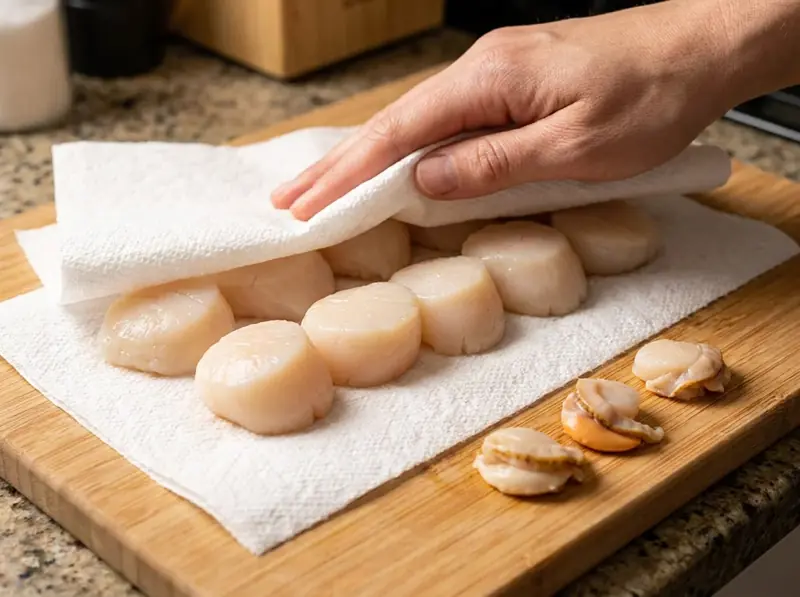
- Sazona ambos lados con sal y pimienta justo antes de cocinar — salar demasiado pronto extrae humedad.
- Calienta una sartén pesada (hierro fundido o acero inoxidable) a fuego alto durante 2–3 minutos hasta que esté muy caliente. Añade el aceite. Cuando el aceite brille y empiece a humear ligeramente, coloca las vieiras en una sola capa con al menos 2 cm entre cada una, friéndolas en 2 tandas para no saturar la sartén — 500 g no caben en una sola capa. Mantén la primera tanda en un plato caliente, tapada sin apretar con papel de aluminio, mientras sellas la segunda.
- Sella sin mover exactamente 2 minutos. La vieira se soltará sola cuando se forme la costra — si se pega, espera 15 segundos más. Voltea. Cocina el segundo lado 1–2 minutos. Tras 1 minuto los lados están opacos unos dos tercios de su altura y el centro sigue algo translúcido. Para vieiras cocinadas del todo según el estándar de seguridad alimentaria (63°C), da al segundo lado los 2 minutos completos, hasta que la carne esté firme, nacarada y opaca hasta el centro. Retira inmediatamente a un plato.
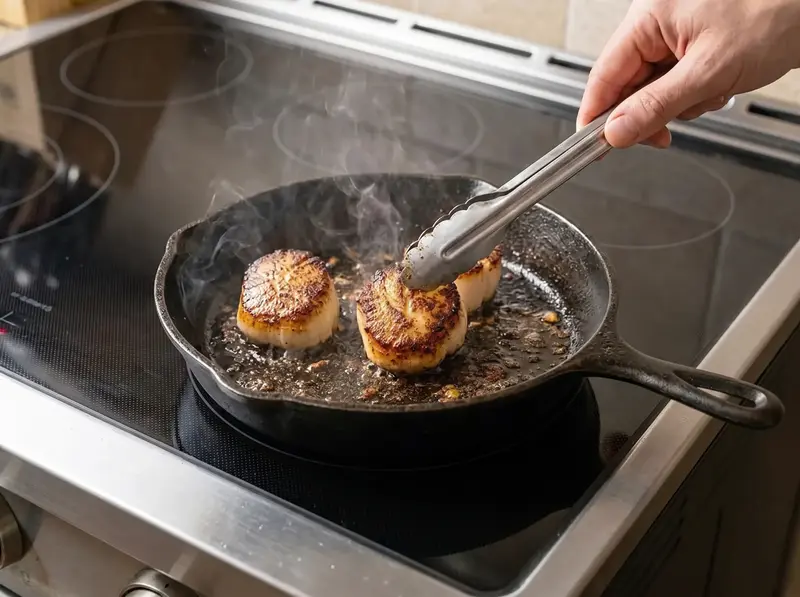
- Retira la sartén del fuego unos segundos para que se enfríe un poco y vuelve a ponerla a fuego medio-bajo. Añade el ajo y cocina 30 segundos removiendo constantemente; debe oler a ajo y no oscurecerse. Añade los dados de mantequilla fría uno a uno, moviendo la sartén hasta que cada uno se derrita — la mantequilla fría emulsiona la salsa, mientras que la caliente o a temperatura ambiente se queda en un charco. Exprime el zumo de medio limón, añade su ralladura (aproximadamente 1 cucharadita) y el perejil, y remueve una vez para combinar. Corta la otra mitad en gajos para servir.
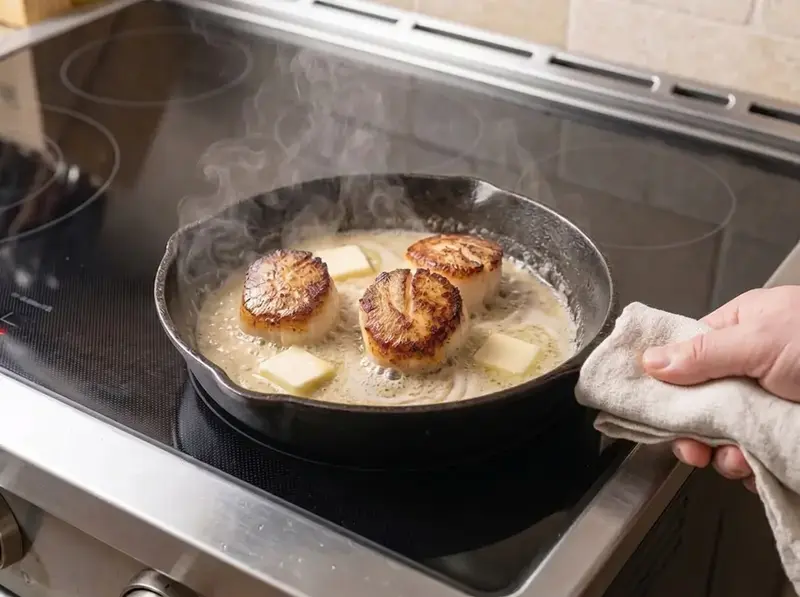
- Devuelve las vieiras a la sartén y báñalas con la salsa durante 15 segundos. Sirve inmediatamente — las vieiras no esperan.
Preguntas
Tres causas. Primera: las vieiras no estaban secas — la humedad crea vapor en lugar de costra. Sécalas con papel de cocina y déjalas sobre un papel seco 10 minutos. Segunda: la sartén no estaba suficientemente caliente. El aceite debe brillar y empezar a humear antes de añadir las vieiras. Tercera: se movieron — no las toques los primeros 2 minutos. La vieira se soltará sola cuando se forme la costra. Si se pega, espera 15 segundos más.
Las vieiras se cocinan en 2 minutos por lado a fuego alto. Señales de que están listas: costra dorada por abajo, los lados están opacos dos tercios de su altura. Presiona con un dedo: cruda se siente blanda como gelatina; perfectamente cocinada tiene un leve rebote y cierta firmeza; pasada de cocción se siente dura como una pelota de goma. Retíralas en cuanto alcancen el punto que quieres — siguen cocinándose un minuto después de retirarlas del fuego. Las vieiras cocinadas del todo según el estándar de seguridad alimentaria (63°C) quedan firmes, nacaradas y opacas hasta el centro.
Las vieiras húmedas se tratan con solución de tripolifosfato de sodio para aumentar el peso. Absorben agua y la liberan como vapor al calentarse — hace imposible un buen sellado y da un sabor ligeramente químico. Las secas no tienen tratamiento. Visualmente: las secas son blanco crema y mate; las húmedas son blanco brillante y ligeramente relucientes. Pide siempre vieiras sin tratar en el mostrador de pescado.
Después. Añadir mantequilla a una sartén muy caliente la quema en segundos, y el ajo se amarga en menos de 30 segundos a fuego alto. El orden correcto: sellar las vieiras en aceite de alto punto de humo, retirarlas, quitar la sartén del fuego unos segundos, bajar el fuego a medio-bajo, añadir el ajo 30 segundos, luego los dados de mantequilla fría uno a uno moviendo la sartén. La mantequilla fría se emulsiona en una salsa brillante; la de temperatura ambiente se separa y forma un charco.
Deja al menos 2 cm entre cada vieira. En una sartén estándar de 26 cm eso significa 6 a 8 vieiras por tanda. Sobrecargar la sartén baja la temperatura inmediatamente: las vieiras sueltan humedad y se cuecen al vapor en lugar de dorarse. Dos tandas perfectas son siempre mejor que una tanda gris cocida al vapor. Mantén la primera tanda en un plato caliente, tapada sin apretar con papel de aluminio, mientras marcas la segunda; al final las dos tandas vuelven a la sartén con la salsa durante 15 segundos.
Valora
Recetas en tu correo
Un correo a la semana: una receta elegida a tu gusto y lo nuevo del sitio. Puedes dejar de recibirlo con un clic.
De regalo: el libro de recetas de Sergei (e-book).
Al pulsar el botón aceptas la política de privacidad.
Cuéntanos qué te gusta cocinar (30 segundos) →Sigue explorando
Más platos del archivo — elegidos por su solapamiento con lo que estás cocinando ahora.
Únete a la conversación
Comentarios (1)
I bring the large sea scallops to room temperature for 10 minutes before cooking scallops with garlic butter. Cold fish hitting a hot pan drops the temperature and you lose that crucial initial sear. Just 10 minutes, not more — food safety matters.