
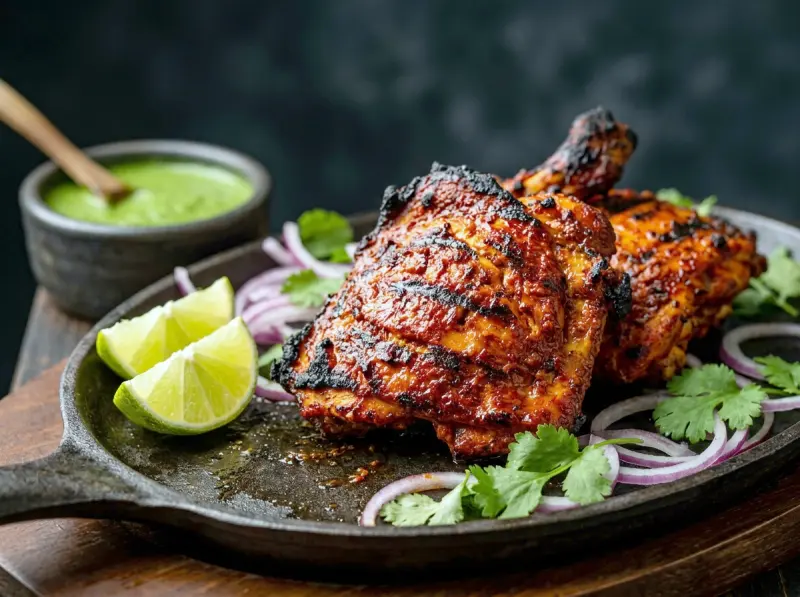
Pollo Tandoori
Muslos y contramuslos de pollo con hueso, marcados profundamente, marinados toda la noche en yogur especiado, luego cocinados a alta temperatura hasta que el exterior se chamusca y el interior se mantiene completamente jugoso. Sin salsa, sin guiso — solo el marinado trabajando directamente contra el calor. El color rojo-naranja viene del chile de Cachemira, el sabor del jengibre, ajo, garam masala y kasuri methi.
Ingredientes
- 1 kgmuslos y contramuslos de pollo con hueso, sin piel, marcados profundamente
- 200 gyogur griego espeso o yogur normal escurrido
- 1.5 cdachile en polvo de Cachemira
- 1 cdtagaram masala
- 1 cdtacomino molido
- 1 cdtacilantro molido
- 0.5 cdtacúrcuma
- 1 cdapasta jengibre-ajo
- 1 cdazumo de limón
- 2 cdaaceite neutro o aceite de mostaza
- 1 cdtakasuri methi, trituradas entre las palmas
- 1 cdtasal fina
- 1 cebolla roja, en rodajas finas
- 2 limas, en gajos
Preparación
- Marcar y marinar. Retirar la piel de todas las piezas. Hacer 3-4 cortes profundos hasta el hueso en cada pieza — no es opcional. Los cortes permiten que el marinado penetre más allá de la capa superficial. Sin ellos, el interior de un muslo grueso no tendrá sabor. Combinar yogur, chile de Cachemira, garam masala, comino, cilantro, cúrcuma, pasta jengibre-ajo, limón, aceite, kasuri methi y sal. Mezclar bien, probar — debe estar bien sazonado y oler a especias. Añadir el pollo y masajear el marinado en cada corte. Cubrir y refrigerar al menos 6 horas, idealmente toda la noche. Sacar 30 minutos antes de cocinar.

- Preparar el horno. Colocar la rejilla en el tercio superior del horno. Poner una rejilla de asar sobre una bandeja forrada con papel de aluminio. Precalentar a 230°C. La rejilla es importante: levanta el pollo para que el aire caliente circule por debajo, imitando el calor envolvente del tandoor.
- Asar. Colocar las piezas de pollo en la rejilla con espacio entre ellas. Asar a 230°C durante 20 minutos. El marinado debe chisporrotear y los bordes empezar a oscurecerse. Untar con marinado restante. Dar la vuelta y asar 15 minutos más hasta que el exterior esté bien chamuscado y el termómetro marque 75°C.

- Toque de grill. Cambiar el horno al modo grill a máxima potencia. Colocar el pollo cerca del elemento calefactor y hacer grill 3-5 minutos hasta que la superficie esté genuinamente carbonizada — manchas negras, no solo tostadas. Vigilar de cerca.

- Reposar y servir. Sacar del horno y dejar reposar 5 minutos. Colocar en una fuente. Esparcir cebolla roja en rodajas finas rociada con lima. Servir con gajos de lima y chutney de menta-cilantro.
Preguntas
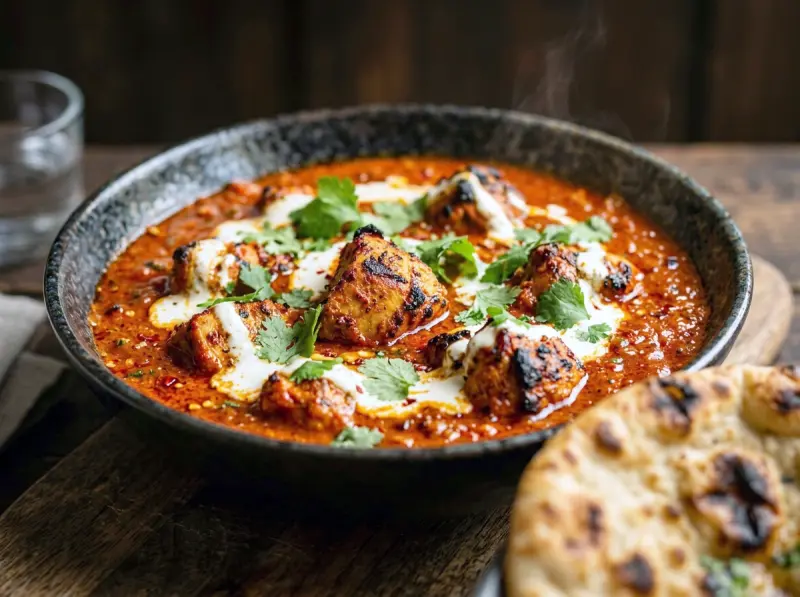
Son fundamentalmente diferentes. El pollo tandoori es un plato seco: pollo marinado en yogur y especias cocinado a alta temperatura. Sin salsa — el objetivo es el sabor ahumado y chamuscado. El butter chicken es un plato de salsa: pollo cocinado a fuego lento en una cremosa salsa de tomate y mantequilla. La conexión histórica: los restos de pollo tandoori acabaron en una salsa de tomate y se convirtió en butter chicken.
Dos métodos confiables. Primero: horno muy caliente a 230°C con rejilla para circulación de aire, y 3-5 minutos finales bajo el grill hasta chamuscado real. Segundo — ahumado dhungar: carbón al rojo en una taza de metal, 2-3 gotas de ghee, cubrir herméticamente 3 minutos. La parrilla de carbón es el sustituto más preciso.
Cuatro reglas. Primera: solo muslos y contramuslos con hueso, no pechuga. Segunda: yogur espeso — el líquido se escurre. Tercera: cortes profundos hasta el hueso. Cuarta: no sobrecocinar — 75°C de temperatura interna.
El color viene del chile en polvo de Cachemira, una variedad con color rojo intenso y picante moderado. Sin colorante, un tandoori bien preparado será naranja oscuro a marrón rojizo — completamente correcto. Sustituto: 3 partes de pimentón suave por 1 parte de cayena.
Mínimo: 2 horas. Mejor: 6-12 horas. Límite: 48 horas. Para marinado rápido: cortes profundos compensan el tiempo corto. Sacar 30 minutos antes de cocinar.
Valora
Recetas en tu correo
Un correo a la semana: una receta elegida a tu gusto y lo nuevo del sitio. Puedes dejar de recibirlo con un clic.
De regalo: el libro de recetas de Sergei (e-book).
Al pulsar el botón aceptas la política de privacidad.
Cuéntanos qué te gusta cocinar (30 segundos) →Sigue explorando
Más platos del archivo — elegidos por su solapamiento con lo que estás cocinando ahora.


Únete a la conversación
Comentarios (3)
The biggest mistake people make with tandoori chicken at home is not scoring the meat deep enough. Shallow cuts do nothing — the marinade needs to reach almost to the bone. I use a sharp knife and make three or four cuts on each piece, then massage the yogurt mixture in by hand. The other thing: your oven broiler is your tandoor. Get the chicken as close to the heating element as possible for those charred edges that make tandoori what it is.
Für ein authentisches Ergebnis muss man zwei Sachen beachten: erstens, das Hähnchen tief einschneiden — nicht nur ritzen, sondern richtig bis zum Knochen. Zweitens, die letzten 3 Minuten unter den Grill schieben für die typischen schwarzen Stellen. Ohne diese Röstaromen ist es nur mariniertes Hähnchen aus dem Ofen. Mit ihnen ist es Tandoori.
Habe das Tandoori Hähnchen gestern zum ersten Mal gemacht und mein Mann hat gefragt ob wir beim Inder bestellt haben. Das Joghurt-Marinade macht das Fleisch so zart, unglaublich. Ich hatte kein Kashmiri Chili und hab normales Paprikapulver genommen — war trotzdem super. Nächstes Mal mariniere ich über Nacht, dann wird es bestimmt noch besser.