
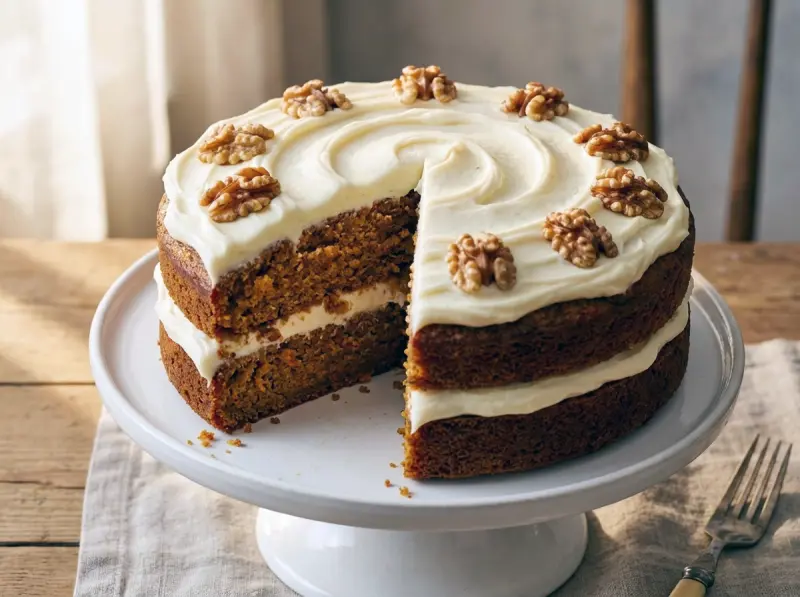
Torta di Carote con Glassa di Crema di Formaggio
La torta di carote è uno dei pochi dolci in cui la verdura nel nome non è un compromesso ma una necessità: le carote fresche grattugiate rilasciano umidità direttamente nell'impasto e portano le spezie in ogni briciola. La torta si fa con olio invece che burro, che la mantiene morbida anche appena uscita dal frigo. Lo zucchero di canna aggiunge profondità di melassa. La glassa di crema di formaggio è la parte migliore: acidula, ricca e non eccessivamente dolce.
Ingredienti
- 280 gfarina di frumento
- 2 cucchiainolievito in polvere
- 1 cucchiainobicarbonato di sodio
- 2 cucchiainocannella in polvere
- 1 cucchiainozenzero in polvere
- 0.5 cucchiainonoce moscata in polvere
- 0.25 cucchiainopimento in polvere
- 0.5 cucchiainosale fino
- 200 mlolio neutro
- 200 gzucchero di canna chiaro compatto
- 100 gzucchero semolato
- 4 uova grandi
- 2 cucchiainoestratto di vaniglia
- 300 gcarote
- 100 gnoci o pecan tostate e tritate grossolanamente opzionale
- 450 gPhiladelphia o altro crema di formaggio intero freddo di frigo
- 115 gburro non salato
- 400 gzucchero a velo setacciato
- 1 cucchiainoestratto di vaniglia per la glassa
- 1 pizzicosale fino per la glassa
Preparazione
- Preparare l'impasto. Preriscaldare il forno a 180°C. Ungere due stampi rotondi da 20 cm, rivestire il fondo con carta forno e ungerla. In una ciotola sbattere con la frusta la farina, lievito, bicarbonato, cannella, zenzero, noce moscata, pimento e sale. In un'altra sbattere l'olio, lo zucchero di canna e lo zucchero semolato. Aggiungere le uova una alla volta sbattendo bene. Aggiungere la vaniglia. Unire i secchi agli umidi con una spatola fino a quasi incorporare. Aggiungere le carote grattugiate e mescolare. Se si usano le noci, unirle ora. Non mescolare eccessivamente.
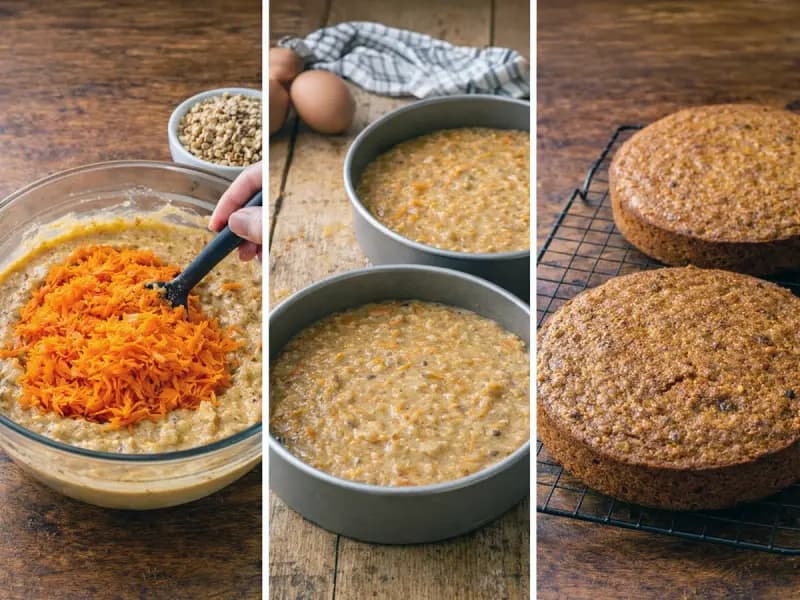
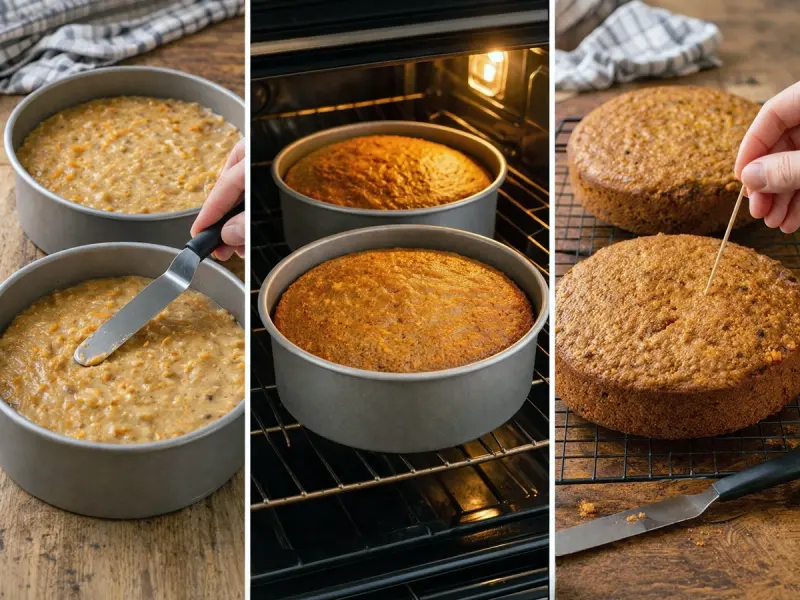
- Cuocere. Dividere l'impasto equamente tra i due stampi. Livellare la superficie. Cuocere nella griglia centrale 28–35 minuti fino a quando uno stecchino inserito al centro esce pulito. Non aprire il forno nei primi 20 minuti. Lasciare negli stampi 10 minuti, sformare sulla griglia e far raffreddare completamente. I dischi devono essere completamente freddi prima di glassare.
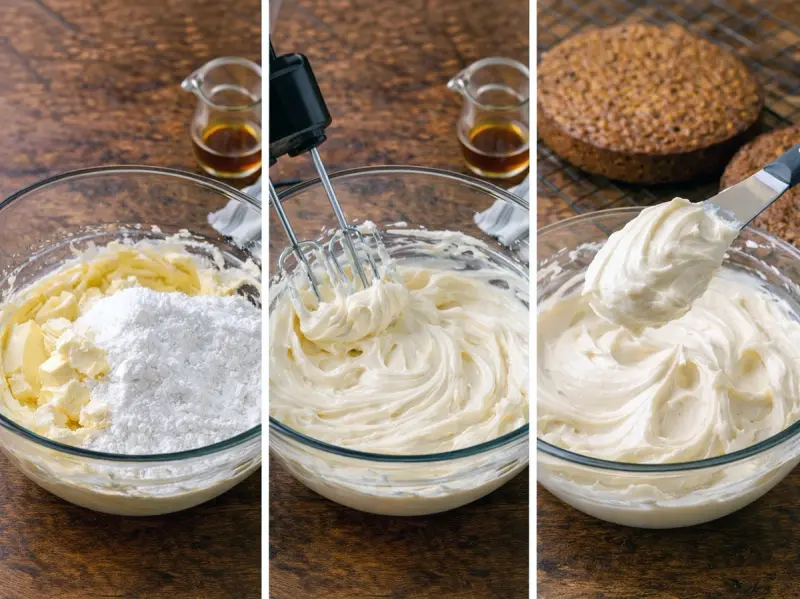
- Fare la glassa. Sbattere il crema di formaggio freddo e il burro morbido insieme a velocità medio-bassa per circa 2 minuti. Il formaggio freddo e il burro morbido è la combinazione che dà stabilità. Aggiungere lo zucchero a velo in 2–3 volte mescolando a bassa velocità poi montare a media velocità fino a spumoso — 1 minuto. Aggiungere vaniglia e sale. Aggiustare: se troppo dolce più sale; se troppo denso un cucchiaino di latte freddo; se troppo liquido più zucchero a velo.
- Assemblare la torta. Mettere un disco raffreddato su un piatto. Spalmare un terzo della glassa in modo uniforme. Mettere il secondo disco sopra. Con la glassa rimasta coprire la parte superiore e i lati. Refrigerare almeno 1 ora per far rassodare la glassa.
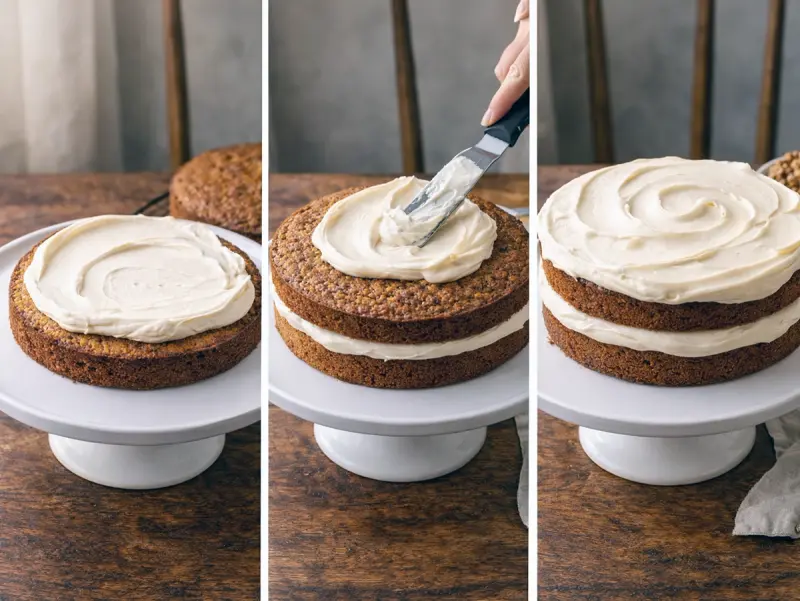
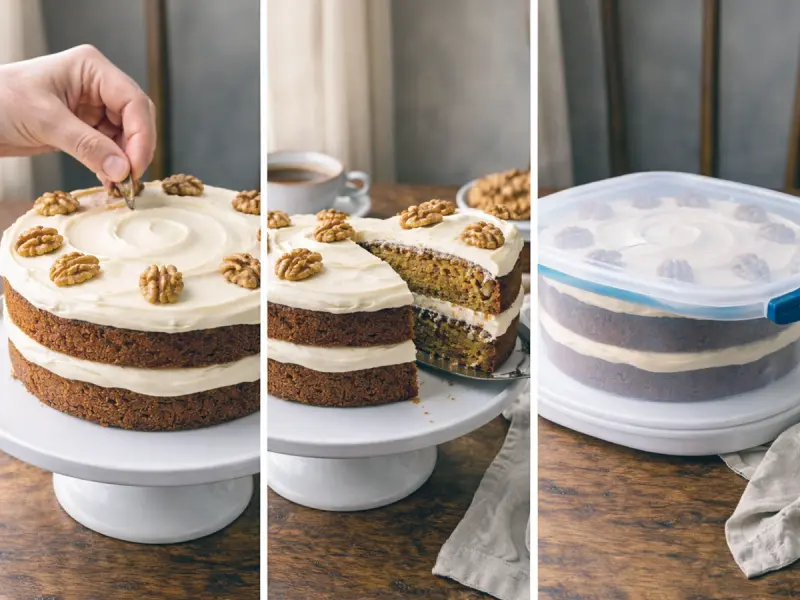
- Servire e conservare. Togliere dal frigo 20–30 minuti prima di servire. Decorare con noci tostate o striscioline sottili di carota cruda. Conservare in frigo fino a 4 giorni. Il sapore migliora il giorno dopo.
Domande
Il burro nel frigo solidifica e la torta con crema di formaggio deve essere refrigerata. Con il burro sarebbe densa e secca. L'olio rimane liquido anche al freddo. Il sapore neutro dell'olio non si sente dietro allo zucchero di canna e le spezie.
La grattugia media è l'ideale. Quella fine fa purea. Quella grossa lascia filamenti visibili. La carota grattugiata correttamente è come mozzarella sminuzzata: quasi scompare nella mollica durante la cottura.
Tre cause: il formaggio era a temperatura ambiente (deve essere freddo), poco zucchero a velo (dà struttura non solo dolcezza), o montato eccessivamente. Se già liquida aggiungere zucchero a velo setacciato e refrigerare 30 minuti.
Sì e migliora. I dischi durano 2 giorni in frigo avvolti o 3 mesi congelati. La torta assemblata dura 4 giorni in frigo. Il giorno dopo è migliore.
Ananas in scatola sgocciolato (120 g), uvetta (75 g), cocco grattugiato (60 g), scorza d'arancia, composta di mele (60–80 g). Non più di 200 g in totale.
Vota
Ricette via email
Una lettera a settimana: una ricetta scelta per i tuoi gusti e le novità del sito. Puoi disattivarla con un clic.
In regalo: il libro di ricette di Sergei (e-book).
Premendo il pulsante accetti l’informativa sulla privacy.
Dicci cosa ti piace cucinare (30 secondi) →Continua a sfogliare
Altri piatti dall’archivio — scelti per sovrapposizione con quello che stai cucinando ora.

Partecipa alla discussione
Commenti (2)
Очень вкусно 👍
Three things separate a great carrot cake from a mediocre one: grating the carrots on the large holes (not fine), using oil instead of butter for moisture, and making the frosting with cold cream cheese straight from the fridge — warm cream cheese makes runny frosting every time. Don't skip the cinnamon, it's doing more work than you think.