
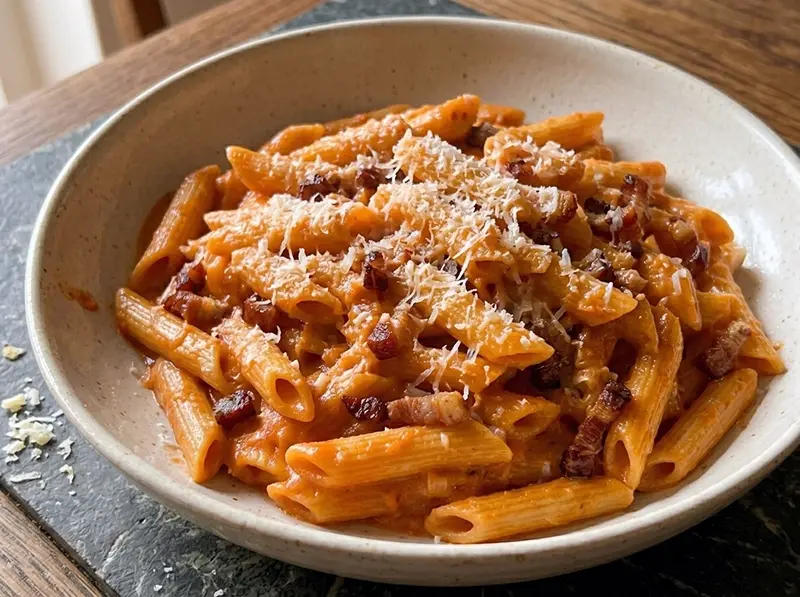
Penne alla Vodka
Penne in una cremosa salsa di pomodoro con pancetta, vodka e peperoncino. La salsa è del colore di un tramonto — tra il rosso profondo e il rosa pallido — e la consistenza è quella che si ottiene quando la panna incontra una base di pomodoro ridotta: densa, lucida e ricca.
Ingredienti
- 400 gpenne rigate
- 150 gpancetta, tagliata a cubetti piccoli
- 1 cipolla piccola, tritata finemente
- 3 aglio, affettati o schiacciati
- 80 mlvodka
- 400 gpomodori San Marzano, schiacciati a mano
- 2 cucchiaioconcentrato di pomodoro
- 150 mlpanna da montare
- 0.5 cucchiainopeperoncino secco in scaglie
- 2 cucchiaioolio d'oliva
- 40 gparmigiano o Pecorino Romano, grattugiato finemente
- 4 foglie di basilico fresco, spezzate
Preparazione
- Rosolare la pancetta. Scaldare l'olio d'oliva in una padella ampia e pesante a fuoco medio. Aggiungere la pancetta e cuocere mescolando fino a quando la maggior parte del grasso non si è sciolta e i pezzi sono dorati e croccanti — circa 6-8 minuti. Rimuovere la pancetta con una schiumarola e metterla da parte, lasciando il grasso nella padella.

- Costruire la base. Nella stessa padella, aggiungere la cipolla tritata al grasso della pancetta. Cuocere mescolando fino a quando non si è ammorbidita e inizia a dorarsi — circa 8 minuti. Aggiungere l'aglio e il peperoncino e cuocere altri 1-2 minuti. Aggiungere il concentrato di pomodoro e mescolare con la cipolla e il grasso, lasciando cuocere 2 minuti per 'tostarlo'.
- Aggiungere la vodka e i pomodori. Togliere la padella dal fuoco prima di aggiungere la vodka. Versare la vodka, tornare a fuoco medio-alto e lasciare bollire vigorosamente 3-4 minuti mescolando spesso. Aggiungere i pomodori schiacciati, mescolare e cuocere a fuoco medio-basso 12-15 minuti fino a quando la salsa si è addensata. Aggiustare di sale.
- Aggiungere la panna e finire la salsa. Ridurre il fuoco al minimo prima di aggiungere la panna. Versare la panna e mescolare fino a completa incorporazione. La salsa dovrebbe passare dal rosso a un colore salmone-rosa profondo. Cuocere a fuoco lento 3-4 minuti. Aggiungere la pancetta di nuovo. Nel frattempo cuocere i penne in acqua abbondantemente salata fino a quasi al dente.

- Terminare nella salsa. Scolare la pasta riservando un bicchiere d'acqua. Aggiungere i penne direttamente alla salsa a fuoco medio e mescolare 1-2 minuti. Se troppo densa aggiungere acqua di cottura poco alla volta. Togliere dal fuoco, incorporare il formaggio grattugiato e il basilico. Servire immediatamente in ciotole calde.

Domande
Per la maggior parte, sì. Un'ebollizione vigorosa di 3-4 minuti evapora la maggior parte dell'alcol. Ciò che rimane è più importante: l'etanolo estrae composti aromatici dai pomodori che né l'acqua né il grasso possono sciogliere.
Sì, ma il risultato è una pasta al pomodoro con panna normale. Il vino bianco o mezzo cucchiaio d'aceto di mele possono sostituire parzialmente. Per i bambini: omettere e fare una salsa di pomodoro con panna.
La guanciale è l'opzione più ricca. I lardelli non affumicati funzionano bene. Il prosciutto a pezzi aggiunto alla fine è un'alternativa più leggera. Per una versione vegetariana: omettere la pancetta e aumentare leggermente l'olio.
Il colore rosa risulta dalla mescolanza della panna con il pomodoro ridotto. La salsa classica deve essere salmone-rosa profondo — non rosa pallido (troppa panna) né rosso scuro (poca panna).
Sì. La salsa si conserva 3 giorni in frigorifero o 2 mesi nel congelatore. Riscaldare lentamente a fuoco basso con un po' d'acqua. Non cuocere la pasta in anticipo — continuerà ad assorbire umidità e si ammorbidirà.
Vota
Ricette via email
Una lettera a settimana: una ricetta scelta per i tuoi gusti e le novità del sito. Puoi disattivarla con un clic.
In regalo: il libro di ricette di Sergei (e-book).
Premendo il pulsante accetti l’informativa sulla privacy.
Dicci cosa ti piace cucinare (30 secondi) →Continua a sfogliare
Altri piatti dall’archivio — scelti per sovrapposizione con quello che stai cucinando ora.
Partecipa alla discussione
Commenti (1)
The widest pan you own works best for penne alla vodka. Maximum surface area means faster evaporation, more concentrated sauce, and better coating. A deep pot keeps things too wet.