
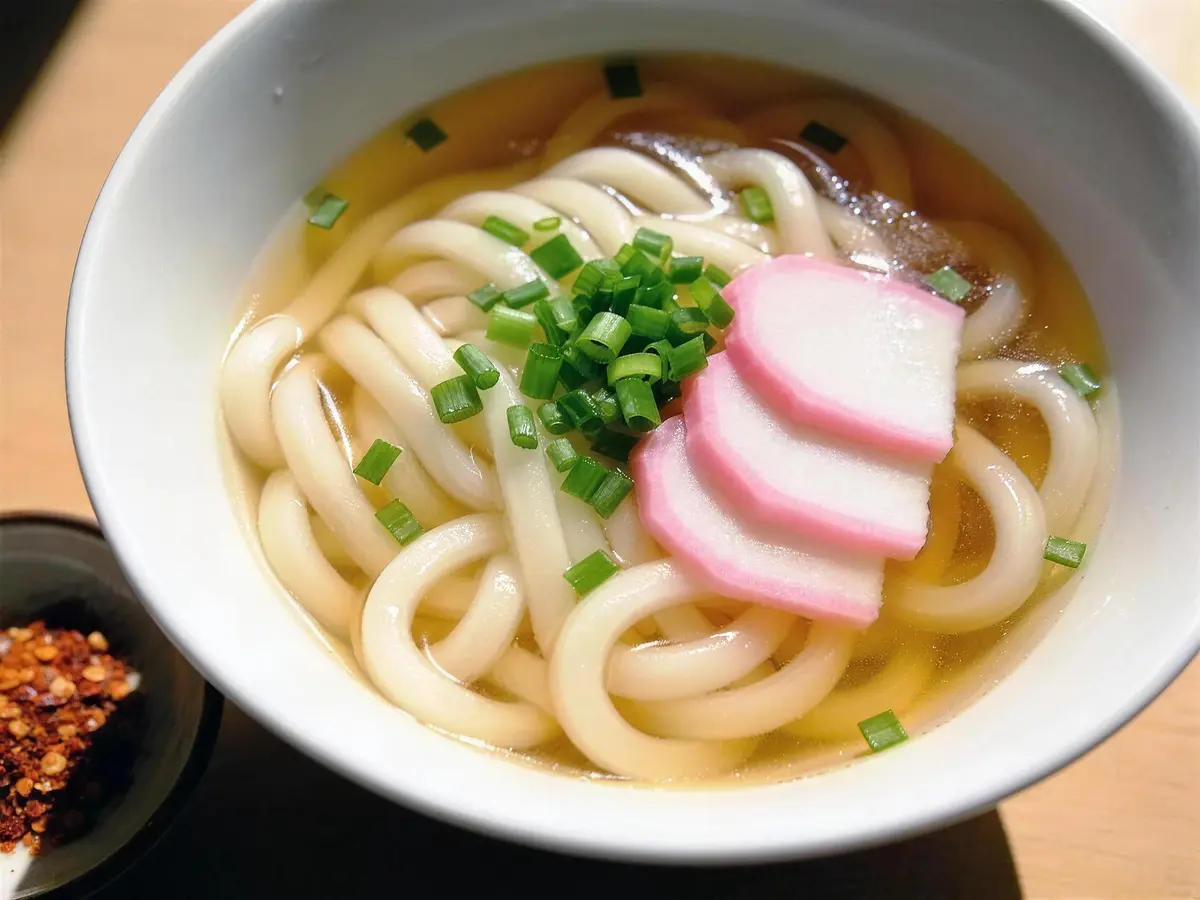
Zuppa di Udon (Kake Udon)
Il kake udon (かけうどん) è la zuppa di udon giapponese nella versione più semplice: noodles di grano spessi e gommosi in un brodo dashi limpido e dorato, condito con salsa di soia e mirin, con cipollina sopra e poco altro. Il brodo è dorato pallido ma ricco di umami, appena dolce per il mirin. L'udon è una specialità della regione di Kagawa (sanuki udon) e si mangia in tutto il Giappone: nel Kansai il brodo è più chiaro e delicato, nel Kanto più scuro e deciso; qui seguiamo lo stile Kansai. I 20 minuti della ricetta sono di lavoro con dashi in bustina o in polvere; il dashi fatto in casa richiede altri 20-30 minuti di ammollo passivo del kombu. Se il brodo riesce, i noodles vanno da soli.
Ingredienti
- 500 gtagliatelle udon fresche o congelate
- 700 mlbrodo dashi
- 2 cucchiaiosalsa di soia
- 2 cucchiaiomirin
- 1 cucchiainosake o sherry secco
- 0.5 cucchiainosale fino
- 2 cipolline, finemente
- 1 cucchiainoshichimi togarashi o ichimi
- 2 fettekamaboko o uovo barzotto dimezzato
- 1 fogliodi nori, tagliato in rettangoli
Preparazione
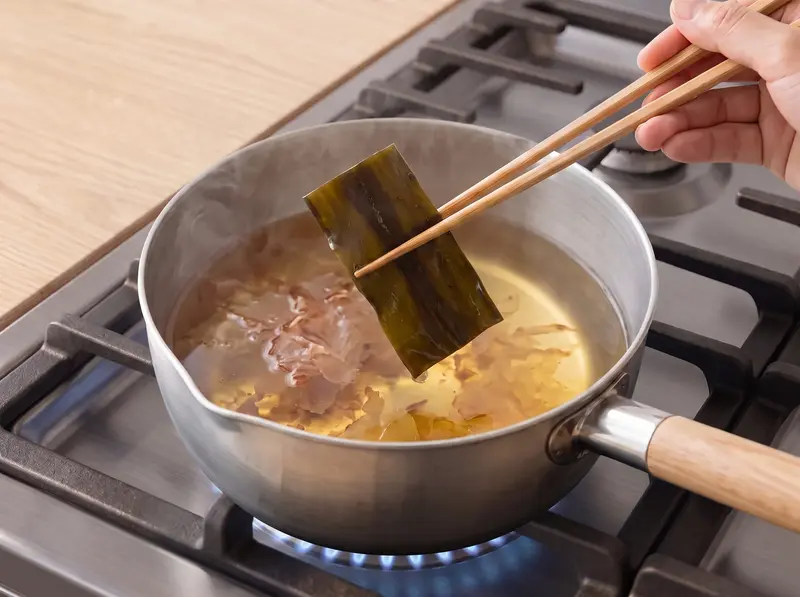
- Preparare il dashi. Il brodo è tutto nella zuppa di udon: le tagliatelle e le guarnizioni contano meno. Dashi fatto in casa: mettere un pezzo di kombu da 10 cm in 800 ml d'acqua fredda e lasciare in ammollo 20-30 minuti. Scaldare a fuoco medio-basso e portare lentamente verso il bollore. Togliere il kombu poco prima che raggiunga il bollore pieno (se bolle, il dashi prende un forte odore di alga). Aggiungere 10-15 g di katsuobushi (scaglie di bonito), spegnere il fuoco e lasciare in infusione 5 minuti. Filtrare attraverso un colino fine senza premere. Il risultato deve essere un brodo ambrato pallido, limpido e di sottile profumo di mare. Per la polvere dashi: sciogliere 1 cucchiaino in 700 ml d'acqua calda. Per le bustine di dashi: seguire le istruzioni sulla confezione. Quello fatto in casa dà il risultato più pulito e complesso; la polvere è la scorciatoia più veloce.
- Condire il brodo. Versare il dashi in una casseruola pulita. Aggiungere salsa di soia, mirin, sake e sale. Per il brodo chiaro stile Kansai descritto da questa ricetta, usare usukuchi (salsa di soia giapponese di colore chiaro); con la normale salsa di soia scura (koikuchi) gli stessi 2 cucchiai danno un brodo più scuro, ambrato, in stile Kanto, che è altrettanto corretto. Portare a un leggero bollore a fuoco medio, senza bollire forte. Assaggiare: il brodo deve essere saporito, leggermente dolce e pulito. Se è scialbo, aggiungere un pizzico di sale; se è troppo salato, un goccio d'acqua. Il colore deve essere dorato pallido e limpido per lo stile Kansai o ambrato più intenso per il Kanto. Tenere caldo al minimo mentre si cuociono le tagliatelle. Il brodo va servito molto caldo: la zuppa di udon si raffredda in fretta.
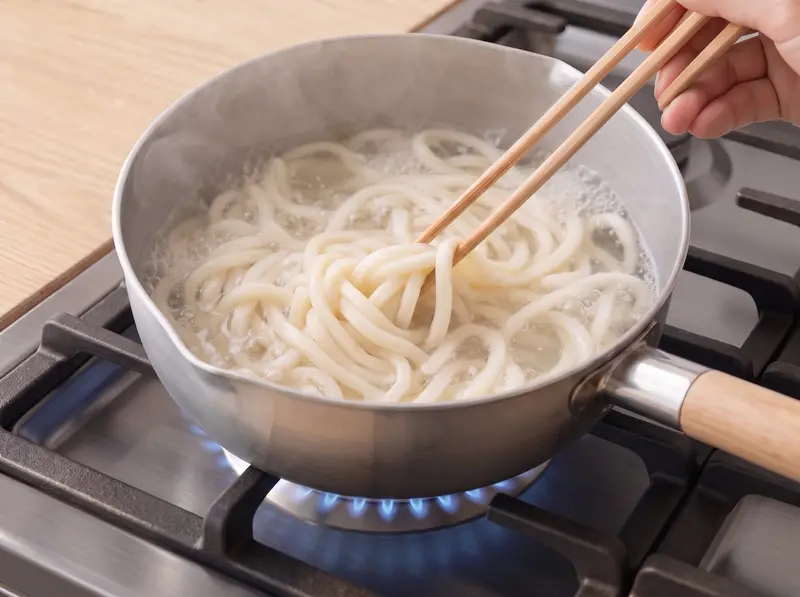
- Cuocere le tagliatelle separatamente. Se si servono con l'uovo, cuocerlo per prima cosa: 6,5 minuti in acqua bollente, poi subito in acqua fredda, sgusciarlo e dividerlo a metà. Cuocere l'udon in una pentola separata con acqua bollente non salata, non nel brodo, perché le tagliatelle rilasciano amido che lo intorbida. L'udon secco e quello fresco non cotto vanno sempre bolliti così; l'udon già cotto (sottovuoto o congelato) si può anche scaldare direttamente nel brodo, se non importa che resti un po' torbido. Udon congelato: 1-2 minuti in acqua bollente, finché si scioglie e si scalda. Fresco sottovuoto: 2-3 minuti. Secco: seguire la confezione, ma 1 minuto in meno. Scolare bene. Sciacquare brevemente con acqua calda per eliminare l'amido in superficie. Dividere in due ciotole profonde, circa 250 g di tagliatelle in ciascuna.
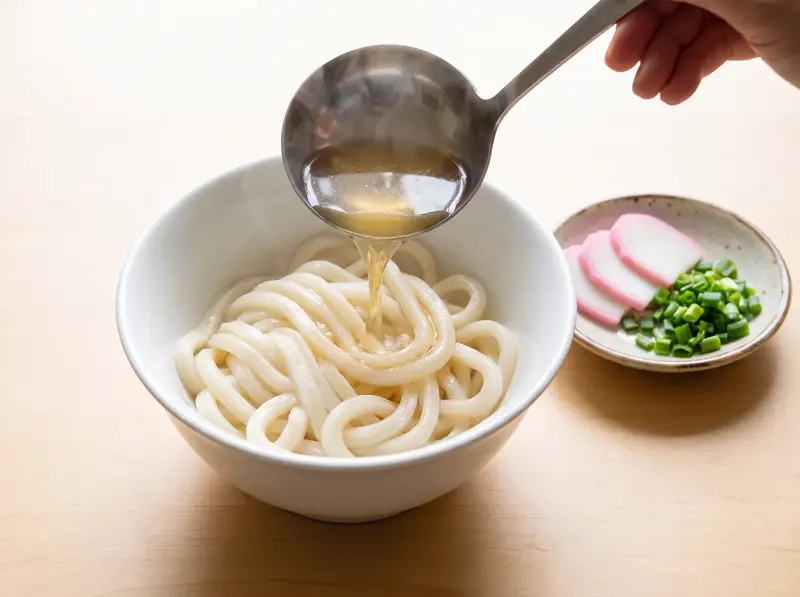
- Assemblare e servire immediatamente. Versare il brodo molto caldo sulle tagliatelle, quanto basta per coprirle quasi del tutto. Cospargere con la cipollina affettata. Aggiungere altre guarnizioni: kamaboko, uovo barzotto, nori o tempura (per il Tempura Udon). Servire lo shichimi togarashi a parte, perché ognuno lo aggiunga a gusto. La zuppa di udon va servita e mangiata subito: le tagliatelle continuano ad assorbire brodo e si ammorbidiscono. Non è un piatto che aspetta.
- Variazioni. Kitsune udon: mettere sopra le tagliatelle un aburaage (sacchettino di tofu fritto, cotto brevemente in soia, mirin e dashi) prima di versare il brodo. Tempura udon: aggiungere sopra un pezzo di tempura di gamberi o verdure. Niku udon (udon con carne): cuocere fettine sottili di manzo o maiale nel brodo 1-2 minuti prima di versarlo sulle tagliatelle. Curry udon: aggiungere al brodo 1 cucchiaio di pasta di curry giapponese (da un panetto di roux) e mescolare fino a scioglierla.
Domande
Il dashi è il brodo base della cucina giapponese, fatto soprattutto con due ingredienti: kombu (alga secca, che dà umami di acido glutammico) e katsuobushi (scaglie di bonito secco, che danno umami di acido inosinico). La combinazione è sinergica: insieme danno un umami più potente di quello di ciascuno da solo. Per prepararlo: ammollare il kombu in acqua fredda 20-30 minuti, scaldare lentamente fino a poco prima del bollore, togliere il kombu, aggiungere il katsuobushi, lasciare in infusione 5 minuti e filtrare. Dashi vegano: solo kombu, oppure kombu con shiitake secchi; il risultato ha un profilo di sapore molto diverso, ma resta ottimo. Il dashi istantaneo in polvere si trova facilmente come scorciatoia rapida. Lo stesso dashi è la base della zuppa di miso.
Le tagliatelle udon congelate stile Sanuki sono considerate lo standard d'oro — cuociono in 1-2 minuti e hanno la caratteristica texture spessa, rotonda e molto gommosa. Le fresche sottovuoto sono una buona seconda scelta. Le secche producono una texture considerevolmente più morbida.
La più tradizionale è semplicemente la cipollina affettata sottile (negi), presente in quasi ogni ciotola. Il kamaboko (tortino di pesce, il semicerchio rosa e bianco) è un classico. Oltre a queste, le guarnizioni definiscono le varianti: aburaage (sacchettino di tofu fritto) = Kitsune Udon; tempura = Tempura Udon; manzo a fettine sottili = Niku Udon; udon cotto e servito nella sua pentola di terracotta con uovo, gambero in tempura, kamaboko e verdure = Nabeyaki Udon. Il kake udon con la sola cipollina è la forma più semplice e probabilmente la più pura. Per preparare la tempura della guarnizione in casa, guarda la ricetta della tempura.
Sì, facilmente. Sostituire il dashi al bonito con dashi solo di kombu, o dashi kombu-shiitake. Usare tamari invece di salsa di soia per la versione senza glutine. Tofu, aburaage, wakame e funghi sono ottime guarnizioni vegane.
Non l'udon secco né quello fresco non cotto: rilasciano molto amido durante la cottura, che intorbida il brodo, e un buon brodo di udon è limpido: dovresti poter vedere le tagliatelle attraverso di esso. Lessale separatamente in acqua non salata, scolale e versa sopra il brodo caldo nella ciotola. L'udon già cotto, sottovuoto o congelato, si può scaldare direttamente nel brodo se non ti dispiace che resti un po' torbido. Se vuoi una zuppa molto densa, quasi come una salsa, è un altro piatto, l'ankake udon, in cui il brodo viene addensato apposta con fecola di patate o maizena.
Continua a sfogliare
Altri piatti dall’archivio — scelti per sovrapposizione con quello che stai cucinando ora.

Ricette via email
Una lettera a settimana: una ricetta scelta per i tuoi gusti e le novità del sito. Puoi disattivarla con un clic.
In regalo: il libro di ricette di Sergei (e-book).
Premendo il pulsante accetti l’informativa sulla privacy.
Dicci cosa ti piace cucinare (30 secondi) →
Partecipa alla discussione
Commenti (1)
класс!!! Приготовил - получилось!