Skip to content
GetCookMatch
⌘K
Ingredient

Bread Flour Recipes

4 recipes with bread flour for weeknights, meal prep, and quick ingredient searches. Choose by time, cuisine, and what is in your kitchen.

Sourdough Bread
🇺🇸USAAdvanced
Flour and Confectionery Products

Sourdough Bread

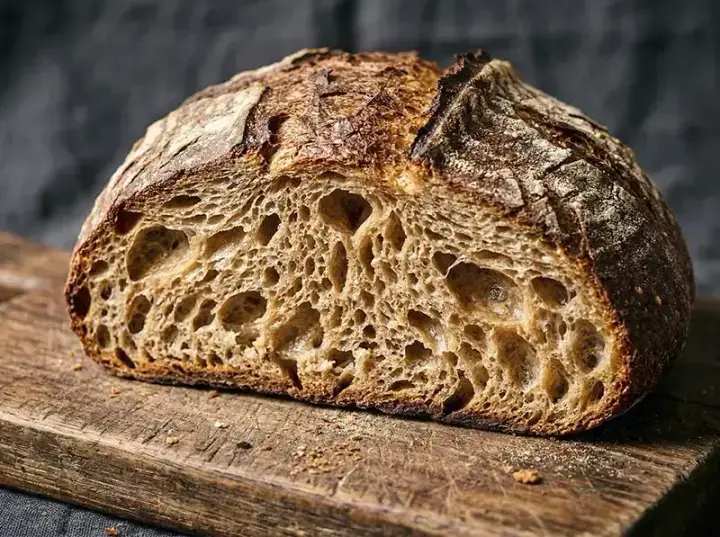
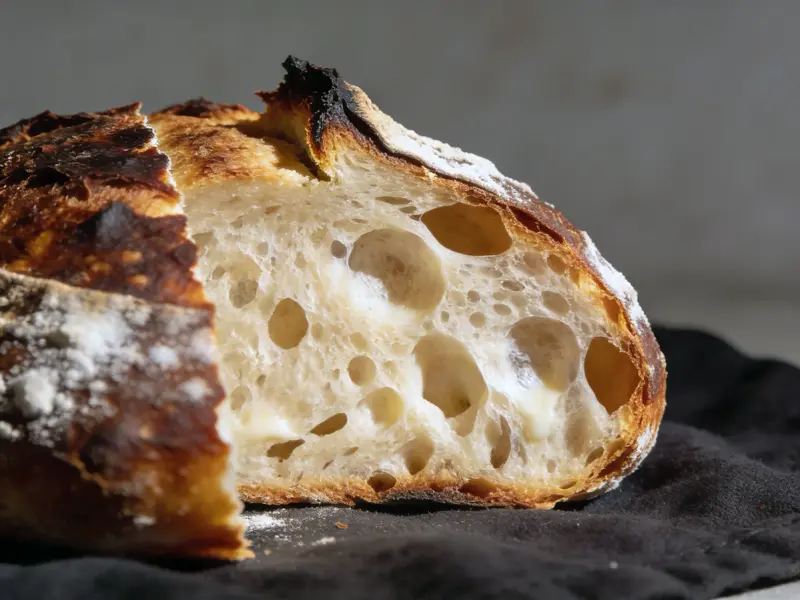
Real sourdough bread: four ingredients — bread flour, water, salt, active starter — and two to three days of patient fermentation. No yeast, no additives. The starter (a living culture of wild yeast and lactic acid bacteria) leavens the dough while simultaneously producing the organic acids that give sourdough its characteristic tang and dense, chewy crumb. The signature is the crust: baked inside a covered Dutch oven, it shatters when you cut it. The open crumb — an irregular network of large and small holes visible when sliced — comes from strong gluten development through stretch-and-folds and a long cold proof that slows fermentation and develops flavor. One of the most technically demanding home bakes; also one of the most rewarding.

1440 min180 kcal12 serves
🌱Vegan🌿Vegetarian
★4.9
New York-Style Bagels
🇺🇸USAAdvanced
Flour and Confectionery Products

New York-Style Bagels

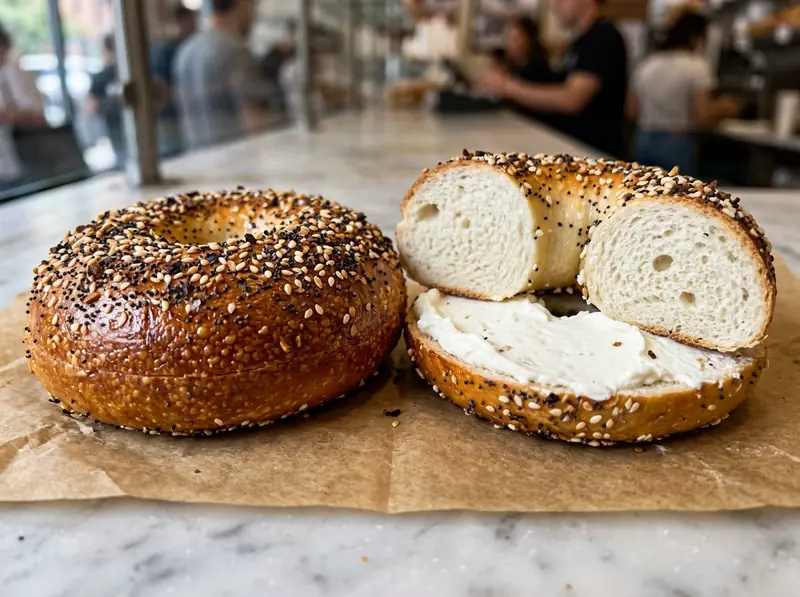
The New York bagel — the definitive version of this Ashkenazi Jewish bread — is one of the most technically precise breads in the home baker's repertoire. It is a lean dough (no fat, no eggs) made exclusively from bread flour, water, yeast, salt, and barley malt syrup. The low hydration (around 55 to 58%) produces an extremely stiff, tight dough that is kneaded until it is smooth and elastic. After an overnight cold fermentation that develops deep flavor, the shaped bagels are boiled briefly in water spiked with barley malt syrup — the boil gelatinises the surface starch, sets the outer crust, and produces the characteristic dense chew that distinguishes a real bagel from any other bread. They are then baked in a hot oven until the crust is a deep, crackled mahogany. Topped with sesame seeds, poppy seeds, or 'everything' seasoning, they are served split with cream cheese and smoked salmon, or eaten warm from the oven with nothing at all.

1440 min280 kcal8 serves
🌱Vegan
★4.8
Italian Cornetto (Authentic Sweet Laminated Breakfast Pastry)
🇮🇹ItalyMedium
Breakfast and Brunch

Italian Cornetto (Authentic Sweet Laminated Breakfast Pastry)

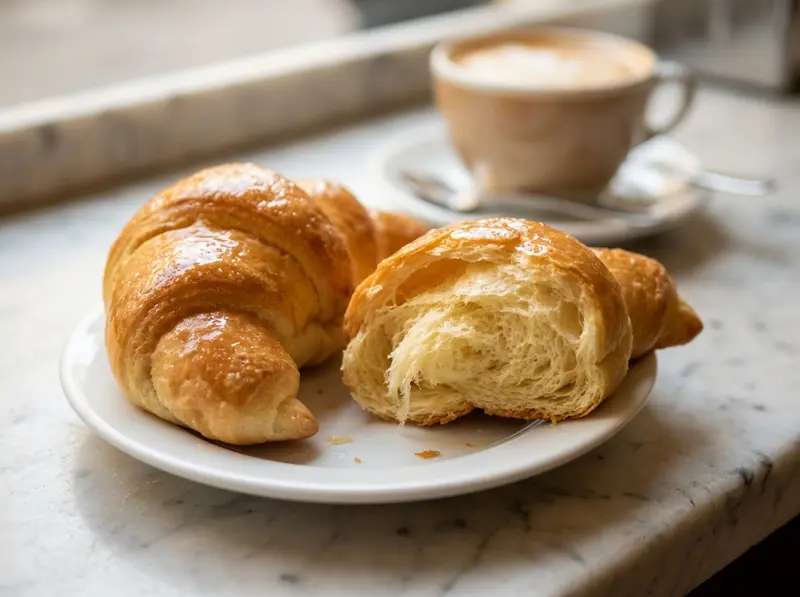
Cornetto (literally 'little horn' in Italian) is the iconic Italian breakfast pastry: a crescent of yeasted laminated dough enriched with eggs, sugar, and citrus zest, baked until deep gold and glazed with sugar syrup. Often confused with the French croissant, but distinctly different — softer, sweeter, more brioche-like, with eggs in the dough that the croissant never has. History: descended from the Austrian kipferl, which arrived in Italy through the Venetian Republic in the late 17th century and spread across the peninsula. Italian bakers transformed it with eggs, more sugar, vanilla, and citrus, creating a pastry fundamentally different from its French cousin. Naming varies by region: cornetto in central and southern Italy (Rome, Naples), brioche in the north (Milan, Venice, Turin) — though true brioche is a different pastry. Never called 'croissant' in Italy. Active prep 60 minutes, total 18-24 hours with overnight cold ferment and 3-hour final proof. Makes 10 pastries. Served warm at Italian bars with cappuccino or espresso, standing at the counter — the iconic 'cornetto e cappuccino al bar' ritual.

60 min320 kcal10 serves
🌿Vegetarian
★4.6
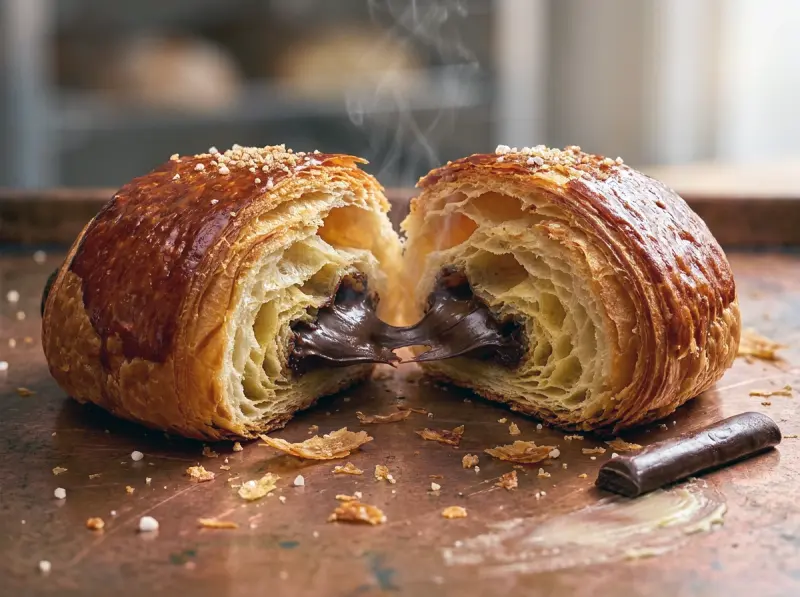
French Pain au Chocolat (Authentic Yeasted Laminated Chocolate Pastry)
🇫🇷FranceMedium
Breakfast and Brunch

French Pain au Chocolat (Authentic Yeasted Laminated Chocolate Pastry)

Pain au chocolat (literally 'chocolate bread' in French) is the classic French viennoiserie: a rectangle of yeasted laminated dough wrapped around two dark chocolate batons, baked until deep golden with a flaky exterior and soft bread-like interior with visible honeycomb structure. One of the most iconic French pastries, alongside the croissant — same dough, different shape. History: Austrian officer August Zang and aristocrat Ernest Schwarzer opened Boulangerie Viennoise at 92 rue de Richelieu in Paris in 1839, introducing Viennese pastries to France. The pastry started life on brioche dough, evolving to today's pâte feuilletée levée (yeasted laminated dough) by the late 19th century. Naming controversy: pain au chocolat (north and central France) versus chocolatine (southwestern France — Bordeaux, Toulouse, Pays Basque, also Quebec). Never called 'chocolate croissant' in France — that's an English misnomer. Active prep 60 minutes, total timeline 24-48 hours with overnight rests. Makes 8 pastries. Best eaten warm, the same morning, with café au lait or espresso.

60 min340 kcal8 serves
🌿Vegetarian
★4.9
Ingredients

Goes well with

Other ingredients that appear most often alongside bread flour across the archive. Pick one to drill deeper.