
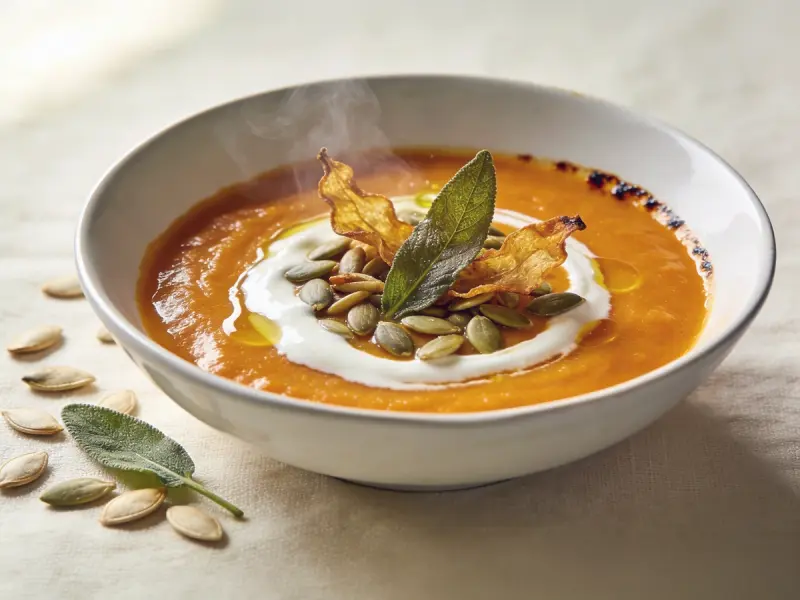
Крем-суп из мускатной тыквы
Запечённая мускатная тыква, взбитая с чесноком, луком и сливками. Запекание — это то, что отделяет глубокий карамелизованный суп от пресного. Не пропускайте этот шаг.
Ингредиенты
- 1.5 кгмускатная тыква, разрезанная пополам, семена удалены
- 1 средняя луковица
- 4 чеснок, неочищенных
- 3 ст.л.оливковое масло
- 800 мловощной бульон
- 100 млжирные сливки или кокосовое молоко
- 0.5 ч.л.мускатный орех молотый
- 0.5 ч.л.копчёная паприка
- 1 ч.л.соль
- 0.5 ч.л.чёрный перец
- 2 ст.л.тыквенные семечки
- 1 ст.л.листья свежий шалфея
Приготовление
- Разогрейте духовку до 200°C. Выложите половинки тыквы разрезом вниз на застеленный противень. Рядом разместите кусочки лука и неочищенный чеснок. Полейте всё оливковым маслом.
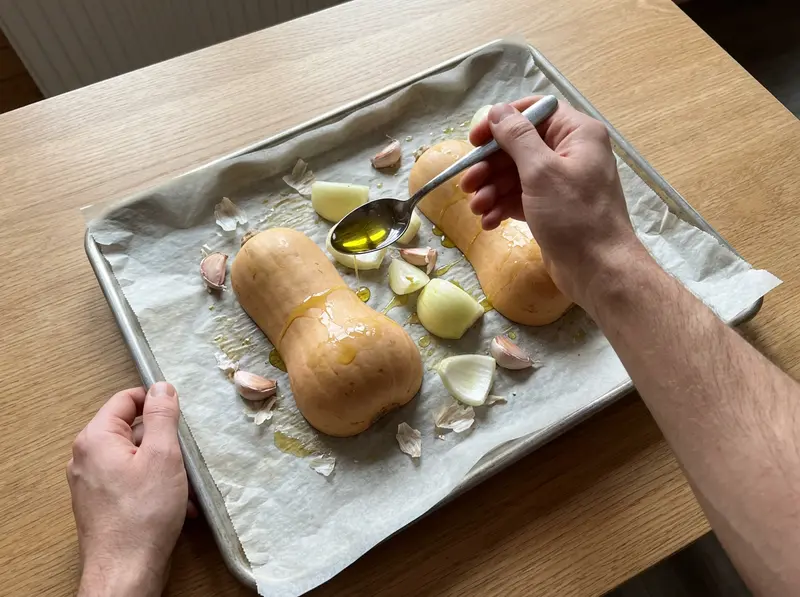
- Запекайте 40–50 минут, пока мякоть тыквы не станет полностью мягкой, а края разреза не потемнеют. Потемнение — это вкус, не вынимайте рано.
- Дайте остыть 10 минут. Выскребите мякоть тыквы в блендер или кастрюлю. Выдавите запечённый чеснок из кожицы и добавьте туда же. Добавьте лук.
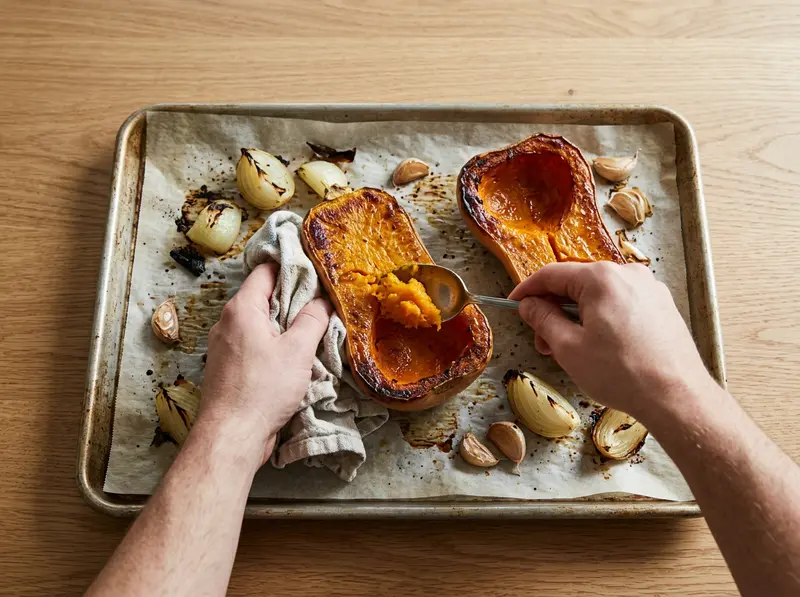
- Влейте бульон и взбейте до полной однородности. Для самой шелковистой текстуры используйте стационарный блендер, а не погружной. При необходимости работайте порциями, придерживая крышку сложенным полотенцем.
- Перелейте суп в кастрюлю и нагрейте на среднем огне. Добавьте сливки или кокосовое молоко, мускатный орех и паприку. Попробуйте, отрегулируйте соль и перец.
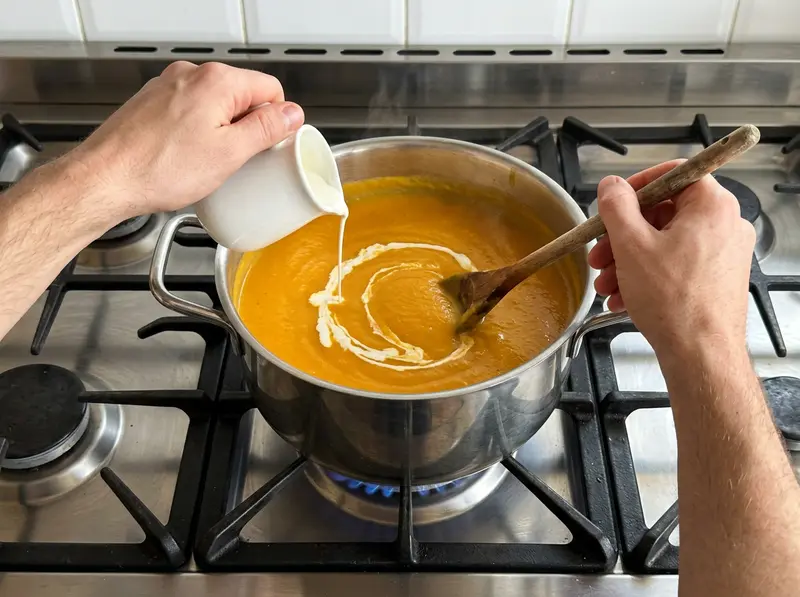
- Варите на слабом огне 5 минут. Подавайте с тыквенными семечками и обжаренными листьями шалфея.
Вопросы
Почти всегда потому что тыква не была запечена перед варкой. Сырая тыква, сваренная в бульоне, отдаёт воду и даёт плоский крахмалистый результат. Запекание при 200°C концентрирует сахара и карамелизирует края — именно отсюда берётся глубина. Проверьте также жирность: без сливок, кокосового молока или хотя бы ложки сливочного масла в конце суп останется жидким и одномерным.
200°C, 40–50 минут разрезом вниз на застеленном противне. Тыква готова когда вилка входит в мякоть без усилия и низ заметно потемнел. Если режете кубиками — 25–30 минут при той же температуре, перевернув раз в середине. Тёмные края — это именно то что нужно.
Кокосовое молоко жирное — лучший вариант: даёт похожую кремовость и лёгкую сладость которая идёт тыкве. Овсяное молоко даёт более нейтральный результат. Можно обойтись без молочного совсем — хорошо запечённая тыква при взбивании сама по себе достаточно шелковистая. Греческий йогурт добавляйте в тарелку а не в кастрюлю — при нагреве свернётся.
Оба работают. Стационарный даёт заметно более шелковистую текстуру — создаёт больше трения и лучше разбивает волокна. При погружном взбивайте не менее 2 минут и проверяйте пальцем — в некоторых позициях остаются мелкие волокна. При использовании стационарного с горячим супом заполняйте не более половины объёма и крепко держите крышку сложенным полотенцем — горячая жидкость под давлением может выбить крышку.
4–5 дней в закрытом контейнере в холодильнике. На второй день вкус становится богаче. Замораживается отлично — до 3 месяцев в контейнерах для заморозки, оставляя место сверху. Размораживайте ночь в холодильнике, разогревайте медленно на плите, вмешав немного бульона или воды если суп загустел при заморозке.
Оцени
Рецепты на почту
Одно письмо в неделю: рецепт под ваш вкус и всё новое на сайте. Отключить рассылку можно в один клик.
В подарок — книга рецептов Сергея (epub).
Нажимая кнопку, вы соглашаетесь с политикой конфиденциальности.
Расскажите, что любите готовить (30 секунд) →Смотри дальше
Ещё блюда из архива — подобраны по пересечению с тем, что ты сейчас готовишь.
Обсудить рецепт
Комментарии (1)
Bring this butternut squash soup to a full boil first, then drop it to the gentlest simmer your stove can manage. Aggressive boiling turns the butternut squash mushy and makes the broth cloudy. Patience here means clarity and texture.