
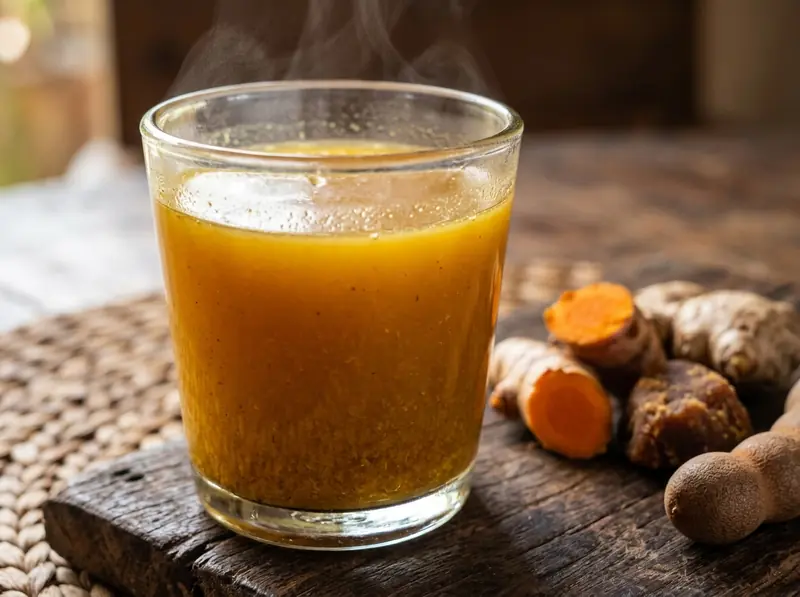
Джаму (индонезийский тоник из куркумы и имбиря)
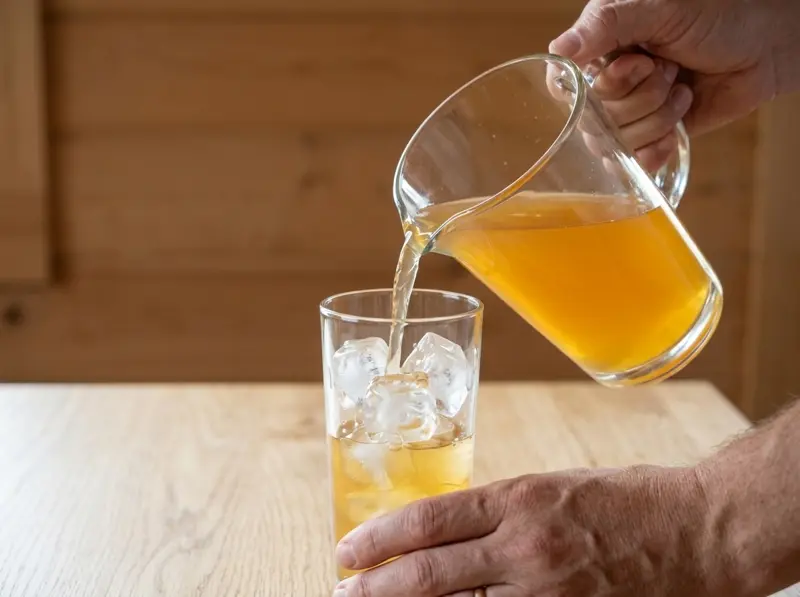
Джаму — общее название индонезийских травяных напитков; этот вариант повторяет куньит асам (kunyit asam): в Индонезии это свежая куркума, сваренная с тамариндом, пальмовым сахаром и щепоткой соли. Имбирь там добавляют не все, здесь он есть; чёрный перец, мёд и кокосовое масло в индонезийский напиток не входят, их можно не класть. Подавайте тёплым дождливым утром или со льдом днём.
Ингредиенты
- 60 гсвежий корень куркумы
- 40 гсвежий корень имбиря
- 1 лвода
- 2 ст.л.паста тамаринда (прессованная мякоть без косточек), около 30 г
- 3 ст.л.пальмовый сахар, натёртый или мелко нарубленный, около 35 г (или около 45 г мёда)
- 1 щепоткачёрного перца (по желанию)
- 1 стебельлемонграсса (по желанию)
- 1 ч.л.кокосовое масло (по желанию)
- 1 щепоткасоли
Приготовление
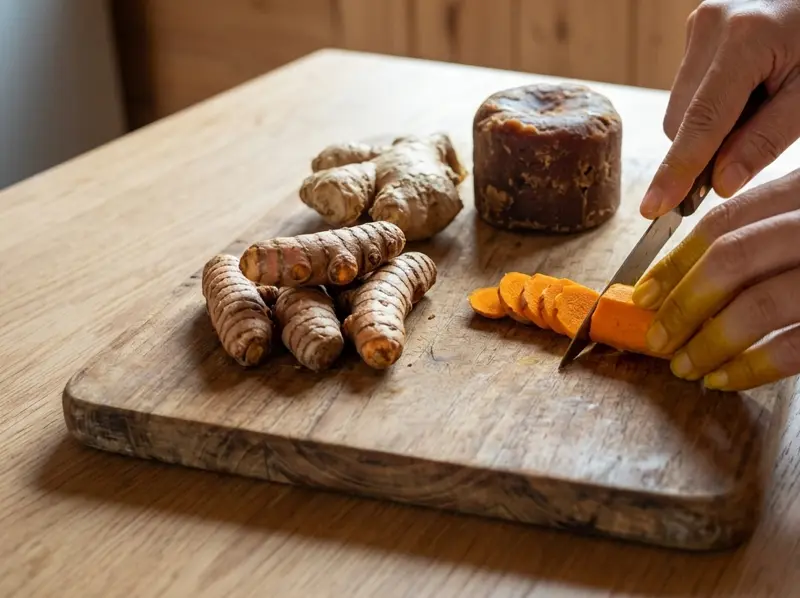
- Очистите корни куркумы и имбиря, затем натрите на тёрке или нарежьте тонкими пластинками. Куркума окрашивает всё, к чему прикасается, — разделочные доски, пальцы, столешницы, — поэтому работайте на поверхности, которую не жалко, или наденьте перчатки. Если пальмовый сахар у вас куском, натрите его или мелко нарубите, чтобы он быстро растворился. Если кладёте лемонграсс, отбейте стебель обухом ножа, чтобы он отдал аромат.
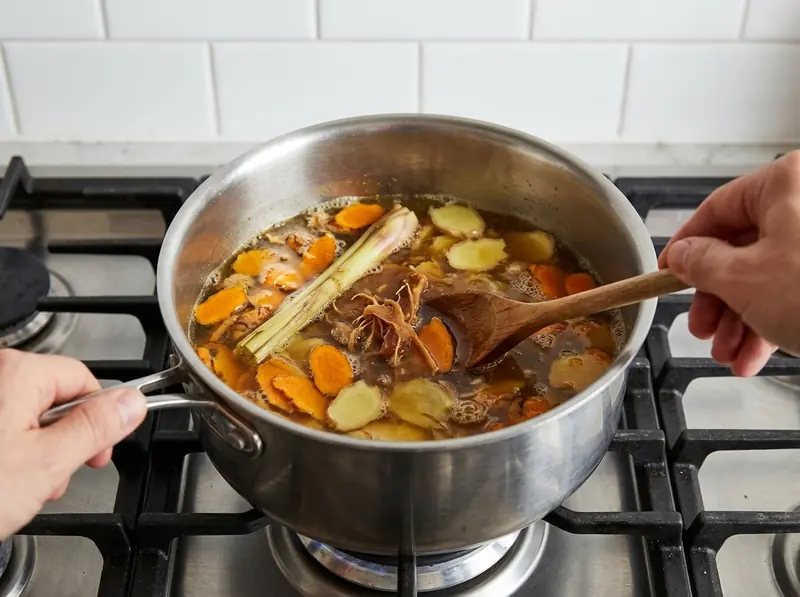
- Доведите воду до кипения в средней кастрюле. Добавьте куркуму, имбирь, пасту тамаринда, пальмовый сахар (если не заменяете его мёдом), соль и, если кладёте, лемонграсс и мешайте, пока сахар не растворится, а тамаринд не разойдётся. Убавьте огонь до слабого кипения и варите без крышки 10–15 минут. Жидкость станет насыщенного золотисто-оранжевого цвета. Не сокращайте варку: в Индонезии куньит асам готовят именно так, проваривая всё вместе, и за полные 10 минут вкусы успевают соединиться.
- Снимите кастрюлю с огня и попробуйте. Кислинка тамаринда должна ясно чувствоваться рядом с землистой куркумой: если напиток пресноват, вмешайте ещё немного тамаринда, если слишком кислый — ещё немного пальмового сахара. Если кладёте чёрный перец, добавьте его сейчас. Если вместо пальмового сахара берёте мёд, не варите его, а размешайте около 45 г на этом этапе.
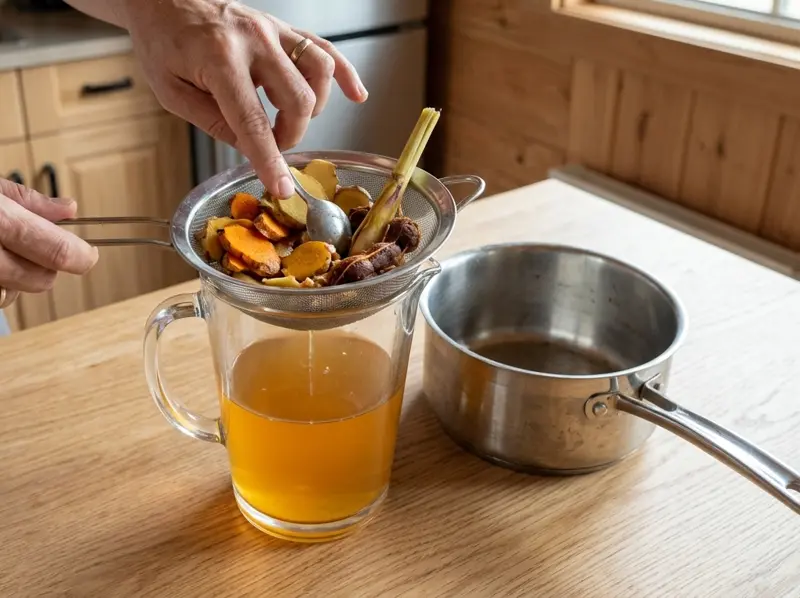
- Дайте смеси настояться 5 минут, затем процедите через мелкое сито или марлю в чистый кувшин, отжимая гущу до последней капли. Жмых выбросьте. Если кладёте кокосовое масло, вмешайте его сейчас.
- Подавайте джаму тёплым в чашках или остудите до комнатной температуры и разлейте по стаканам со льдом. В холодильнике напиток хранится до 3 дней — перед подачей встряхните или перемешайте, потому что куркума оседает на дно.
Вопросы
Горечь обычно появляется, когда куркумы слишком много на такое количество воды или когда тамаринда и сахара не хватает, чтобы её уравновесить. Держитесь пропорции 60 г куркумы на 1 литр воды и варите на слабом огне, а не при бурном кипении: при нём напиток только уваривается и становится концентрированнее. Основную работу делает тамаринд: его кислинка перебивает землистые ноты. Если всё равно горчит, в конце добавьте ещё столовую ложку пальмового сахара или мёда либо выжмите немного сока лайма.
Да: для этого рецепта начните с 2 чайных ложек молотой куркумы на литр воды и добавляйте по половине чайной ложки, пока отвар не станет насыщенного золотисто-оранжевого цвета. Вкус будет чуть проще, а цвет — более приглушённым. Перед тем как класть порошок в кастрюлю, разведите его в небольшом количестве тёплой воды, чтобы не было комочков. Свежий имбирь лучше оставить — его яркость порошком не передать. Если хочется напитка с куркумой помягче, на молоке, посмотрите золотое молоко.
Паста тамаринда — это кисло-сладкая мякоть стручков тамаринда; её продают прессованным брикетом (в Индонезии он называется асам джава) или в виде однородного концентрата в банке. Рецепт рассчитан на брикет: отломите 2 столовые ложки (около 30 г), проверьте, нет ли косточек, и дайте мякоти разойтись в кастрюле — волокна останутся в сите. Концентрат из банки резче, поэтому начните с меньшего количества и добавляйте по вкусу. Без тамаринда напиток похож на обычную куркумовую воду; если его не найти, возьмите 1 столовую ложку сока лайма и 1 чайную ложку коричневого сахара и вмешайте их, сняв кастрюлю с огня, — баланс кислого и сладкого будет похожим, хотя вкус изменится.
Процеженный джаму хранится в закрытой стеклянной бутылке или банке в холодильнике до 3 дней. После этого вкус начинает тускнеть, а тамаринд может дать неприятный привкус. Куркума оседает на дне — это нормально, просто встряхните перед подачей. Для долгого хранения заморозьте в формах для льда и размораживайте порционно; замороженный джаму сохраняется до месяца.
В куркуме есть куркумин — сильный природный краситель. Руки потрите кашицей из пищевой соды и лимонного сока. На пластиковую доску нанесите кашицу из соды и перекиси водорода и оставьте на 10 минут. С деревянными досками сложнее: попробуйте потереть растительным маслом, а затем вымыть средством для посуды. Проще всего не пачкаться вовсе: наденьте одноразовые перчатки и режьте на стеклянной или стальной поверхности.
Оцени
Рецепты на почту
Одно письмо в неделю: рецепт под ваш вкус и всё новое на сайте. Отключить рассылку можно в один клик.
В подарок — книга рецептов Сергея (epub).
Нажимая кнопку, вы соглашаетесь с политикой конфиденциальности.
Расскажите, что любите готовить (30 секунд) →Смотри дальше
Ещё блюда из архива — подобраны по пересечению с тем, что ты сейчас готовишь.

Обсудить рецепт
Комментарии (1)
I make this jamu in slightly larger batches and store it for up to two days. The flavors actually integrate better after resting, and having it ready to pour saves you the prep time.