
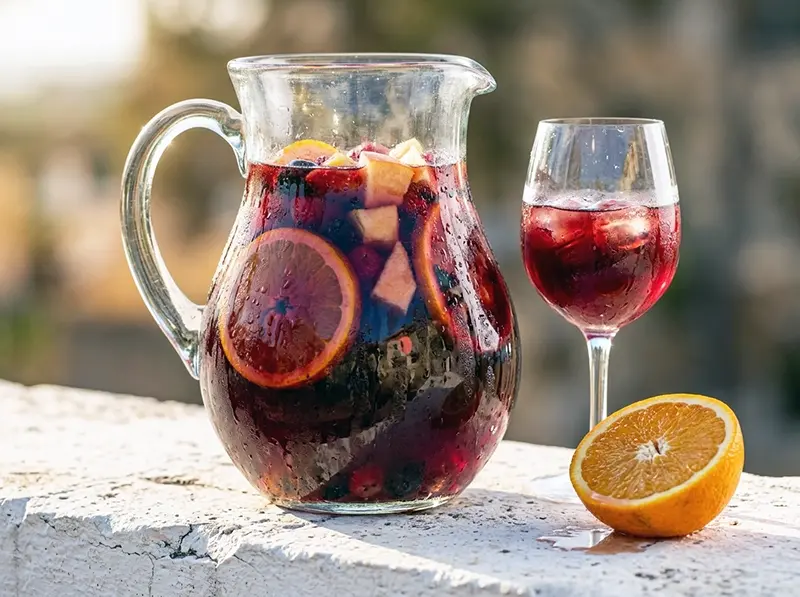
Испанская красная сангрия
Красное вино, фрукты, бренди и восемь часов в холодильнике. Пропорции здесь важны меньше, чем время настаивания — сангрия через два часа это просто вино с фруктами; сангрия через ночь это уже напиток, за которым хочется потянуться ещё раз. Гарнача или Темпранильо, палочка корицы, апельсин с яблоком, немного бренди. Ничего лишнего.
Ингредиенты
- 750 млсухое красное вино, Гарнача или Темпранильо
- 60 млбренди
- 120 млсвежевыжатый апельсиновый сок
- 1 апельсин: половину выжать, половину нарезать
- 1 яблоко Гренни Смит, очищенное от сердцевины, нарезать кусочками 2 см
- 1 лимон, тонко нарезать
- 1 палочка корица
- 2 ст.л.коричневый сахар или кленовый сироп
- 1 горстьлёд
- 120 млгазированная вода или содовая, по желанию в каждый стакан
Приготовление
- Выберите вино вдумчиво. Вино — главная переменная в сангрии. Нужно что-то фруктовое с мягкими танинами: Гарнача идеальна — ягодный, яркий вкус, который не горчит в холоде. Темпранильо тоже хорошо — вишня, смородина, лёгкая дубовость. Каберне-Совиньон не подходит: его высокие танины при охлаждении дают металлический привкус, который ничем не исправить. Дорогое вино смысла нет — нюансы потонут в бренди и фруктах, но откровенно плохое вино даст плохую сангрию. Ищите что-то за 1000–1500 рублей, которое приятно пить само по себе.
- Подготовьте фрукты. Разрежьте апельсин пополам: из одной половины выжмите сок прямо в кувшин (около 120 мл), вторую нарежьте тонкими кружочками. Яблоко очистите от сердцевины и нарежьте кусочками по 2 см — достаточно крупно, чтобы не раскисли за ночь, достаточно мелко, чтобы потом съесть ложкой. Лимон нарежьте тонко. Важный момент: лимонная кожура начинает давать горечь примерно через 6 часов настаивания. Если планируете держать сангрию ночь — добавьте лимон за 2-3 часа до подачи, а не в самом начале.
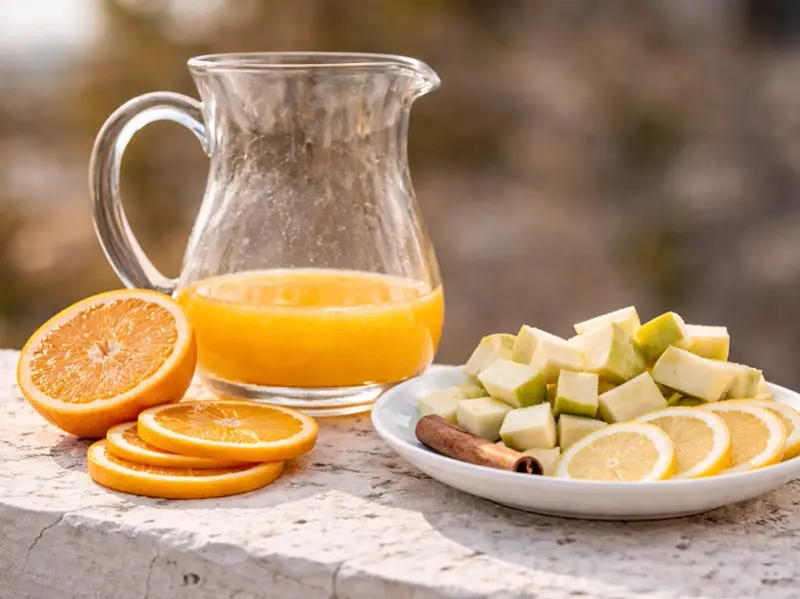
- Смешайте и подсластите. Перелейте вино в большой кувшин. Добавьте бренди, апельсиновый сок, кружочки апельсина, кусочки яблока, дольки лимона и палочку корицы. Перемешайте. Добавьте сахар или сироп — начните с одной столовой ложки, размешайте до растворения (около 20 секунд) и попробуйте. Нужна ли вам сладость, зависит от вина и фруктов. Иногда не нужно вообще ничего.
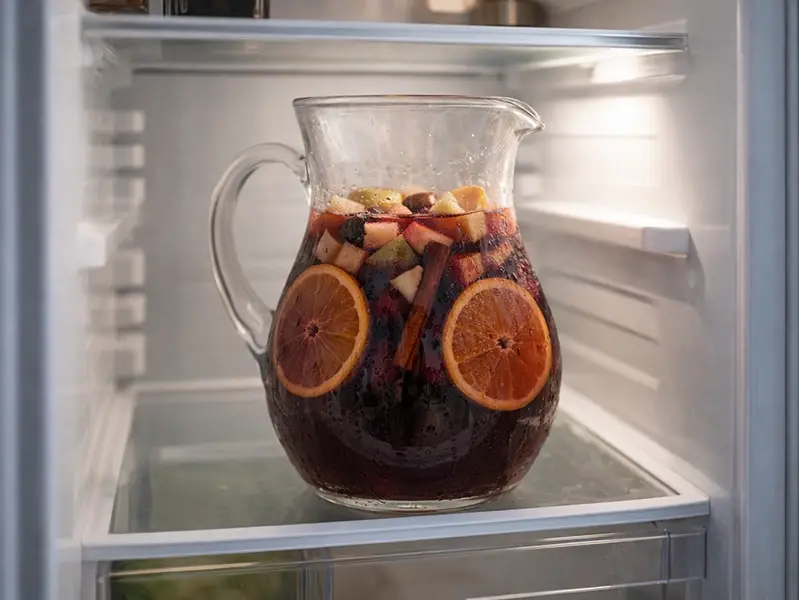
- Поставьте в холодильник. Закройте кувшин и уберите в холодильник минимум на 6 часов, лучше на ночь. Это не необязательная пауза — это то, как сангрия на самом деле работает. За шесть часов фрукты отдают сок в вино, вино впитывается в фрукты, и всё складывается во что-то цельное. Восемь часов лучше. Не пропускайте этот шаг и не подавайте сразу.
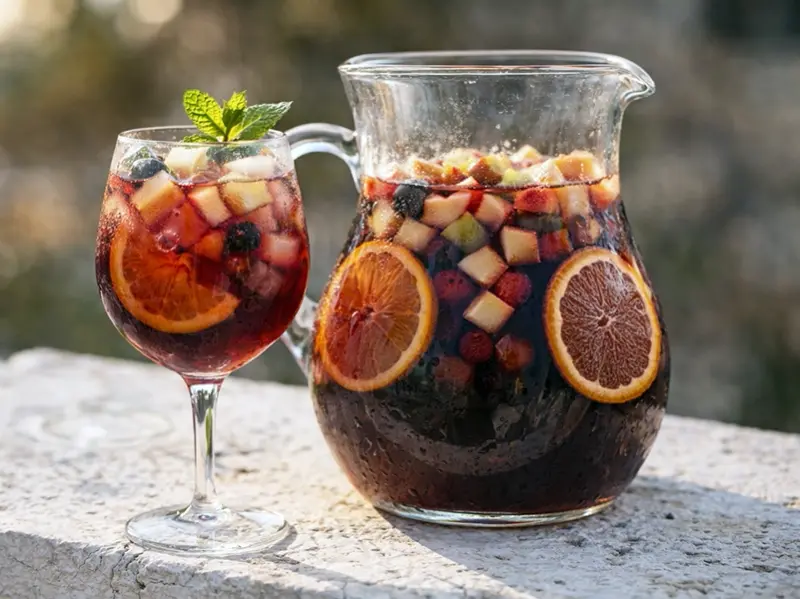
- Подайте. Наполните стаканы льдом. Хорошо перемешайте кувшин — сахар и фруктовый сок оседают на дно. Разлейте сангрию по стаканам и при желании добавьте газированную воду. Выловите несколько кусочков фруктов в каждый стакан. Пропитанные фрукты часто оказываются лучшей частью всего напитка.
Вопросы
Оба подходят, но Гарнача — лучший старт: яркий ягодный вкус и почти нет танинов, а значит нет горечи в холодном напитке. Темпранильо даёт вишню и смородину с лёгкой дубовостью. Каберне-Совиньон не берите — высокие танины при охлаждении дают металлический привкус, который никакие фрукты не перекроют. Дорогое вино здесь не нужно: после бренди, апельсинового сока и суток настаивания нюансы дорогой бутылки исчезнут, но откровенно плохое вино всё равно сделает плохую сангрию. Ищите что-то за 1000-1500 рублей, которое приятно пить само по себе.
Можно, но разница огромная. Свежесделанная — вино рядом с фруктами, они ещё не объединились. После 6-8 часов фрукты отдали сок в вино и впитали вино в себя — всё становится единым. Восемь часов хорошо, ночь лучше. После 24 часов фрукты начинают распадаться. Лимон горчит раньше других — добавляйте его за 2-3 часа до подачи, а не в самом начале.
Апельсиновый ликёр (Cointreau, Grand Marnier, Triple Sec) — самая популярная замена, даёт цитрусовую яркость вместо коньячной глубины бренди. Ром делает сангрию слаще с тропическими нотами. Джин — более сухой и травяной вариант. Совсем без крепкого тоже можно: замените бренди дополнительным апельсиновым соком. Сангрия будет легче и проще, но всё равно вкусная.
Самая надёжная основа — смесь 50/50 гранатового и несладкого яблочного сока: даёт похожую глубину цвета и приятную терпкость. Бренди пропустите или добавьте чайную ложку яблочного уксуса для кислинки. Всё остальное — фрукты, апельсиновый сок, палочка корицы, настаивание в холодильнике — остаётся тем же. Работает лучше, чем кажется. Только пробуйте перед подачей — фруктовые соки очень отличаются по сладости.
С фруктами — 3-5 дней в накрытом кувшине. Главная проблема: через 2-3 дня фрукты размягчаются и начинают горчить, лимон особенно. Лучший способ — вынуть фрукты через 24 часа, вино продолжит настаиваться без потерь. Газированную воду добавляйте только в стакан при подаче, никогда в кувшин — за несколько минут она становится плоской. Замораживать не стоит — вино теряет структуру при разморозке.
Оцени
Рецепты на почту
Одно письмо в неделю: рецепт под ваш вкус и всё новое на сайте. Отключить рассылку можно в один клик.
В подарок — книга рецептов Сергея (epub).
Нажимая кнопку, вы соглашаетесь с политикой конфиденциальности.
Расскажите, что любите готовить (30 секунд) →Смотри дальше
Ещё блюда из архива — подобраны по пересечению с тем, что ты сейчас готовишь.
Обсудить рецепт
Комментарии (1)
Pre-warming your mugs makes a surprising difference for this spanish red sangria. Pour boiling water into them while you prepare the drink, then empty just before serving. It stays hot nearly twice as long.