
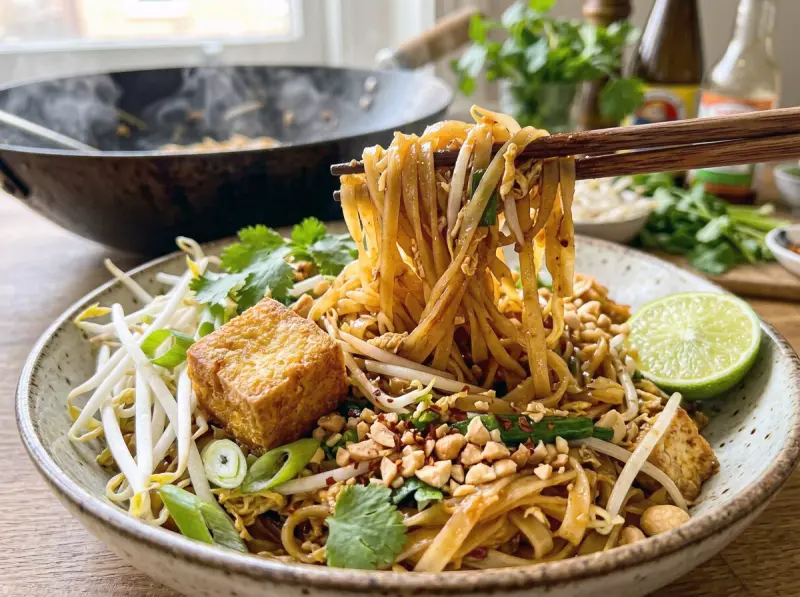
Тофу пад тай
Плоская рисовая лапша обжаренная с отжатым тофу, проростками и зелёным луком в соусе из тамаринда, соевого соуса и пальмового сахара, с дроблёным арахисом и лаймом. Вегетарианская адаптация классического тайского уличного блюда. Тамаринд — не заменить. Вок должен быть по-настоящему горячим. Тофу должен быть сухим перед попаданием в сковороду. Сделайте эти три вещи правильно — остальное следует само.
Ингредиенты
- 200 гплоская рисовая лапша
- 300 гтвёрдый тофу, отжатый насухо 15+ мин
- 3 ст.л.тамаринд-паста
- 3 ст.л.соевый соус
- 1.5 ст.л.пальмовый или светлый коричневый сахар
- 2 ст.л.нейтральное масло с высокой точкой дымления
- 3 шт.зубчики чеснока
- 2 шт.шалота, тонко нарезанных
- 2 шт.яйца
- 100 гпроростков маша
- 3 шт.зелёный лук, нарезанных по 3 см
- 40 гжареный арахис, грубо раздроблённого
- 1 шт.лайм, нарезанный дольками
- 1 ч.л.сухие хлопья чили
Приготовление
- Подготовьте всё до начала жарки. Пад тай готовится быстро — нет времени резать что-то когда вок раскалён. Замочите лапшу в тёплой (не кипящей) воде на 20–30 минут до гибкости. Слейте и нарежьте ножницами пополам. Отожмите тофу: заверните в бумажные полотенца, положите тяжёлый предмет сверху минимум на 15 минут. Приготовьте соус: смешайте тамаринд-пасту, соевый соус и пальмовый сахар в маленькой миске до растворения сахара. Попробуйте: должен быть кислым, солёным, слегка сладким.
- Поджарьте тофу. Разогрейте 1 ст.л. масла в воке на средне-сильном огне до первых клубов дыма. Добавьте кубики тофу в один слой без переполнения. Не перемешивайте первые 2–3 минуты — дайте образоваться золотистой корочке. Переверните и повторите со всех сторон. Уберите на тарелку. Тофу должен быть сухим снаружи и слегка жёвким внутри.
- Создайте основу жарки. Добавьте оставшееся масло в тот же вок на сильном огне. Добавьте шалот и чеснок, обжаривайте 60 секунд до аромата. Добавьте слитую лапшу и полейте соусом. Непрерывно перемешивайте щипцами 1–2 минуты — лапша начнёт впитывать соус и приобретать янтарный цвет. Если прилипает — добавьте ложку воды. Отодвиньте всё в сторону вока.
- Взбейте яйца и соедините. Разбейте яйца в освободившееся пространство. Дайте постоять 10 секунд, затем аккуратно взбейте до почти готовности. Вмешайте в лапшу — яйцо должно обволакивать лапшу мелкими кусочками, а не создавать целый омлет.
- Добавьте оставшиеся ингредиенты и подавайте. Добавьте хрустящий тофу, проростки, зелёный лук и хлопья чили. Перемешивайте 30–45 секунд — только чтобы прогреть. Проростки должны остаться слегка хрустящими. Сразу разложите по двум тарелкам. Сверху — раздроблённый арахис, с боку — дольки лайма. Пад тай не ждёт — ешьте прямо из вока.
Вопросы
Замачивайте плоскую рисовую лапшу для пад тай в тёплой (не кипящей) воде 20–30 минут до гибкости — она должна гнуться без ломки но оставаться слегка жёсткой. Кипяток перезамачивает до мягкости и лапша разваливается в воке. Слишком короткое замачивание — она жёсткая и не впитывает соус. После замачивания нарежьте ножницами пополам — так легче перемешивать.
Тамаринд — определяющий вкус пад тай. Он даёт кислую фруктовую глубину которую ничто в точности не воспроизводит. Ближайшая замена: 1 ст.л. тамаринда = 2 ч.л. лимонного сока + 1 ч.л. коричневого сахара + 1 ч.л. Вустерского соуса. Или 1 ст.л. рисового уксуса + щепотка сахара. Лучший совет: найдите тамаринд-пасту в азиатском магазине. Если только индийский концентрат — берите вдвое меньше.
Три причины. Первая — неправильный тофу: только extra firm. Второй — недостаточно отжат: заверните в бумажные полотенца и прижмите тяжёлым минимум 15 минут. Третья — вок недостаточно горяч или переполнен: кубики в один слой, не двигайте первые 2–3 минуты. Для лучшей корочки: обваляйте отжатый тофу в 1 ч.л. кукурузного крахмала перед жаркой.
Самая большая тяжёлая сковорода которая есть — чугунная или из углеродистой стали — работает приемлемо. Главное правило: не переполнять, максимум две порции за раз. Сковорода должна дымить до добавления масла. Тонкая антипригарная — худший вариант: она не удерживает тепло и деформируется на сильном огне.
Традиционный пад тай содержит яйца и рыбный соус. Для полностью веганской версии: пропустите яйца или замените раскрошенным мягким тофу с куркумой и пищевыми дрожжами. Рыбный соус заменить веганским или соевым соусом + немного морских водорослей (нори, комбу) для морского умами. Остальные ингредиенты — лапша, тамаринд, тофу, проростки, арахис — изначально веганские.
Оцени
Рецепты на почту
Одно письмо в неделю: рецепт под ваш вкус и всё новое на сайте. Отключить рассылку можно в один клик.
В подарок — книга рецептов Сергея (epub).
Нажимая кнопку, вы соглашаетесь с политикой конфиденциальности.
Расскажите, что любите готовить (30 секунд) →Смотри дальше
Ещё блюда из архива — подобраны по пересечению с тем, что ты сейчас готовишь.

Обсудить рецепт
Комментарии (1)
After cooking pad thai across Bangkok for a week, the biggest lesson I brought home was about heat. Restaurant wok burners hit temperatures that home stoves simply cannot match, so I compensate by cooking in two batches — tofu first, then noodles separately. If you pile everything in at once on a home burner, the temperature drops and the noodles absorb sauce instead of getting that slightly charred wok flavour. Press the tofu for at least 30 minutes, ideally an hour. Patience with pressing equals crispiness in the pan.