Skip to content
GetCookMatch
Acai Bowl with frozen acai, banana and frozen blueberries — Brazil recipeBrazilBrazil
📝Useful tips
S
Sergei Martynov

The number one way an acai bowl goes wrong at home is too much liquid. It happens because the blender stalls on frozen fruit and the instinct is to add more almond milk to help it along. Each tablespoon you add makes the bowl harder to save — more liquid means a warmer, thinner result. If the blender stalls, stop it, use a spatula to break up the frozen mass manually, and try again. A high-powered blender with a tamper (Vitamix, Blendtec) handles this much better than a standard blender. If you have a standard blender, cut the banana into smaller coins and let it sit at room temperature for 2 to 3 minutes before adding it.

💡

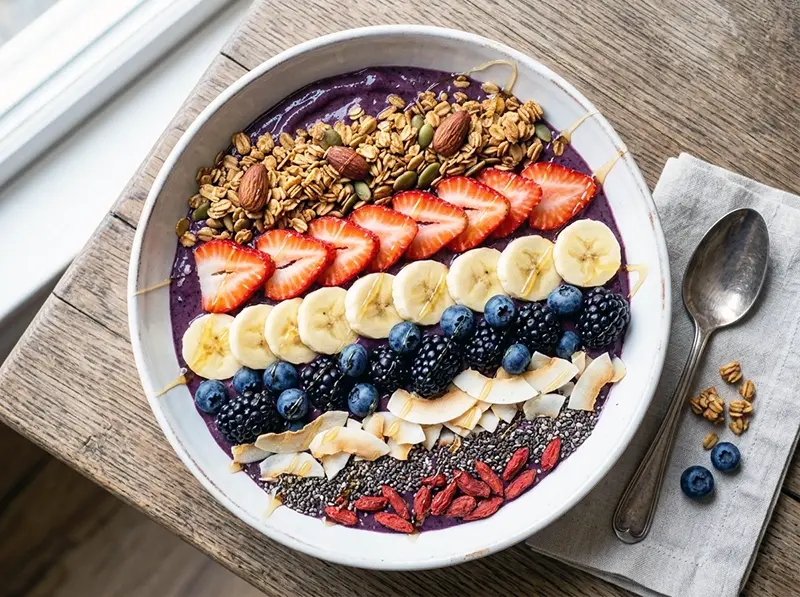
The toppings are the whole meal, not an afterthought. A perfect acai base with boring toppings is a forgettable bowl. Aim for at least four textural elements: something cold and creamy (the base), something crunchy (granola, toasted coconut, cacao nibs), something fresh and juicy (sliced strawberries, banana, mango), and something rich (a drizzle of almond butter or honey). The contrast between cold base and crunchy granola is what makes an acai bowl worth eating.

Breakfast and Brunch

Acai Bowl

By Sergei Martynov

Frozen acai puree blended with frozen banana and berries into a thick, scoopable base — the consistency of soft-serve ice cream, not a smoothie — then covered with granola, fresh fruit, and whatever else you want on it. The whole point is the toppings-to-base ratio and the contrast between the cold, creamy base and the crunch on top. The technique is almost entirely about liquid control: too much liquid and you have purple soup; the right amount and you have something worth the fifteen dollars they charge for it at a juice bar.

⏱️
10
Minutes
👥
1
Servings
🔥
420
kcal
Rate this recipe

Key Ingredients

What you'll need

Ingredients

How to make it

Instructions

  1. 1

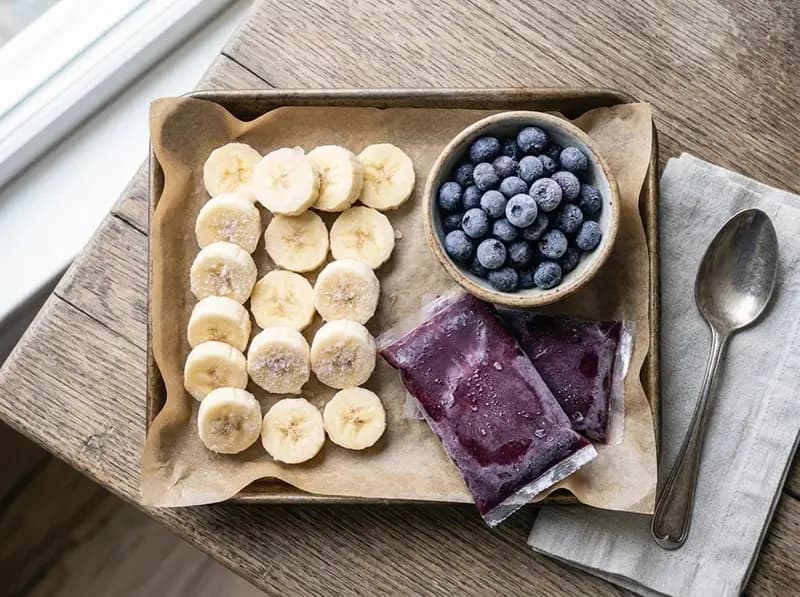
    Freeze everything in advance. The single biggest predictor of a thick acai bowl is the temperature of your ingredients. The banana must be frozen — slice a ripe banana into coins, spread on parchment, freeze for at least 2 hours, then store in a bag. Frozen banana is what gives the base its creamy, almost ice cream texture. A fresh banana produces a watery result. The acai packets should come straight from the freezer. If they've thawed even slightly, refreeze before using. Prepare and chop all your toppings before you start blending — the base starts melting immediately and you need to be ready.

  2. 2

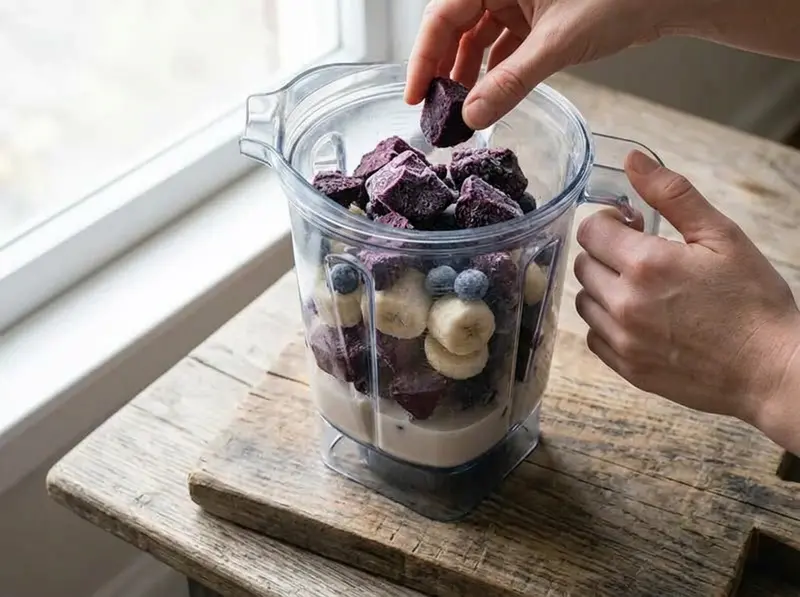
    Break up the acai and build the blender correctly. Snap or break each frozen acai packet into 3 to 4 chunks and drop them into the blender. Layer the frozen banana coins and frozen berries on top. Add the almond butter if using. Pour in the 60 ml of liquid last. This order matters: liquid near the blades helps the motor start, while the frozen solids sit on top and get pulled down as the blades build speed. Do not add more liquid yet — 60 ml is intentionally the minimum.

  3. 3

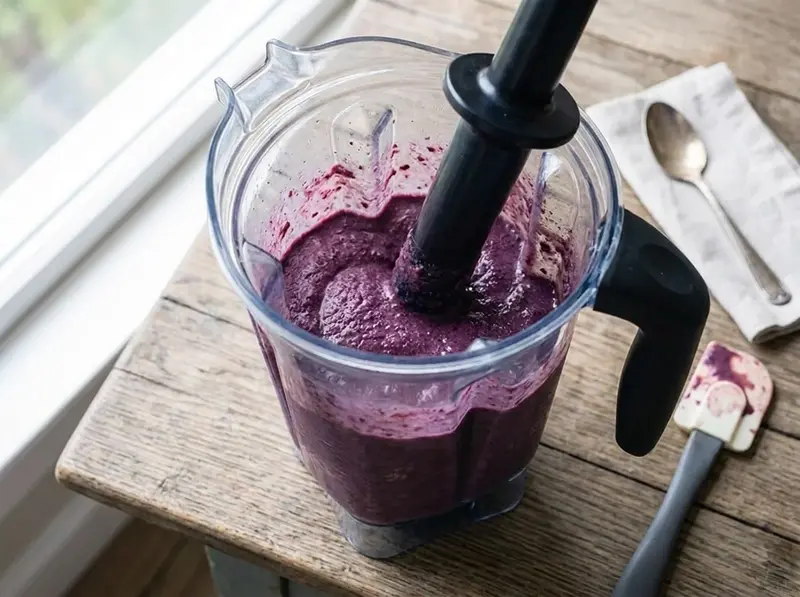
    Blend thick — use a tamper or stop-and-scrape method. Turn the blender to its lowest setting. If you have a tamper (the long pusher that comes with high-powered blenders), use it: push the frozen ingredients firmly down toward the blades while the machine runs, working from the corners in. If you don't have a tamper, blend for 10 seconds, stop, scrape down the sides with a spatula, and repeat. The goal is to get the frozen mass moving without flooding it with liquid. Add more liquid one tablespoon at a time only if the blender is genuinely stuck. Increase speed gradually. The correct final consistency: drag a spoon through the centre — it should hold the groove, like thick Greek yogurt or soft-serve ice cream.

  4. 4

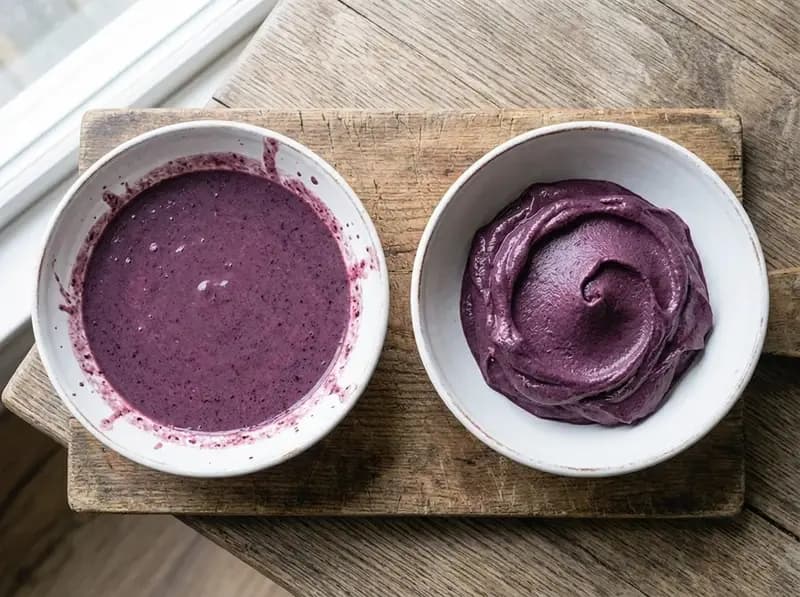
    Test the consistency before pouring. Stop the blender and tilt the container slightly — the base should slide slowly and hold a mound, not pour freely. If it pours freely, it's too thin (add more frozen fruit or a handful of ice). If it's still icy and chunky, blend another 10 seconds. The base will start to melt from the moment it hits room-temperature air, so speed matters here. Pour directly into a chilled bowl — put your serving bowl in the freezer for 5 minutes before you start blending to buy yourself extra time.

  5. 5

    Add toppings immediately and eat fast. Pour or scoop the base into the bowl. Add toppings in rows or sections: granola along one side for crunch, fresh banana slices, berries, coconut flakes, a drizzle of honey or nut butter. The toppings go on immediately — the base is already warming. An acai bowl has about 10 to 15 minutes before the texture degrades. Eat it now, not after you've photographed it from six angles.

Join the conversation

Comments

Leave a comment

Loading comments…

Frequently Asked Questions

What is acai and where do you find it?

Acai (pronounced ah-sigh-ee) is a small dark purple berry from the Amazon rainforest in Brazil. The fresh berry is perishable and rarely available outside Brazil, so it's sold internationally as frozen puree packets. Look for them in the freezer section of health food stores, Whole Foods, or larger supermarkets. The most widely available brand in English-speaking countries is Sambazon. Choose unsweetened puree packets — the sweetened versions have added sugar that throws off the balance of the bowl. Acai powder also exists but produces a less creamy, more artificial-tasting result.

Why is my acai bowl runny instead of thick?

Too much liquid. The bowl should be the consistency of soft-serve ice cream, not a smoothie — if it pours freely, it failed at the liquid control stage. Start with only 60 ml of liquid (less than a quarter cup), and add more only one tablespoon at a time if the blender is genuinely stuck. Thawing the acai before blending also causes this — use it straight from the freezer and broken into chunks. Fresh banana instead of frozen banana makes it thinner and warmer. If the base turns runny, freeze it for 20 minutes and try again.

Can you make an acai bowl without a high-powered blender?

Yes, but it requires more patience. With a standard blender: cut the banana into very small coins (1 cm or less), let the frozen ingredients sit at room temperature for 2 to 3 minutes before blending to take the hardest freeze off, and use the stop-and-scrape method — blend 10 seconds, stop, push everything down with a spatula, repeat. Avoid adding much liquid. The result may be slightly less smooth but will still have the right thick texture. A food processor also works well for thick acai bases.

Can you substitute acai powder for frozen acai packets?

Yes, though the result is different. Use 1 to 2 tablespoons of acai powder in place of the frozen packets. Because the powder doesn't add frozen volume, you'll need more frozen banana and berries to achieve the thick consistency. The colour is usually lighter and the flavour is slightly less rich than frozen puree. Acai powder is a practical option if you can't find frozen packets — mix it in with the other frozen fruit and blend as normal.

How long does an acai bowl keep?

It doesn't. An assembled acai bowl is good for 10 to 15 minutes at room temperature before the base melts and the granola goes soggy. If you need to prep ahead, freeze the blended base (without toppings) in an airtight container for up to 2 days. Let it thaw for 5 to 10 minutes in the fridge, stir well, then add toppings. The texture won't be exactly the same as fresh but it's a practical weekday option. Pre-portioned freezer bags of acai chunks and frozen fruit speed up the morning routine significantly.