
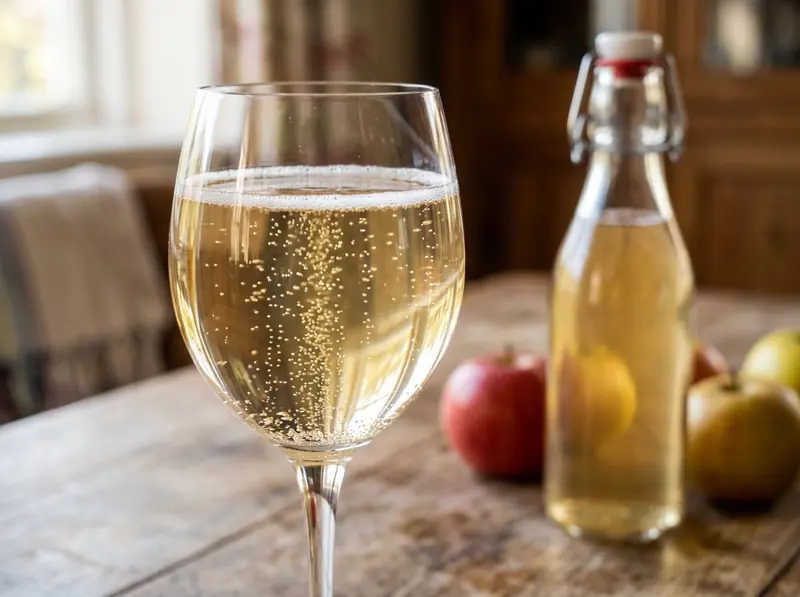
自制苹果酒
这份自制苹果酒是含酒精的那一种,在美国叫作“硬苹果酒”:用苹果汁加葡萄酒酵母或苹果酒酵母发酵1至2周,再澄清、装瓶,成品口感干爽,带轻微气泡。它不是美国那种当作果汁出售、没有发酵的“苹果西打”。光靠果汁大约能得到5至6%的酒精,配方里每升50克的糖会把它提高到约8至9%,所以要把它当葡萄酒看待,而不是软饮料。它比超市里的甜苹果酒更干、更酸,风味取决于你用的苹果。用买来的果汁,真正动手的时间加起来大约一小时,自己榨苹果至少还要再加一小时;其余都是等待和保持清洁。
食材
- 4.5 升苹果汁,浑浊未过滤、不含防腐剂(现榨或购买)
- 1 包苹果酒酵母或葡萄酒酵母
- 1 茶匙酵母营养剂(或按包装上的用量)
- 1 片坎普登片(用于未经巴氏杀菌的果汁)
- 225 克糖(每升果汁50克;可选,用来提高酒精度)
- 36 克装瓶用的糖(每个500毫升的瓶子4克,1平茶匙)
做法
- 准备果汁和发酵容器。动手之前先把器具备齐:除了发酵容器,还需要水封、比重计、虹吸管、第二个4.5至5升的容器、为碳酸饮料设计的瓶子,以及自酿用品店卖的食品级消毒剂(每样东西在用到它的那一步里都有说明)。4.5升果汁大约需要7至9公斤苹果,还要有水果压榨机或电动榨汁机;两样都没有,就直接买果汁。苹果洗净,切掉腐烂的部分,去核,但保留果皮,因为果皮里有单宁。用压榨机的话,要先把苹果打碎或擦成粗果泥,因为整块苹果几乎压不出汁;用榨汁机则不需要这一步。然后分批压榨或榨汁,用纱布过滤。买来的果汁要选浑浊、未过滤的;配料表里有抗坏血酸没关系,但山梨酸钾或苯甲酸钠会抑制酵母。把果汁倒入干净并消过毒、容量至少6升的发酵容器,给头几天的泡沫留出空间。如果果汁是现榨的或未经巴氏杀菌,把1片坎普登片碾碎(通常的用量是每4.5升即一英制加仑用1片),搅拌到溶解,盖好,静置24小时。坎普登片会抑制随苹果皮带进来的野生酵母和细菌,否则它们会把苹果酒弄坏;酵母如果加得太早,也会一起受到抑制。经过巴氏杀菌的果汁不需要坎普登片,也不用等待。
- 加糖并加入酵母。24小时后,把225克糖(每升50克,共4.5升)搅拌溶解在果汁里;它的作用只是提高成品的酒精度。不加糖的话,果汁靠自身的糖发酵,酒精度就是通常的5至6%。检查果汁的温度:18至22°C最理想。把干酵母撒在果汁表面,并按包装上的用量加入酵母营养剂,因为苹果汁里酵母所需的氮很少。盖上发酵容器,装上水封,这是一个装了半管水的小塑料阀,插在盖子或塞子上:它让二氧化碳排出去,又不让空气和果蝇进来。在室温下,12至24小时内水封应该开始冒泡。
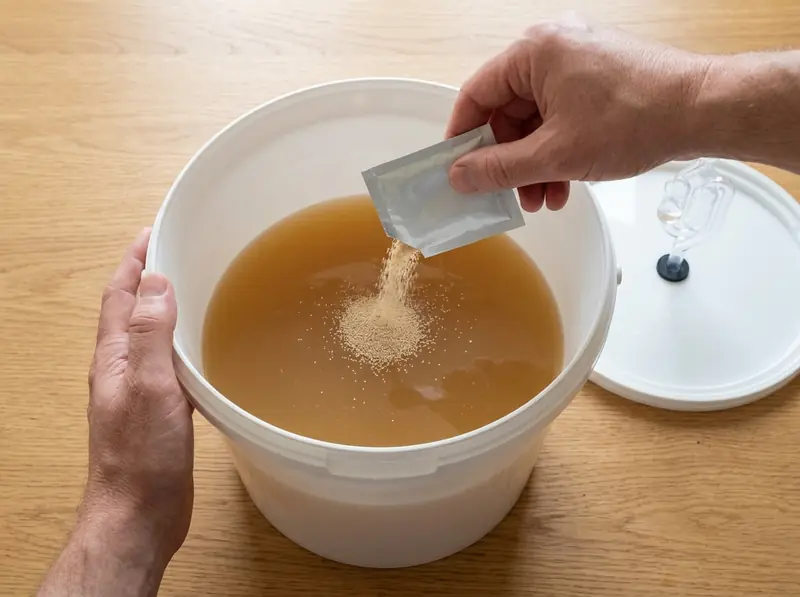
- 发酵1至2周。把发酵容器放在室温(18至22°C)下,避开直射阳光。头几天剧烈的冒泡会慢下来,变成偶尔冒一个泡。水封安静下来只说明发酵变慢了,并不代表已经结束。用比重计检查(这是一种便宜的玻璃浮计,自酿用品店有售)。读数的方法:用消过毒的长柄勺舀出苹果酒,装满一只又高又窄的杯子或量筒,放入比重计,让它自由浮起,然后平视刻度,以液面在浮计杆周围弯曲处的最低点为准。取出的酒样不要倒回去,喝掉或倒掉。读数连续3天不变,通常在1.000或略低,并且苹果酒开始变清,发酵才算结束。尝一尝:应该干爽、微酸,气味干净,没有一点醋味。
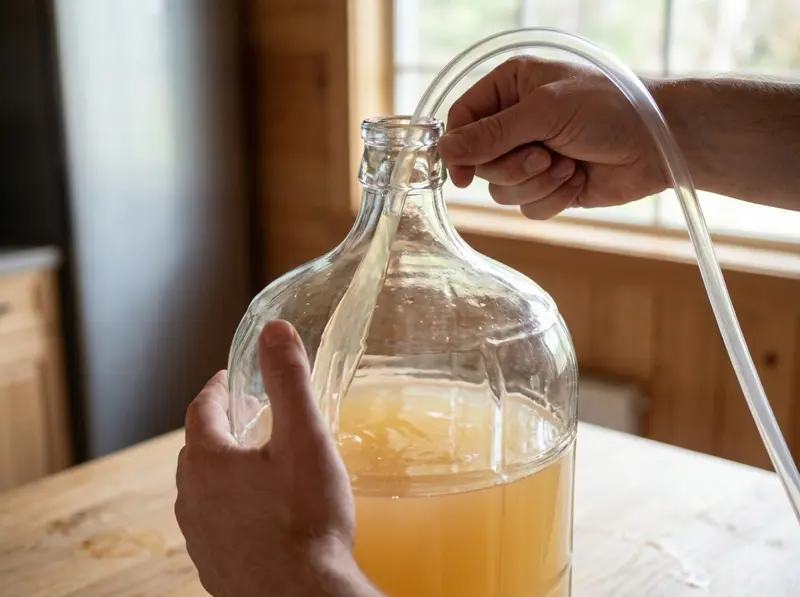
- 换桶并澄清。用虹吸管把苹果酒抽到第二个干净并消过毒的容器里,把沉淀留在原处:虹吸管就是一根食品级塑料软管,只要装满的发酵容器放得比空容器高,液体就会靠重力自己流过去。这一步叫作换桶。让管口保持在沉淀上方,让苹果酒顺着新容器的内壁流下去,不要溅起来。4.5至5升的玻璃瓶大小正合适:装得越满,酒面上方留下的空气越少。重新装上水封,让苹果酒再静置3至5天继续澄清。这时已经可以当作无气苹果酒来喝:干爽、带酸,有朴素的苹果味。
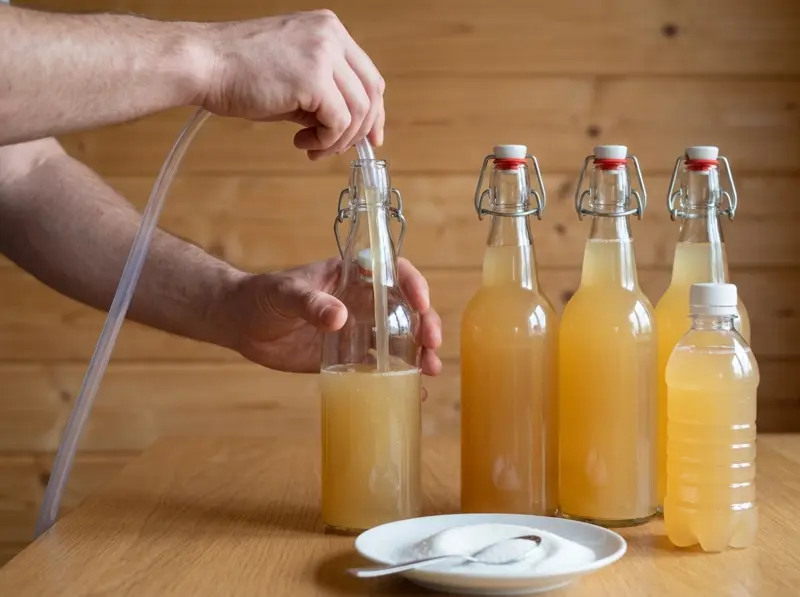
- 装瓶做起泡苹果酒,但必须等比重计读数连续3天稳定之后:如果还有糖在发酵,再加上装瓶用的糖,瓶内的压力可能大到把瓶子撑爆。先把瓶子、瓶盖和虹吸管洗净并消毒。在每个500毫升的空瓶里放入正好4克糖(1平茶匙),然后用虹吸管灌入苹果酒,不要搅起沉淀,瓶盖下方留出2至3厘米的空间。留在酒里的酵母会在密封的瓶中吃掉这些糖,产生气泡。只用为碳酸饮料设计的瓶子:扣压盖或皇冠盖的啤酒瓶,或者塑料汽水瓶;绝不要用玻璃罐或葡萄酒瓶。另外灌一个塑料汽水瓶当测试瓶。把所有瓶子放在室温下,装在有盖的箱子或柜子里,以防万一有瓶子爆裂,每天捏一捏测试瓶:通常需要5至7天,房间凉的话更久,一旦它变硬、很难捏动,就把所有瓶子移进冰箱。开瓶前至少冷藏3天,第一瓶要在水槽上方打开。冷藏的苹果酒可以保存几个月,但久放并不会让它变得更好。
常见问题
混合品种效果最好:甜而中性的苹果做基底(金冠、嘎啦、富士),一种酸苹果提供酸度(布拉姆利、澳洲青苹),一种香气浓的苹果比如考克斯,最好再加一些提供单宁的野苹果或真正的酿酒苹果。常见的参考比例是30至60%中性基底、10至20%酸苹果、10至20%香型苹果和5至20%高单宁果实。只用一种鲜食苹果也能做,但味道通常比较平淡。用市售果汁时,混合2或3个品牌,效果会明显更好。
苹果酒酵母或葡萄酒酵母发酵得干净,能把苹果味留在最前面。面包酵母也能让果汁发酵,但往往留下酵母味和面包味,而且不容易沉降,所以酒会一直浑浊。第一次做,用一包干的葡萄酒酵母或苹果酒酵母。面包酵母更适合短时间的发酵,比如自制黑麦面包格瓦斯,一两天就能喝。
等比重计读数连续3天不变、酒液也变清之后,在灌装和密封前,往每个500毫升的瓶子里放入正好4克糖(1平茶匙)。这相当于每升8克;不要超过每升10克。留在酒里的酵母吃掉这些糖,产生二氧化碳,气体溶在密封的瓶子里。使用为碳酸饮料设计的结实瓶子,并另灌一个塑料汽水瓶当测试瓶:当它很难捏动时,把所有瓶子移进冰箱。绝不要用普通玻璃罐或葡萄酒瓶,因为压力可能让它们炸裂。
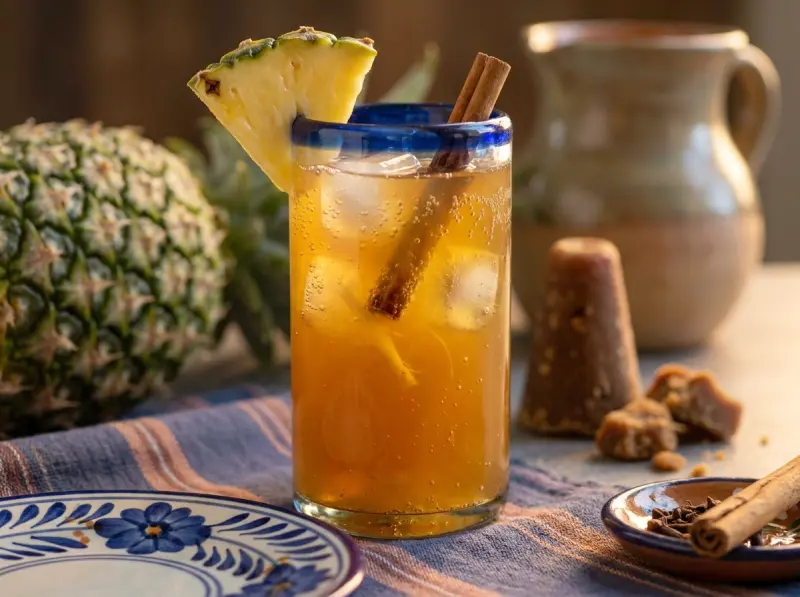
常见原因有:果汁含防腐剂(山梨酸钾或苯甲酸钠会抑制酵母),房间太冷(温度越低发酵越慢,甚至完全停止),酵母已经失活(取一点放进温水,加一小撮糖搅匀:10分钟内应该起泡),或者加坎普登片后太早加酵母(要等满24小时,让二氧化硫散掉)。在凉爽房间里慢慢冒泡的苹果酒往往没问题,所以先把它挪到18至22°C的地方,再判断是不是出了毛病。如果想看野生酵母怎么干活,可以试试特帕切,它靠菠萝皮上的酵母发酵,正是这里坎普登片要除掉的那种。
可以,而且效果很好。选浑浊、未过滤的果汁,并看清配料表:不能含山梨酸钾或苯甲酸钠。巴氏杀菌的果汁没问题,也不需要坎普登片。清澈的过滤果汁同样能发酵,但做出来的苹果酒更淡、更寡味。
为它打分
订阅食谱邮件
每周一封:一道按你口味挑选的菜,加上网站上新出的食谱。一键即可退订。
订阅即赠:Sergei 的食谱电子书。
订阅即表示你同意隐私政策。
告诉我们你爱做什么菜(30秒) →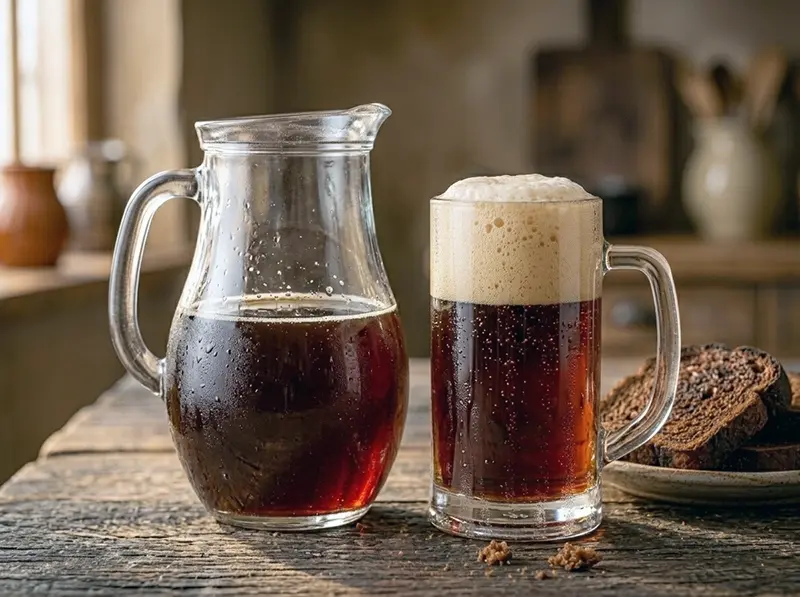
参与讨论
评论 (1)
I always chill the glasses for homemade apple cider — 15 minutes in the freezer transforms the drinking experience. The frost on the glass keeps everything at the perfect temperature through the last sip.