Skip to content
GetCookMatch
Béarnaise Sauce with egg yolks, butter and tarragon — France recipeFranceFrance
📝Useful tips
S
Sergei Martynov

Béarnaise is hollandaise's more elegant sibling. The difference is the tarragon reduction — that concentrated infusion of tarragon, shallot, and vinegar that gives béarnaise its signature anise-herbal flavor. Tarragon is an herb with a subtle anise-like taste, common in French cooking but less familiar elsewhere. If you cannot find fresh tarragon, dried tarragon works at one-third the amount, but the flavor will be less vibrant.

💡

The number one mistake with béarnaise is overheating the yolks. The water bath should barely simmer — if the water boils, the yolks scramble into lumps. If you see any lumps forming, immediately remove the bowl from the heat and whisk in a tablespoon of cold water. This stops the cooking and smooths the sauce back out.

Sauces and Dips

Béarnaise Sauce

By Sergei Martynov

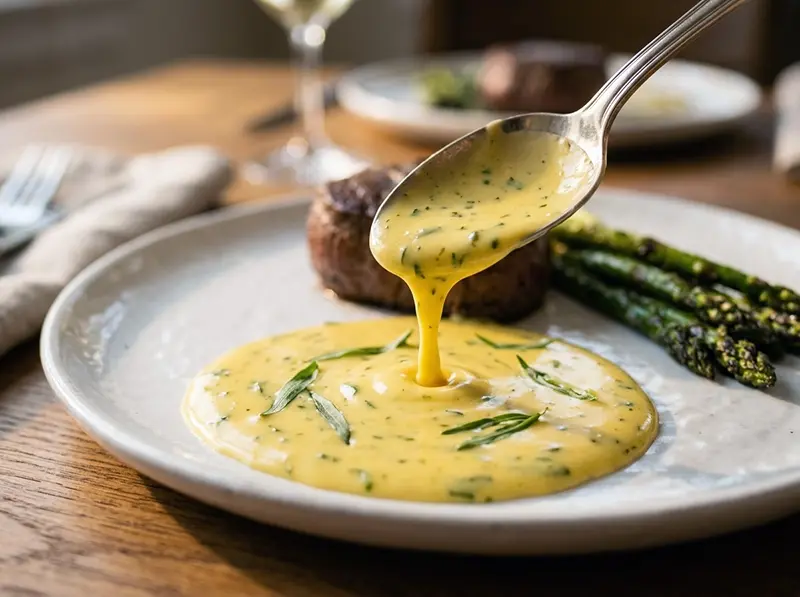
Béarnaise is hollandaise's sophisticated sibling — a rich, silky French butter sauce flavored with a tarragon-and-shallot reduction in white wine vinegar, then emulsified with egg yolks. The classic pairing with grilled steak, but equally stunning on roasted vegetables, fish, or eggs Benedict.

⏱️
20
Minutes
👥
4
Servings
🔥
200
kcal
Rate this recipe

Key Ingredients

What you'll need

Ingredients

How to make it

Instructions

  1. 1

    Finely dice the shallot. Roughly chop most of the fresh tarragon, reserving a teaspoon of finely chopped leaves for finishing. Crush the black peppercorns lightly with the side of a knife.

  2. 2

    Make the reduction: combine the diced shallot, chopped tarragon stems and leaves, crushed peppercorns, and white wine vinegar in a small saucepan. Bring to a simmer over medium heat and reduce until only about 1 tablespoon of liquid remains — this takes roughly 3–4 minutes. Strain through a fine sieve into a heatproof bowl, pressing the solids to extract all the flavor. Discard the solids.

  3. 3

    Melt the butter in a small saucepan over low heat until completely liquid. Do not let it brown. Remove from heat and let it cool for 2 minutes — it should be warm but not hot enough to scramble the yolks.

  4. 4

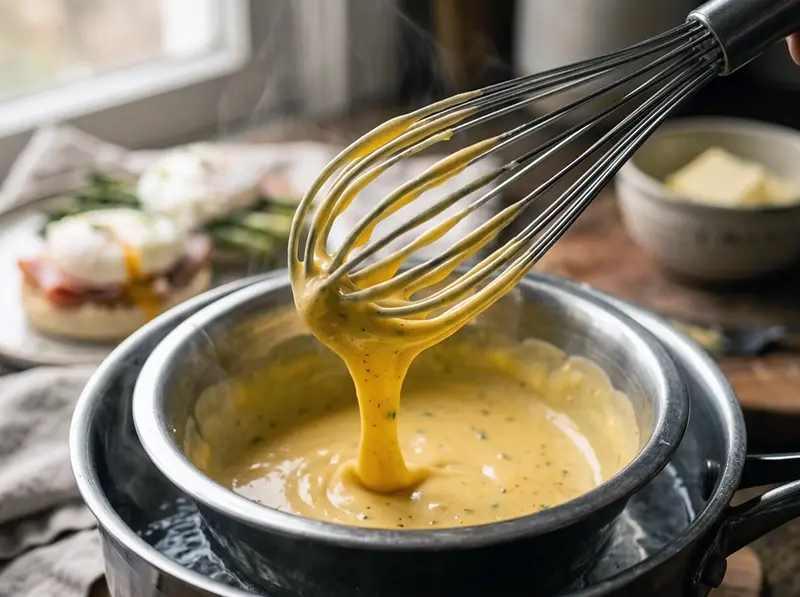
    Add the egg yolks to the strained reduction in the heatproof bowl. Set the bowl over a pot of barely simmering water — the bowl should not touch the water. Whisk the yolks constantly for 2–3 minutes until they thicken and turn pale, and the whisk leaves visible trails in the mixture.

  5. 5

    Remove the bowl from the heat. While whisking continuously, add the melted butter in a very slow, thin stream — just a few drops at first, then a thin trickle as the emulsion builds. If the sauce gets too thick, add a few drops of warm water. Continue until all the butter is incorporated and the sauce is thick, creamy, and glossy.

  6. 6

    Stir in the reserved finely chopped fresh tarragon. Taste and adjust with a pinch of salt and a squeeze of lemon juice if needed. Serve immediately — béarnaise does not reheat well. If it must wait, keep the bowl over warm (not hot) water for up to 20 minutes.

Join the conversation

Comments

Leave a comment

Loading comments…

Frequently Asked Questions

Why did my béarnaise sauce curdle and turn lumpy instead of smooth and creamy?

Béarnaise curdles when the egg yolks get too hot too fast. The water bath must be barely simmering — not boiling. If the water boils, the yolks cook into scrambled bits instead of forming a smooth emulsion. Other causes: adding butter too fast before the emulsion is established, or using butter that is too hot. If you catch it early, remove from heat immediately and whisk in 1 tablespoon of ice-cold water — this drops the temperature and can rescue a breaking sauce. If it is fully curdled, start with a fresh yolk in a clean bowl and slowly whisk the broken sauce into it.

What is tarragon and what can I use instead of tarragon in béarnaise sauce?

Tarragon is a French herb with a distinctive anise-like (licorice-like) flavor that defines béarnaise sauce. Fresh tarragon has soft, narrow green leaves and a gentle sweetness. If you cannot find it fresh, dried tarragon works at one-third the quantity — use about 2 teaspoons dried instead of 2 tablespoons fresh. In a pinch, chervil (another French herb with mild anise notes) is the closest substitute. Basil combined with a tiny pinch of fennel seeds can approximate the flavor, but nothing truly replaces fresh tarragon in this sauce.

Can béarnaise sauce be made ahead and reheated — how do I keep it warm for serving?

Béarnaise is best served immediately because the emulsion is fragile and breaks when reheated. However, you can hold it warm for up to 20 minutes by keeping the bowl over a pot of warm (not simmering) water, stirring occasionally. For longer holding, pour the sauce into a thermos that has been pre-warmed with hot water — it stays at the right temperature for about 1 hour. Do not microwave or reheat béarnaise on the stove — the direct heat will scramble the yolks and break the emulsion instantly.

What is the difference between béarnaise sauce and hollandaise sauce?

Both sauces use the same base technique — egg yolks emulsified with melted butter over a water bath. The difference is flavor. Hollandaise is seasoned simply with lemon juice and a pinch of cayenne. Béarnaise starts with a tarragon-shallot-vinegar reduction that gives it an herbal, anise-like character and more complexity. Hollandaise is the classic for eggs Benedict and asparagus. Béarnaise is the classic for steak. Think of béarnaise as hollandaise that went to finishing school — same foundation, more personality.

What dishes pair best with béarnaise sauce besides steak?

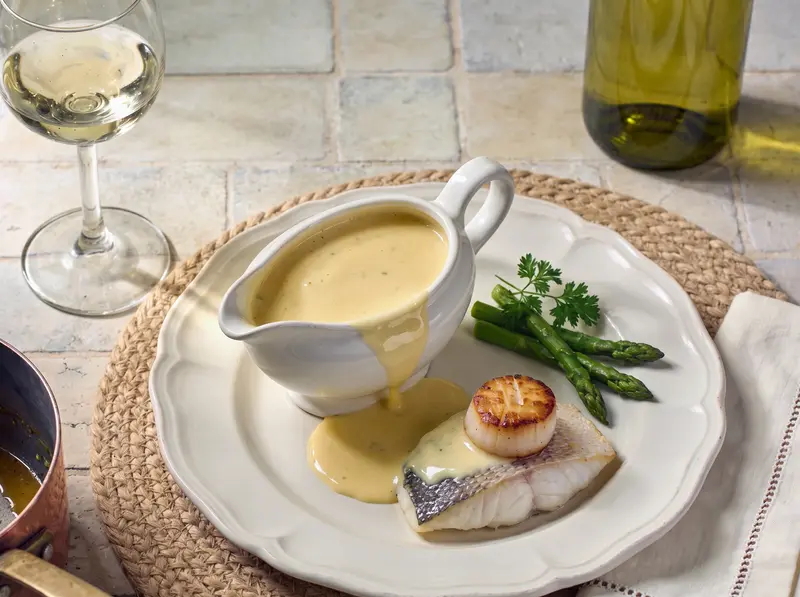
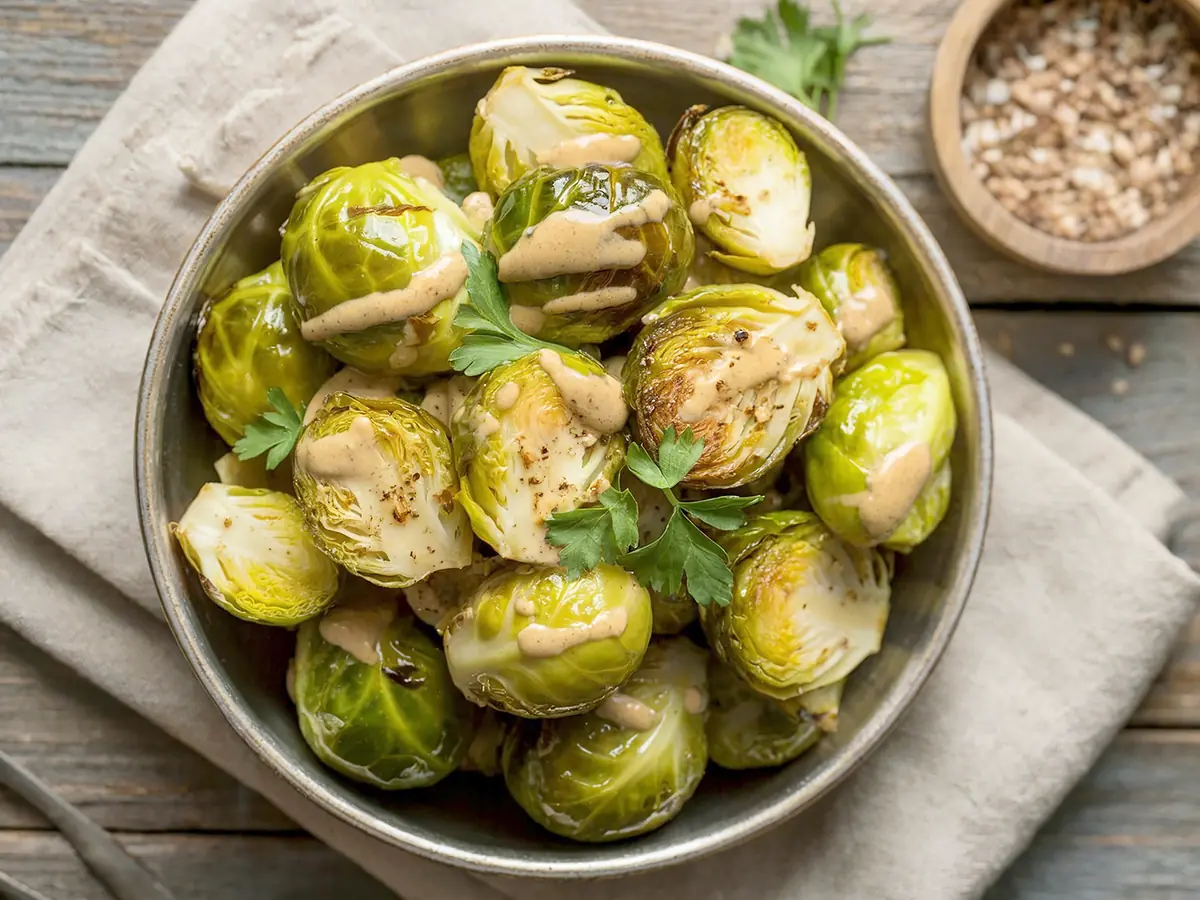
Béarnaise is traditionally served with grilled steak (especially filet mignon or ribeye), but it is incredibly versatile. It pairs beautifully with grilled or pan-seared salmon, roasted asparagus, steamed artichokes, poached eggs, roasted lamb chops, and even thick-cut french fries. The tarragon flavor complements any rich protein or earthy vegetable. For a lighter meal, drizzle béarnaise over a warm salad of roasted beets and goat cheese — the anise notes in tarragon match beets perfectly.