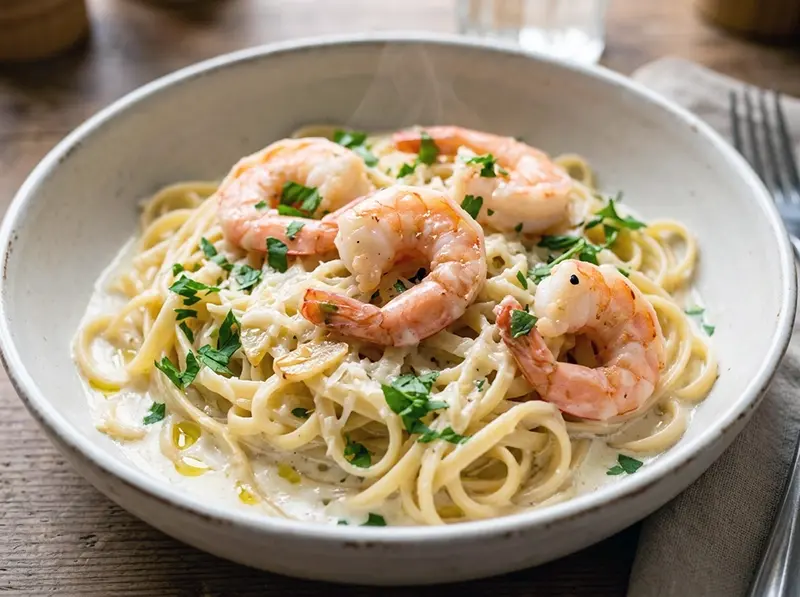
I make this often because it is faster than most seafood dishes. The one thing I have learned over time: do not hold back on the garlic. Recipes usually call for 3 to 4 cloves. I use 6 to 8. This is the dish where too much garlic is better than too little.
Add a teaspoon of lemon juice right at the end, in the sauce. It does not give a citrus taste but it removes the heaviness of the cream. That is the difference between rich and too rich.
Creamy Garlic Shrimp Pasta
By Sergei Martynov
Shrimp seared fast in butter, then a garlic cream sauce built in the same pan — white wine, heavy cream, parmesan, lemon. The pasta finishes in the sauce with a splash of its starchy cooking water. Twenty-five minutes. The only thing that matters is not overcooking the shrimp, which takes about 90 seconds per side and no more.
What you'll need
Ingredients
- 400 g
See recipes with linguine or spaghettilinguine or spaghetti
i - 500 g
See recipes with large shrimplarge shrimp, peeled and deveined
i - 6 piece
See recipes with garlic clovesgarlic cloves
i - 200 ml
See recipes with heavy creamheavy cream
i - 100 ml
See recipes with dry white winedry white wine
i - 50 g
See recipes with parmesanparmesan
i - 3 tbsp
See recipes with butterbutter
i - 1 tbsp
See recipes with olive oilolive oil
i - 1 tsp
See recipes with lemon juicelemon juice
i - 0.5 tsp
See recipes with smoked paprikasmoked paprika
i - 0.5 tsp
See recipes with chili flakeschili flakes
i - 1 tsp
- 0.5 tsp
See recipes with black pepperblack pepper
i - 2 tbsp
See recipes with fresh parsleyfresh parsley
i
How to make it
Instructions
- 1
Cook the pasta in heavily salted boiling water until 1 minute short of al dente — it will finish in the sauce. Before draining, reserve at least half a cup of the starchy cooking water. Drain without rinsing.
- 2
Pat the shrimp dry with paper towels. Season with smoked paprika, salt, and pepper. Dry shrimp sear much better than wet ones.
- 3
Heat a large skillet over medium-high heat. Add 1 tablespoon of butter and the olive oil. When it foams, add the shrimp in a single layer — work in batches if needed. Cook 1 to 1.5 minutes per side until pink and curled into a C-shape. Remove to a plate immediately. Do not wait for them to curl into a tight O — that means overcooked.

- 4
Lower the heat to medium. Melt the remaining butter in the same pan. Add the sliced garlic and cook for 1 minute, stirring so it does not burn. Pour in the wine and let it reduce by half, about 2 minutes. Add the heavy cream and chili flakes. Bring to a gentle simmer and cook for 3 to 4 minutes until slightly thickened.
- 5
Add the pasta directly into the sauce. Toss well, adding pasta water a tablespoon at a time until the sauce coats every strand and looks glossy. Add the parmesan and toss again.
- 6
Return the shrimp to the pan. Squeeze in the lemon juice, stir once, and serve immediately in warm bowls with parsley on top.
Frequently Asked Questions
Why does the creamy sauce for shrimp pasta separate or turn watery — how to keep it together?
The sauce breaks when cream is overheated or simmered too aggressively. After adding cream, keep the heat low — barely simmering. Lemon juice added too fast into hot sauce can also curdle the cream; add it at the very end in small amounts. Cold cream poured into a very hot pan is another cause — remove from heat for a few seconds before adding. If the sauce turns thin anyway, add 2 to 3 tablespoons of pasta cooking water. The starch binds the sauce and adds creaminess without more boiling.
How to avoid overcooking shrimp in pasta — how to tell when shrimp are done?
Once shrimp have turned pink and curled into a C-shape — they are done. If they curl into a tight O (a closed circle) — they are overcooked. In a hot skillet this takes 1 to 1.5 minutes per side on medium-high. Overcooked shrimp are rubbery and no sauce fixes that. Pull them from the heat 30 seconds earlier than feels right — residual heat finishes them. Cook in a single layer, never piled up. A cold or crowded pan steams instead of sears and you never get the colour.
Why save pasta water for creamy shrimp pasta — how much do you need?
Pasta water is a starchy broth that does three things: it emulsifies the sauce (binds fat and water), adjusts the consistency without diluting flavour, and helps the sauce cling to the pasta. This is why restaurant pasta seems more saucy than home-cooked — they almost always add some. Add gradually, a tablespoon at a time, until the sauce reaches the right consistency — not thin, not stiff. Usually 3 to 5 tablespoons is enough. Save at least half a cup before draining.
What pasta shape is best for creamy garlic shrimp pasta — linguine, spaghetti, or penne?
Long pasta — linguine, spaghetti, fettuccine — wraps around shrimp and sauce in one forkful, which works well with seafood. Short pasta — penne, farfalle — captures more sauce inside the shapes and is easier to eat. Both work, it is a personal preference. Linguine is the most common and most natural fit for this recipe: thin enough not to overpower the shrimp flavour, sturdy enough to hold the sauce.
Can you make creamy shrimp pasta without heavy cream — what are the best substitutes?
Crème fraîche or full-fat sour cream (20% fat or more) gives the closest result, but the slight acidity will change the flavour. Add off heat. Mascarpone or cream cheese melts smoothly into the sauce and gives a very creamy result — slightly richer. Milk with a teaspoon of cornstarch works for a lighter version but less stable. Coconut milk gives a completely different flavour — good if you want an Asian-influenced version. Without cream the cleanest option is actually a garlic butter sauce with white wine and pasta water — honest and very good.


Join the conversation
Comments
Loading comments…