GetCookMatch
Meatloaf with apple, beef and bell pepper — USA recipeUSAUSA
Meat Dishes

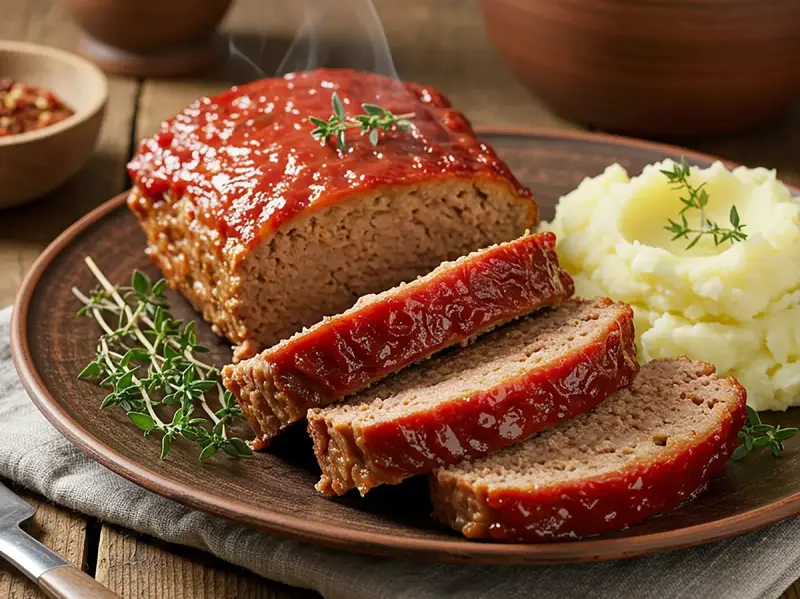
Meatloaf

Meatloaf is a traditional American dish — ground meat mixed with breadcrumbs, eggs and spices, baked into a loaf shape and topped with a tomato glaze.

⏱️
63
Minutes
👥
4
Servings
🔥
700
kcal
Rate this recipe

Key Ingredients

What you'll need

Ingredients

How to make it

Instructions

  1. 1

    Preheat the oven to 180°C. In a large bowl, mix the breadcrumbs with the milk and leave for 5 minutes.

    Meatloaf — step 1
  2. 2

    Add the mince, egg, onion, garlic, Worcestershire sauce, thyme, oregano, salt and pepper. Mix thoroughly with your hands.

  3. 3

    Place meat mixture in a baking dish and form a loaf shape. In a separate bowl, mix together the ingredients for the glaze.

    Meatloaf — step 3
  4. 4

    Brush the top of the meatloaf with half of the glaze. Bake in the oven for 45 minutes.

  5. 5

    Take out, brush with the remaining glaze and bake for another 15-20 minutes, until the internal temperature reaches 70°C. Let the meatloaf stand for 10 minutes before slicing.

Join the conversation

Comments

Leave a comment

Loading comments…

Frequently Asked Questions

Why does homemade meatloaf turn out dry inside, and how to make it juicy?

Dryness usually comes from using too-lean meat or overbaking. For a juicy meatloaf use ground meat with at least 15–20% fat — an 80/20 beef blend or a mix of beef and pork works best. Add moisture-holding ingredients: 1/2 cup of milk-soaked breadcrumbs per 500 g of meat, one egg, and a couple of tablespoons of Worcestershire sauce or ketchup worked into the mix. Do not overwork the mixture — mix just until combined. Bake at 175°C (350°F) and check the internal temperature rather than relying on time alone; pull it out at 70–71°C and let it rest 10 minutes before slicing.

Should you cover meatloaf with foil while baking, and when to remove it?

Covering for the first part of baking keeps steam inside and prevents the top from drying out or browning too fast. Cover the loaf with foil for the first 40–45 minutes, then remove it for the last 15–20 minutes so the glaze caramelises and the top develops a nice crust. If your meatloaf is thin (under 5 cm), you can skip the foil entirely. A thick loaf (7–8 cm) benefits most from the foil stage. If the top browns too fast even uncovered, tent the foil loosely rather than pressing it down tight.

How do you know when meatloaf is fully cooked — what internal temperature should it reach?

The safest way is to use an instant-read meat thermometer inserted into the thickest part of the loaf, not touching the pan. Ground beef must reach 71°C (160°F) — this is the USDA-recommended minimum safe temperature that kills harmful bacteria. At this point the juices run clear and the meat is no longer pink in the centre. Avoid cooking much beyond 75°C as the loaf will start to dry out noticeably. If you don't have a thermometer, a thin skewer inserted in the centre should feel hot to the touch after 10 seconds.

How long does baked meatloaf keep, and what is the best way to reheat it?

Baked meatloaf keeps well in an airtight container in the refrigerator for up to 4 days. For reheating, slice it first and warm in a covered pan with a splash of beef broth or water over low heat for 5–7 minutes — this restores moisture without drying the slices out. Alternatively, cover slices loosely with foil and reheat in a 160°C oven for 15–20 minutes. Microwaving works but can make the texture rubbery — if you use the microwave, place a damp paper towel over the slices and heat in 30-second intervals.

Can you freeze raw meatloaf, and how do you defrost and bake it properly?

Yes, raw meatloaf freezes very well. Shape it, wrap tightly in cling film, then in foil or place in a freezer bag, and freeze for up to 3 months. To cook from frozen, there is no need to defrost first: unwrap, place in a baking dish, cover with foil, and bake at 175°C for about 1 hour 30 minutes — 30–40 minutes longer than normal. Check the internal temperature reaches 71°C. Alternatively, thaw overnight in the refrigerator and bake as usual the next day. Never thaw at room temperature, as the outer layer warms faster than the centre.