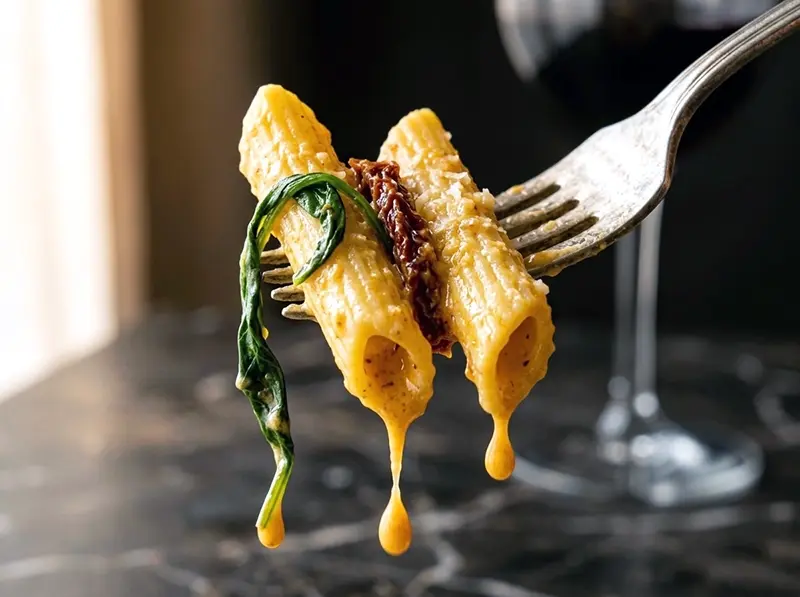
The sun-dried tomatoes in oil are doing two jobs in this recipe: the tomatoes themselves provide a sweet, concentrated, slightly acidic flavour that cuts through the cream, and the flavoured oil in the jar is used as the cooking fat, which means every stage of the dish — from searing the chicken to building the sauce base — carries a layer of tomato-infused depth. Do not substitute sun-dried tomatoes packed in dry without hydrating them first; they will be leathery and too concentrated. Tomatoes in oil, drained, are the correct product.
For the best texture, slice the chicken breasts in half horizontally into thin cutlets before cooking. Thin cutlets cook in 3 to 4 minutes per side, staying juicy and avoiding the dry, rubbery result common when thick chicken breasts are overcooked. If using chicken thighs instead: boneless, skinless thighs are actually more forgiving — harder to overcook and slightly richer in flavour. Slice them similarly and sear the same way.
Creamy Tuscan Chicken Pasta
By Sergei Martynov
Pan-seared chicken in a rich garlic cream sauce with sun-dried tomatoes, baby spinach, and Parmesan — all done in one skillet in 30 minutes. This dish is inspired by the flavours of Tuscany and loosely connected to Florentine sauce (cream, white wine, spinach), with sun-dried tomatoes added for the characteristic sweet-concentrated punch. It is not a traditional Italian dish but an Italian-American one — popularised in American restaurants and home kitchens. What makes it work is the layering: the chicken fond in the pan, the oil from the sun-dried tomatoes for the sauce base, the pasta water to bind everything. Done right, it is genuinely restaurant-quality.
What you'll need
Ingredients
- 400 g
See recipes with pennepenne, rigatoni, or linguine
i - 600 g
See recipes with boneless skinless chicken breastboneless skinless chicken breast, sliced into thin cutlets or bite-sized pieces
i - 100 g
See recipes with sun-dried tomatoes in oilsun-dried tomatoes in oil, drained and roughly chopped (reserve the oil)
i - 2 tbsp
See recipes with oil from the sun-dried tomato jaroil from the sun-dried tomato jar (or olive oil)
i - 4
See recipes with garlic clovesgarlic cloves, finely minced
i - 1
See recipes with small onionsmall onion, finely diced
i - 100 ml
See recipes with dry white wine — or chicken stockdry white wine (Pinot Grigio or Sauvignon Blanc) — or chicken stock
i - 300 ml
See recipes with double creamdouble cream (heavy cream)
i - 150 ml
See recipes with chicken stockchicken stock
i - 60 g
See recipes with parmesanParmesan, freshly grated — plus more to serve
i - 80 g
See recipes with baby spinachbaby spinach
i - 1 tsp
See recipes with italian seasoningItalian seasoning (or a mix of oregano, thyme, and basil)
i - 0.5 tsp
See recipes with dried chilli flakesdried chilli flakes
i - 1 tsp
See recipes with smoked paprikasmoked paprika
i
How to make it
Instructions
- 1
Season and sear the chicken. Pat the chicken dry and season generously with salt, pepper, smoked paprika, and Italian seasoning. Heat the sun-dried tomato oil in a large, wide skillet over medium-high heat. When hot, add the chicken pieces in a single layer — do not crowd. Sear 3 to 4 minutes per side until golden brown and just cooked through. Remove to a plate and rest. Do not wipe the pan — the fond (browned bits stuck to the bottom) is a layer of flavour you need for the sauce. Using the oil from the sun-dried tomato jar rather than plain olive oil adds a subtle depth to the base.
- 2
Build the sauce base. Reduce heat to medium. Add the diced onion to the same pan and cook 3 to 4 minutes until softened. Add the garlic and chilli flakes and stir for 60 seconds — do not let the garlic brown or it will turn bitter. Add the sun-dried tomatoes and stir 1 minute. Pour in the white wine and let it bubble vigorously for 1 to 2 minutes, scraping up all the fond from the bottom of the pan. The wine deglazes the fond and adds acidity. Let the wine reduce by about half.
- 3
Make the cream sauce. Add the chicken stock and bring to a simmer. Add the double cream and stir to combine. Simmer over medium-low heat for 4 to 5 minutes, stirring occasionally, until the sauce has thickened enough to lightly coat the back of a spoon. Add the Parmesan and stir until melted. Taste the sauce — it should be rich, tangy from the tomatoes, slightly sweet, and savoury. Add salt and pepper. Do not boil the sauce vigorously after adding the cream, as it can break and look grainy.
- 4
Cook the pasta and combine. While the sauce simmers, cook the pasta in generously salted water until just shy of al dente. Reserve at least 200 ml of pasta water. Slice or shred the rested chicken and return it to the sauce. Add the baby spinach and stir until just wilted — 1 minute. Add the drained pasta directly to the sauce and toss over medium heat for 1 to 2 minutes. If the sauce is too thick, add pasta water a splash at a time until the consistency is loose and coating. The pasta should finish cooking in the sauce.
- 5
Finish and serve. Taste and adjust seasoning one final time. Serve immediately in warmed bowls with extra Parmesan grated over the top and a final crack of black pepper. The sauce will continue to thicken as it sits — if serving slightly later, keep covered and add a splash of pasta water to loosen when plating. Fresh basil leaves or flat-leaf parsley scattered over the top adds colour and a fresh counterpoint to the richness of the sauce.
Frequently Asked Questions
Is Creamy Tuscan Chicken Pasta actually Italian?
Not strictly. It is an Italian-American dish, loosely inspired by Florentine sauce (a classic French-influenced preparation with cream, white wine, and spinach) and the sun-dried tomato pastas popular in Tuscany. The dish was popularised in American restaurants — notably Olive Garden's Tuscan Garlic Chicken — and became a widespread home-cooking trend. Authentic Tuscan pasta dishes tend to be simpler and less cream-heavy. That said, the flavour combination is genuinely good regardless of its origin.
Can you use chicken thighs instead of breasts?
Yes, and many cooks prefer thighs for this dish. Boneless, skinless chicken thighs are fattier and more forgiving — they are harder to overcook and dry out, and they stay juicier in the sauce. Slice or cut into pieces the same way as breasts. Cooking time is similar: 4 to 5 minutes per side until golden and cooked through. Thighs can also handle more sauce-simmering time without drying out.
What can you substitute for double cream?
Double cream gives the richest, most stable sauce. Single cream (18% fat) works but produces a thinner sauce — simmer it longer to reduce. Half-and-half also works with similar results. Crème fraîche adds a pleasant tang; stir it in off the heat to prevent curdling. Coconut cream (full-fat, from a tin) is a good dairy-free substitute — it adds a faint sweetness that actually works with the sun-dried tomatoes. Do not use milk alone — it will not provide enough body and may split.
What wine should you use for Tuscan chicken pasta?
Use a dry white wine you would actually drink — not cooking wine. Pinot Grigio or Sauvignon Blanc are the most commonly recommended because they are crisp and unoaked, which adds acidity without sweetness. Chardonnay works if unoaked; heavily oaked Chardonnay adds unwanted butter notes. The wine is used to deglaze the pan and its alcohol evaporates quickly in 1 to 2 minutes of bubbling. If avoiding alcohol: use a splash of extra chicken stock with a squeeze of lemon juice for acidity.
Can Tuscan chicken pasta be made ahead?
The sauce and chicken can be made up to 2 days ahead without the pasta, stored in the fridge. Reheat gently over low heat with a splash of cream or stock, stirring frequently — high heat can cause the cream sauce to separate. Cook fresh pasta when ready to serve and toss with the reheated sauce. The assembled dish (pasta in sauce) keeps in the fridge for up to 3 days but the pasta softens as it sits.


Join the conversation
Comments
Loading comments…