
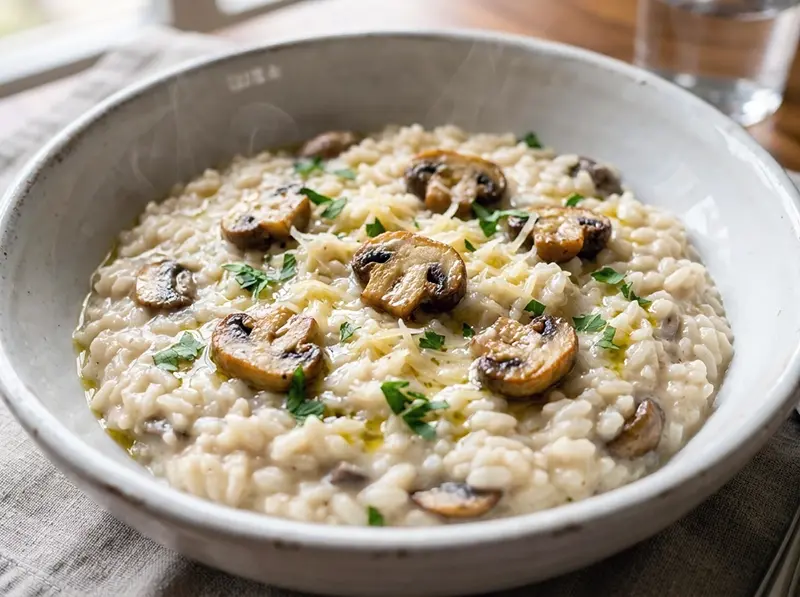
Pilz-Risotto
Arborio-Reis trocken in Butter geröstet, dann Kelle für Kelle mit heißer Brühe und Pilzen aufgebaut, abseits des Herds mit kalter Butter und Parmesan mantecat. Ohne Sahne. Die Cremigkeit kommt ausschließlich von der Stärke im Reis — das ist der ganze Punkt der Technik. Ungefähr 18 Minuten aktives Kochen sobald der Reis drin ist, und man kann wirklich nicht weggehen.
Zutaten
- 320 gArborio- oder Carnaroli-Reis
- 500 gCremini- oder gemischte Pilze
- 15 ggetrocknete Steinpilze
- 1.2 lheiße Gemüse- oder Hühnerbrühe
- 1 Stk.Schalotte
- 2 Stk.Knoblauchzehen
- 150 mltrockener Weißwein
- 60 gkalte Butter
- 60 gParmesan
- 2 ELOlivenöl
- 1 TLSalz
- 0.5 TLschwarzer Pfeffer
- 1 ELfrische Petersilie
Zubereitung
- Getrocknete Steinpilze 20 bis 30 Minuten in 200 ml warmem Wasser einweichen. Abgießen und dabei die Flüssigkeit aufbewahren — durch ein feines Sieb oder Küchenpapier filtern. Steinpilze hacken. Gefilterte Flüssigkeit zur Brühe geben und alles warm auf niedrigem Feuer halten.
- 1 Esslöffel Olivenöl in einer breiten Pfanne bei hoher Hitze erhitzen. Frische Pilze in einer Schicht hineinlegen. 2 bis 3 Minuten nicht rühren — sie brauchen Kontakt mit der heißen Pfanne für Farbe. Rühren, Steinpilze, Salz und Pfeffer hinzufügen. Weitere 2 Minuten kochen. Entfernen und beiseite stellen.
- In derselben Pfanne bei mittlerer Hitze die Hälfte der Butter mit dem restlichen Olivenöl schmelzen. Fein gehackte Schalotte hinzufügen und 3 Minuten kochen. Gehackten Knoblauch 1 Minute hinzufügen. Reis hinzufügen und 2 Minuten rühren bis die Körner an den Rändern durchsichtig werden — das ist die Tostatura. Der Reis sollte leicht nach Nuss duften.
- Wein eingießen. Rühren bis vollständig absorbiert, etwa 2 Minuten. Heiße Brühe kellenweise hinzufügen, nach jeder Zugabe häufig rühren. Warten bis jede Kelle fast vollständig absorbiert ist bevor die nächste kommt. Ein gleichmäßiges leichtes Köcheln aufrechterhalten.
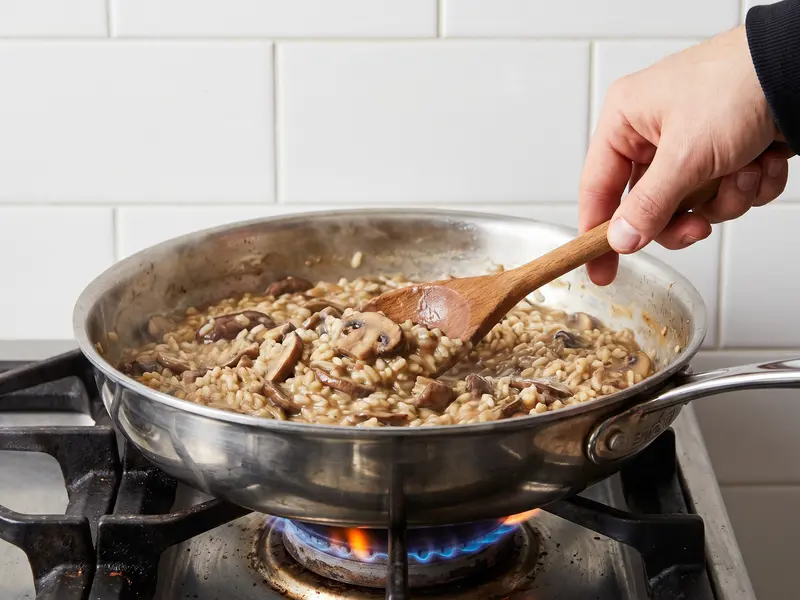
- Nach etwa 14 Minuten die Pilze zurück in die Pfanne geben. Weitere 4 bis 5 Minuten Brühe hinzufügen bis der Reis al dente ist: weich aber mit leichtem Biss. Die Mischung soll langsam fließen, nicht fest sein.
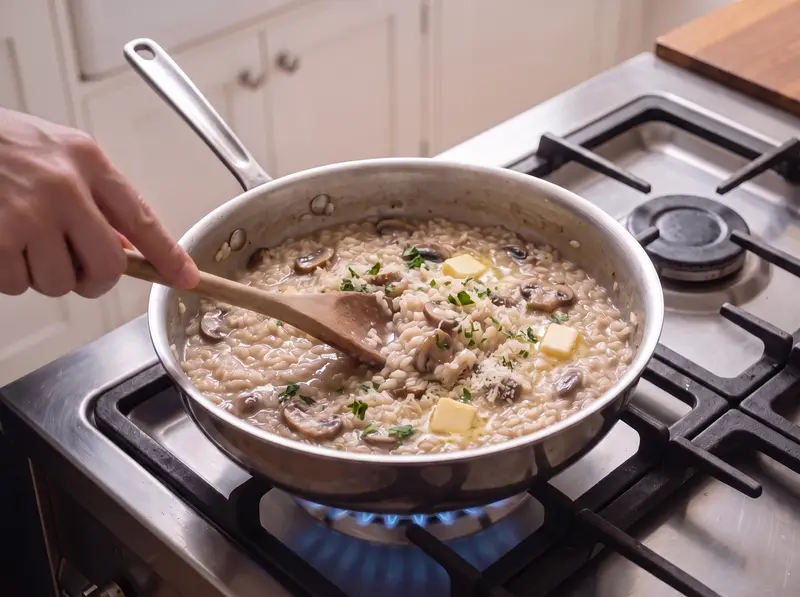
- Pfanne vom Herd nehmen. Kalte Butter in kleinen Stücken und geriebenen Parmesan hinzufügen. 30 Sekunden kräftig rühren bis die Butter im Reis schmilzt und alles glänzend und cremig wird — das ist die Mantecatura. Würzen, Petersilie streuen und sofort in warmen Schüsseln servieren. Risotto wartet auf niemanden.
Fragen
Normalerweise zwei Dinge. Der Reis wurde nicht trocken geröstet bevor die Flüssigkeit kam — die Tostatura macht dass das Korn seine Struktur beim Kochen behält, ohne sie wird es Brei. Die Brühe wurde in zu großen Mengen oder auf einmal zugegeben — Risotto braucht schrittweise Zugabe Kelle für Kelle damit der Reis Flüssigkeit aufnimmt und im richtigen Tempo Stärke freisetzt. Auch: Das Feuer war zu hoch. Risotto muss sanft köcheln, nicht stark kochen. Klebrig statt cremig bedeutet meist entweder zu lang gekochter Reis oder zu schnell hinzugefügte Brühe.
Ständiges Rühren ist eine Vereinfachung. Man muss häufig rühren, nicht jede Sekunde. Nach jeder Brühezugabe aktiv rühren bis die Flüssigkeit fast vollständig absorbiert ist. Dann kann man eine Minute pausieren. Rühren ist wichtig weil die Bewegung die Körner gegeneinander reibt und Stärke freisetzt — diese Stärke schafft die Cremigkeit. Gar nicht rühren und der Reis klebt und brennt unten an. Unaufhörlich aggressiv rühren und die Stärke erschöpft sich zu schnell und das Ergebnis ist klebrig.
Arborio und Carnaroli sind beide richtig. Carnaroli behält die Form besser und verzeiht etwas mehr Fehler; Arborio ist verbreiteter. Beide funktionieren. Normaler Langkornreis geht nicht: er hat zu wenig Oberflächenstärke für die Cremigkeit. Kurzkörniger Reis mit hohem Stärkegehalt ist der einzige echte Ersatz. Wenn man Arborio bekommen kann, Arborio nehmen.
Mantecatura ist der letzte Schritt: kalte Butter und Parmesan kräftig eingerührt nachdem die Pfanne vom Herd genommen wurde. Es ist der wichtigste Schritt und zu Hause am häufigsten übersprungen. Das Ziel: Butter und Käse bilden mit dem stärkehaltigen Kochsud eine Emulsion — eine glatte, einheitliche cremige Masse. Butter in eine kochende Pfanne geben und sie schmilzt einfach und trennt sich, keine Emulsion bildet sich. Die Butter muss kalt sein (direkt aus dem Kühlschrank), die Pfanne vom Herd, alles energisch eingerührt. Das gibt dem Risotto seine fließende glänzende Konsistenz — was die Italiener all'onda nennen, die Welle.
Beide funktionieren und die Kombination ist die beste Wahl. Frische Pilze (Cremini, Champignons, Pfifferlinge) geben ein zarteres Aroma und schöne Textur. Getrocknete Steinpilze geben ein sehr intensives erdiges Aroma — eine kleine Menge verändert den Geschmack des ganzen Gerichts. Frische Cremini als Hauptpilz und eine Handvoll eingeweichte getrocknete Steinpilze für Tiefe. Das Einweichwasser der Steinpilze nicht wegwerfen — filtern und zur Brühe geben. Es ist so aromatisch dass es das Gericht auf ein ganz anderes Niveau heben kann.
Bewerten
Rezepte per E-Mail
Ein Brief pro Woche: ein Rezept nach Ihrem Geschmack und alles Neue auf der Seite. Abmelden mit einem Klick.
Als Geschenk: Sergeis Kochbuch (E-Book).
Mit der Anmeldung akzeptieren Sie die Datenschutzerklärung.
Verraten Sie uns, was Sie gern kochen (30 Sekunden) →Weiter stöbern
Weitere Gerichte aus dem Archiv — ausgewählt nach Überschneidung mit dem, was du gerade kochst.

An der Diskussion teilnehmen
Kommentare (2)
Ризотто с грибами мое любимое блюдо! Стояла мешала 40 минут но оно тогостоит. Сыр пармезан обязательно настоящий а не тот что в пакетиках. Получается крмеовое, нежное, просто тает ворту.
Finish cooking the arborio in the sauce, not in the water. Those last 2 minutes of simmering together create a bond between grain and sauce that plating separately never achieves.