
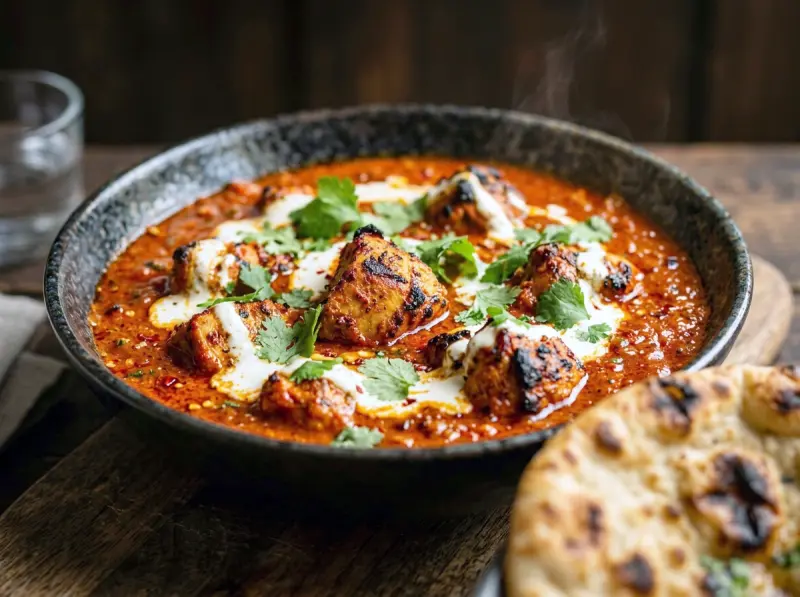
Poulet Tikka Masala
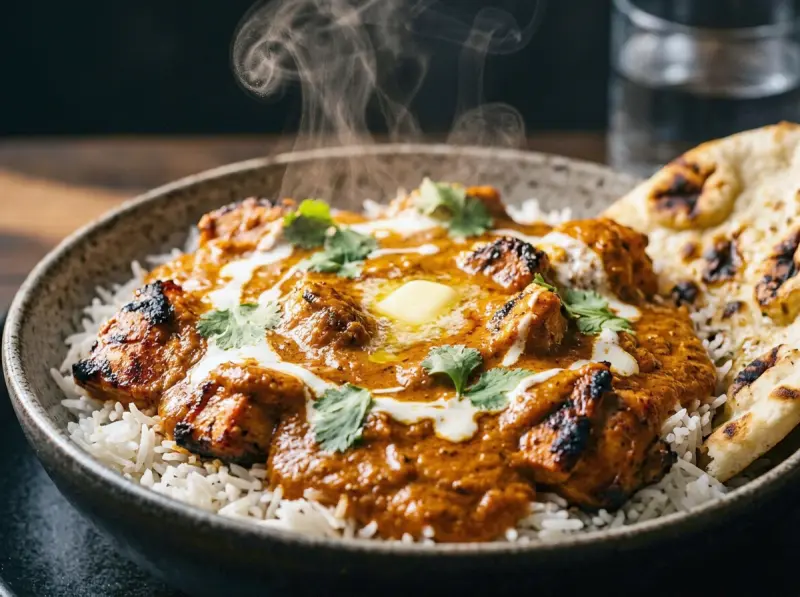
Cuisses de poulet marinées au yaourt, saisies jusqu'à être carbonisées, puis mijotées dans une sauce épicée de tomates et d'oignons avec de la crème. Le processus en deux étapes est l'essentiel : d'abord le tikka, de petits morceaux de poulet cuits à feu vif, puis la masala, la sauce épicée dans laquelle ils finissent. La carbonisation sur le poulet n'est pas anodine. Elle contraste avec la crème, et sans elle, on obtient un bon curry de tomates plutôt qu'un tikka masala. La sauce demande des oignons bien dorés, des épices revenues dans l'huile et un temps de cuisson suffisant pour que les tomates perdent leur acidité. Le poulet marine au moins une heure, idéalement toute la nuit.
Ingrédients
- 700 gcuisses de poulet désossées, coupées en cubes de 4 cm
- 120 gyaourt entier nature
- 1 c. à soupepiment en poudre du Cachemire
- 1 c. à cafécumin moulu
- 1 c. à cafécoriandre moulue
- 0.5 c. à cafécurcuma
- 1 c. à soupepâte gingembre-ail
- 1 c. à soupejus de citron
- 2 c. à soupehuile neutre ou ghee (1 c. à soupe pour saisir le poulet, 1 pour les oignons)
- 2 gros oignons, hachés finement
- 1 c. à soupepâte gingembre-ail
- 2 c. à soupeconcentré de tomate
- 400 gtomates concassées en boîte
- 1.5 c. à cafégaram masala
- 1 c. à cafépiment en poudre du Cachemire
- 1 c. à cafécoriandre moulue
- 80 mlcrème épaisse
- 1 c. à cafékasuri methi, émiettées
- 1 c. à cafésucre
- 1 c. à cafésel pour la marinade, plus selon le goût
Préparation
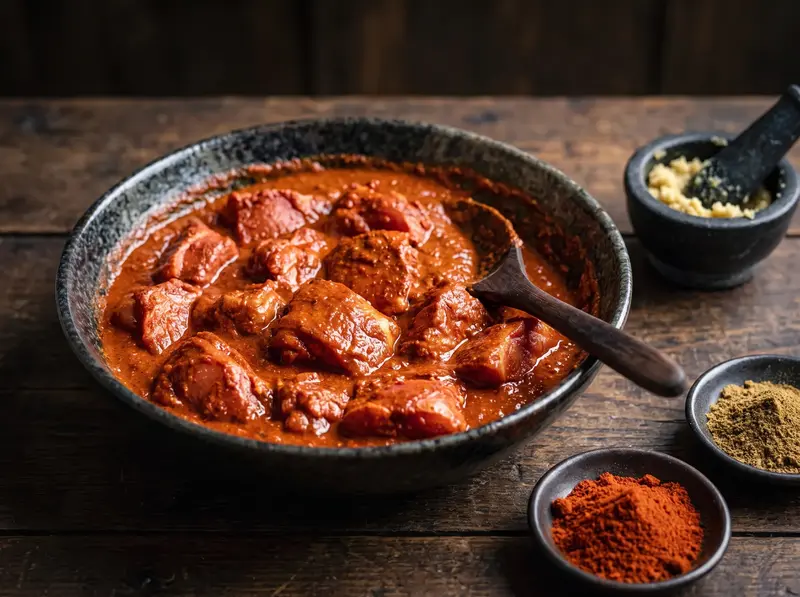
- Mariner le poulet. Dans un grand saladier, mélanger le yaourt, le piment du Cachemire, le cumin, la coriandre, le curcuma, la pâte gingembre-ail, le jus de citron et 1 c. à café de sel. Ajouter le poulet et masser la marinade dans chaque morceau à la main. Couvrir et réfrigérer au moins 1 heure, idéalement toute la nuit pour un meilleur résultat. L'association du yaourt et de l'acidité attendrit la viande et permet aux épices de pénétrer au lieu de simplement enrober la surface.
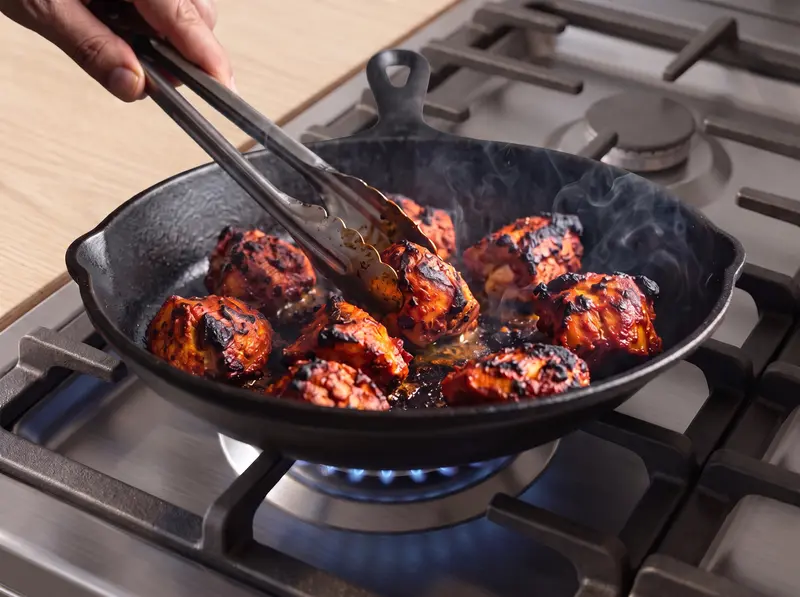
- Cuire le tikka. Chauffer une grande poêle épaisse ou une poêle en fonte à feu vif jusqu'à ce qu'elle soit très chaude. Ajouter une cuillère à soupe d'huile ou de ghee. Secouer l'excès de marinade de chaque morceau et déposer la moitié du poulet en une seule couche, en laissant de l'espace entre les morceaux. S'ils se touchent, ils cuisent à la vapeur dans leur jus et ne se colorent jamais. Cuire sans bouger 3 à 4 minutes, jusqu'à ce que de vraies marques de carbonisation apparaissent en dessous. Retourner et répéter. Le poulet doit sembler presque brûlé par endroits ; il est encore cru au milieu et finira de cuire dans la sauce. Le retirer sur une assiette propre, laisser la poêle redevenir très chaude et saisir la seconde moitié de la même façon. Jeter la marinade restée dans le saladier. Cette carbonisation est tout l'intérêt du tikka : elle donne au plat fini son côté fumé face à la sauce crémeuse.
- Dorer les oignons. Dans une grande casserole, chauffer le reste d'huile ou de ghee (1 cuillère à soupe) à feu moyen. Ajouter les oignons hachés avec une pincée de sel. Cuire en remuant toutes les quelques minutes pendant 15 à 20 minutes, jusqu'à ce qu'ils soient d'un brun doré profond. C'est la base de la saveur : des oignons pâles donnent une sauce pâle et sans relief. Ajouter la pâte gingembre-ail et cuire 2 minutes de plus.
- Construire la sauce. Ajouter le concentré de tomate, bien l'incorporer aux oignons et cuire 2 à 3 minutes, jusqu'à ce qu'il s'assombrisse. Ajouter le garam masala, le piment du Cachemire et la coriandre moulue. Remuer 60 secondes, jusqu'à ce que les épices sentent le grillé. Verser les tomates concassées et le sucre. Porter à frémissement et laisser mijoter sans couvercle 15 minutes en remuant de temps en temps, jusqu'à ce que la sauce réduise et que l'huile commence à se séparer en surface.
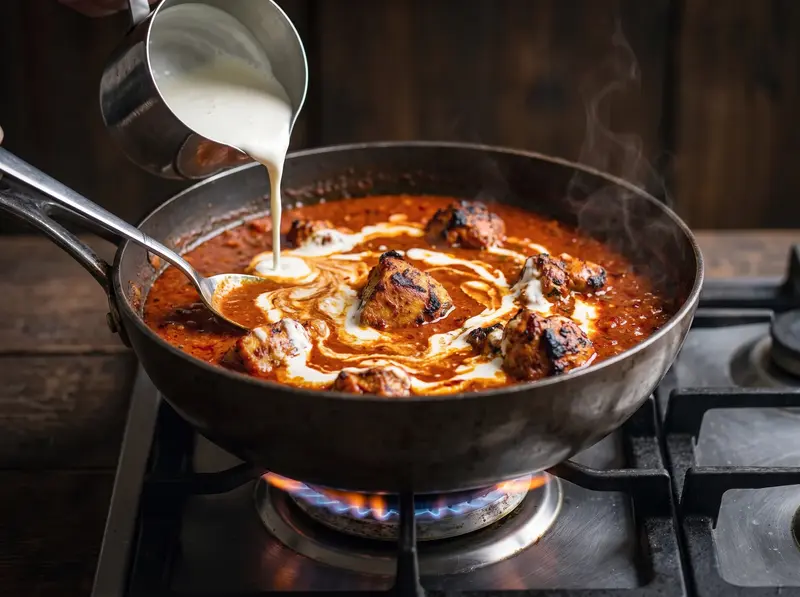
- Terminer et servir. Ajouter les morceaux de poulet carbonisés avec leurs jus de repos. Laisser mijoter 8 minutes, jusqu'à ce que le poulet soit cuit à cœur : le plus gros morceau indique 74 °C au centre, il est blanc jusqu'au milieu quand on le coupe et son jus est clair. Incorporer la crème à feu doux. Émietter le kasuri methi entre les paumes et le parsemer : c'est l'ingrédient qui donne au plat fini son parfum de cuisine de restaurant. Goûter et rectifier le sel. Servir avec du riz basmati ou du naan, avec un peu de coriandre fraîche.
Questions
Tikka signifie 'morceau' en ourdou et hindi. En cuisine, il désigne de petits cubes de viande en brochettes cuits dans un tandoor à chaleur intense. Le nom indique un plat en deux étapes : d'abord le tikka — le poulet est mariné et cuit à feu vif jusqu'à la carbonisation — puis la masala, la sauce épicée dans laquelle il finit. Ce processus en deux étapes donne au plat son caractère : le côté fumé de la première cuisson, l'onctuosité de la sauce. Un curry obtenu en ajoutant simplement du poulet cru à la sauce n'est pas un tikka masala.
L'origine est vraiment contestée. Le chef pakistanais britannique Ali Ahmed Aslam, de Glasgow, en est souvent crédité : selon l'histoire, il aurait ajouté une sauce tomate-crème à du tikka sec à la demande d'un client. D'autres récits évoquent des plats semblables au Pendjab avant la version britannique. En 2001, le ministre des Affaires étrangères britannique Robin Cook l'a décrit comme plat national de Grande-Bretagne. La plupart des historiens culinaires le traitent comme une fusion britannico-indienne, issue de techniques tandoori apportées par des cuisiniers immigrés et adaptées aux goûts européens.
L'aspect aqueux vient presque toujours d'oignons pas assez dorés et de tomates pas assez cuites. Les oignons ont besoin de 15 à 20 minutes jusqu'à une dorure vraiment profonde. Le concentré de tomate doit s'assombrir dans l'huile. Les tomates nécessitent au moins 15 minutes sans couvercle. Pour l'épaisseur : mixer la base avant d'ajouter le poulet.
On peut, mais le blanc sèche quand on le saisit suffisamment fort pour obtenir des marques de carbonisation. Si on utilise du blanc : ne pas cuire complètement à la poêle, laisser finir dans la sauce. Réduire le temps de mijotage à 4-5 minutes. Mariner au moins 1 heure. La meilleure approche est un mélange 50/50 : blanc pour la tendreté, cuisses pour la protection contre la surcuisson. Si vous n'utilisez que du blanc, retirez-le du feu dès que le centre indique 74 °C, que la chair est blanche jusqu'au milieu et que le jus est clair.
Oui, la différence est perceptible. Les sauces en pot sont régulières mais manquent de la saveur des oignons dorés lentement, du côté fumé du poulet correctement carbonisé, de la fraîcheur du gingembre et de l'ail. Un bon compromis pratique : utiliser une bonne pâte de curry comme base, ajouter ses propres oignons fraîchement dorés, l'ail, le gingembre et un poulet carbonisé maison.
Notez
Des recettes par e-mail
Une lettre par semaine : une recette choisie selon vos goûts et les nouveautés du site. Vous pouvez la désactiver en un clic.
En cadeau : le livre de recettes de Sergei (e-book).
En cliquant sur le bouton, vous acceptez la politique de confidentialité.
Dites-nous ce que vous aimez cuisiner (30 secondes) →Continuez à parcourir
D’autres plats des archives — choisis pour leur proximité avec ce que vous êtes en train de cuisiner.

Rejoignez la discussion
Commentaires (2)
So much better than takeaway! I halved the chilli because my kids dont like too much heat and added a bit more yogurt at the end. Husband said it tasted exactly like our local indian place but cheaper.
There is an ongoing debate about whether tikka masala is Indian or British. I have eaten versions in both countries and this recipe sits right in the middle — proper tandoori-style marinade with yogurt and Kashmiri chilli, but the sauce has that creamy British touch. The single most important step is charring the marinated chicken under a very hot broiler, not just baking it. Those blackened edges are where all the flavour lives. Scrape the pan drippings into the sauce.