
Cơm tấm (Riz cassé vietnamien)
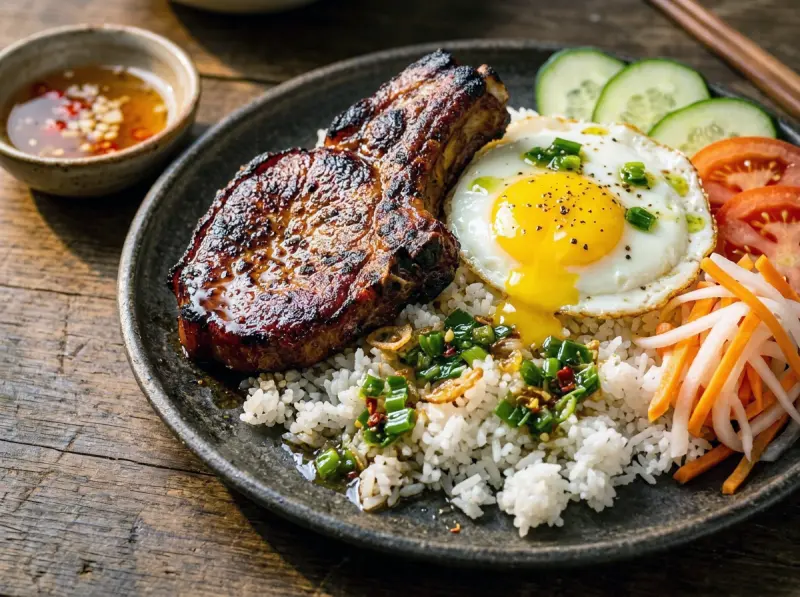
Le cơm tấm (com tam, riz cassé vietnamien) est un plat du sud du Vietnam à base de riz cassé — gạo tấm, les grains qui se brisent pendant le polissage, autrefois les restes bon marché que gardaient pour eux les ouvriers des rizeries et les paysans pauvres — surtout associé à Saïgon. La commande habituelle : une côtelette de porc grillée marinée à la citronnelle (sườn nướng), un œuf au plat, concombre et tomate, carotte et daïkon marinés (đồ chua), de l'huile de ciboule et un bol de nước chấm à verser sur le tout pendant le repas. Les petits grains absorbent la sauce mieux que le riz entier. Comptez environ une heure de travail, plus 2 heures de marinade.
Ingrédients
- 400 griz cassé (gạo tấm) ou riz jasmin
- 4 côtelettes de porc avec l'os, d'environ 1,5 cm d'épaisseur
- 3 c. à soupesauce de poisson
- 2 c. à soupesauce d'huître
- 1 c. à soupesucre
- 1 c. à soupemiel
- 2 tigesde citronnelle, partie blanche et vert clair seulement, très finement hachées
- 4 goussesd'ail, hachées
- 2 échalotes, finement hachées
- 1 c. à soupehuile neutre pour la marinade
- 4 œufs
- 4 ciboules, partie verte seulement, finement émincées
- 3 c. à soupehuile neutre pour l'huile de ciboule
- 200 gcarottes coupées en bâtonnets fins
- 200 gdaïkon coupé en bâtonnets fins
- 1 c. à cafésel, et une pincée pour l'huile de ciboule
- 120 mlvinaigre de riz
- 3 c. à soupesucre pour la marinade des légumes
- 120 mleau pour la saumure
- 60 mlsauce de poisson pour le nước chấm
- 60 mljus de citron vert
- 3 c. à soupesucre pour le nước chấm
- 120 mleau tiède
- 1 goussed'ail, hachée, pour le nước chấm
- 1 piment rouge frais, en fines rondelles, selon le goût
- 2 petits concombres, coupés en diagonale
- 2 tomates mûres, en rondelles
- 2 c. à soupehuile neutre pour frire les côtelettes et les œufs
Préparation
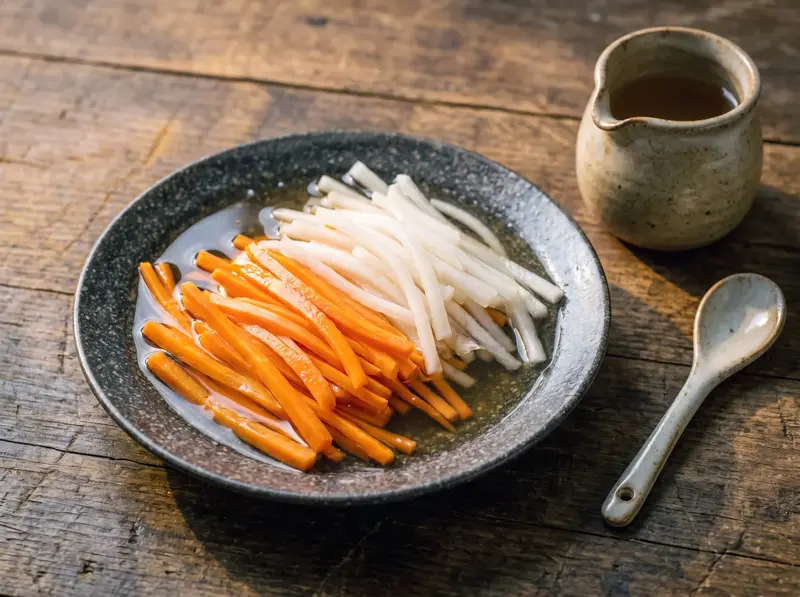
- Marinez les légumes. Coupez la carotte et le daïkon en bâtonnets d'environ 5 mm. Mélangez-les avec le sel et 1 cuillère à café du sucre et malaxez à la main environ 3 minutes, jusqu'à ce qu'un morceau de daïkon plie sans casser. Rincez à l'eau froide et pressez pour égoutter. Mélangez le vinaigre de riz, l'eau et le reste du sucre jusqu'à dissolution, versez sur les légumes et laissez reposer au moins 30 minutes. Ils se gardent jusqu'à 2 semaines au réfrigérateur, dans leur saumure, et sont plus croquants les premiers jours.
- Marinez les côtelettes. Aplatissez chaque côtelette avec un maillet ou le dos d'un gros couteau jusqu'à 1 à 1,5 cm d'épaisseur : la viande devient plus tendre et la marinade a plus de surface à caraméliser. S'il y a une bordure de gras, entaillez-la légèrement pour que la côtelette ne se recroqueville pas. Dans un bol, mélangez la sauce de poisson, la sauce d'huître, le sucre, le miel, la citronnelle, l'ail, les échalotes et 1 cuillère à soupe d'huile, ajoutez les côtelettes et enrobez-les bien. Laissez mariner au réfrigérateur au moins 2 heures, ou toute la nuit pour plus de goût.
- Cuisez le riz cassé. Rincez le riz à l'eau froide jusqu'à ce que l'eau soit claire. Au cuiseur à riz, comptez 1 volume d'eau pour 1 volume de riz : pour 400 g de riz, environ 480 ml d'eau. Sur le feu, portez à ébullition le riz et la même quantité d'eau, baissez au minimum, couvrez hermétiquement et laissez cuire à la vapeur 12 à 15 minutes sans soulever le couvercle : le riz cassé cuit plus vite que le riz entier. Il est prêt quand l'eau est absorbée et que de petits trous de vapeur se sont formés à la surface. Laissez reposer 5 minutes couvert, puis égrenez à la fourchette.
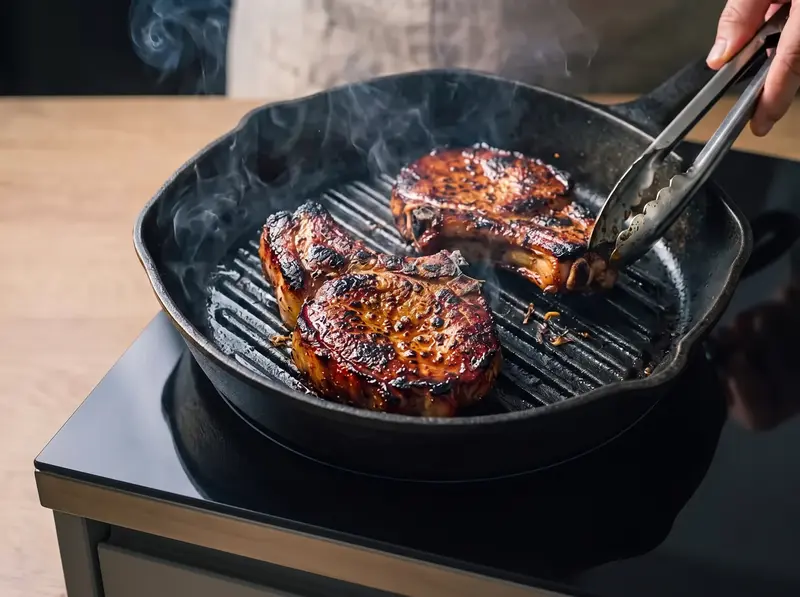
- Grillez les côtelettes. Chauffez une poêle-grill ou une poêle en fonte à feu moyen-vif et huilez-la avec 1 cuillère à soupe de l'huile de friture. Laissez égoutter l'excès de marinade des côtelettes, car le sucre brûle vite. Jetez la marinade restée dans le bol. Faites-les cuire 3 à 4 minutes de chaque côté sans les bouger. Au bout de 3 minutes, soulevez un coin : le dessous doit être brun foncé avec des bords plus sombres, et s'il noircit, baissez le feu. Les côtelettes, de 1 à 1,5 cm d'épaisseur, sont cuites quand la partie la plus épaisse, loin de l'os, indique 63°C (145°F) : la viande est ferme et le centre peut rester légèrement rosé. Laissez reposer 5 minutes. Un barbecue au charbon donne le résultat le plus proche du cơm tấm de rue.
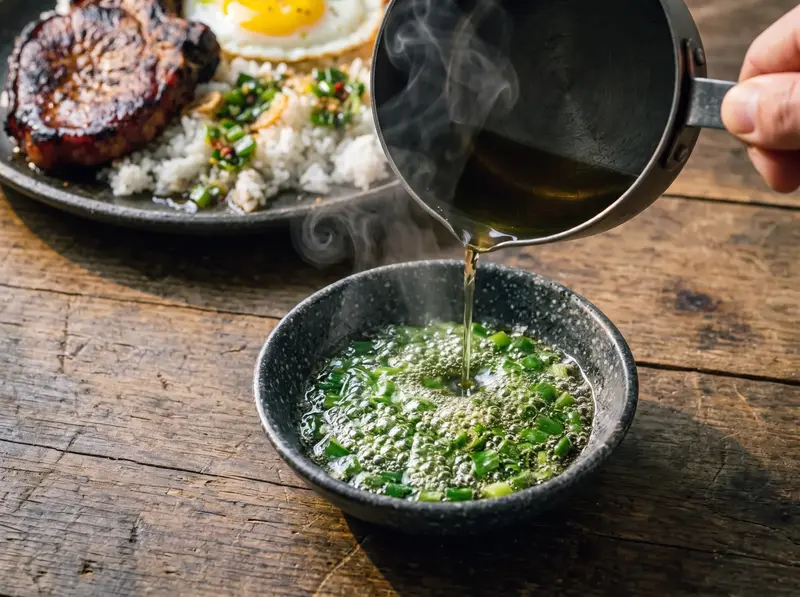
- Préparez l'huile de ciboule. Épongez complètement la partie verte émincée des ciboules, car l'eau fait éclabousser l'huile chaude, et mettez-la dans un petit bol profond résistant à la chaleur avec une pincée de sel. Chauffez l'huile dans une petite casserole jusqu'à ce qu'elle ondule et qu'une rondelle de ciboule y jetée grésille aussitôt ; elle n'a pas besoin de fumer. Versez lentement l'huile chaude sur les ciboules, en gardant visage et mains à distance : elles vont grésiller et libérer un parfum vert intense. Remuez et réservez.
- Faites frire les œufs, préparez le nước chấm et dressez l'assiette. Faites frire les œufs dans l'autre cuillère à soupe d'huile, dans une poêle antiadhésive à feu moyen, 2 à 3 minutes, jusqu'à ce que le blanc soit pris avec des bords croustillants et que le jaune reste coulant ; faites-le en dernier pour qu'ils soient chauds. Dissolvez le sucre dans l'eau tiède, puis ajoutez la sauce de poisson, le jus de citron vert, l'ail et le piment. Goûtez : seul, il doit paraître un peu trop sucré et trop acide, car le riz et le porc le dilueront. Pour dresser, tassez une portion de riz dans un petit bol et retournez-la sur l'assiette pour former un dôme. Appuyez une côtelette contre le riz. Disposez concombre et tomate autour. Ajoutez les légumes marinés et un œuf au plat. Arrosez le riz et la viande d'huile de ciboule. Servez le nước chấm dans un petit bol à verser pendant le repas.
Questions
Le riz cassé, ce sont des grains fissurés pendant le polissage ; on les vendait autrefois à bas prix ou les pauvres les gardaient pour eux, et ils sont devenus une nourriture de rue de tous les jours à Saïgon. Les petits morceaux irréguliers cuisent plus vite que les grains entiers et absorbent mieux la sauce. On en trouve dans les supermarchés asiatiques en grands sacs, souvent sous le nom « broken jasmine rice ». À défaut, on utilise le plus souvent du riz jasmin ordinaire pour le cơm tấm : on perd la texture légèrement friable, mais le plat fonctionne. Rincez-le, cuisez-le comme à l'étape 3 avec un peu plus d'eau et prévoyez quelques minutes de plus.
Cette recette utilise 60 ml de sauce de poisson, 60 ml de jus de citron vert, 3 cuillères à soupe de sucre et 120 ml d'eau tiède, plus une gousse d'ail hachée et du piment selon le goût. Soit autant de sauce de poisson que de citron vert, deux fois plus d'eau et juste assez de sucre pour arrondir. Comme on la verse sur le riz au lieu d'y tremper, elle est plus diluée que le nước chấm habituel. Goûtez-la seule sur une cuillère : elle doit sembler un peu trop sucrée et acide, car le riz et la viande la dilueront. Si elle est parfaite sur la cuillère, elle sera fade dans l'assiette.
Aplatissez les côtelettes à 1 à 1,5 cm pour qu'elles cuisent avant que le sucre ne brûle, et laissez égoutter l'excès de marinade avant la cuisson. Utilisez une poêle-grill ou une poêle en fonte à feu moyen-vif, pas au maximum, et ne les touchez pas pendant les 3 premières minutes pour qu'une croûte se forme. Soulevez alors un coin : brun foncé est bon, noir signifie qu'il faut baisser le feu. Un four chaud convient aussi : environ 15 minutes à 160°C, puis retournez et 5 à 7 minutes à 180°C. Dans tous les cas, vérifiez que la partie la plus épaisse atteigne 63°C, loin de l'os.
La version complète de restaurant comporte cinq éléments sur le riz cassé : sườn nướng (la côtelette grillée à la citronnelle), bì (couenne de porc en lanières avec du riz grillé moulu et de l'ail), chả trứng (un gâteau vapeur de porc haché, vermicelles de soja et œuf), trứng ốp la (l'œuf au plat) et un petit bol de bouillon clair. À la maison, une soupe acidulée comme la canh chua remplace bien le bouillon. Cette recette est la version la plus accessible, côtelette et œuf, et l'une des commandes habituelles dans un stand de rue. Le bì et le chả trứng sont plus difficiles à faire chez soi et valent la peine d'être cherchés dans les restaurants vietnamiens.
Gardez les côtelettes cuites, le riz et les légumes marinés dans des boîtes hermétiques séparées au réfrigérateur. Les côtelettes se gardent 3 jours ; les légumes restent dans leur saumure et sont plus croquants les premiers jours, mais tiennent jusqu'à 2 semaines. Réchauffez les côtelettes à la poêle à feu moyen 2 à 3 minutes de chaque côté jusqu'à ce qu'elles soient chaudes à cœur (74°C), car le micro-ondes les rend caoutchouteuses. Arrosez le riz d'un peu d'eau, couvrez et réchauffez-le au micro-ondes 1 à 2 minutes, jusqu'à ce qu'il soit brûlant à cœur. Faites frire un œuf frais et préparez l'huile de ciboule le jour même, car l'un et l'autre sont meilleurs frais.
Notez
Des recettes par e-mail
Une lettre par semaine : une recette choisie selon vos goûts et les nouveautés du site. Vous pouvez la désactiver en un clic.
En cadeau : le livre de recettes de Sergei (e-book).
En cliquant sur le bouton, vous acceptez la politique de confidentialité.
Dites-nous ce que vous aimez cuisiner (30 secondes) →Continuez à parcourir
D’autres plats des archives — choisis pour leur proximité avec ce que vous êtes en train de cuisiner.


Rejoignez la discussion
Commentaires (2)
Broken rice has a texture that regular rice cannot replicate. The fractured grains cook unevenly, creating a mix of soft and slightly chewy that soaks up the pork chop marinade differently than whole grains would. The lemongrass pork chop marinade needs at least 2 hours — the lemongrass flavour does not penetrate quickly. Slice the chops thin (about 1cm) so they grill fast and stay juicy.
Com Tam war mein erster Versuch mit vietnamesischer Küche und ich bin begeistert! Der Bruchreis hat so eine tolle Textur, ganz anders als normaler Reis. Die Schweinkoteletts hab ich auf dem Kontaktgrill gemacht weil ich kein Kohlegrill hab, hat auch funktioniert. Die Fischsauce riecht komisch aber im Essen schmeckt man nur Umami, vertraut dem Rezept!