

Tzatziki
Le tzatziki (en grec τζατζίκι, aussi écrit zaziki) est une sauce grecque froide à base de yaourt égoutté, de concombre râpé, d'ail, d'huile d'olive et d'aneth. On le sert en meze avec du pain pita ou en sauce pour les gyros et les souvlaki. Le secret : essorer chaque goutte d'eau du concombre ; sinon, vous obtenez de la soupe, pas du tzatziki. Il se prépare en 10 minutes et doit passer au moins 30 minutes au réfrigérateur avant d'être servi.
Ingrédients
- 300 gyaourt grec, entier
- 1 concombre moyen
- 2 goussesail, finement râpé
- 1 c.à.s.aneth frais
- 1 c.à.s.jus de citron
- 1 c.à.s.huile d'olive
- au goûtsel
Préparation
- Râpez le concombre (environ 200 g) avec le côté gros de la râpe. Placez le concombre râpé au centre d'un torchon propre ou d'une étamine.
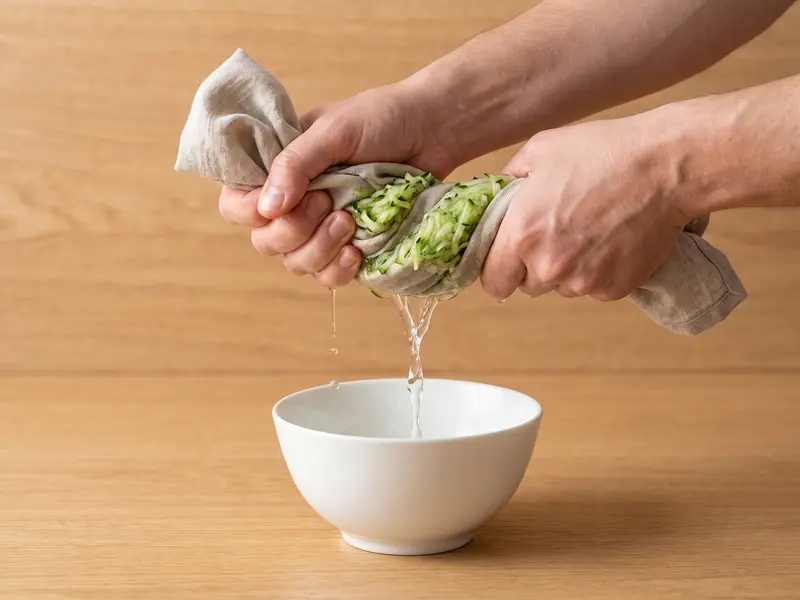
- Formez un baluchon et essorez fermement au-dessus de l'évier. Tordez jusqu'à ce que presque plus rien ne sorte — vous devez extraire au moins 3–4 cuillères à soupe d'eau. C'est l'étape la plus importante.
- Dans un bol, mélangez le yaourt grec, le concombre essoré, l'ail, l'aneth haché, le jus de citron et l'huile d'olive. L'ail devient plus fort quand la sauce repose ; si vous l'aimez doux, commencez avec 1 gousse.

- Salez (commencez avec ¼ de c. à café), remuez encore une fois et goûtez.
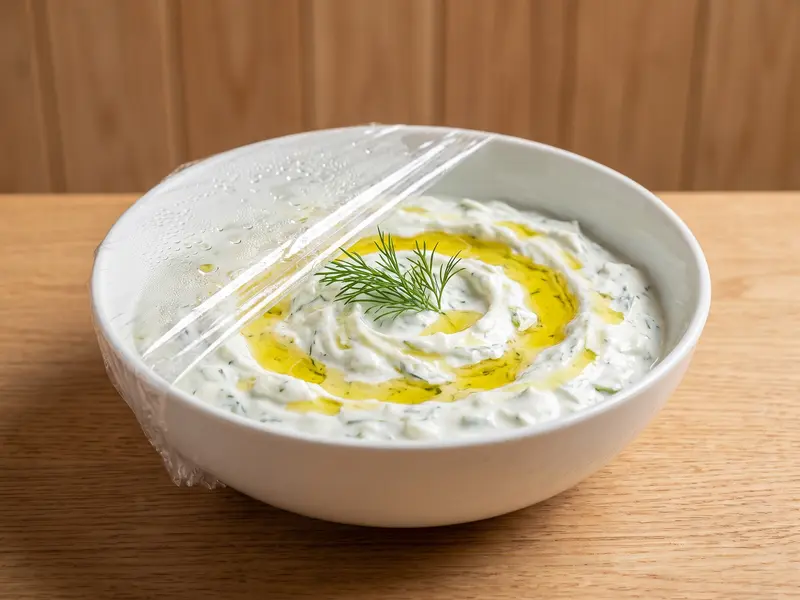
- Couvrez et réfrigérez au moins 30 minutes avant de servir. Les saveurs ont besoin de temps pour se marier. Le tzatziki est meilleur le lendemain.
Questions
Deux causes. Premièrement, le concombre n'a pas été assez essoré : le concombre râpé rend de l'eau en continu, et même un peu d'humidité résiduelle dilue le yaourt en moins d'une heure. Tordez-le dans un torchon propre jusqu'à ce qu'il ne sorte presque plus rien. Deuxièmement, un yaourt trop liquide. Le yaourt ordinaire contient trop de petit-lait. Utilisez du yaourt grec entier égoutté (5 à 10 % de matières grasses), ou égouttez un yaourt ordinaire dans une étamine pendant 1 à 2 heures. Si votre tzatziki est déjà devenu liquide, retirez le liquide accumulé et incorporez 2 à 3 cuillères à soupe de yaourt égoutté.
Le yaourt grec entier est la référence, car il est épais et légèrement acidulé. Le yaourt ordinaire est trop liquide et donne une trempette coulante. Si vous n'avez que du yaourt ordinaire, égouttez-le : garnissez une passoire d'étamine posée sur un bol, versez le yaourt et placez au réfrigérateur 1 à 2 heures, jusqu'à ce qu'il épaississe. Le labneh donne un résultat encore plus épais. Évitez le yaourt grec sans matières grasses : il a un goût acide et manque de l'onctuosité qui rend le tzatziki si savoureux.
Le tzatziki s'améliore au repos. Préparez-le 2 à 24 heures à l'avance pour un goût optimal. Il se conserve 3 à 4 jours au réfrigérateur dans un récipient hermétique ; à table, ne le laissez pas hors du réfrigérateur plus de 2 heures (1 heure par temps chaud). Une précision : l'ail cru s'intensifie avec le temps. Si vous le servez le lendemain, mettez un peu moins d'ail ou ajoutez-en du frais juste avant de servir. Remuez bien avant de servir, car le concombre peut se déposer au fond.
Le tzatziki est l'une des sauces les plus polyvalentes de toute cuisine. Au-delà de l'agneau et du poulet grillés, il sert de trempette pour des chips de pita, des crudités et des falafels. Tartinez-en les sandwichs et les wraps à la place de la mayonnaise. Déposez-en une cuillerée sur des légumes rôtis, des pommes de terre au four ou des bols de céréales. Allongé d'un peu de jus de citron, il devient une vinaigrette. Il se marie étonnamment bien avec les plats épicés : le yaourt frais compense la chaleur du piment ou de la harissa. C'est aussi la sauce habituelle du gyros et des souvlaki.
L'aneth frais est fortement préférable : sa saveur vive, proche de l'anis, définit le tzatziki traditionnel. L'aneth séché dépanne, mais n'en mettez que le tiers, car il est plus concentré et légèrement terreux. La menthe fraîche est la meilleure alternative ; beaucoup de cuisiniers grecs la mettent avec l'aneth ou à sa place. Un mélange de menthe et d'aneth est excellent. Le persil convient, mais donne un caractère tout à fait différent. Évitez en général les herbes séchées : le tzatziki est une sauce fraîche qui gagne à être faite avec des herbes fraîches.
Notez
Des recettes par e-mail
Une lettre par semaine : une recette choisie selon vos goûts et les nouveautés du site. Vous pouvez la désactiver en un clic.
En cadeau : le livre de recettes de Sergei (e-book).
En cliquant sur le bouton, vous acceptez la politique de confidentialité.
Dites-nous ce que vous aimez cuisiner (30 secondes) →Continuez à parcourir
D’autres plats des archives — choisis pour leur proximité avec ce que vous êtes en train de cuisiner.



Rejoignez la discussion
Commentaires (1)
This tzatziki stores beautifully in the fridge for 5-7 days. I portion it into small jars and bring one to room temperature while the main dish cooks. Fresh-tasting condiment without any day-of effort.