I have been making this vinaigrette for years and the secret that changed everything was learning the 3-to-1 ratio: three parts oil to one part acid. Too much vinegar and the dressing is harsh and mouth-puckering. Too much oil and it tastes flat and greasy. The Dijon mustard is not just for flavor — it is the emulsifier that holds everything together into a creamy dressing that clings to salad leaves instead of pooling at the bottom of the bowl.
Dijon mustard is a smooth French mustard made from brown mustard seeds and white wine. Do not substitute with yellow American mustard — it will change the flavor entirely. If you cannot find Dijon, use whole-grain mustard instead, which gives a rustic texture with similar emulsifying power.
Classic French Vinaigrette
By Sergei Martynov
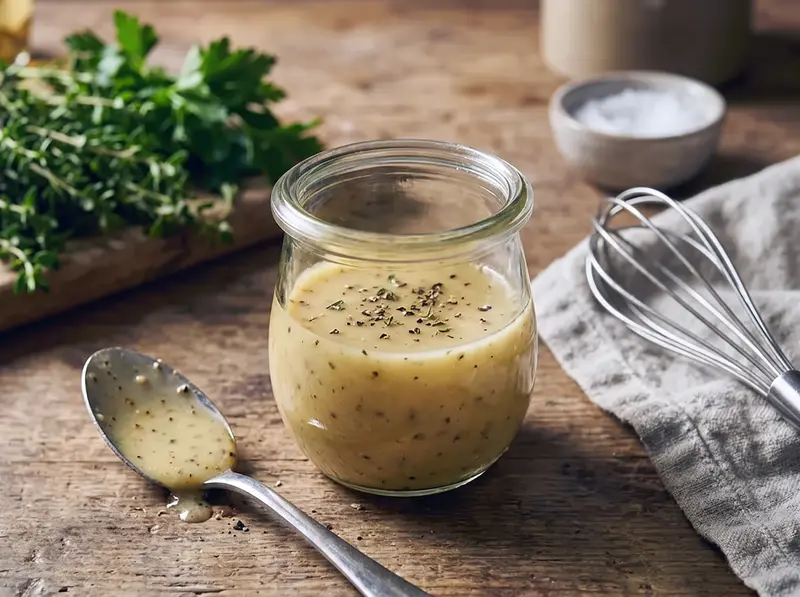
A classic French vinaigrette made with olive oil, red wine vinegar, Dijon mustard, and a hint of garlic. The 3-to-1 oil-to-acid ratio and a spoonful of mustard create a silky emulsified dressing that clings to every leaf and never separates in the bowl.
Key Ingredients
What you'll need
Ingredients
- 90 ml
See recipes with olive oilolive oil
i - 30 ml
See recipes with red wine vinegarred wine vinegar
i - 1 tsp
See recipes with dijon mustardDijon mustard
i - 1 clove
See recipes with garlicgarlic
i - to taste
- to taste
See recipes with black pepperblack pepper
i - 1 tsp
See recipes with dried herbsdried herbs
i
How to make it
Instructions
- 1
Finely mince or grate the garlic clove into a small bowl or jar. Add the red wine vinegar and let the garlic sit in the vinegar for 2 minutes — this softens its raw bite and infuses the acid with garlic flavor.
- 2
Add the Dijon mustard, salt, and black pepper to the vinegar-garlic mixture. Whisk or shake until the mustard is fully dissolved.
- 3
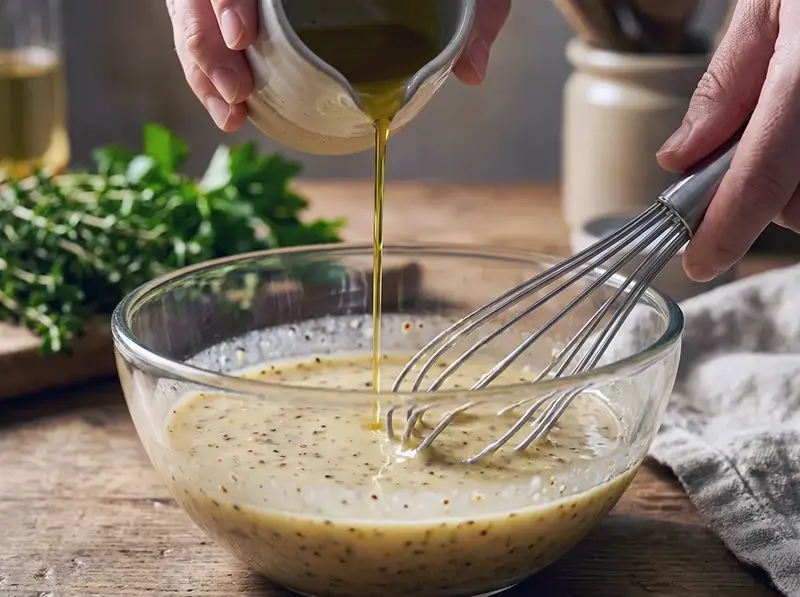
Slowly drizzle in the olive oil while whisking constantly. The mustard acts as an emulsifier, binding oil and vinegar into a creamy, unified dressing instead of a separated puddle. Pour the oil in a thin stream over about 30 seconds.
- 4
Add the dried herbs — thyme, oregano, or herbes de Provence all work beautifully. Whisk once more to combine.
- 5
Taste and adjust: if too sharp, add a tiny pinch of sugar or a few more drops of oil. If too oily, add a splash more vinegar. The dressing should taste balanced — tangy but not harsh, rich but not heavy. Use immediately or store in a sealed jar in the refrigerator for up to 10 days. Shake well before each use.
Frequently Asked Questions
Why does my homemade vinaigrette always separate — how do I keep it emulsified?
Vinaigrette separates because oil and vinegar naturally repel each other. The fix is an emulsifier — Dijon mustard is the best one for vinaigrettes. The lecithin in mustard seeds coats the oil droplets and prevents them from merging back together. Use at least 1 teaspoon of Dijon per batch, add it to the vinegar first, then drizzle oil slowly while whisking. The slow addition is key — dumping all the oil at once overwhelms the emulsifier. A mason jar with a tight lid also works: add everything, close, and shake vigorously for 30 seconds.
What is the best oil-to-vinegar ratio for a balanced vinaigrette that is not too sour?
The classic French ratio is 3 parts oil to 1 part acid (vinegar or citrus juice). This gives a dressing that is tangy but not harsh. For this recipe: 90 ml olive oil to 30 ml red wine vinegar. If you prefer a lighter dressing, go 2:1. For a sharper, more assertive flavor, try 2.5:1. The type of acid matters too — red wine vinegar is medium-sharp, while balsamic is sweeter and lemon juice is brighter. Start with 3:1 and adjust by taste. A tiny pinch of sugar can round off harsh edges without making it sweet.
Can I substitute red wine vinegar in vinaigrette — what other vinegars work?
Absolutely. Each vinegar gives a different character. Sherry vinegar is nutty and complex — my favorite alternative. White wine vinegar is lighter and more delicate. Apple cider vinegar adds a fruity sweetness. Balsamic vinegar is sweeter and darker, best in small amounts blended with another vinegar. Rice vinegar is very mild and works for Asian-inspired dressings. Lemon or lime juice can replace vinegar entirely for a fresh citrus vinaigrette. Keep the same 3:1 ratio regardless of which acid you use, and always taste before serving.
How long does homemade vinaigrette last in the fridge and does it go bad?
A vinaigrette made with olive oil, vinegar, and mustard keeps in a sealed glass jar in the refrigerator for 7–10 days. The olive oil will solidify and turn cloudy when cold — this is completely normal and does not mean it has gone bad. Take the jar out 10 minutes before use or run it under warm water, then shake vigorously. If you added fresh garlic or shallots, use within 5–7 days. Discard if you notice any off smells or mold. A jar of vinaigrette in the fridge means salad is always 2 minutes away.
What is the difference between vinaigrette and regular salad dressing from the store?
Store-bought salad dressings typically contain stabilizers like xanthan gum, preservatives, added sugars, and sometimes soybean oil instead of olive oil. A homemade French vinaigrette uses just 5–6 whole ingredients: olive oil, vinegar, mustard, garlic, salt, and pepper. The flavor is cleaner, fresher, and more complex. It also takes 5 minutes to make and costs a fraction of bottled dressing. The only trade-off is shelf life — homemade lasts 7–10 days versus months for bottled. But once you taste the difference, you will never go back.


Join the conversation
Comments
Loading comments…