
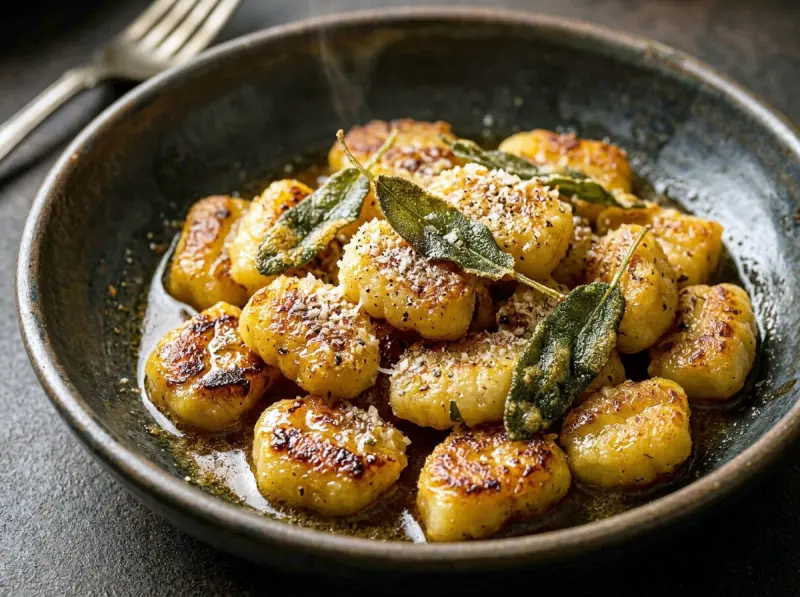
Гноки с коричневым маслом и шалфеем (Gnocchi al Burro e Salvia)
Мягкие картофельные клёцки варятся до всплытия, затем обжариваются в коричневом масле с хрустящим шалфеем до золотистого цвета по краям. Соус — четыре ингредиента: масло, шалфей, крахмальная вода от пасты и пармезан.
Ингредиенты
- 500 гклёцки гноки
- 100 гнесолёное сливочное масло хорошего качества
- 12 шт.свежие листьев шалфея
- 2 зуб.чеснок, слегка раздавленных
- 80 млвода от варки паста
- 60 гпармезана, свежемолотого
- 1 шт.лимон
- 1 ч.л.крупная соль и чёрный перец
Приготовление
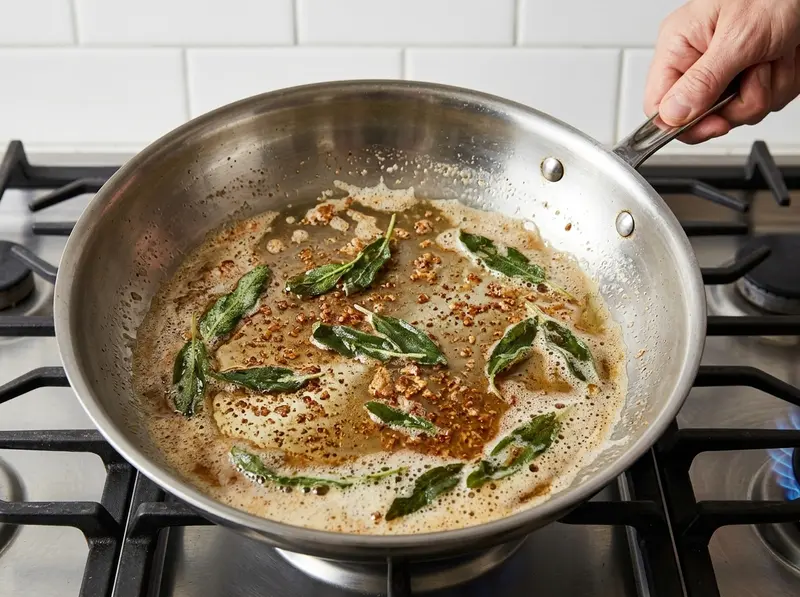
- Сделайте коричневое масло и обжарьте шалфей. В широкой сковороде на среднем огне растопите масло. Добавьте листья шалфея и чеснок (если используете). Готовьте помешивая около 3–4 минут до золотисто-янтарного цвета и орехового аромата. Выньте шалфей вилкой на тарелку — он должен быть хрустящим. Оставьте масло в сковороде.
- Сварите гноки. Большая кастрюля с хорошо посоленной водой. Добавьте гноки и варите до всплытия, затем ещё 30 секунд. Перед сливом зачерпните 80 мл крахмальной воды — она эмульгирует масло в соус.
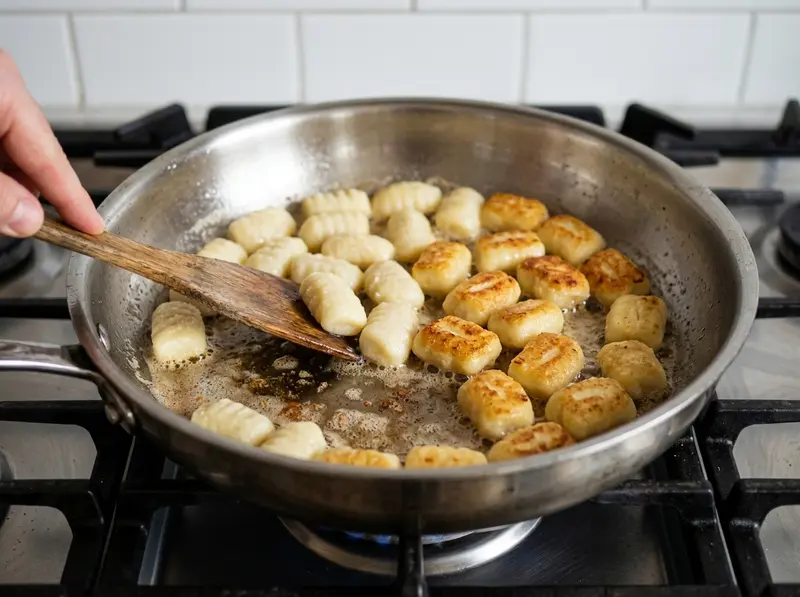
- Обжарьте до золотистых краёв. Верните сковороду с коричневым маслом на средне-сильный огонь. Слейте гноки и переложите прямо в горячее масло. Не мешайте 2 минуты — дайте развиться золотистой корочке с одной стороны. Переверните и готовьте ещё 1 минуту.
- Завершите с водой от пасты и пармезаном. Добавьте зарезервированную воду и энергично помешайте — крахмал эмульгирует масло в глянцевый соус. Снимите с огня, вмешайте пармезан. Капните лимонного сока если используете. Посолите и поперчите.
- Подайте немедленно. Разложите по тёплым тарелкам. Положите хрустящий шалфей сверху. Добавьте ещё пармезана. Ешьте сразу — гноки в коричневом масле не ждут.
Вопросы
Коричневое масло (beurre noisette) — масло варёное до испарения воды и карамелизации сухих молочных остатков. Результат: ореховый, поджаренный, сложный вкус. Французское название означает ореховое масло. В этом блюде коричневое масло и есть соус — его вкус — вкус всей тарелки.
Вода от варки крахмальная. Когда крахмал попадает в горячее масло и энергично мешается — создаётся эмульсия: жир и вода объединяются в однородное кремовое покрытие вместо разделения. Без воды коричневое масло стекает на дно тарелки. Один черпак воды — разница между соусом и лужей.
Свежий шалфей обязателен. Свежие листья, обжаренные в горячем масле, становятся хрустящими и мягкими по вкусу. Сушёный шалфей теряет летучие масла и горчит при жарке. Если нет свежего — лучше свежий тимьян или розмарин. Или вовсе без шалфея: просто пармезан и перец.
Домашние гноки значительно мягче и воздушнее. Покупные содержат больше муки и консерванты для хранения — плотнее. Но для быстрого ужина хорошие покупные гноки дают отличный результат. Соус из коричневого масла делает даже покупные гноки вкусом ресторанного уровня.
После варки сразу переложите в горячее масло — не давайте лежать в дуршлаге. Не мешайте первые 2 минуты в сковороде — дайте образоваться корочке. Домашние гноки разваливаются в воде если картошка слишком влажная (всегда запекайте, никогда не варите) или слишком мало муки.
Оцени
Рецепты на почту
Одно письмо в неделю: рецепт под ваш вкус и всё новое на сайте. Отключить рассылку можно в один клик.
В подарок — книга рецептов Сергея (epub).
Нажимая кнопку, вы соглашаетесь с политикой конфиденциальности.
Расскажите, что любите готовить (30 секунд) →Смотри дальше
Ещё блюда из архива — подобраны по пересечению с тем, что ты сейчас готовишь.
Обсудить рецепт
Комментарии (2)
Store-bought gnocchi is perfectly fine here, do not let anyone tell you otherwise. The star of this dish is the sage brown butter, and homemade gnocchi would not make the sauce taste any different. Brown the butter until it smells nutty and turns amber — not just melted, but actually browned. Drop the sage leaves in and they crisp up in seconds. Then the gnocchi goes in and soaks up all that flavour. Five minutes, one pan.
Store bought gnocchi works perfectly fine here, dont let anyone tell you otherwise. The sage butter is the star anyway. Brown the butter until it smells nutty, toss in the sage leaves until they get crispy, then add the gnocchi. Five minutes start to finish and it tastes like a $30 restaurant plate.