
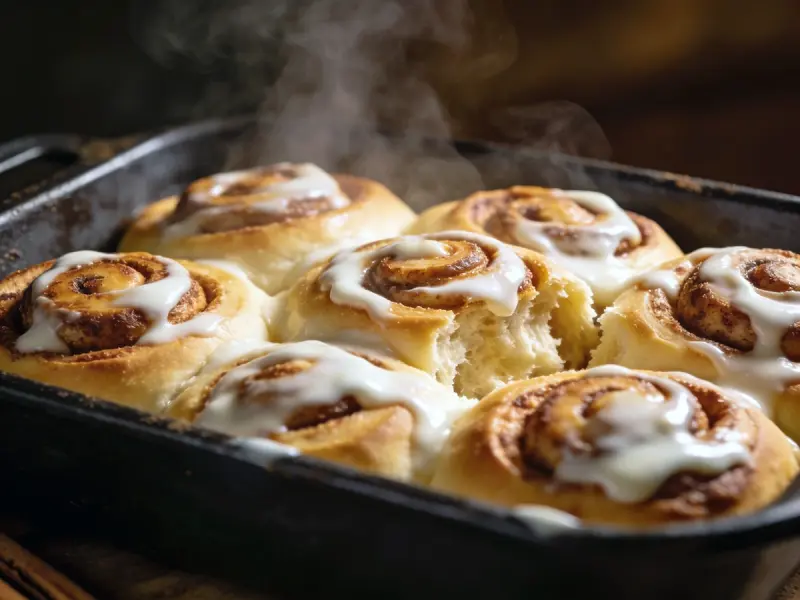
Булочки с корицей и глазурью из сливочного сыра
Булочки с корицей в стиле пекарни: воздушное, обогащённое тесто по технике тангчжон — японский метод заваривания небольшой части муки с молоком до пасты, что позволяет тесту удерживать значительно больше влаги. Начинка из коричневого сахара и корицы карамелизуется в слоях. Сверху — глазурь из сливочного сыра.
Ингредиенты
- 40 гпшеничная мука
- 200 млцельное молоко
- 400 гхлебная мука или сильная белая мука
- 60 гсахарная пудра
- 7 гинстантных дрожжи
- 1 ч.л.мелкая соль
- 2 шт.яйца
- 80 млтёплое цельное молоко
- 60 гнесолёное масло
- 120 гмягкий коричневый сахар
- 2 ст.л.молотая корица
- 60 гнесолёного масло очень мягкий
- 150 гжирный сливочный сыр
- 60 гнесолёное масло
- 200 гсахарная пудра просеянная
- 1 ч.л.ванильный экстракт
- 2 ст.л.цельное молоко или сливки
Приготовление
- Приготовьте тангчжон. Взбейте 40 г муки с 200 мл молока до однородности. Готовьте на среднем огне постоянно помешивая 2–3 минуты до густой пудингообразной пасты. Снимите, охладите до комнатной температуры.
- Замесите тесто. В чаше миксера смешайте хлебную муку, сахар, дрожжи и соль. Добавьте тангчжон, яйца и тёплое молоко. Месите крюком 5 минут на средней скорости. Добавляйте масло кусочками постепенно. Продолжайте месить 8–10 минут до гладкого эластичного теста. Накройте и дайте подойти до удвоения объёма, 60–90 минут.
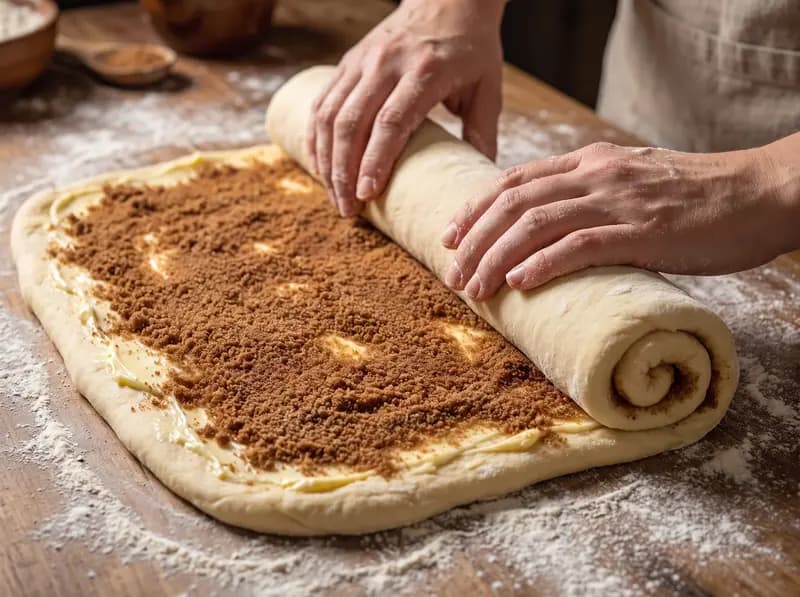
- Раскатайте и наполните. На слегка посыпанной мукой поверхности раскатайте тесто в прямоугольник 40×30 см. Смешайте коричневый сахар с корицей. Равномерно намажьте очень мягкое масло по всей поверхности. Посыпьте сахарно-коричной смесью. Плотно сверните в рулет. Зубной нитью или зубчатым ножом нарежьте на 12 равных частей. Разложите срезом вверх в застеленную форму 23×33 см. Накройте и дайте подойти 45–60 минут.
- Выпечка. Разогрейте духовку до 180°C. Выпекайте 20–25 минут до светло-золотистого цвета — не до тёмного. Внутренняя температура 88°C. Охладите в форме 5 минут.
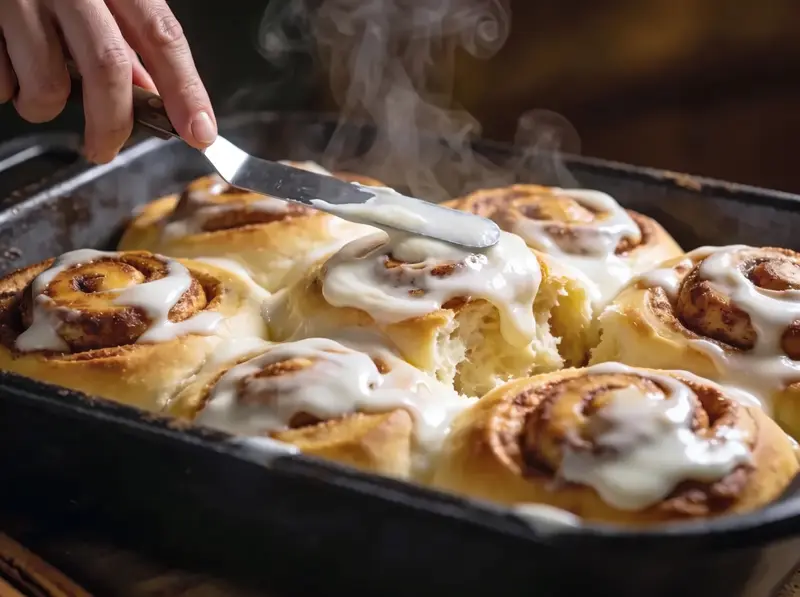
- Приготовьте глазурь. Взбейте сливочный сыр с маслом до гладкости. Добавьте сахарную пудру и ваниль. Добавьте молоко для консистенции. Нанесите обильно на тёплые булочки. Подавайте сразу.
Вопросы
Японская и китайская техника: небольшая часть муки и жидкости из рецепта заваривается до густой пасты перед замешиванием. При нагреве до 65°C крахмал желатинизируется и связывает молекулы воды прочнее чем сырая мука. Это позволяет тесту быть более гидратированным — более мягкая, нежная текстура сохраняется дольше.
Да — ночной метод даже предпочтительнее для вкуса. После нарезки плотно накройте и уберите в холодильник на ночь (до 16 часов). Медленный холодный подъём развивает больше вкуса. Утром достаньте за 45–60 минут перед выпечкой. Выпеченные без глазури булочки замораживаются на 1 месяц.
Три причины: неправильное замешивание (тесто должно быть гладким и эластичным); пересушивание в духовке (светло-золотые, не тёмно-коричневые); слишком много муки при раскатке — используйте минимум.
Лучший метод — зубная нить: подведите под рулет и потяните перекрёстно. Острый зубчатый нож тоже подходит: пилящие движения без давления. Обычный нож давит слои — избегайте.
Идеально — через 5–10 минут после выпечки. Сразу из духовки глазурь превращается в жидкость. На полностью холодные булочки глазурь лежит твёрдым слоем сверху. Тёплые булочки позволяют глазури мягко затекать в слои оставаясь густой.
Оцени
Рецепты на почту
Одно письмо в неделю: рецепт под ваш вкус и всё новое на сайте. Отключить рассылку можно в один клик.
В подарок — книга рецептов Сергея (epub).
Нажимая кнопку, вы соглашаетесь с политикой конфиденциальности.
Расскажите, что любите готовить (30 секунд) →Смотри дальше
Ещё блюда из архива — подобраны по пересечению с тем, что ты сейчас готовишь.


Обсудить рецепт
Комментарии (1)
The cream cheese frosting must go on while the rolls are still warm from the oven. Not hot — warm. Hot rolls melt the frosting into a thin glaze. Cold rolls do not absorb it. There is a window of about 10 minutes after they come out that is perfect. The other thing I learned after testing this recipe many times: do not skip the overnight rise in the fridge. Room temperature rolls are good. Cold-fermented rolls have a depth of flavour that is noticeably better, and the texture is more tender.