
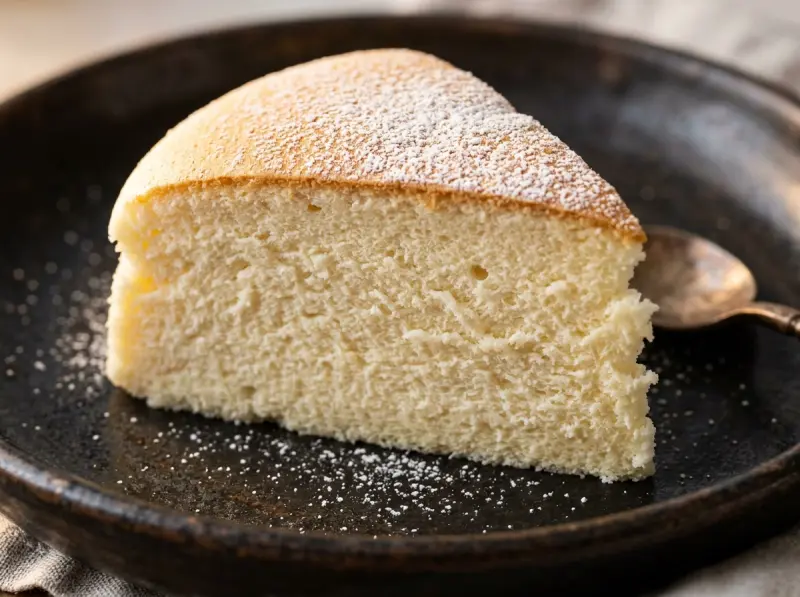
Японский чизкейк (суфле-чизкейк)
Невесомый гибрид чизкейка и суфле: сливочный сыр растоплен в гладкое тесто, белки взбиты до мягких пиков и введены, выпекается на водяной бане при низкой температуре. Результат колышется при встряхивании формы. Не сладкий по-американски — лёгкая кислинка сыра с нотой лимона.
Ингредиенты
- 250 гжирный сливочный сыр
- 60 гнесолёное сливочное масло
- 80 млцельное молоко
- 6 шт.яйца
- 120 гсахарная пудра
- 60 гмука для тортов
- 20 гкукурузный крахмал
- 1 шт.лимон
- 0.25 ч.л.винный камень
- 2 ст.л.абрикосовый джем + 1 ст.л. тёплая вода
Приготовление
- Подготовьте форму и водяную баню. Разогрейте духовку до 160°C. Застелите только дно круглой формы 20 см пергаментом — бока оставьте голыми, чтобы тесто цеплялось за них при подъёме. Если форма разъёмная — плотно оберните снаружи двумя слоями фольги. Поставьте противень на среднюю полку и налейте 2–3 см горячей воды.
- Приготовьте основу из сливочного сыра. Соедините сыр, масло и молоко в жаростойкой миске над едва кипящей водой. Помешивайте до полной гладкости. Снимите с огня. Вмешайте желтки по одному. Добавьте 60 г сахара и перемешайте. Просейте муку и крахмал, вмешайте до гладкости. Добавьте цедру и сок лимона. Процедите через мелкое сито. Немного охладите.
- Взбейте меренгу до мягких пиков. Миска и венчик должны быть абсолютно сухими и обезжиренными — протрите уксусом перед использованием. Взбейте холодные белки с винным камнем до пены. На средней скорости добавляйте оставшиеся 60 г сахара в три приёма. Взбивайте до мягких глянцевых пиков — кончик чуть загибается при поднятии. Не до жёстких пиков.
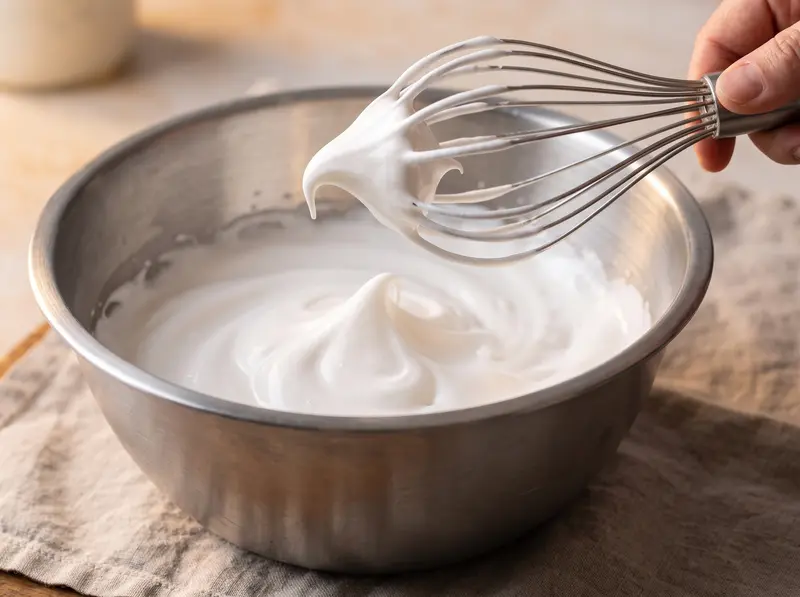
- Вмешайте и выпекайте. Вмешайте четверть меренги в основу из сыра для облегчения. Перелейте облегчённую основу в оставшуюся меренгу и складывайте лопаткой — около 30–40 движений до исчезновения белых полос при сохранении объёма. Вылейте в форму. Слегка постучите о стол. Поставьте в водяную баню. Выпекайте 25 минут при 160°C.
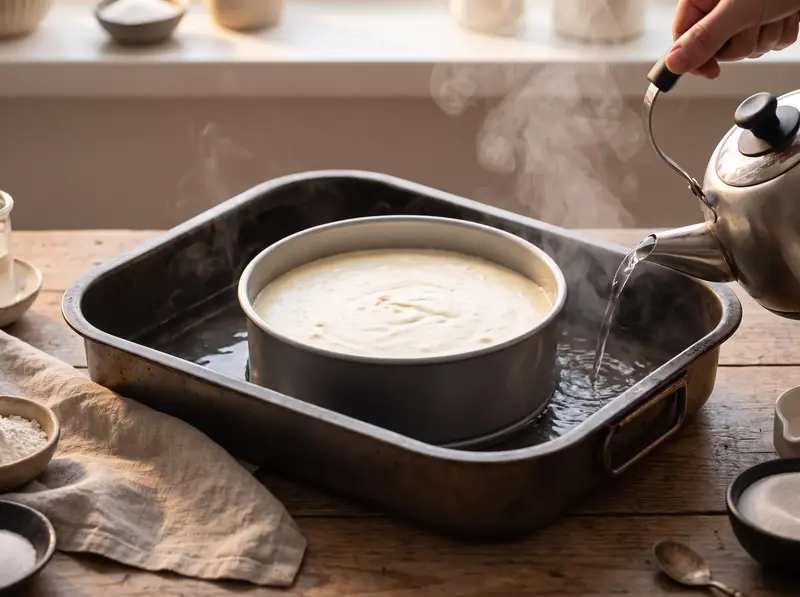
- Уменьшите температуру и доведите до готовности. Снизьте температуру до 140°C не открывая дверцу. Выпекайте ещё 40–50 минут до золотистого верха и характерного колыхания всего пирога целиком. Выключите духовку, приоткройте дверцу деревянной ложкой, оставьте 15 минут. Охладите в форме 10 минут, выньте. По желанию смажьте тёплым абрикосовым джемом. Подавайте тёплым или охлаждённым.
Вопросы
Почти всегда — слишком высокая температура. Поверхность схватывается до того как тесто внутри расширится. Также: жёсткие пики меренги; выпечка без водяной бани; открытие дверцы в первые 25 минут. Снизьте температуру на 10°C, используйте только мягкие пики.
Небольшое оседание (10–15% высоты) нормально. Большой провал: слишком быстрое охлаждение (всегда оставляйте в выключенной духовке с приоткрытой дверцей 15 минут); недопечённость (дрожание должно быть всего торта целиком); чрезмерное смешивание, разбившее меренгу.
Мягкие: кончик меренги слегка загибается при поднятии венчика. Поверхность глянцевая и гладкая. Жёсткие: кончик стоит прямо. Жёсткие белки плохо вмешиваются, создают неравномерные пузыри, торт трескается. Для этого чизкейка остановитесь прямо перед тем как кончик станет жёстким.
Да, но плотно оберните внешние стенки двумя-тремя слоями тяжёлой фольги перед погружением в водяную баню. Попавшая вода снизу сделает дно мокрым. Перед открытием кольца проведите тонким ножом по краю.
Свежий — соуфлеобразный, тёплый, очень нежный. После ночи в холодильнике структура уплотняется, вкус сливочного сыра углубляется, текстура смещается от облачной к чему-то между муссом и классическим чизкейком. Оба варианта правильные — это просто разные десерты из одной выпечки.
Смотри дальше
Ещё блюда из архива — подобраны по пересечению с тем, что ты сейчас готовишь.
Рецепты на почту
Одно письмо в неделю: рецепт под ваш вкус и всё новое на сайте. Отключить рассылку можно в один клик.
В подарок — книга рецептов Сергея (epub).
Нажимая кнопку, вы соглашаетесь с политикой конфиденциальности.
Расскажите, что любите готовить (30 секунд) →
Обсудить рецепт
Комментарии
Комментариев пока нет — будьте первым!