
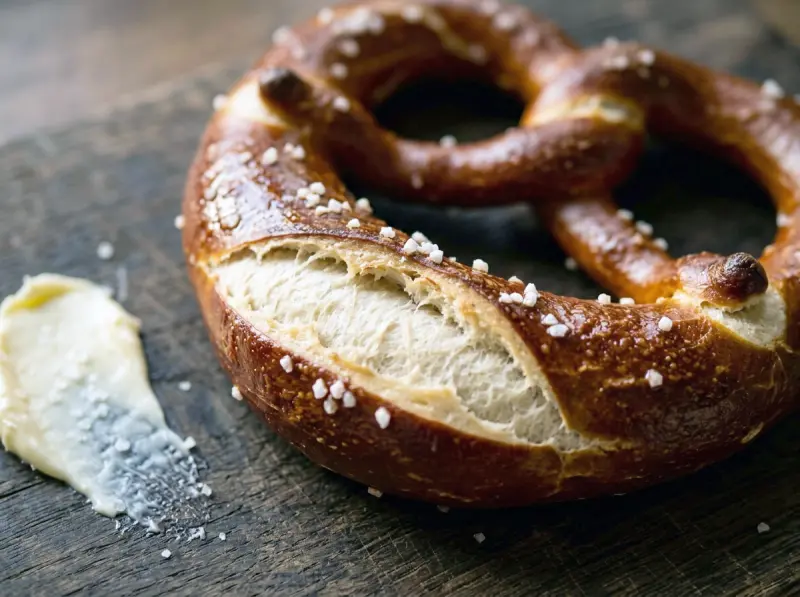
Крендель (Brezel / Pretzel)
Крендель (немецкий Brezel, Laugenbrezel) — узел из дрожжевого теста родом из Южной Германии и Австрии, который перед выпечкой окунают в щелочную ванну, чтобы корочка стала блестящей красновато-коричневой. Именно ванна даёт кренделю тёмную корочку и лёгкую горчинку. Немецкие пекарни берут пищевую щёлочь; в этом рецепте прокалённая питьевая сода — домашний вариант с более высоким pH, чем у обычной соды. Серединка толстая и мягкая, скрученные концы тонкие, упругие и хрустящие. Активная работа занимает около 55 минут. Соде нужен час в духовке (она может запекаться, пока поднимается тесто), тесто поднимается 1 час и ещё 30 минут охлаждается, так что от начала до конца пройдёт около 2 часов 40 минут. Подавайте тёплыми, с маслом и холодным пивом.
Ингредиенты
- 500 гхлебной или пшеничная мука
- 7 гбыстродействующих или активных дрожжи
- 1 ч.л.мелкая соль
- 1 ч.л.сахар
- 300 млтёплая вода
- 30 гнесолёного сливочное масло
- 100 гпищевой соды
- 1 литрлитр воды
- 2 ст.л.крупная соль для кренделей или хлопьевидной морская соль
Приготовление
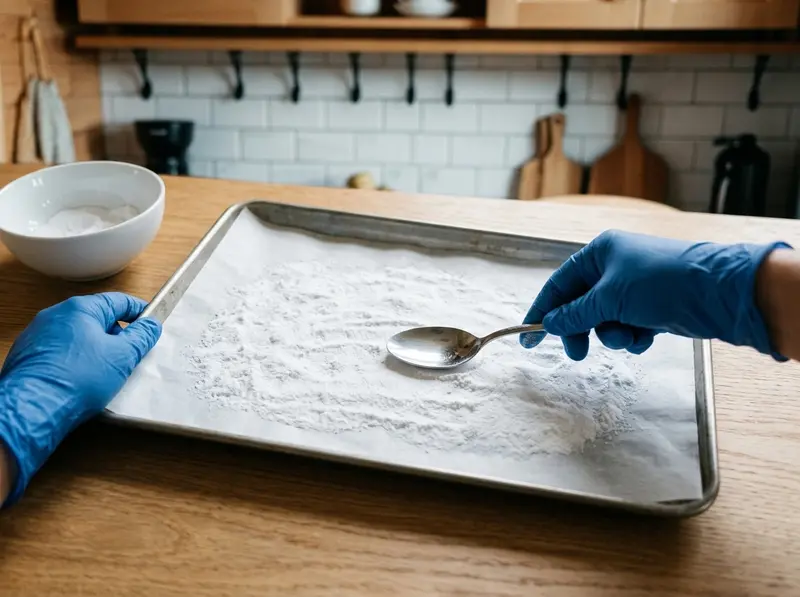
- Прокалите пищевую соду (сделайте это заранее). Рассыпьте соду на противне, застеленном бумагой для выпечки, и запекайте при 120°C 1 час. Бикарбонат натрия превращается в карбонат натрия — более сильную щёлочь, которая даёт кренделям более тёмную корочку и более аутентичный вкус, чем обычная сода. Остудите и храните в герметичной банке. Работайте с ней в перчатках: карбонат натрия раздражает кожу.
- Приготовьте тесто. Растворите дрожжи и сахар в тёплой воде и оставьте на 5–10 минут, пока не образуется пена. Соедините муку и соль в большой миске. Добавьте дрожжевую смесь и размягчённое масло. Месите руками 8–10 минут или в миксере 5–6 минут, пока тесто не станет гладким, эластичным и слегка липковатым, но не клейким. Если его надавить, оно должно пружинить. Накройте и оставьте подниматься в тёплом месте на 1 час до удвоения.
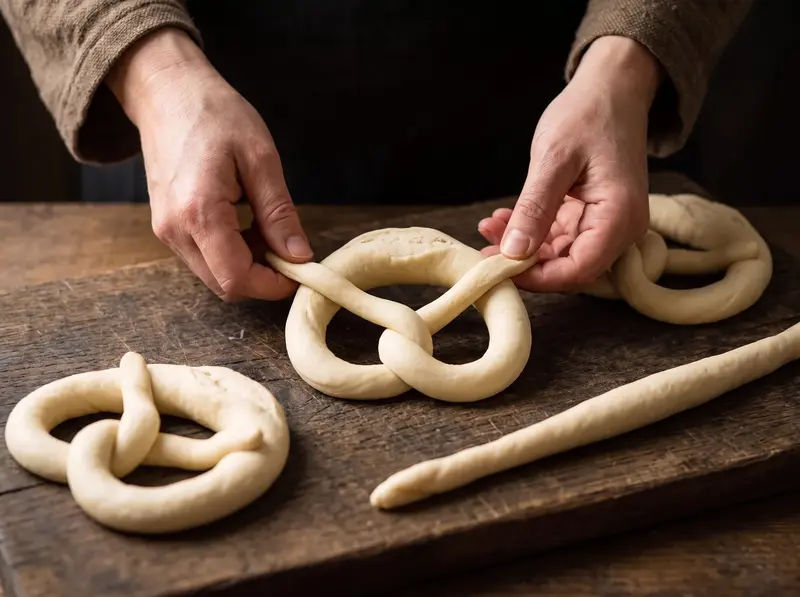
- Сформируйте крендели. Выложите поднявшееся тесто и разделите на 8 равных частей (около 100 г каждая). Скатайте каждую в жгут длиной около 50 см — толще посередине и намного тоньше на концах. Форма: сложите жгут буквой U, дважды скрестите концы друг с другом, получится скрутка, затем опустите скрученные концы вниз и плотно прижмите к нижней дуге U. Выложите на смазанную маслом бумагу для выпечки. Уберите в холодильник на 30 минут без накрывания — тесто уплотнится и сохранит форму в ванне. Пока крендели охлаждаются, разогрейте духовку до 220°C.
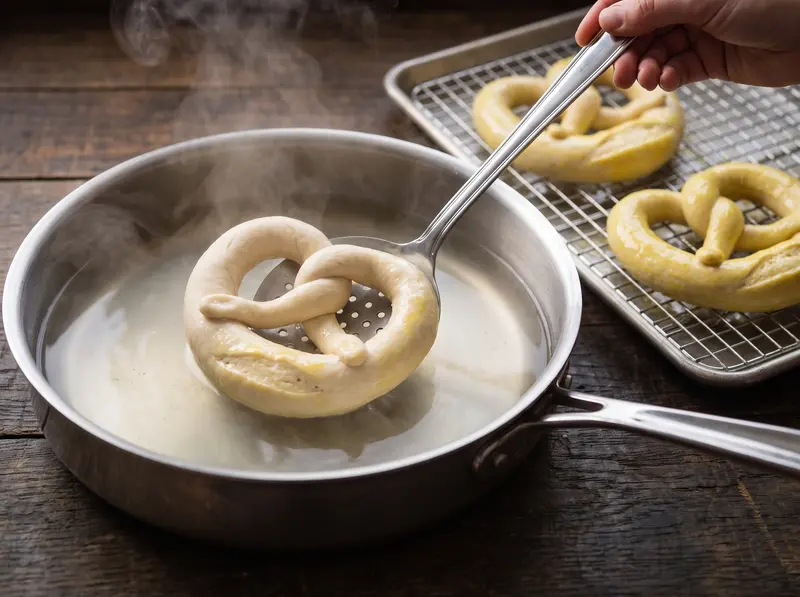
- Окуните в щелочную ванну и выпекайте. Растворите прокалённую соду в 1 литре кипящей воды в широкой кастрюле из нержавеющей стали или керамики (не берите алюминий — щёлочь с ним реагирует). В перчатках по одному аккуратно опускайте крендели в ванну шумовкой, чтобы горячий щелочной раствор не брызгал, и держите каждый по 20–30 секунд с каждой стороны. Переложите на застеленный, смазанный маслом противень. Надрежьте толстую серединку каждого кренделя острым ножом или лезвием — глубокий горизонтальный надрез, который раскроется при выпечке. Щедро посыпьте крупной солью. Выпекайте 12–15 минут до тёмного красновато-коричневого цвета.
- Подавайте тёплыми. Переложите на решётку на 5 минут. Крендели вкуснее всего в течение 2 часов после выпечки, пока корочка ещё похрустывает. По-баварски: разрежьте горизонтально через серединку и щедро намажьте холодным солёным маслом. Не храните в пластиковом пакете — соль притягивает влагу, и корочка размокает. Бумажный пакет или ткань — не дольше суток.
Вопросы
Щелочная ванна — единственная причина, по которой крендель на вкус как крендель, а не как обеденная булочка из того же теста. Она меняет поверхность теста так, что в горячей духовке оно быстро и глубоко румянится: получается блестящая красновато-коричневая корочка и лёгкая горчинка, которые бывают только у кренделя. Выпеките то же тесто без ванны — выйдет приятная мягкая булочка, но не крендель. Чем сильнее щёлочь (прокалённая сода сильнее обычной, пищевая щёлочь сильнее ещё), тем темнее и насыщеннее результат.
Обычная сода (бикарбонат натрия): pH ~8. Лёгкое потемнение и слабая нота кренделя. Самый доступный вариант. Прокалённая сода (карбонат натрия): pH ~11. Получается, если запекать соду 1 час при 120°C. Крендели выходят заметно темнее и аутентичнее. Лучший вариант для дома. Пищевая щёлочь (гидроксид натрия): pH 13–14. Традиционный профессиональный способ: самая тёмная красновато-коричневая корочка и самый насыщенный вкус. Пекари используют раствор 3–4% и работают в резиновых перчатках и защитных очках, потому что даже такой раствор обжигает кожу и глаза. После выпечки корочку есть безопасно. В этом рецепте щёлочь не используется.
Раскатайте жгут примерно до 50 см: толще посередине и намного тоньше на концах. Тонкие концы станут скрученными ручками, толстая середина — мягким брюшком. Выложите жгут буквой U. Возьмите оба конца, скрестите их друг с другом от себя, затем скрестите ещё раз — получится двойная скрутка. Опустите скрученные концы вниз и плотно прижмите к нижней дуге U примерно в положениях на 4 и 8 часов. Сверху крендель должен выглядеть симметричным. Формовка требует практики: первые два будут выглядеть неправильно, остальные получатся быстро лучше. Охлаждение сформованных кренделей перед ванной уплотняет тесто, и их легче переносить, не теряя формы.
Надрез создаёт контролируемую слабую точку на толстой серединке, где крендель раскроется при выпечке. Без надреза серединка расширяется как придётся, и поверхность трескается неровно. Глубокий надрез поперёк серединки даёт чистый разрыв — это визуальная подпись настоящего немецкого кренделя, и он влияет на текстуру: внутри надреза мякиш остаётся мягче и воздушнее, а край надреза подрумянивается. Надрез должен быть уверенным и глубоким, острым ножом или лезвием, прямо перед тем, как посыпать солью и поставить крендели в духовку.
Крупная соль на поверхности гигроскопична: она притягивает влагу из воздуха и передаёт её корочке. Поэтому крендель в пластиковом пакете через несколько часов полностью размокает. Заворачивайте в бумажный пакет или неплотную ткань, чтобы влага уходила. Лучше всего крендели в течение 2 часов после выпечки. Потом разогрейте их в духовке, нагретой до 200°C, 5 минут — корочка оживает. Не используйте микроволновку: она парит крендель и убивает остатки хруста. Вчерашние крендели мягче, но с маслом всё равно вкусны и отлично подходят как хлеб для бутерброда с баварским Obazda (сырная намазка), а ещё хороши рядом с братвурстом.
Смотри дальше
Ещё блюда из архива — подобраны по пересечению с тем, что ты сейчас готовишь.
Рецепты на почту
Одно письмо в неделю: рецепт под ваш вкус и всё новое на сайте. Отключить рассылку можно в один клик.
В подарок — книга рецептов Сергея (epub).
Нажимая кнопку, вы соглашаетесь с политикой конфиденциальности.
Расскажите, что любите готовить (30 секунд) →
Обсудить рецепт
Комментарии (3)
Die Natronlauge macht mir ehrlich gesagt etwas Angst. Hab stattdessen Natron im Wasser aufgelöst, Ergebnis ist ok aber nich so dunkel wie beim Bäker
Super Rezept! Die Laugenbrezel sind fast wie vom Bäcker geworden. Nur die Form muss ich noch üben haha
Frage an die community: benutzt ihr wirklich Natronlauge oder geht auch Backpulver im Wasser? Ich hatte Angst vor der Lauge und hab Natronlösung genommen. Das Ergebnis war okay aber nicht so dunkel wie beim Bäcker.