Skip to content
GetCookMatch
Bratwurst with fresh bratwurst, German lager and onion — Germany recipeGermanyGermany
📝Useful tips
S
Sergei Martynov

The two-stage method — simmer first, sear second — is not extra work, it is better food. A raw bratwurst put directly onto a screaming hot grill has to navigate a difficult path: cook the inside before the outside burns. The result is often a split sausage with a charred exterior and a questionable interior. The beer bath removes that uncertainty entirely. After the simmer the sausage is cooked through and safe to eat; the final sear is purely for colour and skin texture. This is how German street vendors handle volume — a tray of simmered bratwurst is always ready and a sear on the grill takes 4 minutes.

💡

The beer-braised onions from the poaching bath are arguably better than the bratwurst itself. Do not discard them. Once the sausages are removed, raise the heat and let the onions cook in the remaining beer until the liquid has almost completely reduced and the onions are jammy and golden-edged. Season with salt and a pinch of sugar. They keep for several days and are excellent on anything.

Meat Dishes

Bratwurst

By Sergei Martynov

Fresh pork sausages grilled or pan-fried until the skin is deeply browned and the fat inside sizzles. The classic method: simmer briefly in beer with onions first, then finish on a hot grill or cast-iron pan to build colour and crispness. The beer bath cooks the sausages through gently and infuses flavour without the risk of splitting or drying out. Serve with coarse-ground German mustard, sauerkraut, and crusty bread. Bratwurst is street food, tavern food, market food — always eaten immediately, always hot.

⏱️
25
Minutes
👥
4
Servings
🔥
420
kcal
Rate this recipe

Key Ingredients

What you'll need

Ingredients

How to make it

Instructions

  1. 1

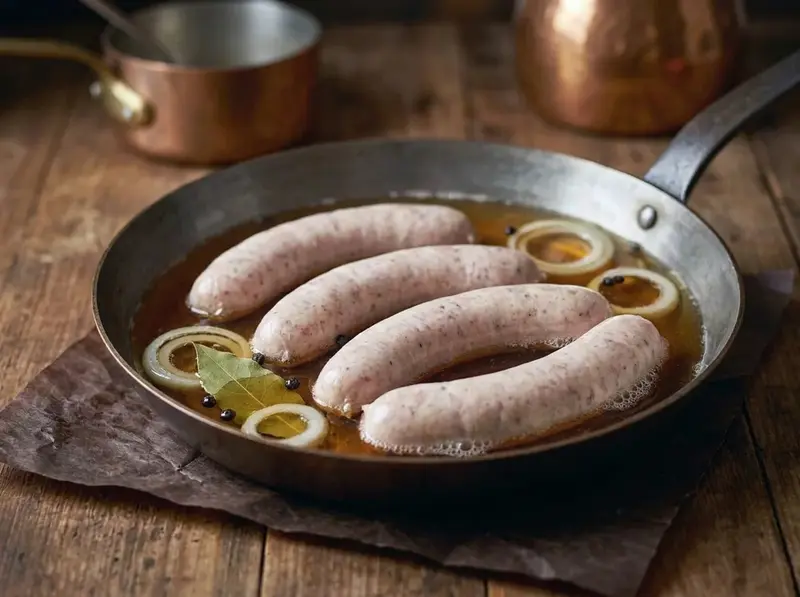
    Simmer in beer. Place the bratwurst in a single layer in a wide pan. Add the sliced onion, bay leaf, and peppercorns. Pour the beer over until the sausages are just covered. Bring to a gentle simmer over medium heat — do not boil. Simmer for 10 to 12 minutes, turning once. The sausages will turn pale and plump. Remove them from the beer bath. The beer-braised onions can be kept warm and served alongside.

  2. 2

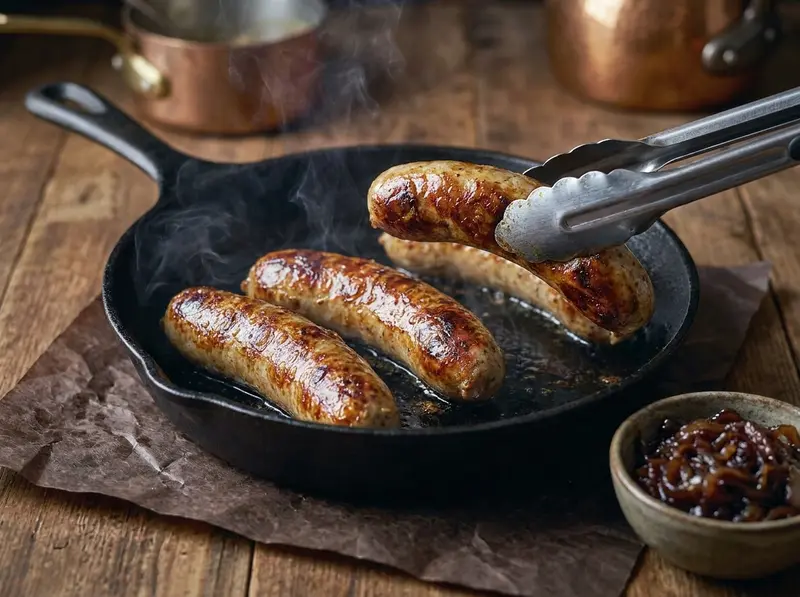
    Sear on high heat. Heat the oil or lard in a cast-iron skillet or grill pan over high heat until very hot. Add the sausages. Do not pierce them. Cook for 3 to 4 minutes per side, turning every 2 minutes, until the skin is deeply golden-brown and visibly blistered. The high heat after the gentle simmer creates the characteristic crackling skin without the risk of splitting. On a charcoal grill: 4 to 5 minutes total over direct heat, turning frequently.

  3. 3

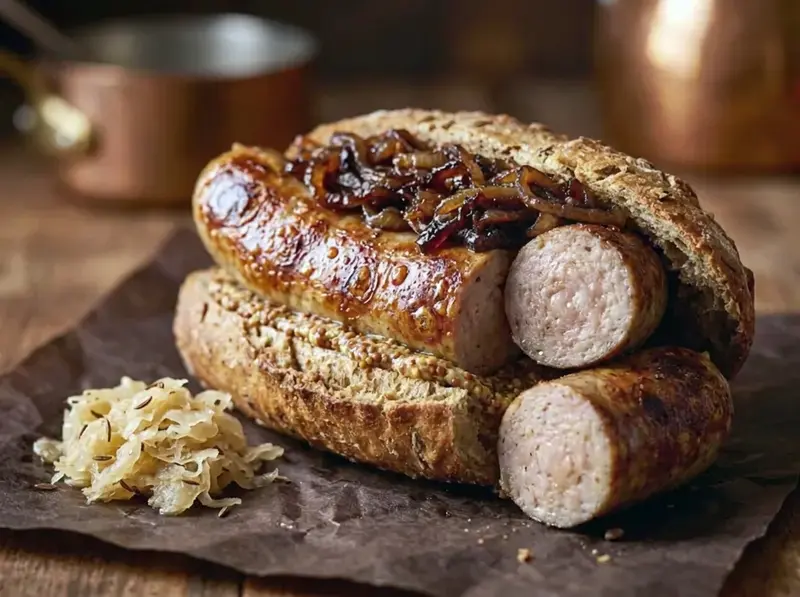
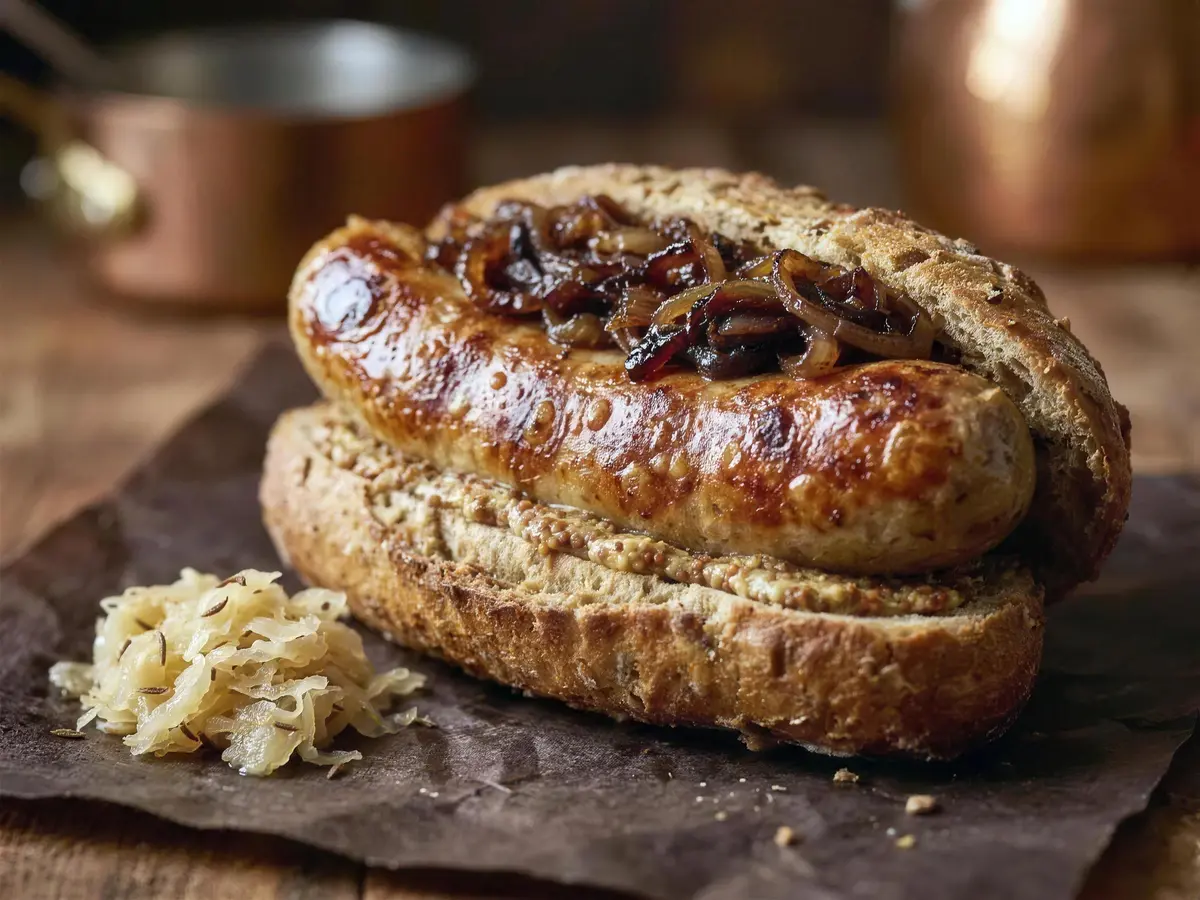
    Rest briefly and serve. Let the bratwurst rest on a wire rack for 1 to 2 minutes after the sear — the juices settle slightly. To serve in a roll: split the roll, spread mustard generously on both sides, tuck in the bratwurst, and pile the beer-braised onions on top. Sauerkraut is served on the side or piled into the roll. Eat immediately while the skin is still crackling.

Join the conversation

Comments

Leave a comment

Loading comments…

Frequently Asked Questions

Why does bratwurst split when frying — how do you prevent it?

Bratwurst splits when the fat inside heats faster than the casing can expand, or when the outside is already firm while the inside is still cold and contracting. Three ways to prevent it: first, never put cold bratwurst directly onto a very hot grill — bring them to room temperature for 20 minutes first. Second, use the beer-bath method: simmer gently in beer for 10 minutes first, then sear. The simmer cooks the sausage through and allows the casing to stretch gradually. Third, do not pierce the sausages to check doneness — every hole is a potential split point and loses juice.

Why poach bratwurst in beer — what does it actually do?

Beer poaching does three things. First, it cooks the sausage through safely and gently so that when it goes onto the grill or pan, the sear is purely for skin colour and texture rather than a race against time to cook the interior. Second, the beer infuses a subtle malt and hop flavour into the meat. Third, the simmered onions and liquid become a natural accompaniment — sweet, beer-soaked onions that are standard in any German sausage stall. Plain water works instead of beer and achieves the cooking benefit, but beer is traditional and adds flavour the water cannot.

What types of bratwurst exist — what is the difference between Thüringer and Nürnberger?

Germany has more than 40 protected regional bratwurst varieties. The most famous: Thüringer Rostbratwurst from Thuringia — long, thin, coarsely ground pork, heavily seasoned with marjoram and caraway, always grilled over charcoal, never boiled. Nürnberger Rostbratwurst from Nuremberg — tiny (about 9 cm long), finely ground, mildly spiced with marjoram, traditionally served in sets of 6 or 8 with sauerkraut. Fränkische Bratwurst from Franconia — large, coarsely ground, simply spiced. Weißwurst from Bavaria — white veal and pork sausage not grilled but poached in hot water, served with sweet mustard. The common thread across all: fresh raw sausage cooked to order.

What do you serve with bratwurst — mustard, sauerkraut, or what else?

The classic German accompaniments: coarse-ground mustard (Mittelscharfer Senf or Düsseldorfer) is non-negotiable — sweet mustard or smooth yellow mustard are wrong here. Sauerkraut, warm or at room temperature, is the standard vegetable side. Beer-braised onions are standard at any German street stall. Bread: a crusty Brötchen (roll) or Laugenbrötchen (pretzel roll) split and pressed around the bratwurst. For a plated meal: German potato salad (Kartoffelsalat, dressed with vinegar not mayonnaise in the southern style) or simply boiled potatoes with parsley butter. The combination of fat, salt, acid (sauerkraut or mustard), and bread is what makes the meal work.

Can you make bratwurst at home without a meat grinder?

Yes, with reasonable results. Buy ground pork from a butcher (medium grind) and mix in the spice blend: per 500 g pork, add 1 teaspoon salt, ½ teaspoon white pepper, ½ teaspoon ground mace or nutmeg, ½ teaspoon dried marjoram, ¼ teaspoon caraway seeds, and 3 tablespoons cold water or white wine. Mix vigorously until the mixture becomes slightly sticky — this develops the protein bonds. Shape into patties (Bratwurst Frikadellen) or, if you can get natural hog casings from a butcher, press through a piping bag into the casings. The patty version skips the casing entirely and fries identically to a burger. Sausage casings are available online and from butchers.