Skip to content
GetCookMatch
Lentil Bolognese with red lentils, crushed tomatoes and tomato paste — Italy recipeItalyItaly
📝Useful tips
S
Sergei Martynov

The tomato paste step is the one most people skip and the one that matters most. Browning tomato paste in the oil before adding liquid is a technique borrowed from traditional meat bolognese — it caramelises the sugars in the paste and drives off the acidic rawness. Two to three minutes in a hot pan transforms it from sharp and concentrated to something rounded and almost sweet. The lentils will thicken the sauce on their own as they dissolve, so resist adding more liquid early on. Give the sauce time to do its thing.

💡

For a more convincingly meaty texture, add a tablespoon of soy sauce or a teaspoon of miso paste when you add the lentils. Neither makes the sauce taste Asian — both add umami that lentils naturally lack. Soy sauce in particular disappears completely into the tomato base, leaving only depth behind. This is also the bolognese to make on Sunday and eat all week. It thickens in the fridge and needs a splash of water when reheating, but the flavour gets noticeably better after 24 hours.

Cereal and Pasta Dishes

Lentil Bolognese

By Sergei Martynov

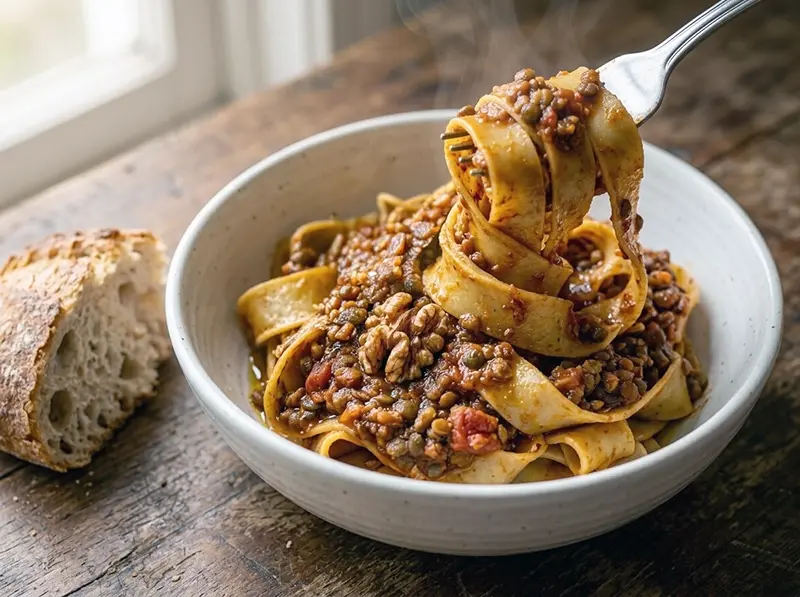
Red lentils simmered with soffritto, tomato paste, crushed tomatoes, and red wine into a thick, deeply savoury pasta sauce. No meat, no substitutes — just lentils doing what they do best when you give them enough time and heat. The sauce works because red lentils dissolve into the tomato base, thickening it while adding body and protein. Walnuts, added near the end, give the sauce a slight richness and something to chew on. The whole thing takes about 40 minutes and tastes better the next day.

⏱️
45
Minutes
👥
4
Servings
🔥
480
kcal
Rate this recipe

Key Ingredients

What you'll need

Ingredients

How to make it

Instructions

  1. 1

    Build the soffritto. Heat the olive oil in a large heavy pot over medium heat. Add the onion, carrots, and celery with a good pinch of salt. Cook for 8 to 10 minutes, stirring occasionally, until the vegetables are soft and the onion is starting to turn golden at the edges. Don't rush this — the soffritto is where the sauce gets its sweetness and depth. Add the garlic and dried herbs and cook for another 60 seconds.

  2. 2

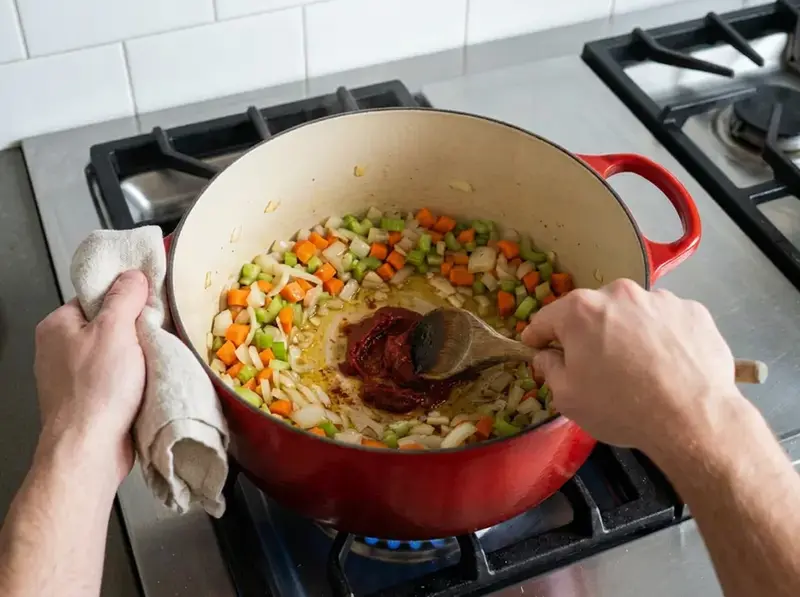
    Brown the tomato paste. Push the vegetables to the sides and add the tomato paste to the centre of the pot. Let it sit on the heat for 2 to 3 minutes without stirring, then stir it into the vegetables. It should darken slightly and smell toasty rather than raw. This step makes a noticeable difference to the final flavour — caramelised tomato paste tastes nothing like paste straight from the tube.

  3. 3

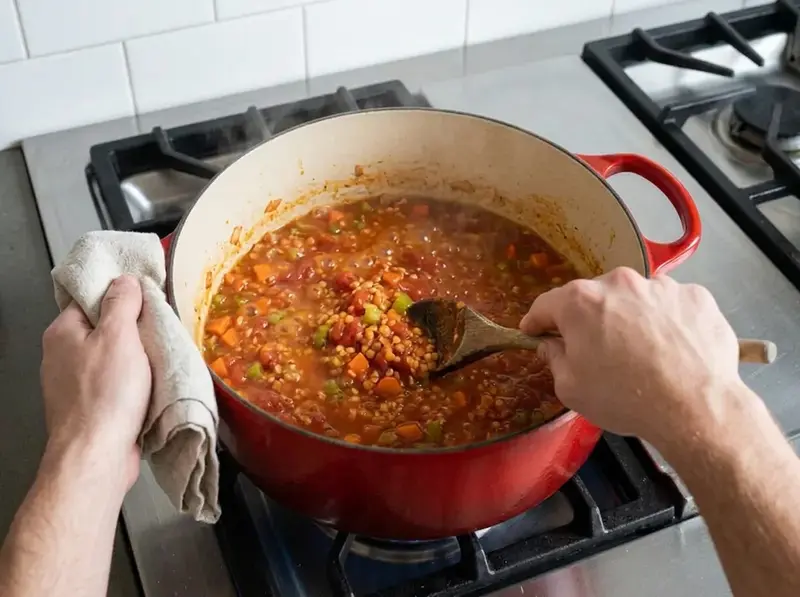
    Deglaze and build the sauce. Pour in the red wine and scrape up anything stuck to the bottom of the pot. Let it bubble and reduce for 2 minutes. Add the rinsed red lentils, crushed tomatoes, and vegetable stock. Stir everything together and bring to a boil, then reduce the heat to a steady simmer. Cook uncovered for 25 to 30 minutes, stirring every 8 to 10 minutes, until the lentils have mostly dissolved into the sauce and it has thickened considerably.

  4. 4

    Add walnuts and finish. Stir in the chopped walnuts and cook for 5 more minutes. Taste carefully: the sauce likely needs more salt. Add black pepper. If it tastes sharp or flat, a teaspoon of balsamic vinegar or a small pinch of sugar usually fixes it. The sauce should be thick enough to mound slightly on a spoon — if it's still loose, simmer a few minutes more uncovered. If it's too thick, add a splash of the pasta cooking water.

  5. 5

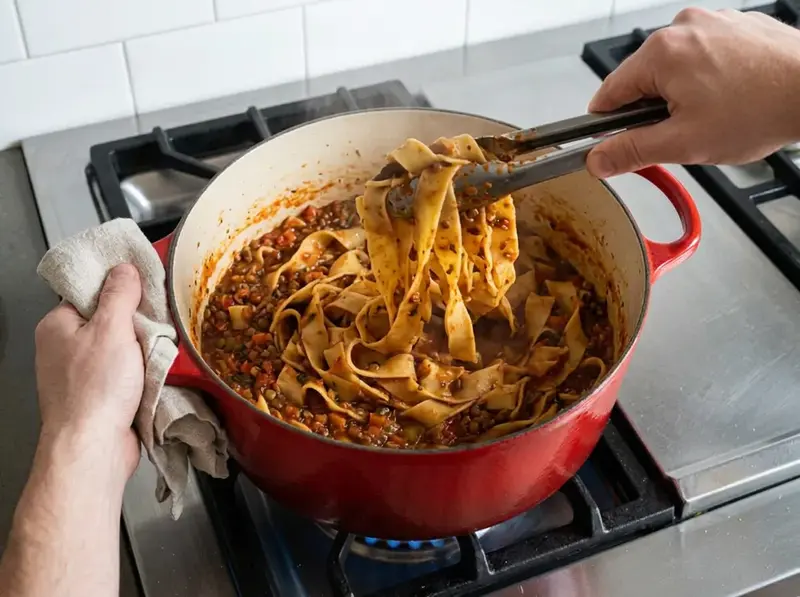
    Toss with pasta and serve. Cook the pasta until just al dente in well-salted water, saving a cup of the cooking water before draining. Add the drained pasta directly to the sauce and toss over medium heat for 1 to 2 minutes, adding pasta water a splash at a time to loosen if needed. The starch in the water binds the sauce to the pasta better than any other method. Serve in warmed bowls with a drizzle of olive oil and fresh basil or parsley if you have it.

Join the conversation

Comments

Leave a comment

Loading comments…

Frequently Asked Questions

What type of lentils work best for vegan bolognese — red, green, or brown?

Red lentils are the go-to for bolognese-style sauces. They cook in 20 to 25 minutes and dissolve into the tomato base, creating a thick, dense texture that reads as meaty without looking obviously like lentils. Green and brown lentils hold their shape better — the sauce ends up chunkier and more textured, which some people prefer. Black Puy lentils stay almost entirely intact and aren't ideal here. If you want a sauce that closely mimics the smooth density of traditional bolognese, use red. If you like something with more bite and visible pieces, go green or brown and add 10 to 15 minutes to the cooking time.

How do you make lentil bolognese taste meatier without adding meat?

Three things work reliably. First, brown the tomato paste in hot oil for 2 to 3 minutes before adding any liquid — caramelised paste has a depth that raw paste doesn't. Second, add finely chopped walnuts: they provide fat and chew that the brain associates with ground meat. Third, a tablespoon of soy sauce or a teaspoon of miso stirred in with the lentils adds the umami that lentils are missing on their own. None of these taste out of place — together they close the gap considerably. Meat-eaters regularly mistake this sauce for a meat version when it's cooked well.

Can you make lentil bolognese ahead and how long does it keep in the fridge?

Yes — it's one of the best pasta sauces for batch cooking. The sauce keeps for up to 5 days in the fridge and actually improves after the first day as the flavours settle. It freezes well for up to 3 months in portions. When reheating, the sauce will have thickened considerably — add a few tablespoons of water or vegetable stock and warm over medium heat, stirring. Always cook the pasta fresh rather than storing it mixed with the sauce, otherwise the pasta absorbs all the liquid and becomes stodgy.

What can you substitute for red wine in lentil bolognese without alcohol?

Wine adds two things: acidity and aromatic depth. The best non-alcoholic substitute is 1 tablespoon of balsamic vinegar combined with 3 to 4 tablespoons of extra vegetable stock. The balsamic provides the acidity and a faint sweetness, the stock gives volume. Pomegranate juice (2 to 3 tablespoons) is another solid option with a similar fruity-tart profile. Either way, don't skip the deglazing step itself — adding any liquid to the hot pan and scraping up the stuck bits is where the flavour is, regardless of what the liquid is.

How much plant-based protein is in lentil bolognese — is it good for a high-protein vegan diet?

Red lentils contain around 18 g of protein per 100 g dry weight, making them one of the better plant-based protein sources. One serving of the sauce (without pasta) provides roughly 14 to 18 g of protein. With a serving of standard pasta, that rises to around 22 to 26 g total — comparable to a meat bolognese. Adding walnuts as the recipe suggests brings in another 4 to 5 g plus healthy fats. For an even higher protein meal, serve with chickpea or lentil pasta, which adds a further 8 to 12 g per serving.