Pomegranate molasses is the ingredient that makes this dip what it is. It's thick, deeply tart, and sweet in a concentrated way that gives muhammara its distinctive character. There's no clean substitute — lemon juice gives tartness but not the fruity depth, and honey or sugar gives sweetness but not the acid. If you can't find it in a supermarket, look in any Middle Eastern grocery store; it's a staple. If you truly can't get it, reduce half a cup of pomegranate juice with a teaspoon of sugar in a small saucepan until syrupy. It takes 10 minutes and gets you closer to the real thing than any other workaround.
Muhammara is one of those dips that tastes noticeably better the next day. Make it the day before, press a layer of olive oil over the surface, refrigerate, and bring it to room temperature for 30 minutes before serving. The flavors mellow and integrate overnight — the garlic softens, the molasses settles into the walnut, and the whole thing becomes more cohesive. If you're serving it for a dinner party, this is a genuine advantage.
Muhammara
By Sergei Martynov
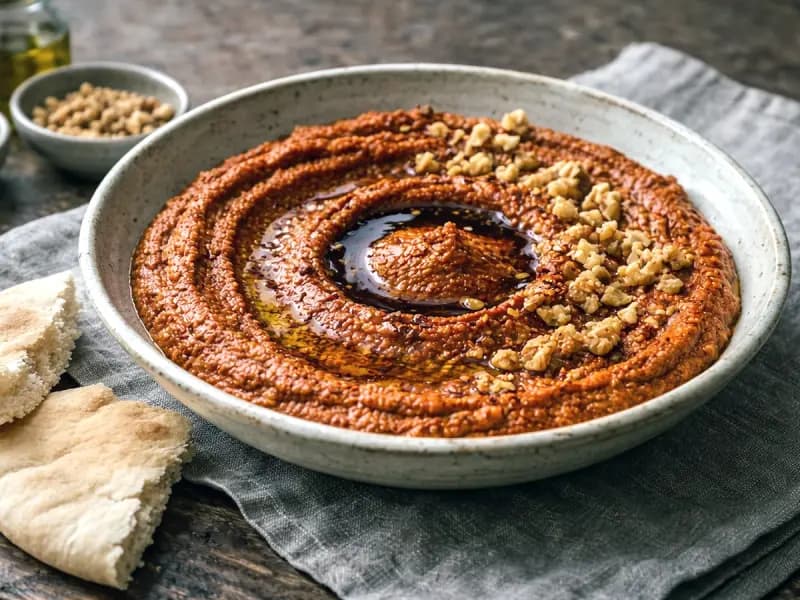
Muhammara comes from Aleppo, Syria, and the name is Arabic for 'reddened'. It's a roasted red pepper and walnut dip with a flavor unlike anything else in the mezze world: sweet from the peppers, tangy from pomegranate molasses, earthy from toasted walnuts, with a slow heat from Aleppo pepper. Breadcrumbs give it body and a slightly grainy texture that holds up on pita. The dip improves overnight — the flavors round out and the texture firms slightly. Unlike hummus, which can be polarising, muhammara tends to win over everyone who tries it.
Key Ingredients
What you'll need
Ingredients
- 400 g
See recipes with roasted red peppersroasted red peppers
i - 100 g
See recipes with walnutswalnuts
i - 40 g

plain breadcrumbs or panko
i - 2
See recipes with garlic clovesgarlic cloves
i - 2 tbsp

pomegranate molasses
i - 1 tbsp
See recipes with fresh lemon juicefresh lemon juice
i - 3 tbsp
See recipes with extra-virgin olive oilextra-virgin olive oil
i - 1.5 tsp

Aleppo pepper flakes
i - 1 tsp
See recipes with ground cuminground cumin
i - 0.5 tsp

fine salt
i - 1 tsp

sumac
i
How to make it
Instructions
- 1
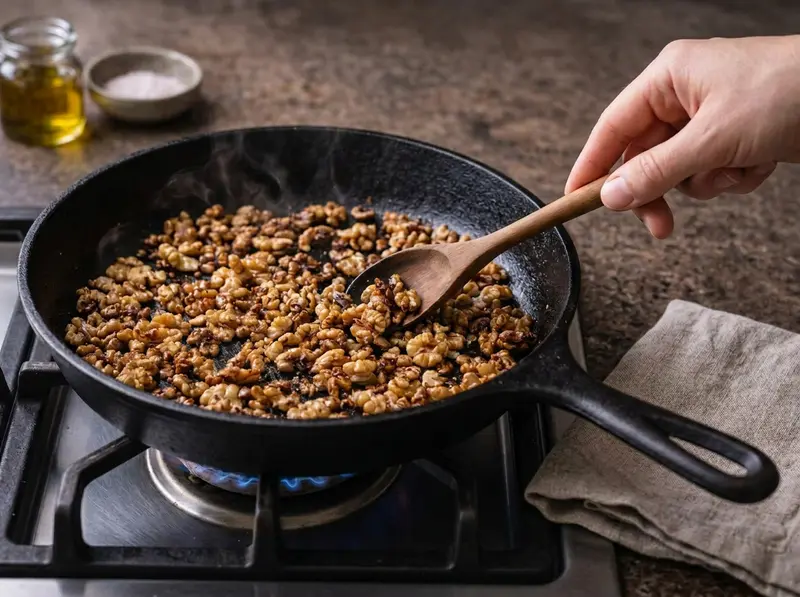
Toast the walnuts. Put the walnuts in a dry skillet over medium heat. Stir frequently for 3 to 4 minutes until they smell nutty and turn a shade darker. Watch them — walnuts go from toasted to bitter fast. Tip onto a plate to cool. Don't skip this step: raw walnuts taste flat and slightly astringent in this dip; toasted walnuts give it the earthy richness it needs.

- 2
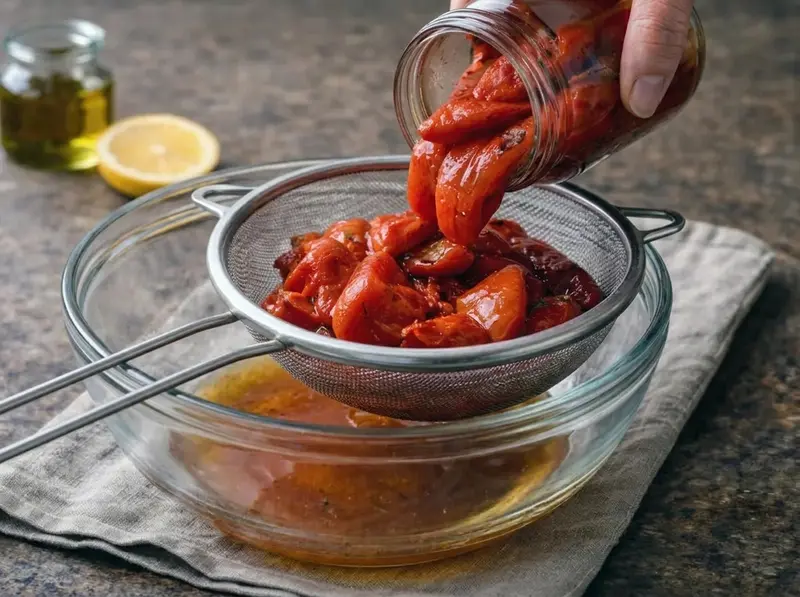
Drain the peppers well. If using jarred roasted peppers, drain them in a colander and press firmly to remove as much liquid as possible. Excess liquid makes the dip thin and watery. If roasting your own: halve fresh red peppers, remove seeds, broil cut-side down for 12 to 15 minutes until charred, steam in a covered bowl for 10 minutes, then peel. Both methods produce a good result; jarred is faster and often as good.

- 3
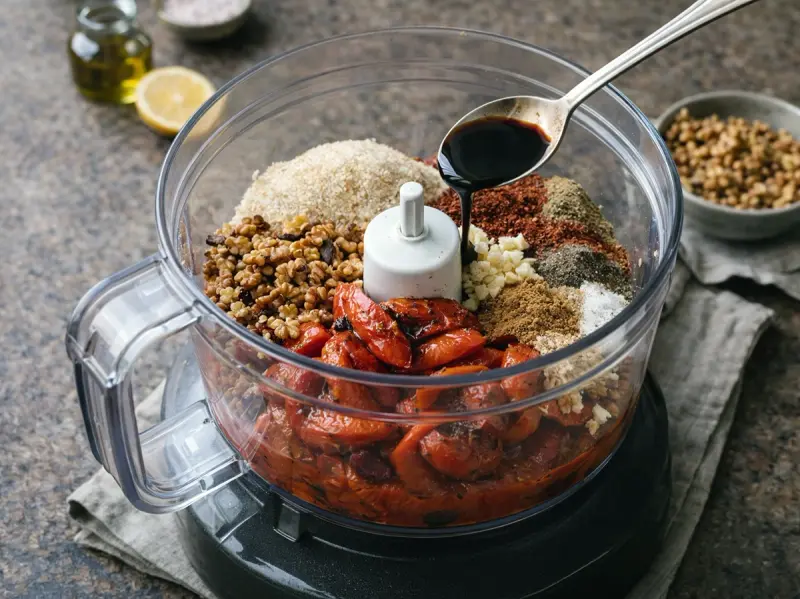
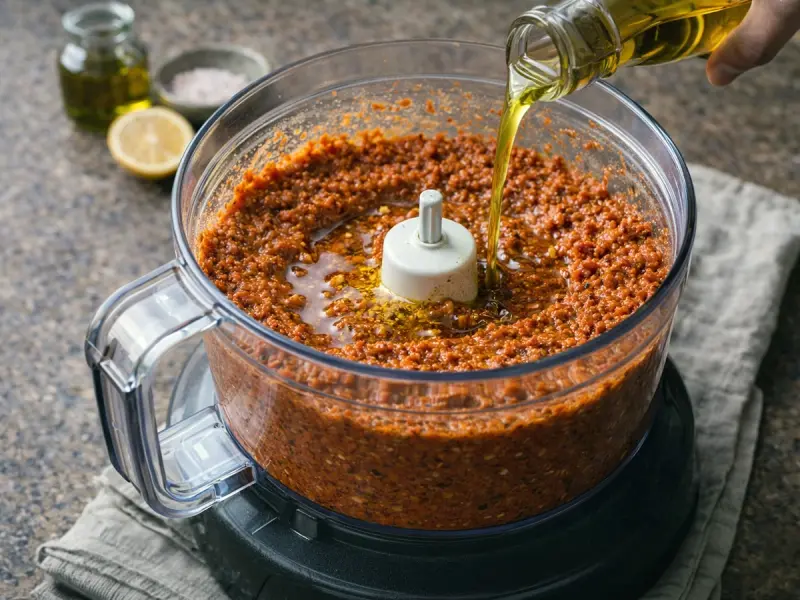
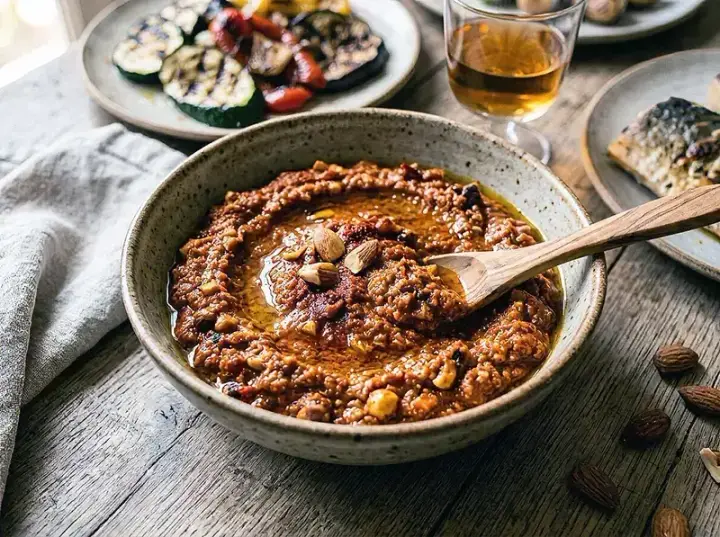
Blend. Add the drained peppers, most of the toasted walnuts (reserve a small handful for garnish), breadcrumbs, garlic, pomegranate molasses, lemon juice, Aleppo pepper, cumin, salt, and sumac if using to a food processor. Pulse 8 to 10 times to break everything down. With the motor running, pour the olive oil through the feed tube. Process until the dip is mostly smooth but still has some texture — about 45 seconds total. Muhammara should not be a smooth paste. Some walnut texture visible is correct.

- 4
Taste and adjust. This is where you dial in the balance. The dip should be: sweet and a little smoky from the peppers, tangy from the pomegranate molasses, nutty, and mildly hot. If it needs more tang, add lemon juice or a drop more pomegranate molasses. If it's too sharp, a touch more olive oil smooths it out. Too thick: a tablespoon of water. Too thin: more breadcrumbs, pulsed in. Check the salt — jarred peppers often have salt already.

- 5
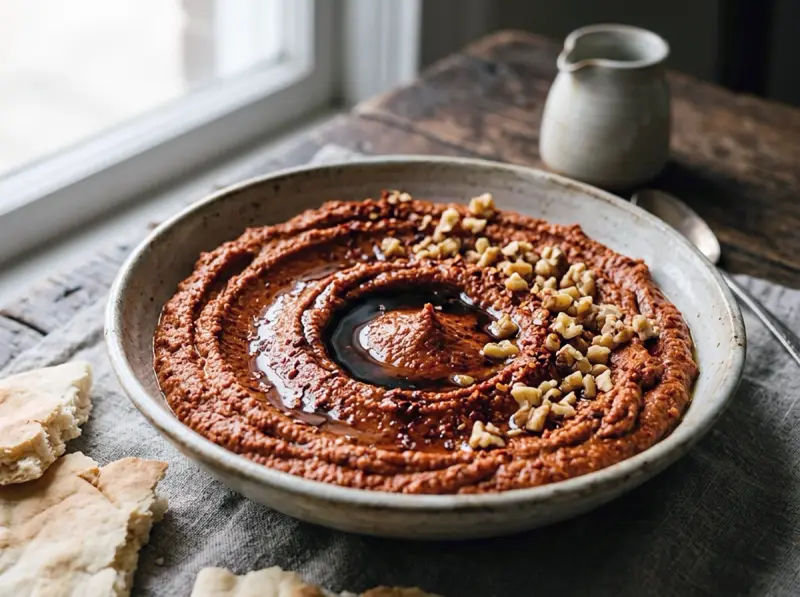
Serve. Spread the muhammara into a wide, shallow serving bowl. Drizzle with olive oil and a little more pomegranate molasses. Scatter the reserved chopped walnuts on top, add a dusting of Aleppo pepper or paprika. Serve at room temperature with warm pita, flatbread, or vegetable crudités. Muhammara keeps in the fridge for up to 5 days. Press a layer of olive oil over the surface before sealing to prevent discolouration.

Frequently Asked Questions
What is pomegranate molasses and where can I find it?
Pomegranate molasses is pomegranate juice reduced to a thick, intensely flavoured syrup — dark, tart, and sweet. It's a staple ingredient across the Middle East and Levant, used in salad dressings, marinades, stews, and dips. The flavor is complex: sweet at the front, sour and fruity in the middle, with a slight bitterness at the end. You'll find it in Middle Eastern grocery stores (look near the sauces and condiments), Persian markets, and many well-stocked supermarkets. Online it's very easy to source. A bottle keeps for months in the cupboard once opened.
What is Aleppo pepper and what can I substitute?
Aleppo pepper is a mild, fruity dried chilli from the Syrian city of Aleppo. It has a moderate heat level — lower than cayenne — with an oily, slightly salty quality and a flavor that's closer to sun-dried tomatoes than to conventional chilli flakes. It's what gives muhammara its characteristic warmth without overwhelming heat. If you can't find it, use a combination of sweet paprika and a small amount of cayenne or standard red pepper flakes. The heat level won't be identical but the result is still good. Aleppo pepper is increasingly available online and in specialty food stores.
Can I use fresh red peppers instead of jarred?
Yes. Roasting your own peppers takes more time but produces a slightly smokier, fresher result. Halve 3 large red bell peppers, remove seeds and stems, place cut-side down on a baking sheet, and broil for 12 to 15 minutes until the skin is charred and blistered. Transfer to a bowl, cover with cling film, and let them steam for 10 minutes — the steam loosens the skin. Peel off the charred skin and discard it. The peppers will be soft, sweet, and smoky. Whether you roast your own or use jarred, the most important step is draining them very well before blending.
How do I adjust the texture?
Muhammara's texture is chunky to spreadable — not smooth like hummus. Breadcrumbs are the thickener: more crumbs makes it denser and drier, fewer makes it looser and lighter. If the dip comes out too thick, add olive oil a teaspoon at a time or a splash of water. If it's too thin (usually because the peppers weren't drained well enough), add more breadcrumbs and pulse them in. Some people prefer it with visible walnut chunks; others like it nearly smooth. Both are fine. Just stop processing before it becomes a uniform paste.
What can I serve muhammara with?
The classic pairing is warm pita, either torn for scooping or cut into wedges. It's also excellent on grilled bread — brush a sourdough slice with olive oil, grill it, and serve with a generous smear of muhammara. As part of a mezze: it sits well next to hummus, labneh, baba ganoush, and tabbouleh. Beyond dipping: use it as a pasta sauce (toss with cooked pasta and a splash of pasta water), as a spread in sandwiches or wraps, or as a sauce under grilled chicken or fish. It can be stirred into soups to add body and a hit of spice.


Join the conversation
Comments
Loading comments…