Skip to content
GetCookMatch
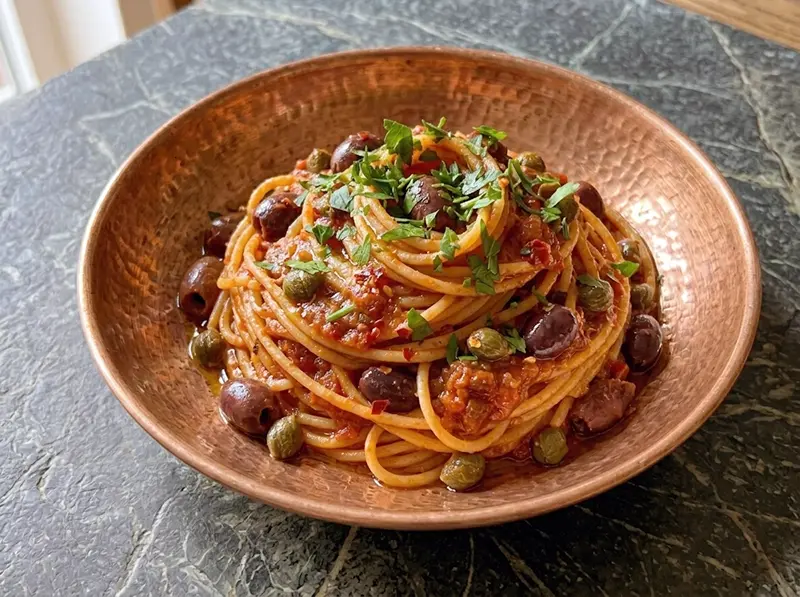
Pasta alla Puttanesca with spaghetti, anchovy fillets and olives — Italy recipeItalyItaly
📝Useful tips
S
Sergei Martynov

Salt discipline is the single most important variable in puttanesca. The sauce contains four salty ingredients — anchovies, capers, olives, and the olive oil itself — and over-salting at any point produces a sauce that is unpleasantly harsh rather than complexly savoury. Resist salting the sauce while it cooks. Taste it at the very end, after the pasta water has been added (which dilutes saltiness slightly), and only add a small pinch if it genuinely needs it. If you've already over-salted: add a little more pasta water, or even a small amount of unsalted butter stirred in off the heat — both absorb and dilute saltiness.

💡

Gaeta olives are the traditional Neapolitan choice and worth seeking out — they are small, purple-black, and have a soft, meaty flesh with a clean, fruity brine flavour that integrates beautifully into the sauce. Kalamata olives (Greek) are the most widely available good substitute: stronger flavour, firmer texture. Castelvetrano olives (green, Sicilian) are milder and buttery — a good choice if you find regular black olives too assertive. Avoid jarred cocktail olives from supermarket shelves — they have been soaked in mild brine and taste of nothing.

Cereal and Pasta Dishes

Pasta alla Puttanesca

By Sergei Martynov

A bold, briny Neapolitan pasta sauce built entirely from pantry staples: anchovies, olives, capers, garlic, and canned tomatoes. The name translates roughly as 'in the manner of a prostitute' — the exact origin is disputed but the dish is genuinely Neapolitan, from the Spanish Quarter, and dates to at least the mid-20th century. What makes it work is the combination of four distinct salty elements — the anchovy dissolves into the oil, the capers add a floral brine, the olives add a fruity richness, the tomato provides acidity — and none of them taste quite right alone, but together they produce something complex and deeply savoury in under twenty minutes. Do not worry about the anchovies: they disappear completely into the oil and leave no fishy taste. Only their umami remains.

⏱️
25
Minutes
👥
4
Servings
🔥
490
kcal
Rate this recipe

Key Ingredients

What you'll need

Ingredients

How to make it

Instructions

  1. 1

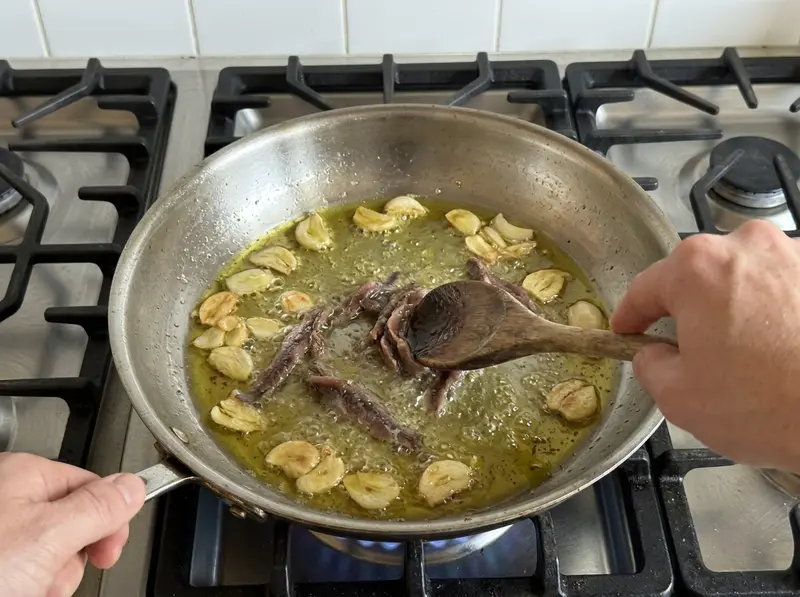
    Build the anchovy base. Start with a cold pan: add the olive oil and sliced garlic together and place over low heat. Let them come up to temperature together slowly — about 4 to 5 minutes — until the garlic turns soft, golden, and fragrant but not brown. Browned garlic turns bitter and ruins the sauce. Add the chopped anchovy fillets and chilli flakes and cook for 1 to 2 minutes, stirring and pressing the anchovies with the back of a spoon. They will dissolve into the oil, essentially disappearing and leaving behind a rich, savoury, orange-tinted oil. This is your sauce base. If you cannot see any visible anchovy pieces, you are ready to proceed.

  2. 2

    Add tomatoes and simmer. Add the tomato paste and stir it into the oil for 30 seconds. Add the crushed tomatoes, stir to combine, and raise the heat to medium. Bring to a gentle simmer and cook for 10 to 12 minutes, stirring occasionally, until the sauce has thickened and the tomatoes have broken down. While the sauce simmers, bring a large pot of generously salted water to a boil. The sauce should be thick enough to coat a spoon — not watery. If it looks too thin, continue simmering uncovered; if the tomatoes seem too acidic, a small pinch of sugar helps.

  3. 3

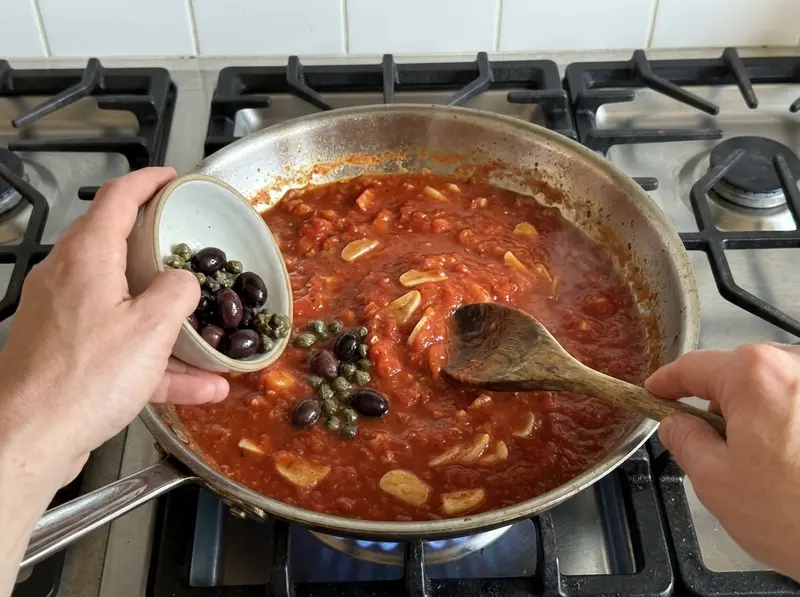
    Add olives and capers. Once the tomato sauce has thickened, stir in the olives and capers. These go in late — not at the start — because they should retain their texture and individual flavour. If they simmer too long, they lose their character and become just background saltiness. Let them cook in the sauce for 3 to 4 minutes. Taste the sauce carefully before adding any salt — the anchovies, capers, and olives are all quite salty, and the sauce almost certainly needs no extra. Add a tiny pinch only if genuinely needed.

  4. 4

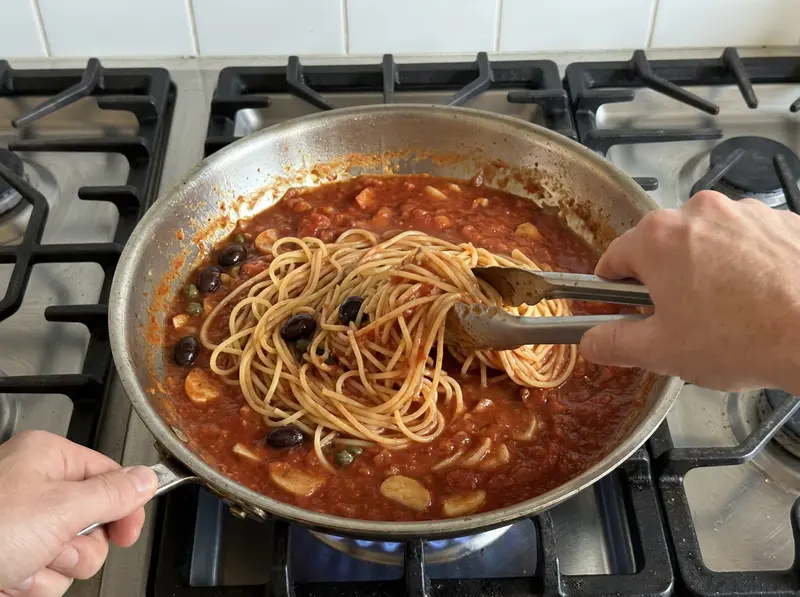
    Cook and finish the pasta. Cook the spaghetti in well-salted boiling water until just shy of al dente — 1 to 2 minutes less than the package says. Reserve a mug of pasta water. Transfer the pasta directly to the sauce using tongs, letting some starchy pasta water come with it. Toss over medium heat for 1 to 2 minutes, adding a splash of pasta water if needed to loosen. The pasta should finish cooking in the sauce and be properly coated — not swimming in it and not dry.

  5. 5

    Finish and serve. Remove from heat. Stir in the fresh parsley — add it at the end, not into simmering sauce, so it stays bright green and flavourful. Serve immediately in warmed bowls with an extra drizzle of good olive oil if you like. Puttanesca is traditionally served without Parmesan: the sauce is intensely flavoured and fully self-sufficient, and cheese would add fat and dairy where neither is wanted. This is a rule worth respecting.

Join the conversation

Comments

Leave a comment

Loading comments…

Frequently Asked Questions

Can you make puttanesca without anchovies?

Yes, but the sauce loses its defining depth. The anchovies do not taste fishy in the finished dish — they dissolve into the oil and contribute pure umami, an intensity of savouriness that salt alone cannot replicate. If you must skip them for dietary reasons: add a teaspoon of miso paste or a small splash of soy sauce to the oil at the same stage — neither is traditional but both bring some of the same glutamate-based depth. A teaspoon of Worcestershire sauce also works. The sauce will be pleasant but will taste less complete.

Where does the name 'puttanesca' come from?

The name translates roughly as 'in the style of a prostitute' or 'whorish.' The most colourful story says it was created in the brothels of the Spanish Quarter of Naples, where the strong smell of garlic, anchovies, and olives cooking would attract clients. A simpler explanation is that puttanesca in Neapolitan slang simply meant something bold, strong, and audacious — which accurately describes the sauce. The name only appeared in print in the mid-20th century; the dish itself is older. Its exact invention is disputed.

Should you use Parmesan on puttanesca?

Traditionally, no — and this is one of the cases where the tradition makes culinary sense. Puttanesca is already intensely flavoured, salty, and rich from the olive oil; adding Parmesan would add more salt, more fat, and a dairy element that competes with rather than enhances the sauce. It would make the dish heavier and muddier. Most Southern Italian cooking with briny, pungent ingredients (olives, anchovies, capers) deliberately avoids cheese for this reason. Serve it as is, with a final drizzle of olive oil.

Black olives or green olives for puttanesca?

Black olives are traditional — Gaeta (small, from Lazio) or Kalamata (from Greece) are the most common. Black olives in puttanesca contribute a fruity, slightly earthy richness. Green Castelvetrano olives are a valid modern alternative, milder and buttery, and work particularly well if you find the sauce too assertive. Whatever you use: buy proper olives in brine or olive oil from a deli or a good jar, not the stuffed cocktail variety. Quality matters significantly more here than in most recipes because the olives are a main flavour, not a garnish.

Can puttanesca sauce be made ahead and frozen?

Yes, the sauce freezes well without the pasta. Make it through step 3, cool completely, and freeze in portions for up to 3 months. Reheat gently from frozen with a splash of water. The parsley should always be added fresh after reheating, not before freezing — frozen parsley turns black and loses its flavour. Cook the pasta fresh when ready to serve and toss it in the reheated sauce.