
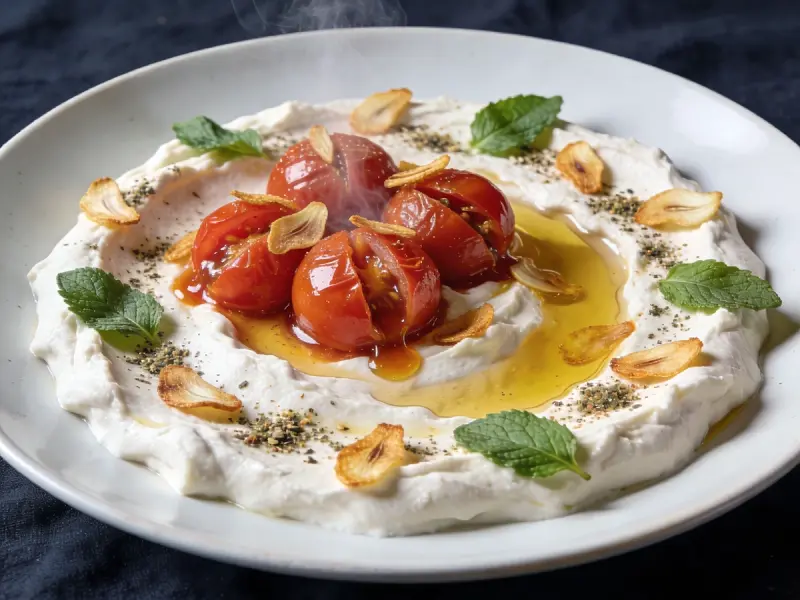
Labneh aux Tomates Grésillantes
Le labneh est un yaourt égoutté — drainé toute la nuit jusqu'à devenir épais, acidulé et tartinable. Les tomates sont à l'opposé : cuites vite dans une huile très chaude avec de l'ail et des graines de cumin jusqu'à ce qu'elles cloquent et éclatent, puis versées encore grésillantes sur le labneh froid. Le contraste est le point.
Ingrédients
- 500 gyaourt entier nature
- 0.5 c. à cafésel fin
- 250 gtomates cerises ou datterini
- 3 c. à soupehuile d'olive vierge extra
- 3 ail
- 1 c. à cafégraines de cumin
- 0.5 c. à caféflocons de poivre d'Alep
- 1 c. à soupejus de citron frais
- 1 c. à caféza'atar
- 2 c. à soupehuile d'olive vierge extra
- 10 gmenthe fraîche ou basilic
Préparation
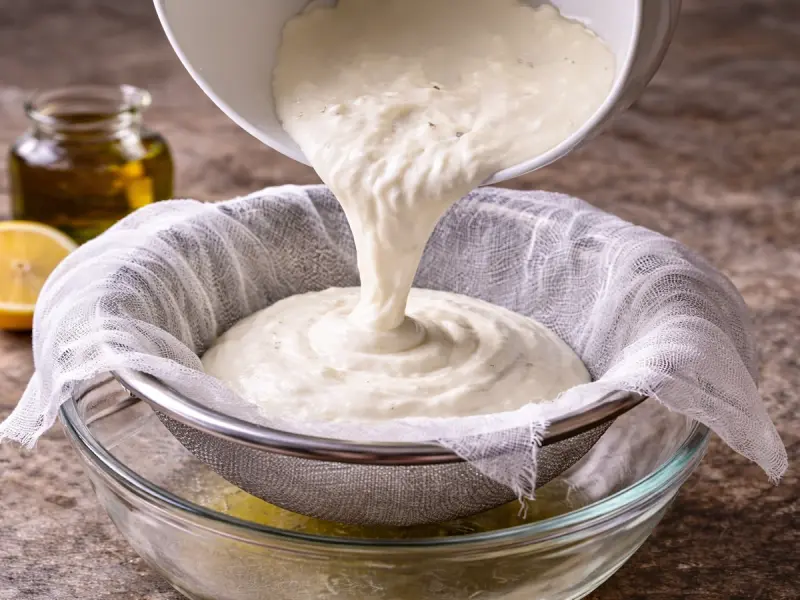
- Égoutter le yaourt en labneh. Tapisser une passoire d'une double couche de mousseline ou d'un torchon en coton propre. Mélanger le sel avec le yaourt, le verser dans la passoire, replier le tissu sur le dessus. Poser sur un bol, réfrigérer et laisser au moins 12 heures — 24 c'est mieux. Plus ça draine longtemps plus c'est épais et acidulé. Jeter le petit-lait liquide. De 500 g de yaourt on obtient 250–300 g de labneh. Sauter cette étape si on utilise du labneh acheté.
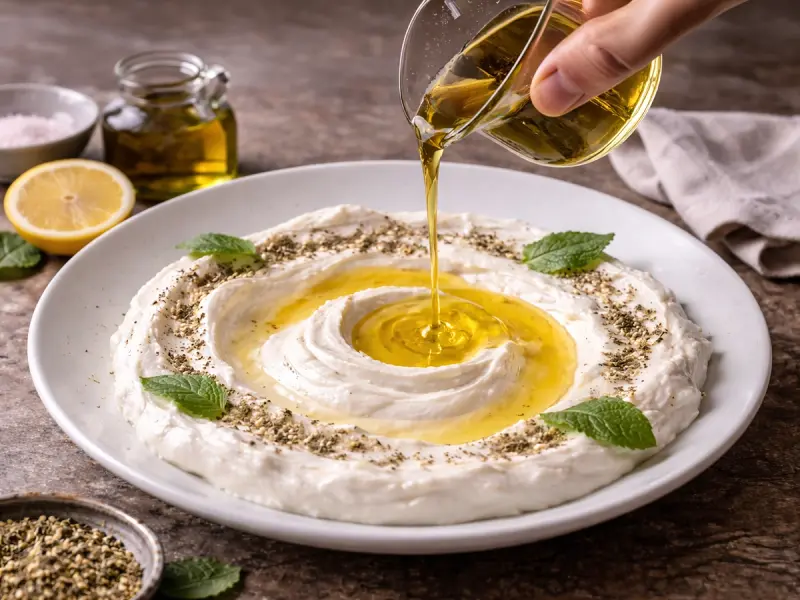
- Dresser le labneh. Le sortir directement du frigo — il doit être froid quand les tomates arrivent. Le mettre à la cuillère dans une assiette large et peu profonde. L'étaler avec le dos de la cuillère en laissant un léger monticule au centre et des bords fins. Arroser d'huile de finition et mettre de côté pendant la cuisson des tomates.
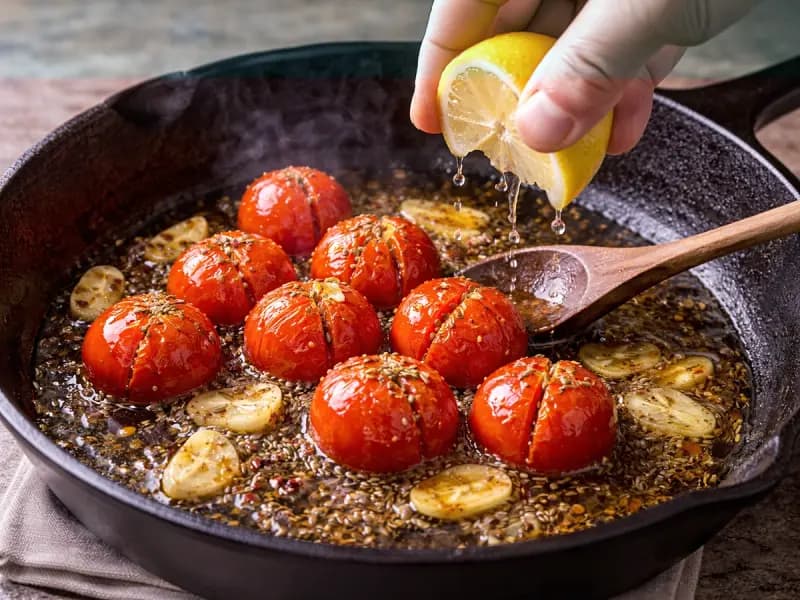
- Faire grésiller les tomates. Chauffer une petite poêle à feu très vif jusqu'à ce qu'elle soit très chaude. Ajouter les 3 c. à soupe d'huile. Quand elle frémit ajouter l'ail en tranches. Il dorera en environ 30 secondes ; le retirer à l'écumoire quand il est doré et réserver. Ajouter les graines de cumin — elles vont éclater en quelques secondes. Puis les tomates cerises. Les laisser intactes 1–2 minutes pour que la peau cloque. Secouer la poêle. Certaines vont éclater ; encourager les autres en pressant doucement. Ajouter le poivre d'Alep et le jus de citron. Encore 30 secondes. Total environ 3–4 minutes.
- Assembler. Verser les tomates chaudes et grésillantes avec toute l'huile directement au centre du labneh froid. Le contraste de températures est voulu — ne pas laisser reposer avant de servir. Éparpiller dessus les tranches d'ail dorées. Saupoudrer de za'atar. Ajouter de la menthe ou du basilic déchiré.
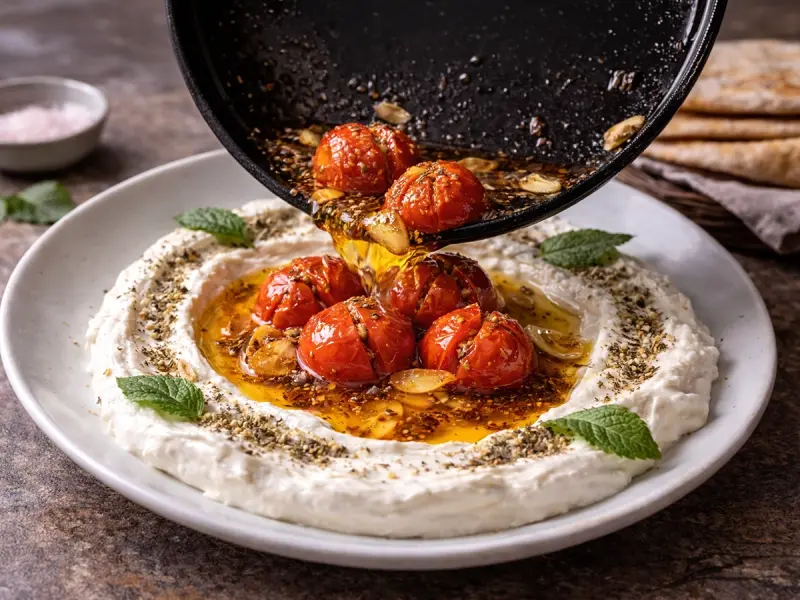
- Servir immédiatement avec du pain pita chaud, du pain plat ou du pain grillé au levain. Le plat ne se conserve pas assemblé — les tomates refroidissent et l'huile est absorbée en 20 minutes. Pour préparer à l'avance : labneh dressé au frigo et tomates faites juste avant de servir.
Questions
C'est du yaourt dont le petit-lait liquide a été drainé. Plus il draine longtemps plus il est épais et acidulé. À 12 heures il a la consistance de la crème fraîche épaisse. À 24 h il ressemble au fromage frais à tartiner. À 48 h il est assez ferme pour former des billes. Incontournable au Liban, Syrie, Palestine, Jordanie.
Oui — il est déjà partiellement égoutté et draine plus vite. Réduire le temps à 8–12 heures. Jamais de yaourt allégé : le labneh sera aqueux et sans saveur. Le gras entier est indispensable.
Un mélange d'épices du Moyen-Orient de thym ou origan séché, sésame, sumac et sel. Saveur herbacée, noisette, citronnée et savoureuse. Utilisé comme épice de finition. Version approximative : thym séché + sésame grillé + pincée de sumac.
Oui — acheter du labneh. Vendu en bocaux dans les épiceries orientales. Celui du commerce est souvent plus salé que le fait maison. Si pas de labneh, le yaourt grec entier et épais est le meilleur substitut disponible : l'utiliser froid sans égoutter.
Classique : avec huile d'olive, za'atar et olives (petit-déjeuner libanais traditionnel). Avec graines de grenade et noix. Avec poivron rouge rôti. En base sous légumes rôtis ou comme sauce pour poulet grillé.
Continuez à parcourir
D’autres plats des archives — choisis pour leur proximité avec ce que vous êtes en train de cuisiner.
Des recettes par e-mail
Une lettre par semaine : une recette choisie selon vos goûts et les nouveautés du site. Vous pouvez la désactiver en un clic.
En cadeau : le livre de recettes de Sergei (e-book).
En cliquant sur le bouton, vous acceptez la politique de confidentialité.
Dites-nous ce que vous aimez cuisiner (30 secondes) →
Rejoignez la discussion
Commentaires
Aucun commentaire pour l'instant — soyez le premier !