
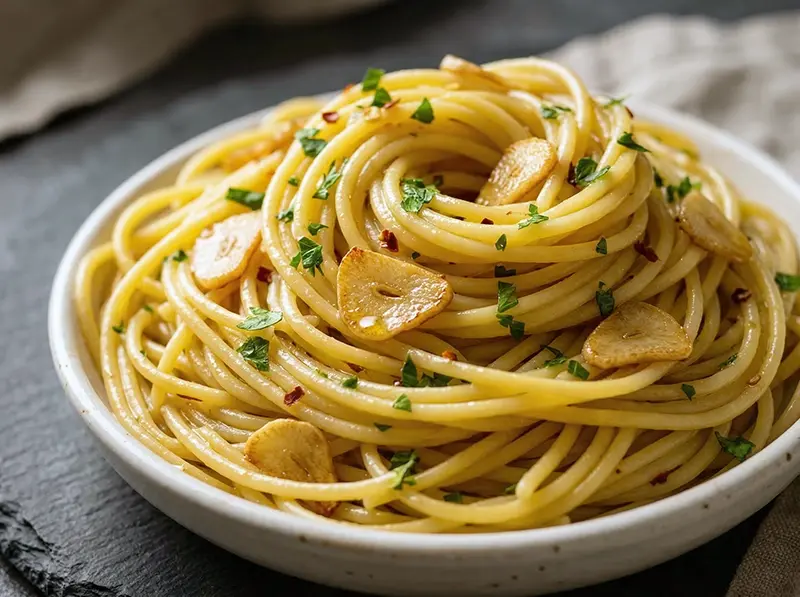
Spaghettis aglio e olio
Spaghettis, huile d'olive, ail, piment et persil. Du placard à la table en 20 minutes. L'eau de cuisson des pâtes transforme l'huile en sauce — ne la sautez pas.
Ingrédients
- 400 gspaghettis
- 80 mlhuile d'olive vierge extra, la meilleure que vous ayez
- 8 ail, en fines lamelles
- 1 c. à c.flocons de piment
- 4 c. à s.persil frais finement
- 1 c. à c.sel pour l'eau de cuisson
- 0.5 c. à c.poivre noir
Préparation
- Portez une grande casserole d'eau généreusement salée à ébullition. L'eau doit être salée au goût — c'est là que les pâtes prennent leur saveur.
- Ajoutez les spaghettis et cuisez jusqu'à 1 minute avant l'al dente indiqué sur le paquet. Avant d'égoutter, prélevez au moins 250 ml d'eau de cuisson amidonnée.
- Pendant que les pâtes cuisent, mettez l'ail en lamelles et l'huile dans une grande poêle froide. Mettez à feu moyen. Cuisez lentement en remuant souvent pendant 3 à 5 minutes jusqu'à ce que l'ail soit doré et parfumé — pas brun. Dès que vous le sentez, c'est presque prêt. L'ail brun est amer.
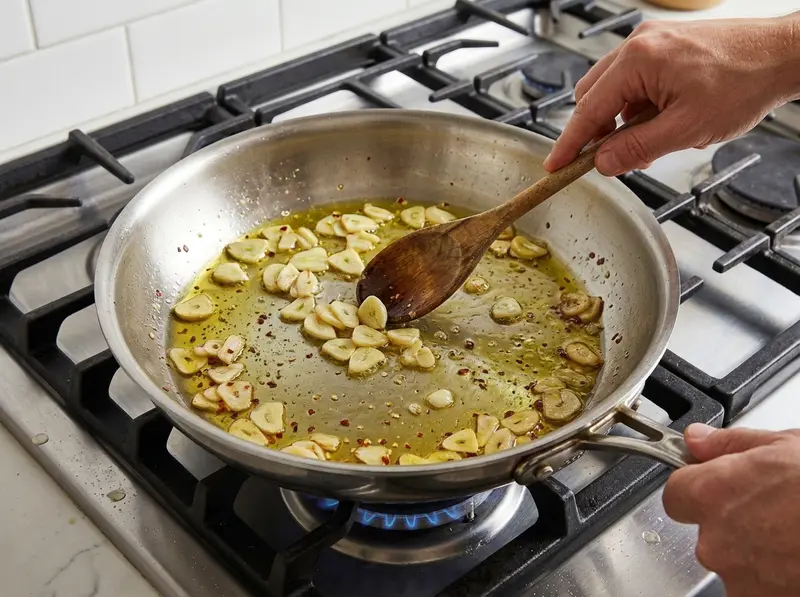
- Ajoutez les flocons de piment et remuez 30 secondes. Retirez la poêle du feu.
- Transférez les pâtes encore légèrement pas assez cuites directement dans la poêle avec des pinces — ne les égouttez pas complètement. Ajoutez une louche généreuse (environ 120 ml) d'eau de cuisson chaude. Remettez à feu moyen.
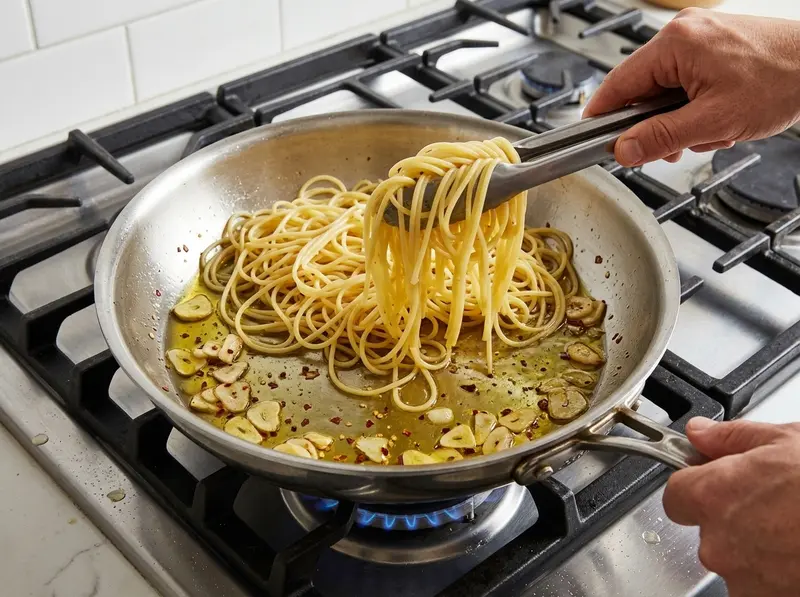
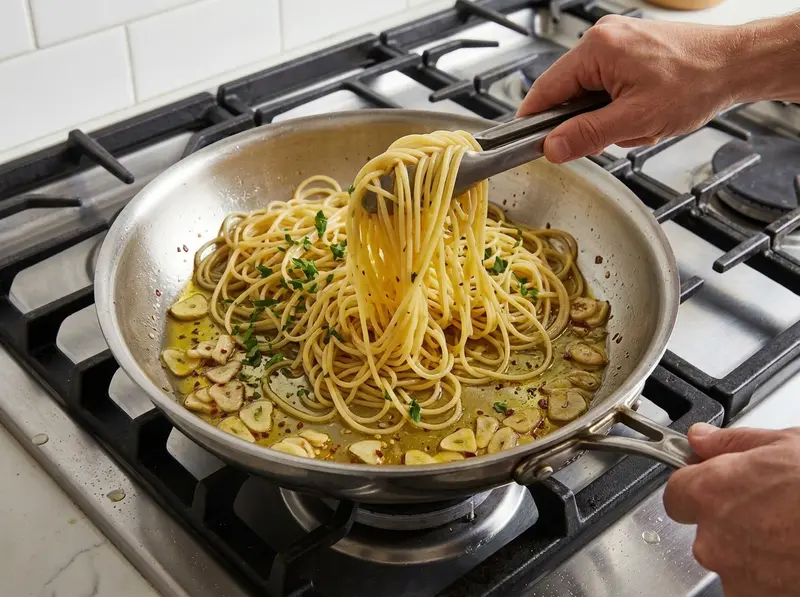
- Mélangez continuellement pendant 1 à 2 minutes. L'amidon dans l'eau s'émulsionne avec l'huile et enrobe chaque brin. Ajoutez plus d'eau un peu à la fois si ça semble sec. La sauce doit être brillante et légèrement adhérente aux pâtes.
- Retirez du feu, ajoutez le persil et un tour de moulin à poivre. Servez immédiatement dans des assiettes chaudes.
Questions
L'eau de cuisson est ce qui fait fonctionner le tout. L'huile et l'eau ne se mélangent pas d'elles-mêmes, mais l'amidon dissous dans l'eau agit comme émulsifiant. Ajoutez une louche généreuse d'eau de cuisson chaude dans l'huile à l'ail hors du feu, puis ajoutez les pâtes et mélangez énergiquement 1 à 2 minutes. Le mélange doit devenir crémeux et légèrement épaissir. Si l'huile continue à se séparer, l'eau était trop froide ou vous n'en avez pas mis assez.
L'amertume signifie presque toujours que l'ail a brûlé. Mettez toujours l'ail en lamelles dans l'huile froide puis allumez le feu à intensité moyenne — il chauffe progressivement et uniformément. L'objectif est doré et parfumé, pas brun. Dès que vous le sentez, c'est presque prêt. Si les pâtes ne sont pas prêtes quand l'ail l'est, retirez la poêle du feu. Vous pouvez toujours la remettre au chaud ; l'ail brûlé est irrécupérable.
La recette traditionnelle romaine et napolitaine ne contient pas de fromage — c'est l'une des rares pâtes italiennes sans fromage. On peut ajouter du parmesan ou du pecorino si on le souhaite, mais cela change le caractère du plat : plus lourd, plus riche, moins épuré. La version authentique finit uniquement avec du persil.
De 4 à 6 gousses pour une version douce, de 8 à 10 pour quelque chose avec plus de présence — question de goût personnel. Traditionnellement la saveur aillée doit être le sujet du plat, pas une note de fond. Laminer plutôt qu'écraser : l'ail écrasé brûle plus vite et donne un goût plus agressif. Les lamelles fines cuisent uniformément et s'adoucissent en colorant.
Ce plat ne se conserve pas et ne se réchauffe pas bien. L'émulsion se brise dès que les pâtes refroidissent — l'huile se sépare à nouveau et les pâtes s'agglomèrent. Une version réchauffée est notablement différente d'une version fraîche. Ne cuisinez que ce que vous mangerez immédiatement. Avec un temps total de 20 minutes il n'y a aucune raison de le préparer à l'avance.
Notez
Des recettes par e-mail
Une lettre par semaine : une recette choisie selon vos goûts et les nouveautés du site. Vous pouvez la désactiver en un clic.
En cadeau : le livre de recettes de Sergei (e-book).
En cliquant sur le bouton, vous acceptez la politique de confidentialité.
Dites-nous ce que vous aimez cuisiner (30 secondes) →Continuez à parcourir
D’autres plats des archives — choisis pour leur proximité avec ce que vous êtes en train de cuisiner.
Rejoignez la discussion
Commentaires (1)
The widest pan you own works best for spaghetti aglio e olio. Maximum surface area means faster evaporation, more concentrated sauce, and better coating. A deep pot keeps things too wet.