
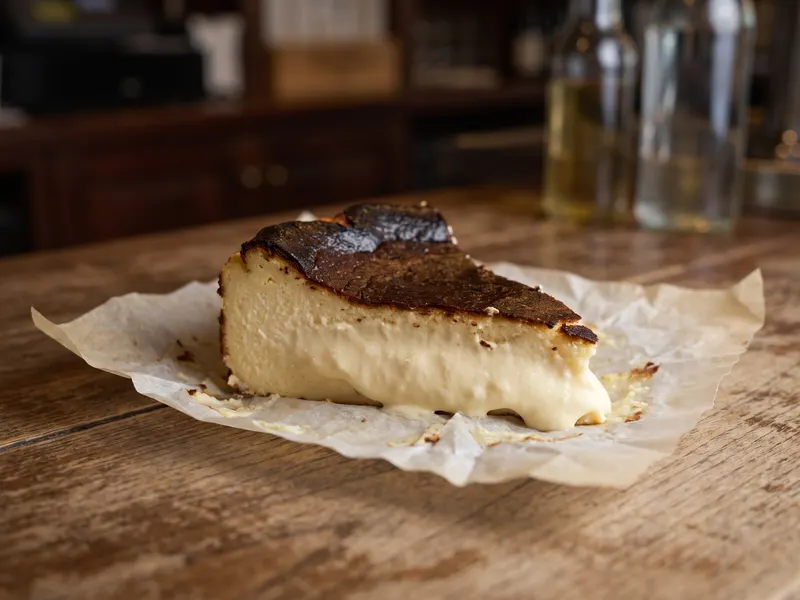
Basque Burnt Cheesecake
Basque burnt cheesecake has no biscuit crust and makes no attempt to hide its dark, blistered top. Under that bitter-caramel edge, the center settles into a soft custard that is best served cool but not fridge-cold.
Ingredients
- 700 gcream cheese
- 250 gsugar
- 5 eggs
- 350 mlheavy cream
- 20 gall-purpose flour
- 0.25 tspsalt
- 10 gbutter
Method
- Temper the ingredients. Leave the cream cheese, eggs, and cream at room temperature for 60 minutes. Cold cheese forms stubborn lumps, and aggressive mixing later would trap too much air.
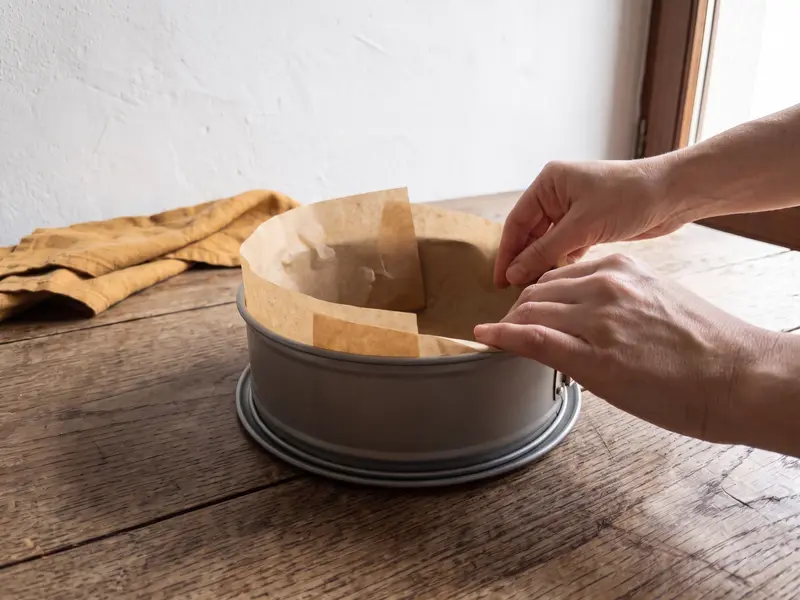
- Prepare the pan and oven. Heat the oven to 220°C with a rack in the center. Butter a 20 cm springform pan and line it with two overlapping sheets of baking paper, leaving 5 cm above the rim; the tall paper supports the rising batter.
- Mix cheese and sugar. Beat the cream cheese and sugar on low speed for 2 minutes, scraping the bowl twice, until completely smooth. Keep the mixer slow: this cake needs density, not a foamy cheesecake batter.
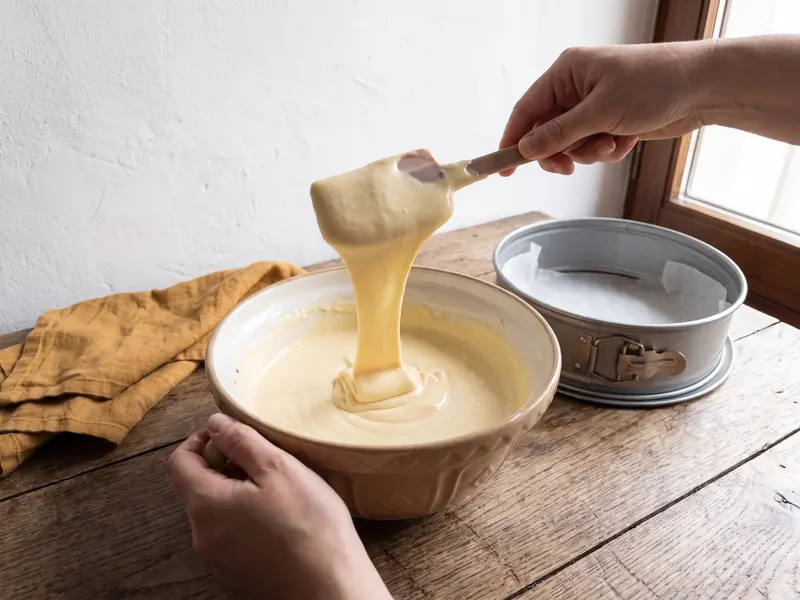
- Add the eggs. Beat in one egg at a time for 20 seconds, scraping after the third egg. The mixture should look glossy and pour in a thick ribbon, without visible curds or a cap of bubbles.
- Finish the batter. Whisk the flour into 60 ml of the cream until smooth, then mix in the remaining cream and salt. Pour this into the cheese mixture and stir on low for 45 seconds; strain once if any small lumps remain.
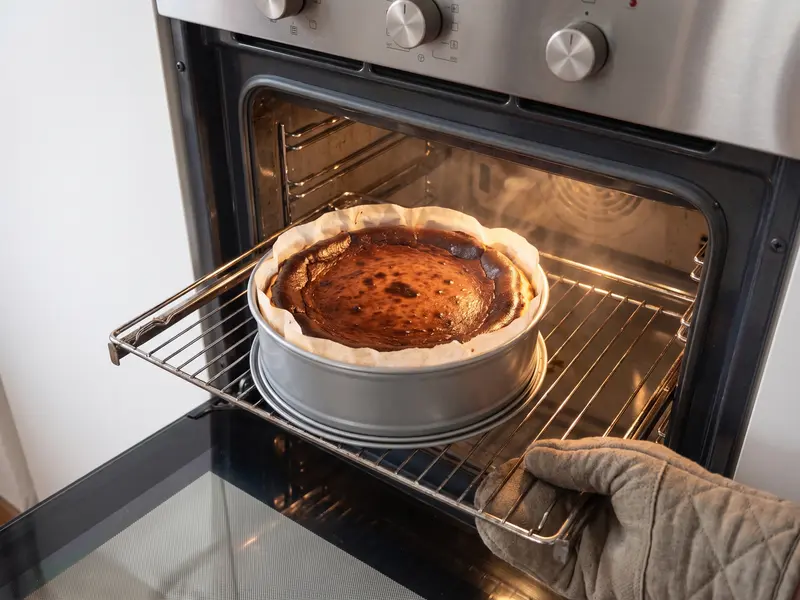
- Bake to a dark top. Pour into the pan, tap it twice on the counter, and bake for 45 minutes at 220°C. The top should be deep mahogany with darker patches, the edge set, and a 10 cm circle in the center should wobble as one piece.
- Cool before slicing. Cool in the pan for 2 hours, then refrigerate for 3 hours so the custard can set. Take it out 30 minutes before serving; a clean warm knife should reveal a creamy center that holds its shape.
FAQ
A warm cake is always very soft, so chill it for the full 3 hours before judging. If a chilled slice flows like sauce, the oven ran cool or the cake came out before the outer ring set. Next time verify 220°C with an oven thermometer and bake for the stated 45 minutes.
Yes, omit the 20 g flour for a gluten-free version and bake the same way. The center will be softer and more custard-like, so chill it overnight before slicing. Check that the cream cheese and other packaged ingredients carry a gluten-free label if cross-contamination matters.
Sinking is expected because the hot batter rises and contracts as steam escapes. Deep cracks usually mean too much air was beaten in or the cake was overbaked. Mix on low speed and tap the filled pan twice before it enters the oven.
Cover the cooled cake and refrigerate it for up to 4 days. Let each portion stand at room temperature for 30 minutes before serving, so the center regains its creamy texture. Freeze individual slices for up to one month and thaw them overnight in the refrigerator.
The top should taste deeply caramelized with a slight coffee-like bitterness, not acrid or ashy. Deep mahogany is right; a uniformly black crust means it went too far. In San Sebastián it is commonly served plain, without fruit sauce or biscuit base.
Rate this
Recipes by email
One letter a week: a recipe picked for your taste, plus whatever is new on the site. Unsubscribe in one click.
Welcome gift: Sergei's cookbook (e-book).
By subscribing you agree to the privacy policy.
Tell us what you like to cook (30 seconds) →Keep browsing
More dishes from the Spanish archive — picked by overlap with what you're cooking now.
Join the conversation
Comments
No comments yet — be the first!