Большинство людей знают, что нужно есть больше клетчатки. Очень немногие на самом деле это делают. Средний взрослый американец получает около 15–17 граммов в день при рекомендации 25–38 г. Разрыв понятен: продукты с высоким содержанием клетчатки требуют больше усилий при приготовлении, и большая часть советов по здоровью кишечника читается как будто написана для людей, которым нравится псиллиум.
Эти шесть рецептов подходят к клетчатке с другой стороны. Они сначала вкусные. Польза для кишечника реальна и значительна, но это не причина готовить их дважды. Готовят их дважды потому что они сытные — и в них оказывается больше клетчатки на порцию, чем большинство людей едят за целый день.
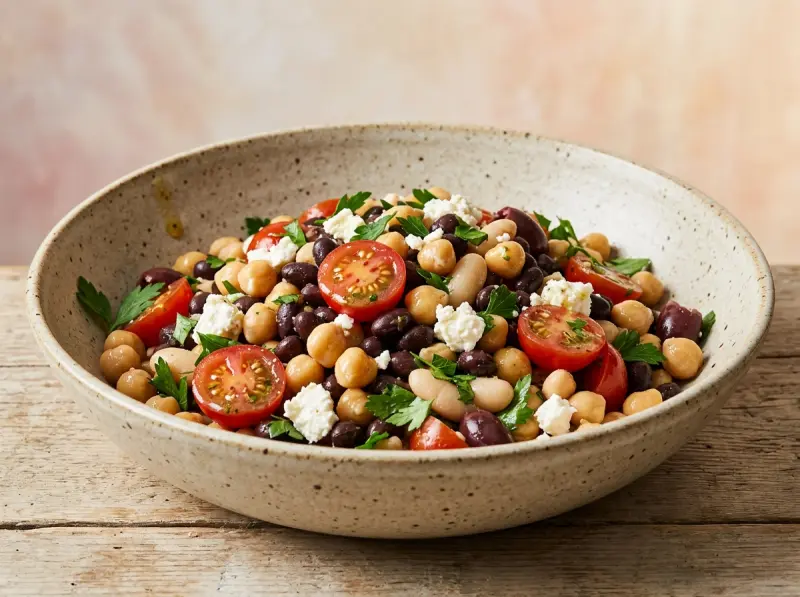
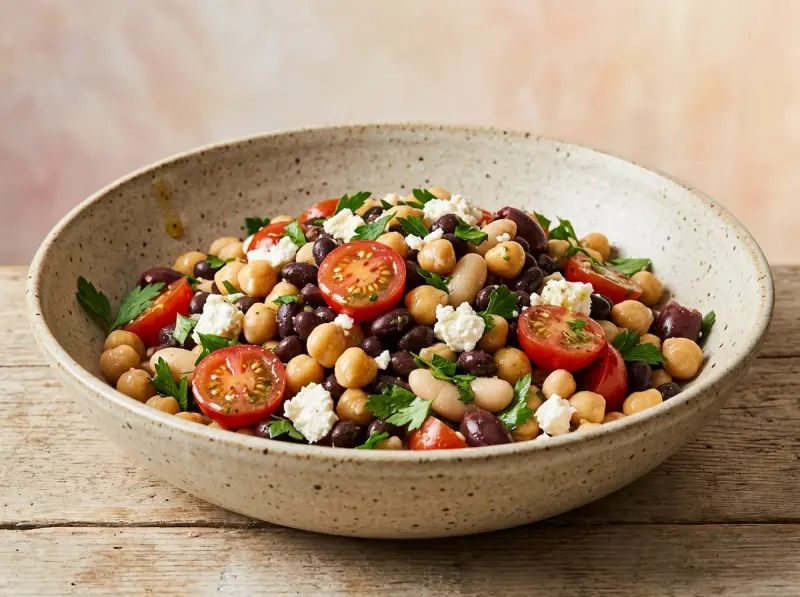
Плотный бобовый салат
Без готовки. Нут и каннеллини с огурцом, болгарским перцем, красным луком, маслинами и вялеными томатами в лимонно-орегановом дрессинге. Около 14 г клетчатки на порцию.
Салат без листьев не вянет в холодильнике. Дрессинг улучшается по мере маринования. Можно приготовить большую партию в воскресенье и есть до пятницы.
Один приём, который имеет значение: нарезайте всё одинакового размера с горошиной нута. Равномерный размер означает, что дрессинг покрывает каждый кусочек одинаково, и в каждой ложке есть понемногу всего.
→ Рецепт плотного бобового салата
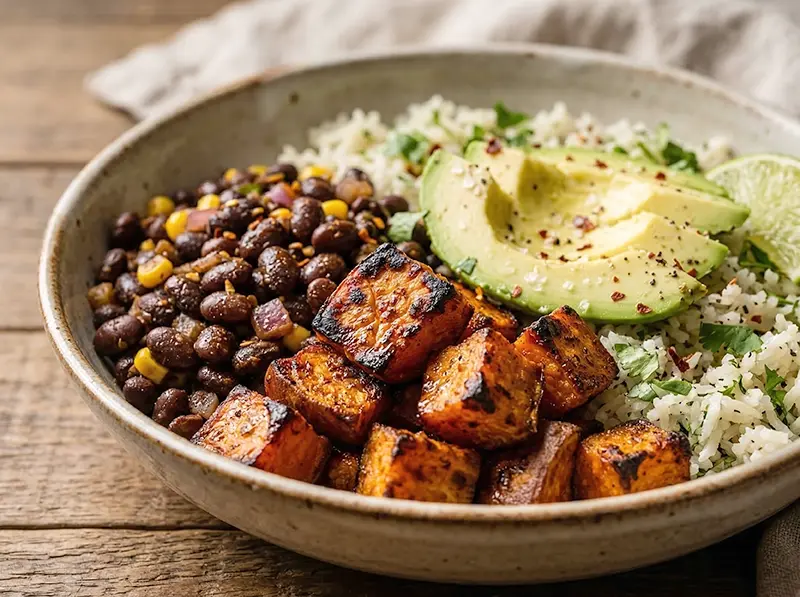
Боул с запечённым бататом и чёрными бобами
Батат, запечённый при 220°C до карамелизации, подаётся с рисом, чёрными бобами, авокадо, красной капустой и лаймово-тминным дрессингом. Около 12 г клетчатки на миску.
Батат — один из лучших источников резистентного крахмала: типа крахмала, который не переваривается в тонком кишечнике и питает полезные бактерии в толстом. Чёрные бобы добавляют 7 г клетчатки на порцию самостоятельно.
Частая ошибка: переполненный противень. Когда кусочки соприкасаются, они выделяют пар и тушатся вместо карамелизации. Один слой, видимые промежутки, 220°C.
→ Рецепт боула с запечённым бататом и чёрными бобами
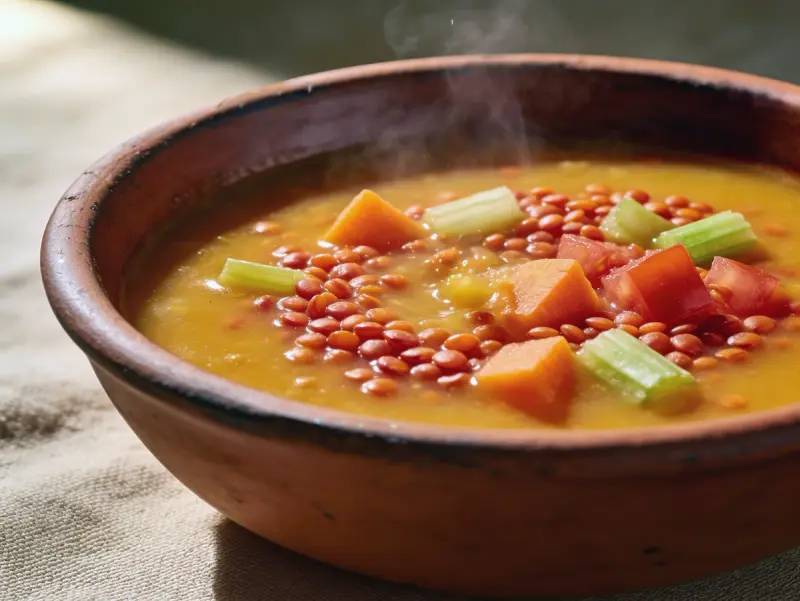
Суп из чечевицы с овощами
Красная чечевица варится 25 минут без замачивания и растворяется в супе — именно отсюда берётся густая кремовая текстура без блендера и сливок. Около 14 г клетчатки на миску.
Чечевица содержит пребиотики — специфические виды клетчатки, которые избирательно питают полезные бактерии кишечника. Это не просто клетчатка — это механизм.
Один шаг действительно меняет всё: поджарьте тмин, паприку и куркуму в горячем масле 30 секунд до добавления овощей. Специи в холодной жидкости остаются сырыми на вкус. Лимонный сок — после снятия с огня.
→ Рецепт супа из чечевицы с овощами
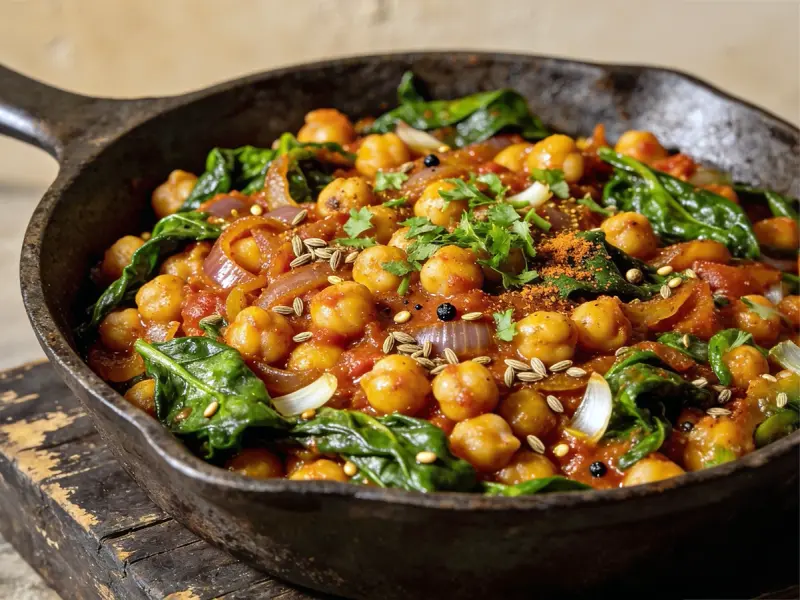
Нут со шпинатом на сковороде
Нут, обжаренный с луком, чесноком, помидорами и тмином, со шпинатом в конце. 25 минут, одна сковорода, около 11 г клетчатки. Подаётся с рисом, лепёшкой или с яйцом пашот.
Нут питательно плотен: на 100 г варёного — 9 г белка, 8 г клетчатки, значительное количество железа и фолата. Но главная причина готовить это дважды в неделю — сочетание тмина, паприки и томатного соуса создаёт более глубокий вкус, чем кажется за 25 минут работы.
Лайфхак: дайте нуту полежать в горячей сковороде без помешивания две минуты до добавления томатов. Образуется лёгкая корочка.
→ Рецепт нута со шпинатом на сковороде
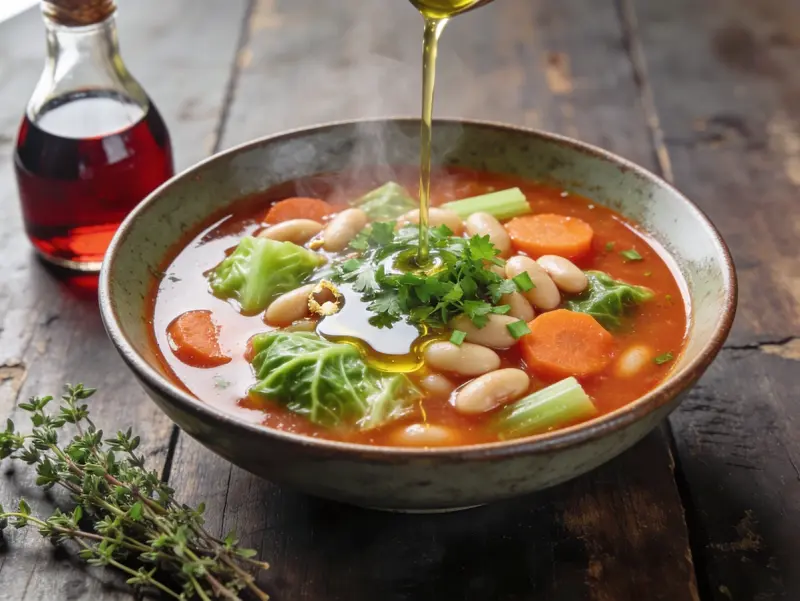
Суп из капусты с белой фасолью
Капуста хорошо берёт вкус там, где более дорогие овощи не справляются. Каннеллини немного разваривается при готовке и загущает бульон без ру и крахмала. Около 12 г клетчатки на порцию. Недорого, хранится пять дней.
Главный приём: одна ложка красного винного уксуса, добавленная после снятия с огня, вытягивает весь горшок в фокус. На вкус это не кислота. Овощи просто начинают вкуснее пахнуть собой.
Каннеллини содержат около 11 г клетчатки на стакан. Капуста добавляет нерастворимую клетчатку.
→ Рецепт супа из капусты с белой фасолью
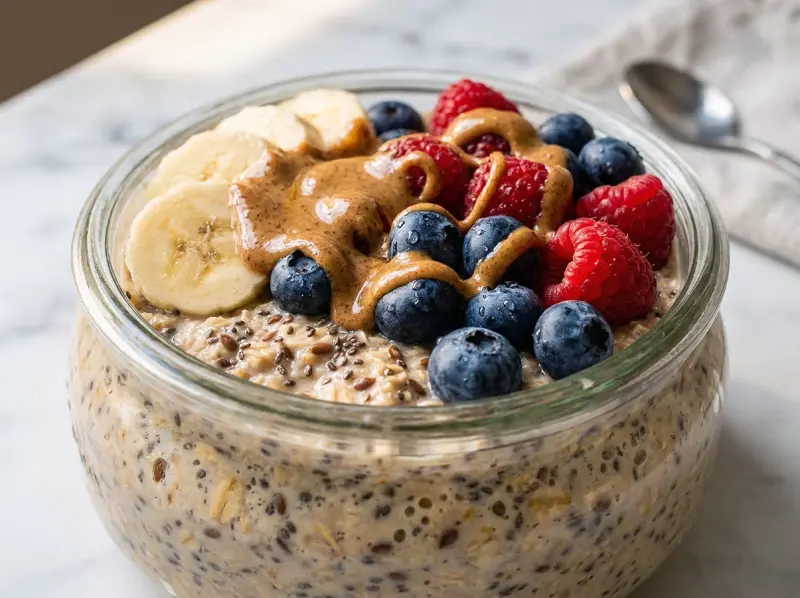
Ночная овсянка с высоким содержанием клетчатки
Овсяные хлопья, замоченные на ночь с семенами чиа, молотым льном, греческим йогуртом и молоком. Готово утром без готовки. Около 12 г клетчатки. Хранится четыре дня.
Обычная овсянка даёт около 3–4 г клетчатки. Семена чиа добавляют 5 г на ложку, молотый лён — 2 г. Итого около 12 г до добавления ягод.
Молотое льняное семя, не целое. Целые семена льна проходят непереваренными. Храните молотое в холодильнике — масло быстро окисляется.
→ Рецепт ночной овсянки с высоким содержанием клетчатки
Что на самом деле помогает здоровью кишечника
Исследования в области здоровья кишечника более однозначны, чем большинство популярных публикаций предполагает. Разнообразие клетчатки важнее её количества. 30 г клетчатки из одного источника каждый день — это другое, чем 25 г из десяти источников.
Эти шесть рецептов вместе покрывают бобовые, крестоцветные, резистентный крахмал, пребиотики, растворимую и нерастворимую клетчатку. Они хорошо работают как ротация именно потому, что отличаются друг от друга.
Одна вещь, которая постоянно подрывает высоковолоконное питание: слишком быстрое увеличение клетчатки. Если нынешний рацион беден клетчаткой и добавить 25 г за одну ночь — реакция пищеварения будет достаточно неприятной. Увеличивайте постепенно в течение двух-трёх недель.