
Whatever took the whites, whether meringue, cloud bread or an angel food cake, six yolks are now sitting in a cup in the fridge with about three days on them. Float a spoonful of cold water over the top so they do not skin over.
Yolks are the more useful half. The fat, the lecithin and all of the colour are in there, which is why nearly everything worth making with them turns out to be a custard or an emulsion. That narrows the field, and the narrowing helps.
Six recipes that use yolks in real numbers, ordered by how much of your evening they take.
Fifteen minutes, three yolks
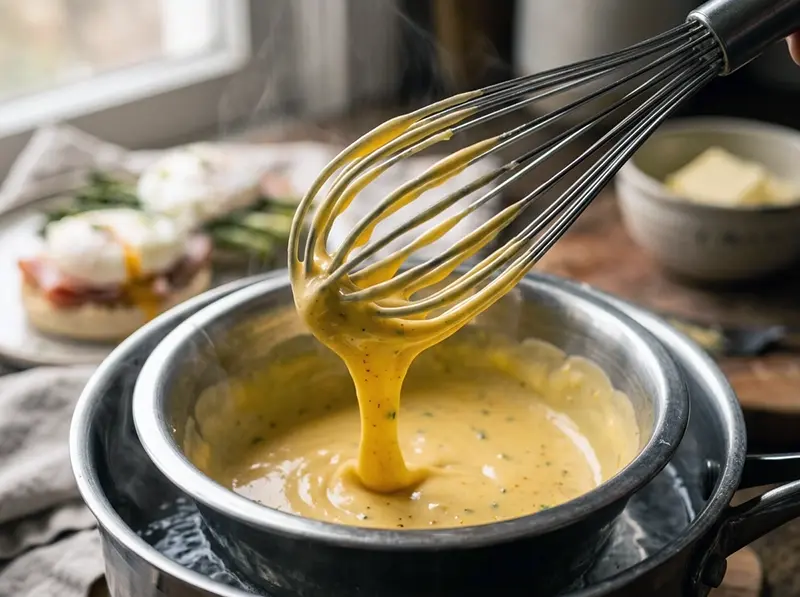
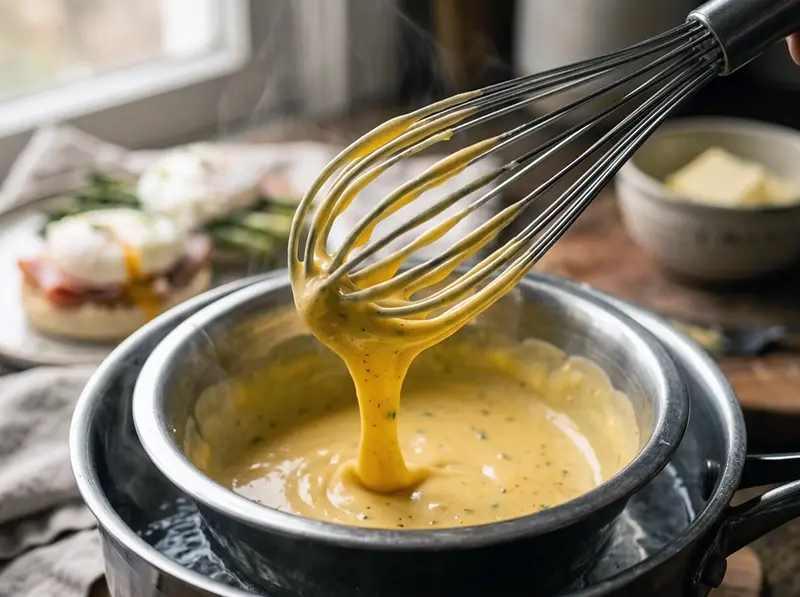
Hollandaise has a reputation for splitting that it only half deserves. The failure is nearly always heat. Butter hotter than 60°C scrambles the yolks the moment it lands, and a bowl sitting down in the simmering water does the same thing more slowly.
Whisk the yolks with a spoonful of cold water over the double boiler for a full two minutes before any butter goes in, until the whisk leaves a trail that holds for a second. That is the structure the butter has to enter. Then take the bowl off the heat completely and add the butter in a thread rather than a pour.
Ice cream without an ice cream maker
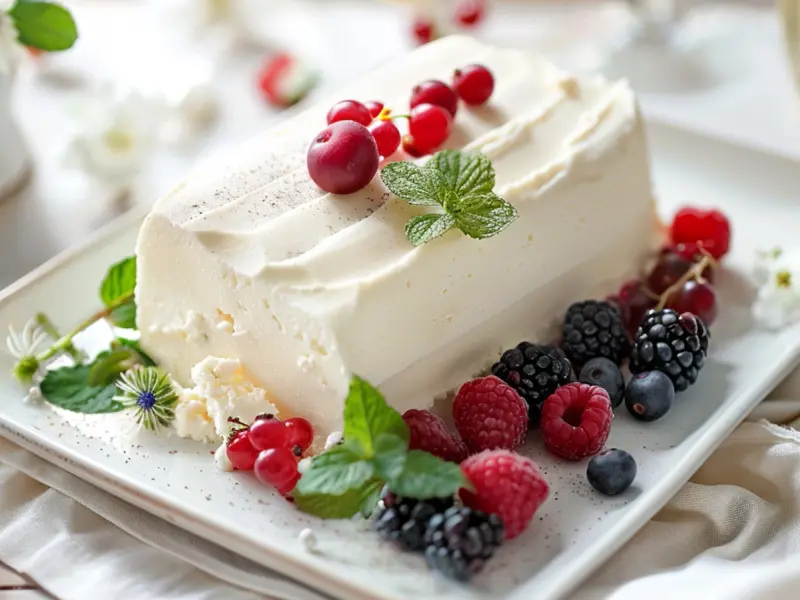
Semifreddo takes four yolks and about twenty-five minutes of actual work. Nothing gets churned because there is nothing to churn: the yolks are whipped over a water bath, cooled, then folded into cream that is already at soft peaks. Air goes in during the whisking and the freezer only has to hold it there.
Cool the yolk mixture completely before it meets the cream, or you melt what you just spent ten minutes whipping. And give it ten minutes on the counter before serving. Straight from the freezer it slices like a brick.
The one everyone thinks of first
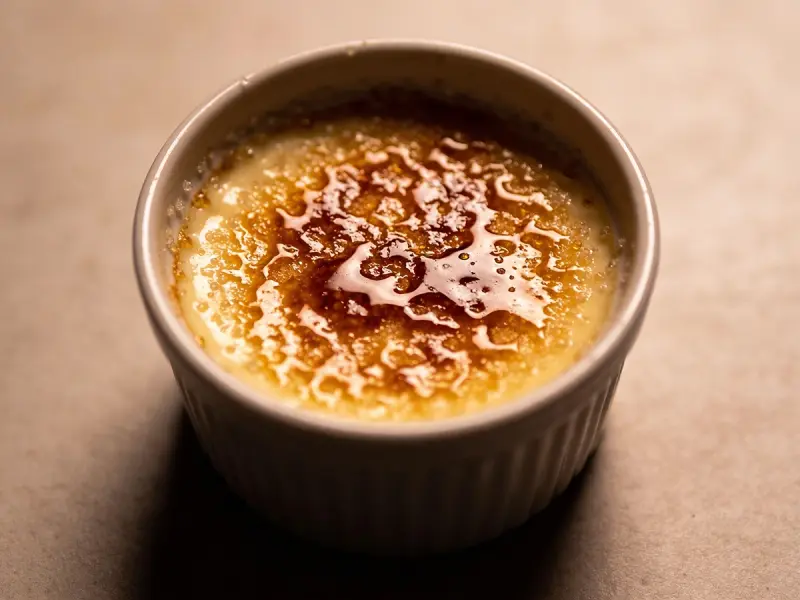
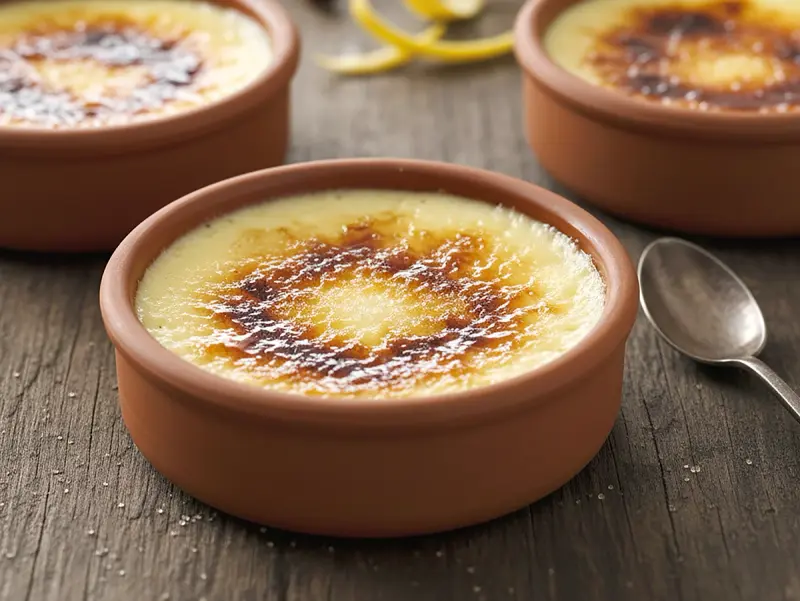
Crème brûlée uses five yolks and is mostly a lesson in gentle heat. 150°C, a water bath up to the middle of the ramekins, and out of the oven while the centre still wobbles. It sets as it cools, and a custard baked until firm is a custard that has already curdled.
Strain the mixture before it goes into the moulds. There is always a thread of chalaza that refuses to break up, and you will meet it later on a spoon.
Six yolks in one tin
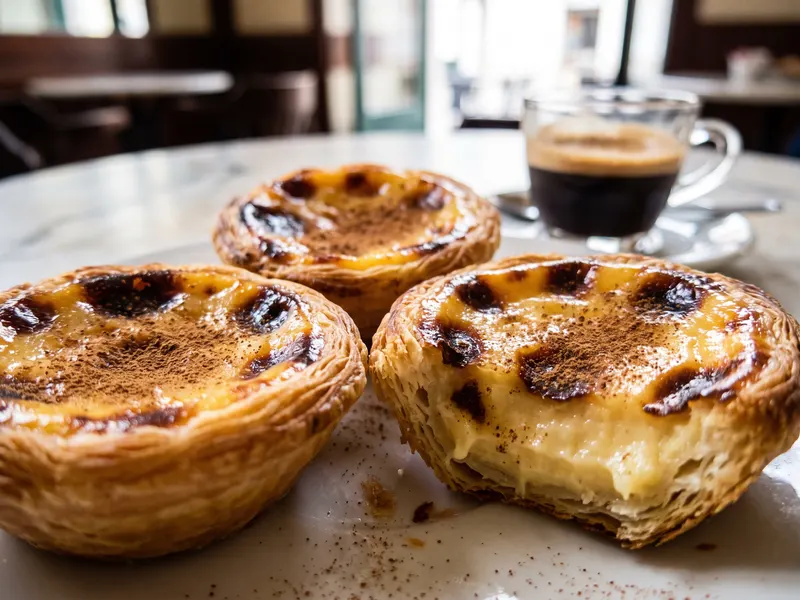
Pastel de nata is where six go at once, and the Portuguese method is strange in a way that matters. Sugar never touches the yolks directly. It is cooked into a syrup at 100 to 104°C, and that hot syrup goes into a hot milk and flour base before the yolks are beaten in one at a time.
The custard will look too thin when you fill the shells. That is correct: a thick custard bakes rubbery. What it needs instead is a savage oven, 250°C or whatever your dial tops out at, so the tops blister before the pastry dries out.
Seven yolks, no oven at all
Crema catalana is the Catalan cousin of crème brûlée and it eats more yolks than anything else here. Seven, and it never sees an oven. Cornflour goes in with the yolks and the whole custard is cooked on the stove, stirred with a wooden spoon over low heat for eight to ten minutes until it coats the back of the spoon.
Below boiling the entire time. Cornflour makes it more forgiving than crème brûlée, but not forgiving enough to survive an actual boil.
The one nobody expects
Chikhirtma is a Georgian chicken soup thickened with five yolks and soured with vinegar, and it is the only savoury dish here that spends yolks in quantity. There are almost no vegetables in it. One onion, and that is the list.
The yolks get beaten with the vinegar first, then tempered with a ladle of warm broth before they go near the pot. Pour them in off the heat, stirring in one direction, and hold the soup just under a simmer for two or three minutes. Let it boil and you have chicken broth with scrambled egg in it, which is a different and worse dish.
If cloud bread started this
Then your whites are already spent and the list above is the whole answer. If it happens the other way round and you are staring at leftover whites instead, cloud bread is the quickest way through them: whipped whites, cream cheese, no flour anywhere.
Yolks keep three days covered in the fridge and freeze badly on their own. Beat a pinch of salt or sugar into them first and they will freeze for a month without going gummy. Label which one you added. Salted yolks in a semifreddo is a mistake you make once.