



Pastel de Nata (Portuguese Custard Tart)
Pastel de nata is the Portuguese puff pastry tart filled with egg yolk custard that comes out of the oven spotted dark. The custard is built on a sugar syrup rather than on sugar, and the pastry is rolled into a log and cut into rounds so the base sets in a spiral. The pastry log chills for 20 minutes and the oven needs a full 30 minutes to heat, so start it early.
Ingredients
- 400 gpuff pastry
- 500 mlwhole milk
- 6 pcsegg yolks
- 250 gsugar
- 125 mlwater
- 40 gplain flour
- 1 pcscinnamon stick
- 2 pcslemon peel
- 1 pinchsalt
- to serveground cinnamon
Method
- Put the sugar, water, cinnamon stick and the strips of lemon peel in a small pan and bring to a boil. Boil without stirring once until the syrup reaches 104°C, about three minutes; stirring makes the syrup crystallise.
- Whisk the flour and salt with a splash of the cold milk until smooth, add the rest of the milk and cook over medium heat, whisking, for five minutes until it thickens.
- Lift the cinnamon and peel out of the syrup, then pour the hot syrup into the hot milk base in a thin stream while whisking hard. Let the mixture cool for ten minutes.
- Whisk in the egg yolks one at a time, then pass the custard through a sieve into a jug. It stays thin and pourable, which is correct — a thick custard sets rubbery.
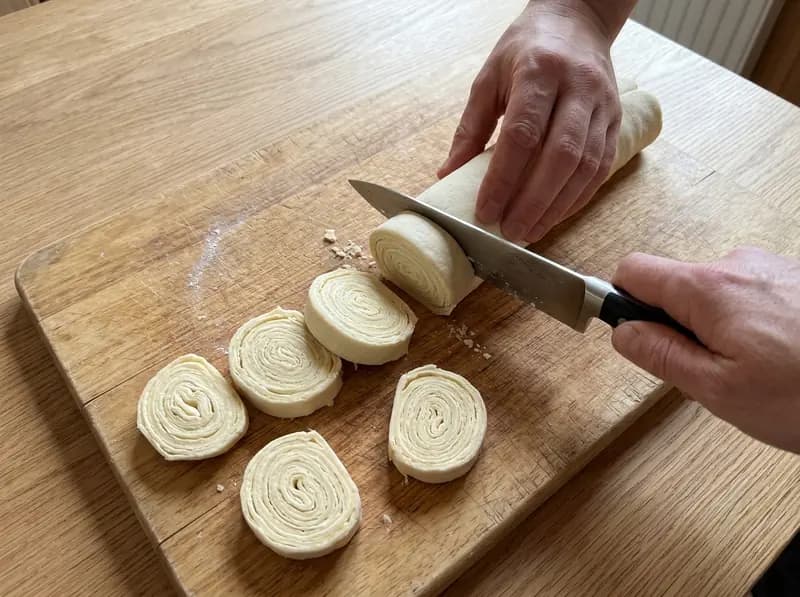
- Unroll the puff pastry (roll a block out first to a rectangle about 25 × 40 cm), brush the surface lightly with water and roll it up tightly from a short side into a log a little narrower than the base of your muffin cups. Chill the log for 20 minutes, then cut it into 12 equal rounds about 2 cm thick. Switch the oven to its highest setting, 250–290°C, when the log goes into the fridge, so it gets a full 30 minutes to heat up.
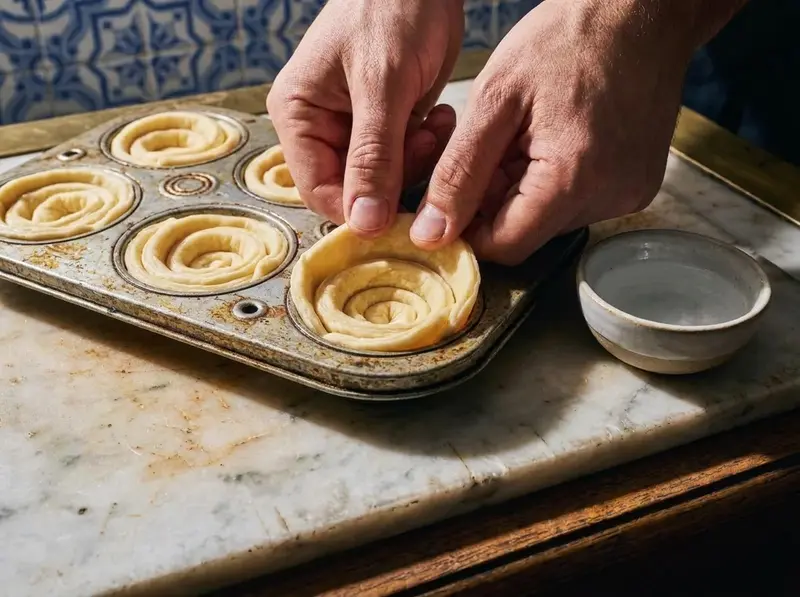
- Set each round cut side down in a 12-hole muffin tin (butter the holes unless the tin is non-stick). Dip your thumbs in cold water and press the pastry up the sides so it stands a little above the rim.
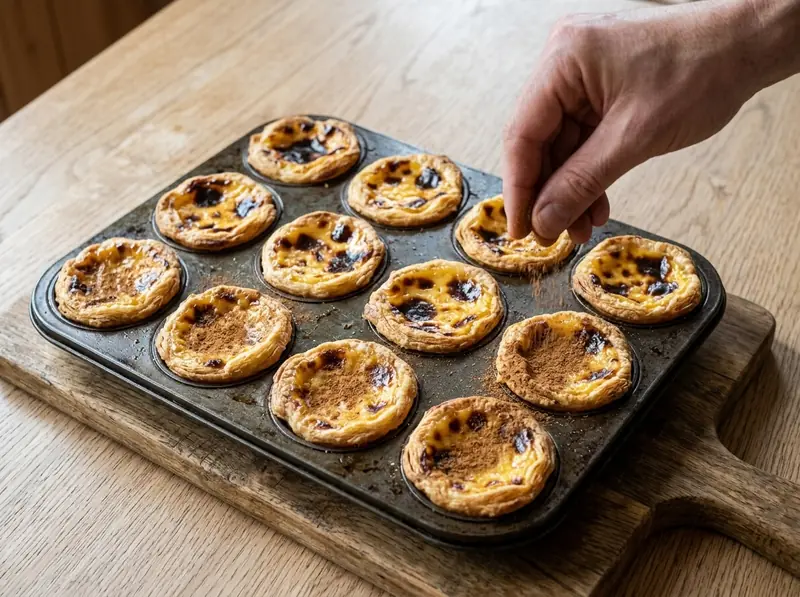
- Fill each shell three quarters full and bake in the top third of the fully heated oven at the highest setting it has, 250–290°C, for 12 to 15 minutes until the pastry is golden and the custard is spotted dark. If the pastry is brown and the custard is still plain yellow, switch on the grill for the last 30 to 60 seconds and watch it. Cool for five minutes in the tin, then dust with ground cinnamon.
Cooked it? Rate the recipe
FAQ
The oven is not hot enough. Preheat for a full 30 minutes at the maximum setting, 250–290°C, bake in the top third of the oven, where the heat is strongest, and do not open the door. Spots appear in the last two or three minutes of the 12 to 15. If they still do not come, finish under the grill for 30 to 60 seconds and watch it. If you own an oven thermometer, check the real temperature: many home ovens run cooler than the dial says.
Yes, and most home cooks in Portugal do. Buy all-butter pastry, 400 g for 12 tarts, unroll the sheet, brush it with water and roll it into a tight log from a short side. Chill the log for 20 minutes so the layers do not smear, then cut it into rounds about 2 cm thick. Set them cut side down in the tin — cutting across the log is what gives you the spiral in the base.
Either the syrup went into the milk base too fast, or the yolks went in while the mixture was still hot. Pour the syrup in a thin stream with the whisk moving, and let the base cool for ten minutes before the yolks. Add the 6 yolks one at a time, then pass the custard through a sieve: it catches any egg that did set and stray bits of peel.
Pastel de Belém is a protected name used by one bakery in Lisbon that holds the recipe from the Jerónimos monastery. Every other version, in Portugal and elsewhere, is a pastel de nata. The idea is the same in both: a puff pastry shell, an egg yolk custard and a very hot oven, with ground cinnamon shaken over the tart when it is served. If you like custards with a burnt top, crema catalana and crème brûlée get theirs from sugar caramelised on the surface.
They are at their best within a few hours of baking, so eat them the same day if you can. The filling is an egg custard: whatever will not be eaten that day goes into the fridge in a closed box once cool, for up to 2 days. The fridge softens the pastry, so bring the crispness back in a 200°C oven for three or four minutes. Skip the microwave, which leaves the pastry limp.
Keep browsing
More dishes from the Portuguese archive — picked by overlap with what you're cooking now.








Recipes by email
One letter a week: a recipe picked for your taste, plus whatever is new on the site. You can stop the letters in one click.
Welcome gift: Sergei's cookbook (e-book).
By signing up for the newsletter you agree to the privacy policy.
Tell us what you like to cook (30 seconds) →
Join the conversation
Comments
No comments yet — be the first!