Salmon is the fish most people are comfortable buying and the fish most people overcook. It goes from silky to chalky in about ninety seconds, and once it's there you can't bring it back. Everything below hangs on that one problem.
Know when to stop
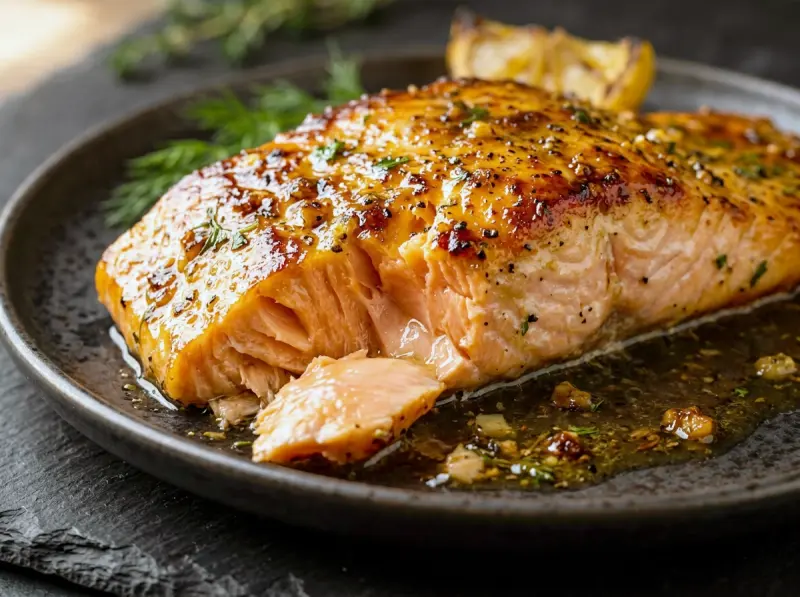
Salmon is done long before it looks done. Pull it at 50 to 52°C in the centre for medium, around 55°C if you want it firmer, and it will climb a few degrees more while it rests. Without a thermometer, press the top of the fillet: when the flakes just begin to separate and the centre still looks slightly translucent, it's ready. The white stuff that leaks out is albumin, a protein squeezed out by heat. A little is normal. A lot means it was cooked too hot, too long, or both.
Farmed salmon has more fat running through the muscle and forgives an extra minute. Wild sockeye and coho are leaner and punish it. Buy thick centre-cut pieces if you can, because a tapering tail end cooks unevenly no matter what you do.
The oven, for a weeknight
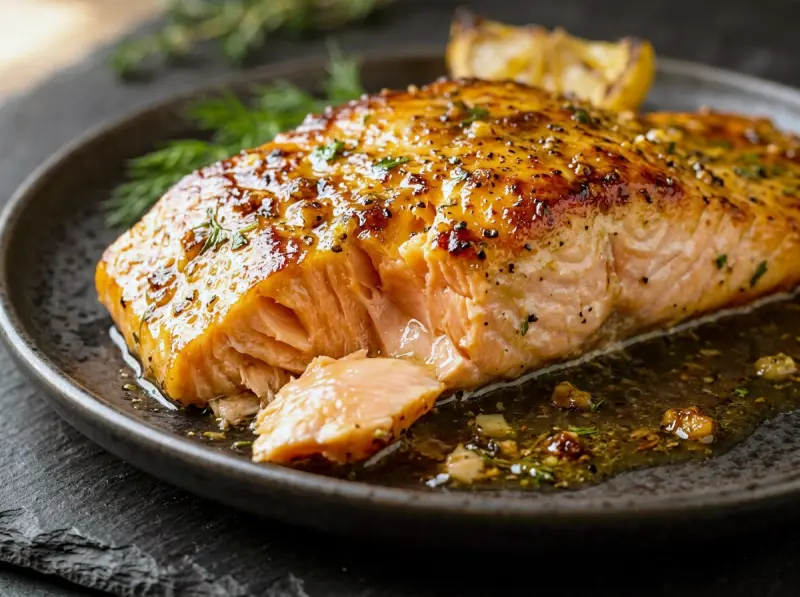
Roasting is the most forgiving method: no smoke, no flipping, no guessing where the hot spot in your pan is. A 190°C oven and 12 to 15 minutes handles most fillets; a piece 2.5 cm thick takes about thirteen. Season it well, oil it lightly, and take it out while you still doubt it's ready.
A glaze, and when to give it heat
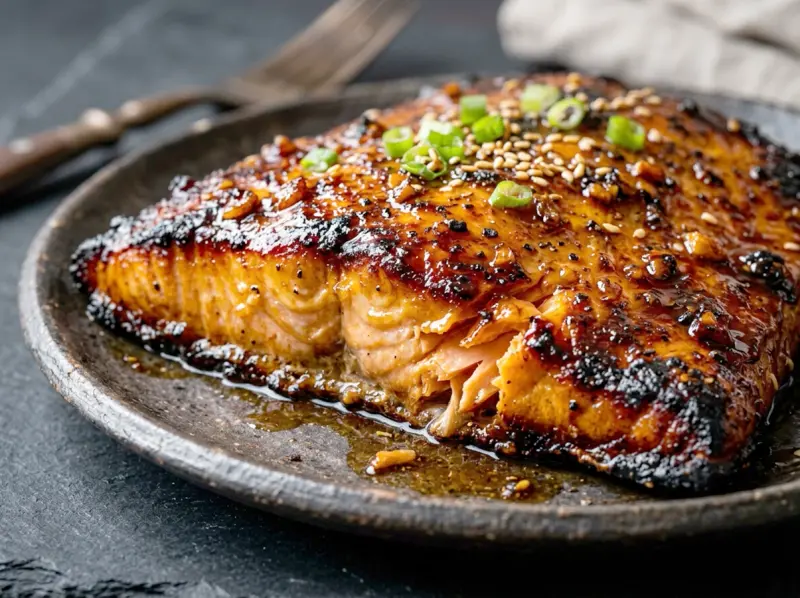
A glaze does what plain roasting can't: it clings. Butter, garlic, honey and soy, spooned over the fillet before it goes in, then two or three minutes under the grill at the end. The timing is the whole trick. Honey held at oven heat for a quarter of an hour turns bitter and black; honey given ninety seconds under a hot grill turns to caramel.
For the same idea with brown sugar and a sharper caramel edge, there's brown sugar salmon, and for a coconut and lime version, Thai-style salmon.
Yesterday's fillet, rescued
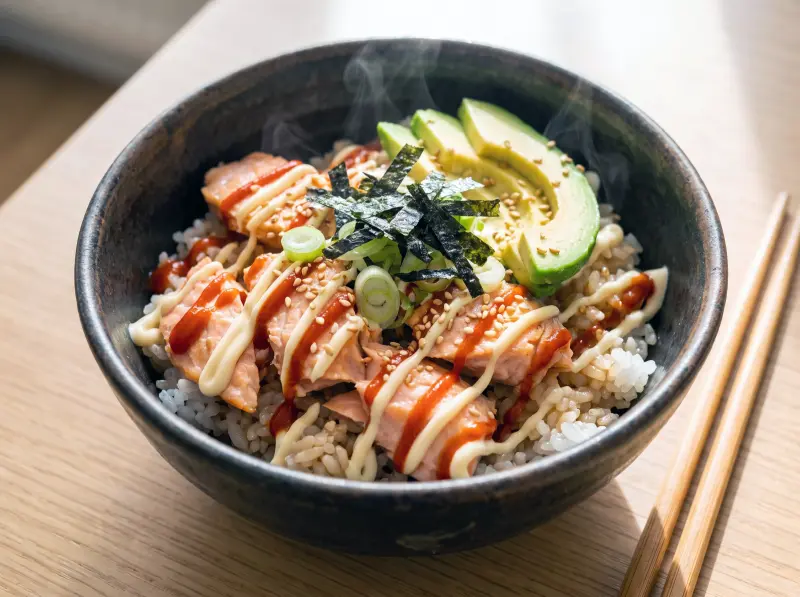
Cold cooked salmon reheated in a microwave is grim: dry fish, hard rice, a smell that fills the kitchen. The bowl that went around the internet solves it with an ice cube. You flake the salmon over warm rice, set an ice cube on top, lay a sheet of nori over the bowl like a lid, and microwave for a minute. The ice turns to steam under the nori and rehydrates everything instead of blasting it. Then a sauce of Kewpie mayonnaise, soy and sriracha over the top.
Raw, if the fish is right
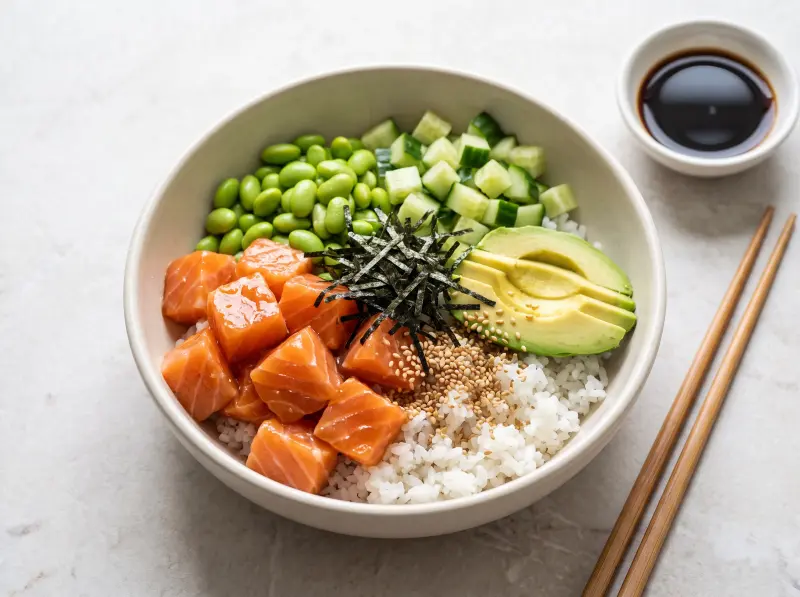
Poke is the opposite dish: raw salmon cut into cubes, seasoned briefly with soy, sesame oil and scallion, served cold over rice. Two rules keep it good. Use only salmon sold as sushi-grade or sashimi-grade by someone you trust, and marinate for 15 to 20 minutes, no longer. Soy and vinegar cure raw fish the way lime does in ceviche, and past half an hour the salmon turns firm and opaque instead of silky.
If raw fish makes you nervous but the flavours appeal, salmon ceviche cures it properly in citrus, which is a gentler place to start.
One fillet, stretched
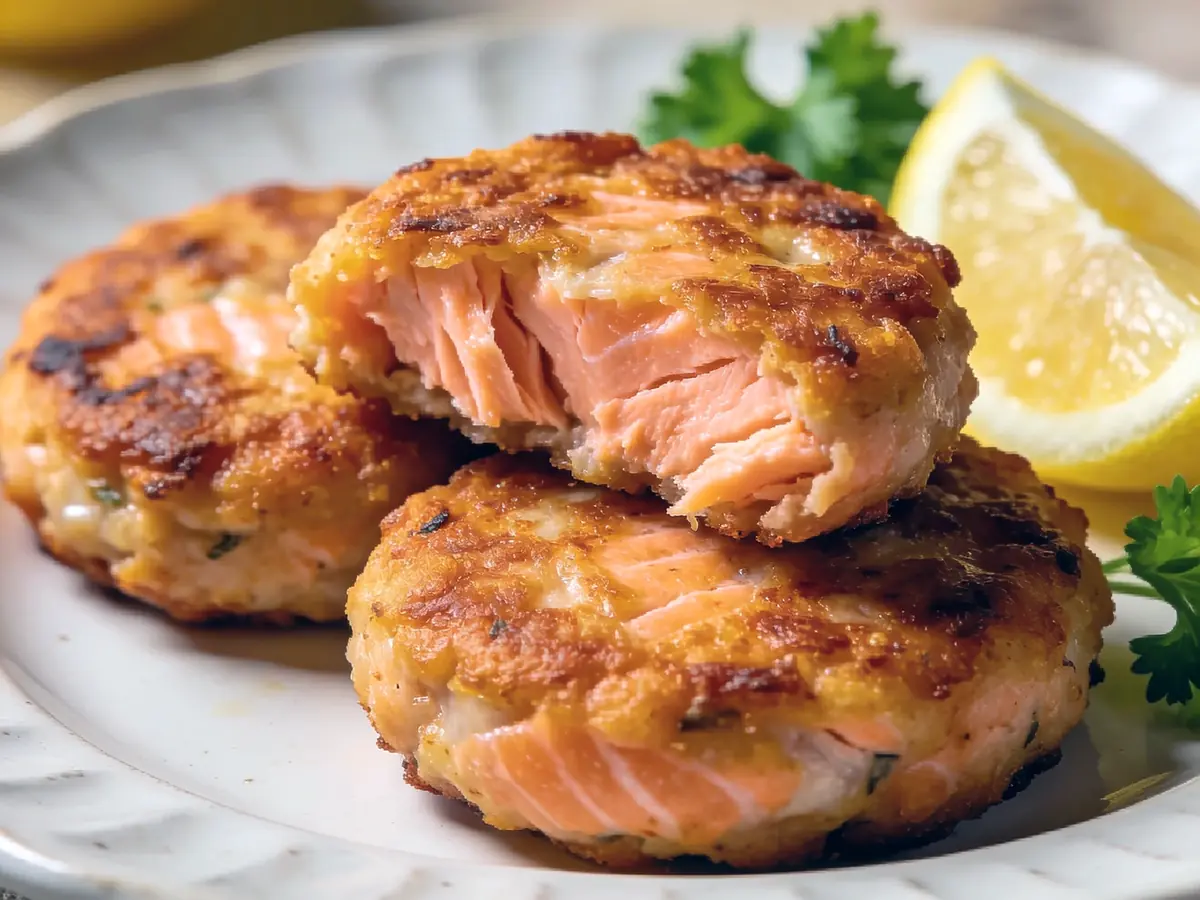
Salmon patties are what to make when one fillet has to feed four. The fish is chopped or minced, bound with egg, breadcrumbs and onion, and fried until the outside is crisp. Cooked leftovers work the same way, and unlike a reheated fillet, patties are as good the second day as the first.
For people coming over
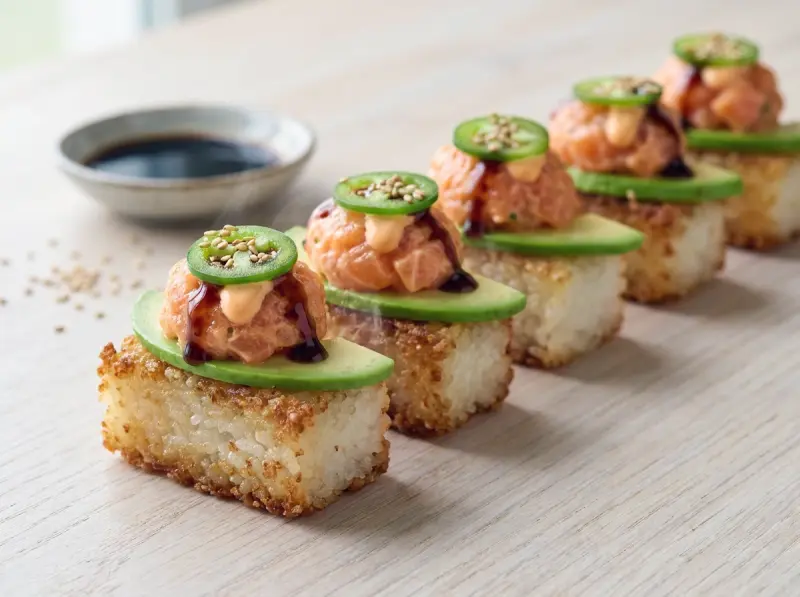
Crispy rice with spicy salmon is finger food that looks like restaurant work and isn't. Rice is pressed, chilled, cut into blocks and fried until the outside crackles, then topped with spicy salmon. The chilling step is not optional; warm rice falls apart in the oil.
→ Crispy rice with spicy salmon
About the skin
Crisp skin needs three things: a dry surface, a properly hot pan, and patience. Pat the skin with paper towel, salt it, lay it down and don't move it for four minutes. If you plan to flake the fish into a bowl or a salad anyway, cook it skin-side up and give the skin to whoever in the house likes it.
Storing it
Cooked salmon keeps two days in the fridge and is better cold than reheated: flake it into a salad, a rice bowl, or onigiri. Raw salmon should be cooked the day you buy it, or frozen the day you buy it. And if you have a head and a tail left over from a whole fish, they make ukha, the Russian fish soup that exists precisely because those parts are too good to throw away.