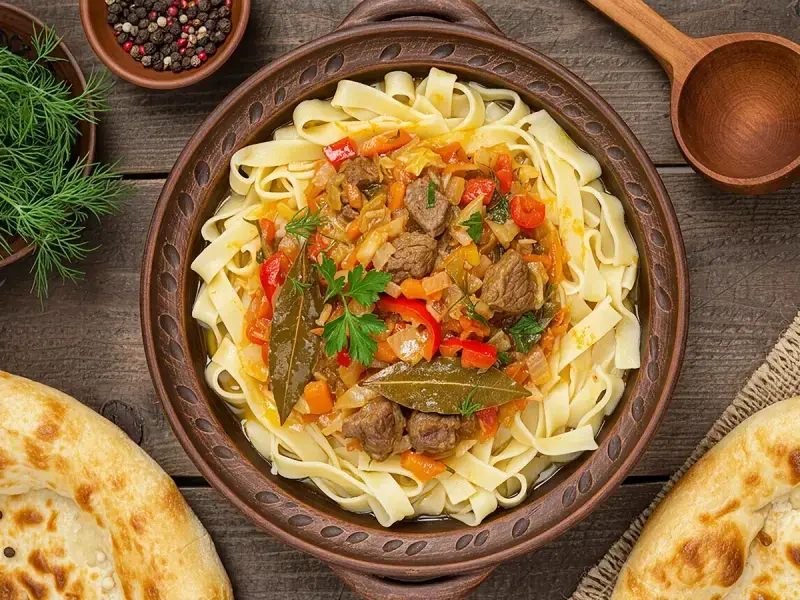
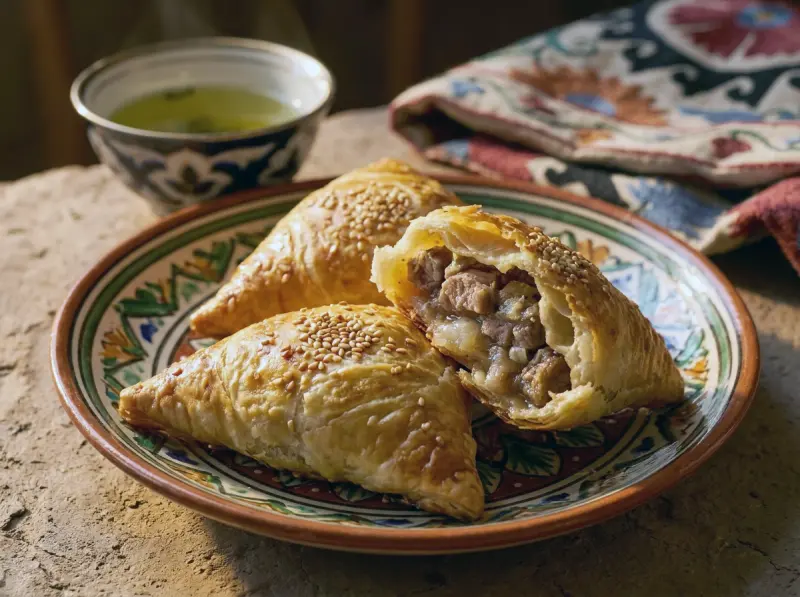
Six dishes account for most of what comes out of an Uzbek kitchen. Plov is rice cooked with lamb and carrot. Shurpa is a clear lamb soup with the vegetables left in big pieces. Lagman is hand-pulled noodles under meat and broth. Kavardak is a lamb and potato stew. Samsa is a baked lamb pastry, not a fried one. Achichuk is the thin-sliced tomato and onion salad that goes next to all of them.
Almost all of them start the same way. A heavy cast iron pot, lamb, more onion than seems reasonable, and cumin crushed between your palms instead of shaken out of a jar. The pot is a kazan, and its thick walls are doing real work: on thin steel the meat scorches before anything else is ready.
You do not need one to cook any of this. A cast iron Dutch oven behaves closely enough. What you cannot substitute is the heat discipline. These dishes are built on searing hard first and then leaving things alone for an hour or two.
Six of them, starting with the one everything else orbits.
The one that takes three hours and earns them
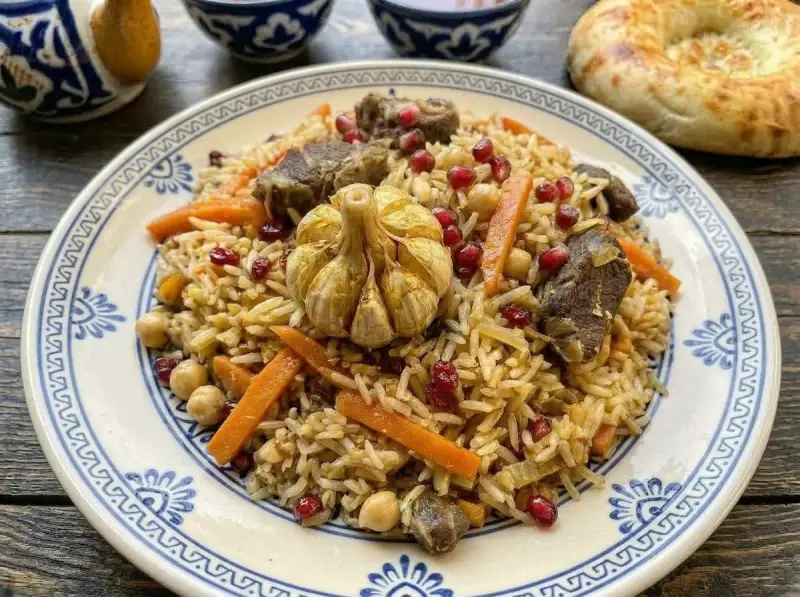
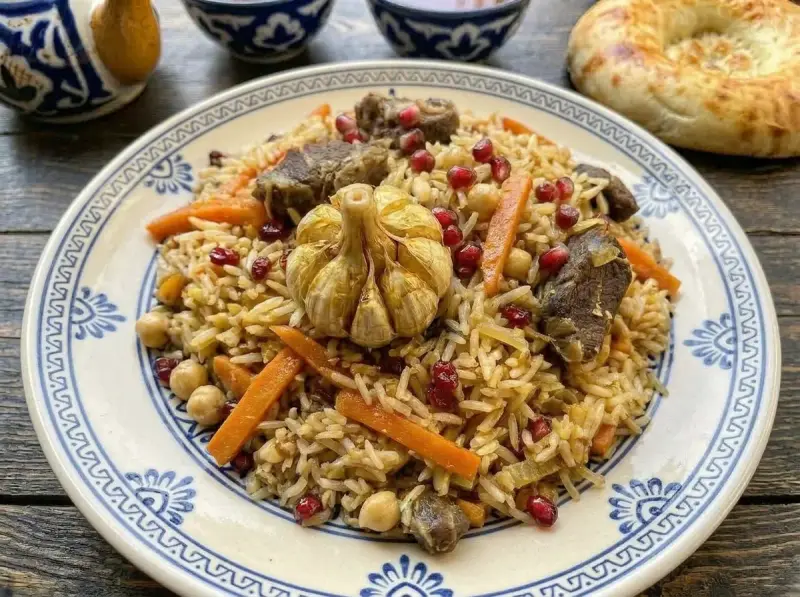
Plov is the centre of Uzbek cooking and the closest thing it has to a public ritual, cooked by men in kazans big enough to feed a wedding, usually over an open fire.
Everything is decided by the zirvak, the base of onion, lamb and carrot fried down before a single grain of rice appears. Onions go until amber, lamb until it has a real crust, carrots for another ten to fifteen minutes. The rice is then spread over the top and never stirred into it. Water stands 1.5 to 2 cm above the surface and cooks away, and you poke holes down through the rice so the steam has somewhere to go.
Whole heads of garlic get pushed into the rice with only the papery outer layer removed. They steam to a paste and are handed round at the table for people to squeeze out themselves.
→ Plov
Fifteen minutes, and it makes the plov work
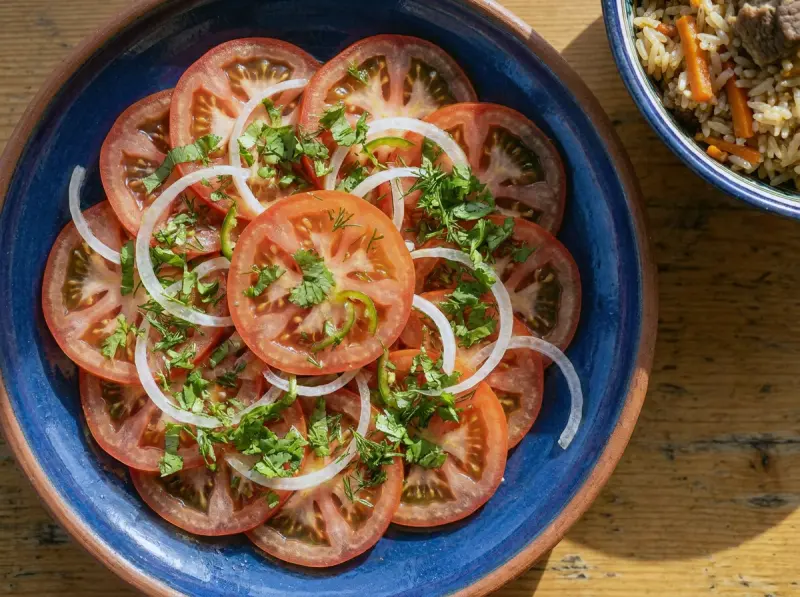
Achichuk is what sits beside plov, and after a plateful of rice cooked in lamb fat you understand the logic immediately. Paper-thin tomato, almost translucent onion, hot green chilli, cilantro and dill, salt, and a little unrefined sunflower oil. No vinegar, nothing else.
One step does the work. Pour boiling water over the sliced onion, leave it three to five minutes, then drain and dry it. That pulls out the raw sharpness and leaves a faint sweetness behind. The name comes from achchiq, Uzbek for spicy.
→ Achichuk
The soup you drink separately from its own contents
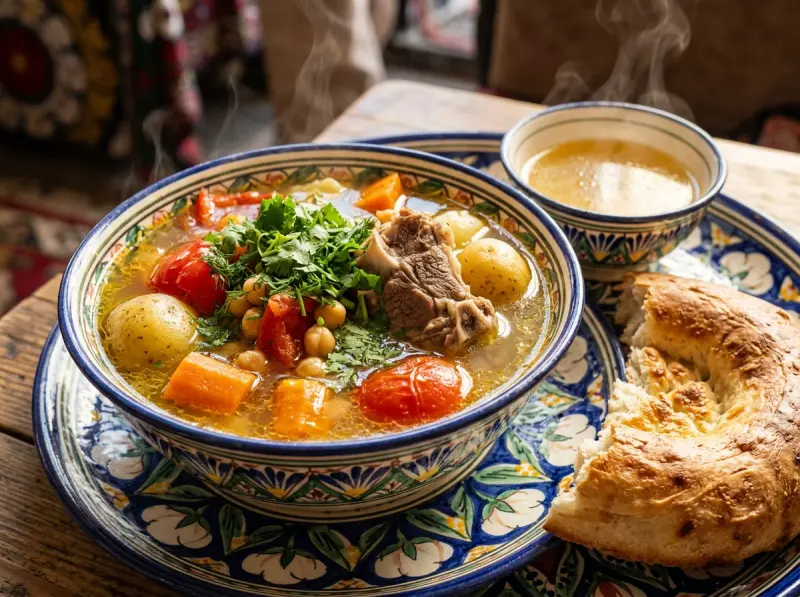
Shurpa is lamb on the bone with vegetables cut deliberately large. Potatoes whole or halved, carrots in thick chunks, onion in wedges. Nothing is diced, because everything is meant to stay recognisable in the bowl and be eaten with a fork while the broth is drunk alongside it.
Clarity is decided in the first twenty minutes. Skim the foam properly then and the broth stays clear through the next two hours of simmering. Miss it and no amount of straining afterwards brings it back.
→ Shurpa
The one whose name means "mess"
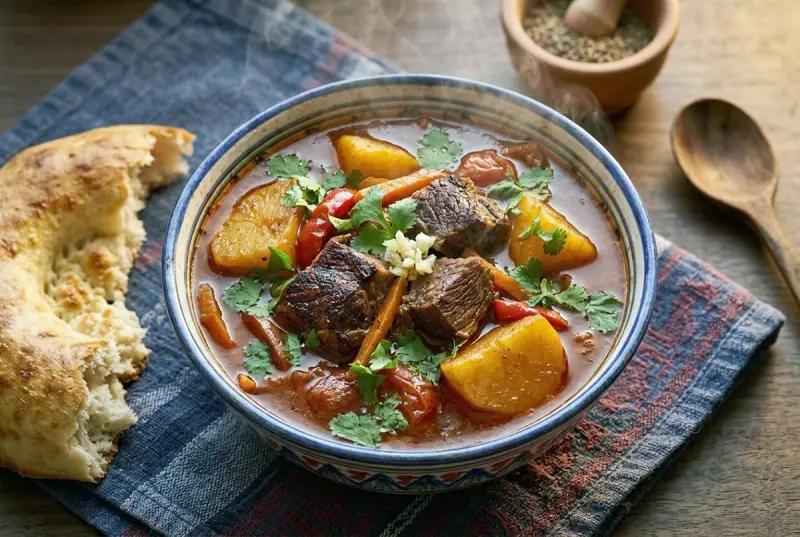
Kavardak translates roughly as shambles, which tells you exactly what it was: whatever vegetables were in the house on a day when there was also meat. It is forgiving about ingredients and completely unforgiving about one thing.
The oil has to be smoking before the lamb goes in. Not hot. Smoking. Warm oil lets the meat release its juices and boil in them, and you end up with grey lamb in a thin broth instead of the crust the whole stew is built on. Pat the meat dry first, because wet meat steams no matter what the oil is doing.
→ Kavardak
The noodles are the point
Lagman is meat, vegetables and broth over hand-pulled noodles, and every family in Uzbekistan is convinced their grandmother's were better than everyone else's. Pulling them is the difficult part. Oil your hands and the dough generously or the strands stick and tear instead of stretching.
Boil the noodles in their own pot of water and rinse them afterwards. Starch coming off the noodles will cloud a broth you have just spent an hour and a half building.
→ Lagman
The one with two rules
Samsa is baked rather than fried, and its layers come from butter rolled through the dough instead of from yeast. Roll the dough thin, brush it with melted butter, roll it into a log and chill it for at least an hour. Cutting that hour short costs you the layers, and the layers are the whole appeal.
The filling has two rules worth treating as fixed. Chop the lamb with a knife rather than putting it through a mincer, because minced meat packs dense and bakes dry. And use as much onion by weight as meat: it melts during baking and becomes the juice inside. The filling goes in raw and cooks in its own steam at 200°C for about forty minutes.
→ Samsa
If you only make one thing
Make plov, and make achichuk to go beside it. Those two together are the cuisine in miniature: something long, fatty and slow, with something cold and sharp sliced thin enough to see through sitting right next to it. The salad takes fifteen minutes and does more for the rice than any amount of extra spice would.