
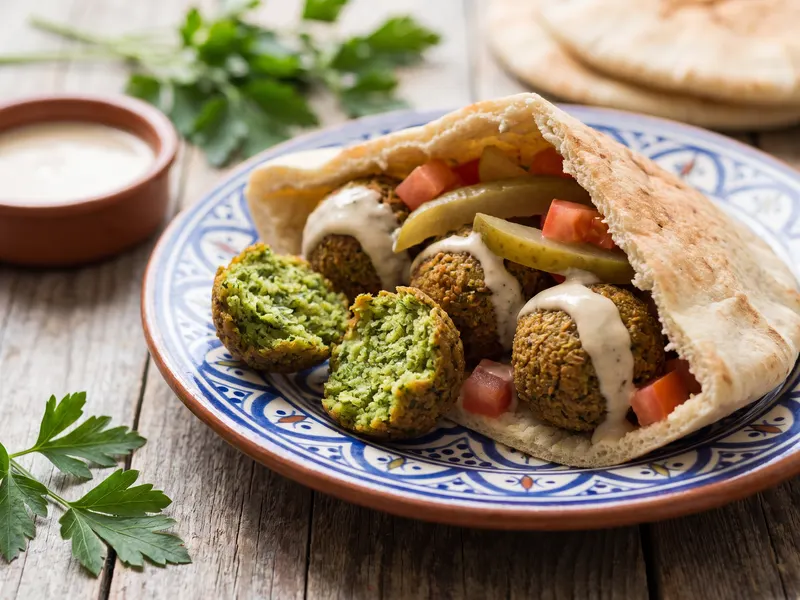
Lebanese Falafel
Falafel is a deep-fried ball of ground soaked chickpeas, fava beans or both, mixed with herbs and spices and sold as street food across the Levant and Egypt. This version uses chickpeas only; in Lebanon the mixture is often half chickpeas and half dried fava beans. The dried chickpeas soak for 24 hours and the ground mixture chills for 1 hour, with no flour or egg; the hands-on work takes about 70 minutes. The shell cracks under the teeth and the centre stays moist, coarse and green. Eat it straight from the fryer with tahini sauce, pickles and warm flatbread.
Ingredients
- 300 gdried chickpeas
- 100 gonion
- 4 clovesgarlic
- 30 gflat-leaf parsley
- 20 gfresh cilantro
- 2 tspground cumin
- 1 tspground coriander
- 0.25 tspground cardamom
- 1.5 tspsalt
- 0.25 tspblack pepper
- 0.5 tspbaking soda
- 15 gsesame seeds
- 1000 mlsunflower oil
Method
- Soak the chickpeas. Cover the dried chickpeas with at least three times their volume of cold water and leave them for 24 hours; in a hot kitchen, soak them in the refrigerator. They should double in size and split cleanly when bitten, but remain raw; do not boil them.
- Drain and dry. Tip the chickpeas into a colander, rinse them and spread them on a clean towel for 15 minutes. Surface water makes the mixture pasty and encourages falafel to break in the oil, so the chickpeas should feel damp rather than wet.
- Grind the mixture. Pulse the chickpeas, the quartered onion (1 small), garlic, parsley and cilantro in two batches, scraping the bowl between pulses. Stop when it resembles coarse couscous and a squeezed spoonful holds together; a smooth hummus-like paste will fry dense. Mix in the cumin, coriander, cardamom, salt and pepper.
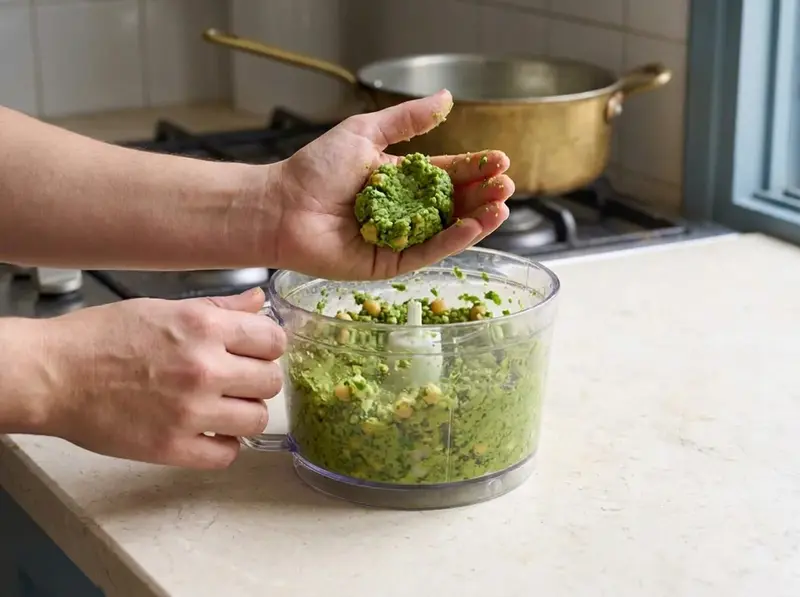
- Chill the mixture. Cover the bowl and refrigerate for 60 minutes. This rest lets the chickpea starch absorb moisture from the onion and firms the mixture without flour or egg.
- Heat the oil and test the seasoning. Pour the sunflower oil into a deep heavy saucepan about 16 cm across: 1 litre stands about 5 cm deep there and should reach no more than halfway up the side. Heat it to 175°C. Stay at the stove while the oil is hot and keep water away from it: dry your hands before you go near the pan and lower each ball in on a spoon. If the oil catches fire, turn off the heat and cover the pan with a lid — never pour water on it. Stir the baking soda and sesame seeds through the cold mixture only now, form one 25 g tester and fry it for 4 minutes. It should turn deep golden, stay intact and have a cooked, fluffy centre; adjust salt before shaping the rest.
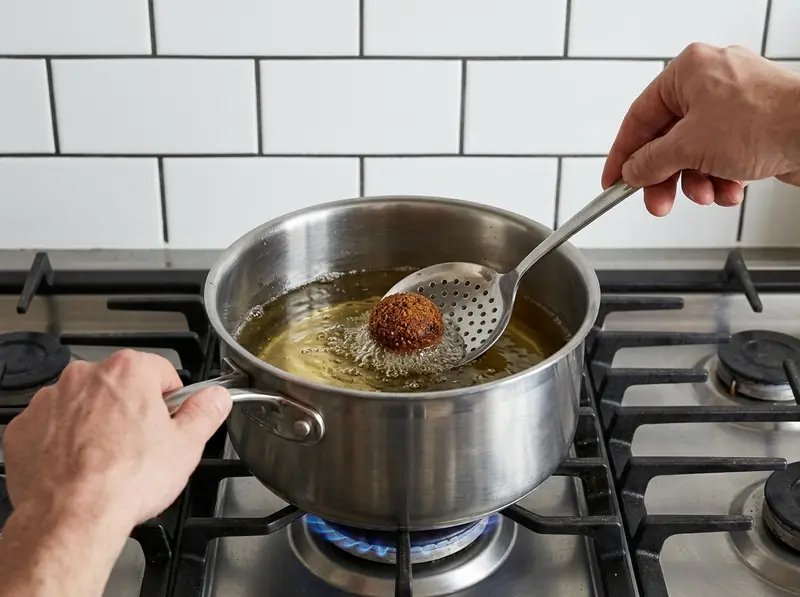
- Shape and fry. With damp hands, press the mixture into compact balls or low domes of 25 g each, closing any cracks around the edges; you will get about 32. Shape them away from the stove, dry your hands and lower each ball into the oil on a spoon, never by hand over the pan. Fry four at a time for 4 minutes at 175°C, turning once, until the crust is deep golden-brown and the centre is hot and green. Let the oil return to 175°C between batches so the falafel do not soak up excess oil.
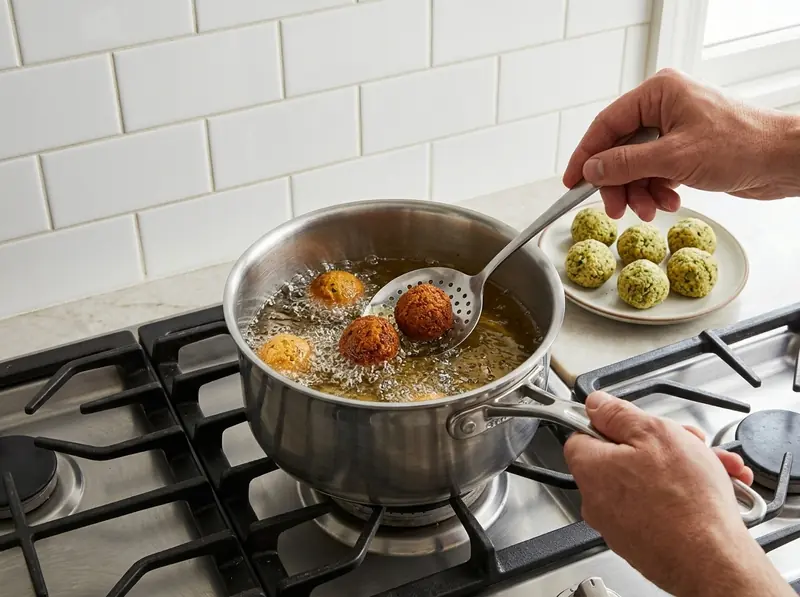
- Drain and serve at once. Lift the falafel onto a rack set over a tray for 2 minutes; a rack keeps the underside crisp better than a pile of paper towels. Serve hot with tahini sauce, cucumber pickles, tomato and flatbread, or as part of a mezze plate.
FAQ
The usual causes are canned chickpeas, wet soaked chickpeas or oil below 175°C. Start with dried chickpeas, soak them for 24 hours and dry them for 15 minutes before grinding. Chill the mixture for 60 minutes and press each 25 g piece firmly enough to close visible cracks. Fry one tester before committing the batch.
Canned chickpeas do not work well for this fried falafel. They are cooked and waterlogged, so the mixture tends to become a smooth paste that either crumbles in the oil or fries up heavy. Use 300 g dried chickpeas and soak them without cooking. If canned chickpeas are all you have, make chickpea patties bound with flour instead, but expect a different texture.
Shape the cold mixture into flatter 25 g patties so hot air can reach the centre. Brush both sides with oil and cook at 190°C for 14 minutes, turning after 7 minutes. The surface will be drier and less blistered than deep-fried falafel, but the middle should remain moist. Do not use canned chickpeas for the air-fryer version either.
Refrigerate the ground mixture without baking soda for up to 24 hours in a tightly covered container. For longer storage, shape it without soda and freeze the pieces on a tray, then bag them for up to 2 months. Thaw overnight in the refrigerator, mix in the soda and reshape before frying. Cooked falafel keep for 3 days in the fridge; reheat them in a 200°C oven for 8 minutes to restore the crust.
Lebanese falafel is commonly tucked into thin flatbread with tahini sauce, tomato, parsley and sharp pickles. Turnips dyed pink with beet are especially good because their acidity cuts through the fried crust. For a mezze meal, serve the falafel beside hummus, tabbouleh and raw vegetables. Bring it to the table hot; the shell softens as it stands.
Rate this
Recipes by email
One letter a week: a recipe picked for your taste, plus whatever is new on the site. Unsubscribe in one click.
Welcome gift: Sergei's cookbook (e-book).
By subscribing you agree to the privacy policy.
Tell us what you like to cook (30 seconds) →Keep browsing
More dishes from the Lebanese archive — picked by overlap with what you're cooking now.
Join the conversation
Comments
No comments yet — be the first!