


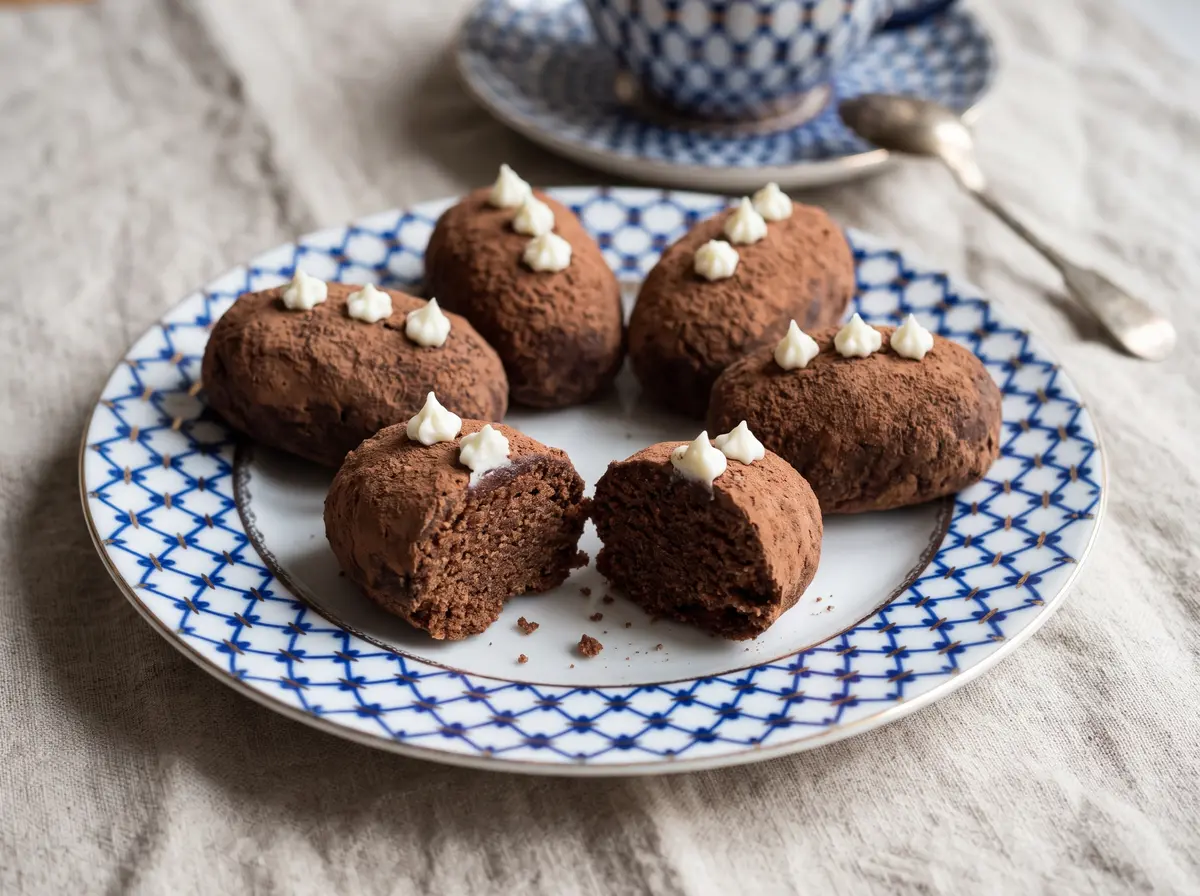
Kartoshka Cake
Kartoshka is a Soviet crumb pastry: cake or biscuit crumbs worked into butter cream, shaped like a small potato and rolled in cocoa with icing sugar. The Russian name, пирожное «Картошка», simply means "potato", and it is also written Kartoschka. This is the no-bake home version with plain biscuits and sweetened condensed milk. Cocoa goes into the mass, so it is dark all the way through. The textbook shop version is made from sponge with cocoa only in the coating, so it is usually light inside. The butter is beaten soft rather than melted, the way butter cream is made in a pastry shop, so the mass sets firm in the fridge. Allow about 45 minutes of work, then at least an hour in the fridge.
What kartoshka is
Kartoshka belongs to a whole family of Soviet crumb pastries. Recipes for them were printed in the official 1952 Soviet collection of confectionery recipes, and «Картошка» was one of several kinds. In a pastry shop it is made from sponge trimmings rubbed into crumbs and worked with butter cream and a little cognac until the mass turns plastic. Each piece is shaped like a potato and rolled in cocoa mixed with icing sugar, then a few small eyes are poked into the top and filled with white cream, like sprouts. That dusted version is called «Картошка» обсыпная.
A Russian pastry textbook gives the shop proportions as about 1.1 parts crumb to 1 part cream, with each cake weighing 54 g. It is often called a GOST recipe, but a Russian pastry cook who writes about Soviet recipes points out that Soviet GOST standards set the quality of the finished product and did not contain recipes.
Biscuits or sponge
At home, kartoshka is mostly made from biscuits with condensed milk and cocoa, and this recipe is that version. The cocoa goes into the mass, so the cakes are dark inside, while the textbook shop version is usually light. The same pastry cook says biscuits give a different taste, and it is still kartoshka, just homemade.
Some home recipes melt the butter. Here it is beaten first and the condensed milk is added gradually, the way butter cream is made in a pastry shop. The cream holds the crumbs better, and the cakes set firm after an hour in the fridge.
Ingredients
- 300 gMarie-type biscuits
- 120 gbutter
- 150 gsweetened condensed milk
- 20 gcocoa powder
- 1 tbspdark rum
- 10 gcocoa powder
- 20 gicing sugar
Method
- Let the butter and the condensed milk come to room temperature first, so the butter is soft, about 18 to 20 °C. Break 300 g plain Marie-type biscuits (cookies in the US) into a blender and blitz them to fine crumbs, like sand, with nothing bigger than a lentil left. No blender? Put them in a freezer bag and crush them with a masher or a rolling pin. Big pieces show up as lumps on the finished cakes.
- Beat 120 g soft butter with a hand mixer for 5 minutes, until it turns pale and fluffy. It should be soft enough to dent with a finger but not melted. Add 150 g sweetened condensed milk (not evaporated milk) a spoonful at a time while beating, then beat for 3 minutes more until the cream is smooth and glossy, with no streaks of milk. Spoon 2 tablespoons of this cream into a small bag for the sprouts, close it and leave it on the counter, since cold butter cream will not pipe.
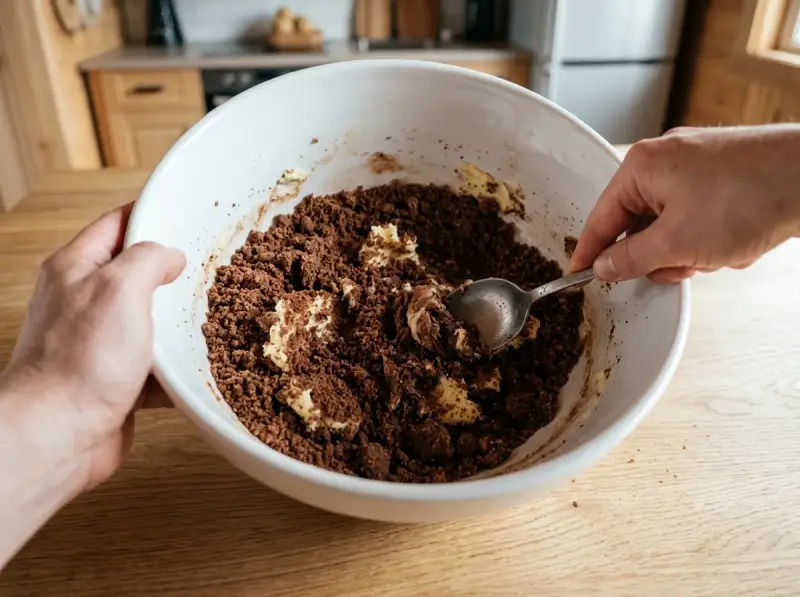
- Add the crumbs, 20 g cocoa powder and 1 tablespoon dark rum (or cognac) to the rest of the cream. Mix with a tablespoon, not your hands, since warm hands melt the butter and the mass then sets badly. Stop when it feels like plasticine: a lump squeezed in your fist holds its shape and does not crumble. If it crumbles, work in a teaspoon of the reserved cream at a time, up to 2 teaspoons. If it is too soft to shape, wrap it and chill it for 15 to 30 minutes.
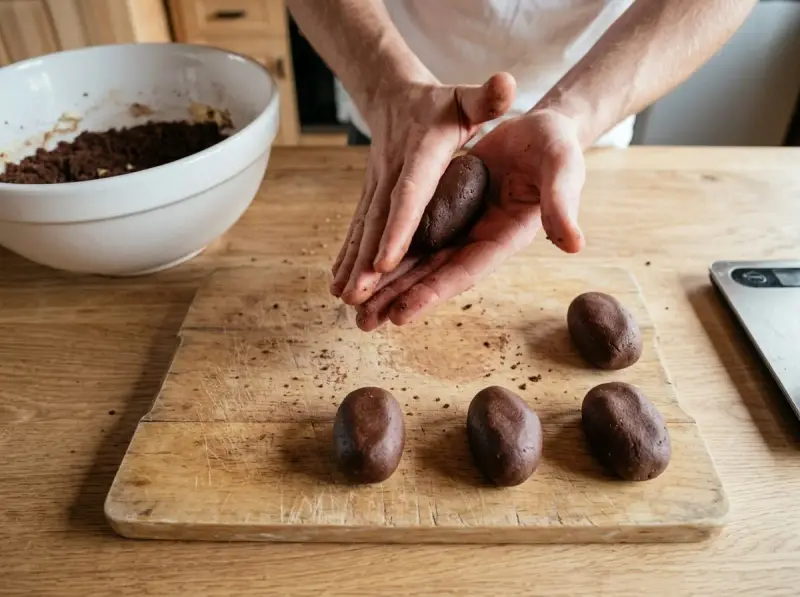
- Weigh the mass and divide it into 12 pieces of about 48 g. Shape each one between cool palms into an uneven oval, like a small potato, working quickly so the butter does not soften. Leave the surface smooth for now.
- Mix 10 g cocoa powder and 20 g icing sugar (powdered sugar) on a wide plate. Roll each piece in it until it is evenly covered in a matte brown coat with no bare spots. The icing sugar keeps the coating from tasting bitter.
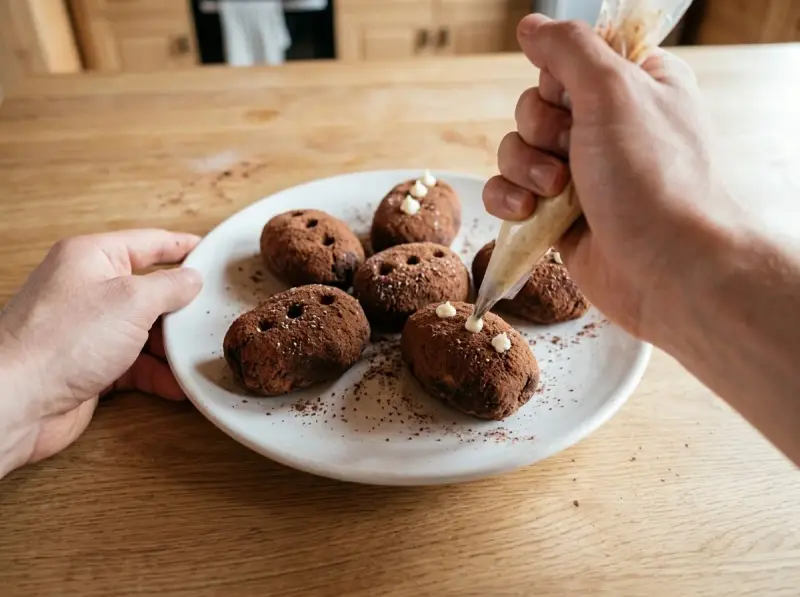
- With a chopstick, poke 3 shallow holes into the top of each coated piece for the eyes. Snip a tiny corner off the bag of reserved cream and pipe a short white sprout into each hole. Making the holes after the coating keeps them clean, so the cream sits neatly inside.
- Chill the cakes for at least 1 hour, on a plate or in paper cases, until they are firm and hold their shape when you lift them, then cover them. If the coating has soaked in, roll them again before serving. Keep them in the fridge at about 4 °C and eat them within 36 hours. At the table they can stay out for up to 2 hours, then back into the fridge.
Cooked it? Rate the recipe
FAQ
A good kartoshka mass feels like plasticine: squeeze a lump and it keeps its shape without crumbling. If it falls apart, the biscuits were drier than usual, so work in a teaspoon of the reserved cream at a time, up to 2 teaspoons. If it is too soft and sticks to your hands, the butter got too warm or was melted. Wrap the mass and chill it for 15 to 30 minutes, then shape it with cool hands. Mixing with a spoon instead of your hands also stops the butter from melting.
Yes. Nothing in kartoshka is cooked, so the 1 tablespoon of rum stays in the 12 cakes, and for children it is better to leave it out. Put in 1 tablespoon of milk instead, so the mass keeps the same softness. The spirit only adds aroma, and many home recipes call it optional.
Kartoshka is a butter-cream pastry, so it belongs in the fridge. The Russian sanitary rules (SanPiN 2.3.2.1324-03) list kartoshka itself at 36 hours at 4 °C, give or take 2 degrees, and that is a sensible limit at home too. Keep the cakes covered so they do not pick up fridge smells. At the table they can stay out for up to 2 hours. If the cocoa coating has soaked in, roll them in cocoa and icing sugar again before serving.
Choose plain, not very sweet biscuits such as Marie, or plain butter biscuits such as German Butterkekse. Very sweet or salty biscuits throw the balance off, because the condensed milk already brings plenty of sugar. Shop kartoshka in Russia is made from sponge trimmings mixed with butter cream, and you can use 300 g of dry sponge crumbs instead of biscuits. Sponge is moister, though, so add the cream a little at a time and stop as soon as the mass can be shaped. A Russian pastry cook who writes about Soviet recipes says the biscuit version tastes different from the shop one but is still real kartoshka, just the homemade kind.
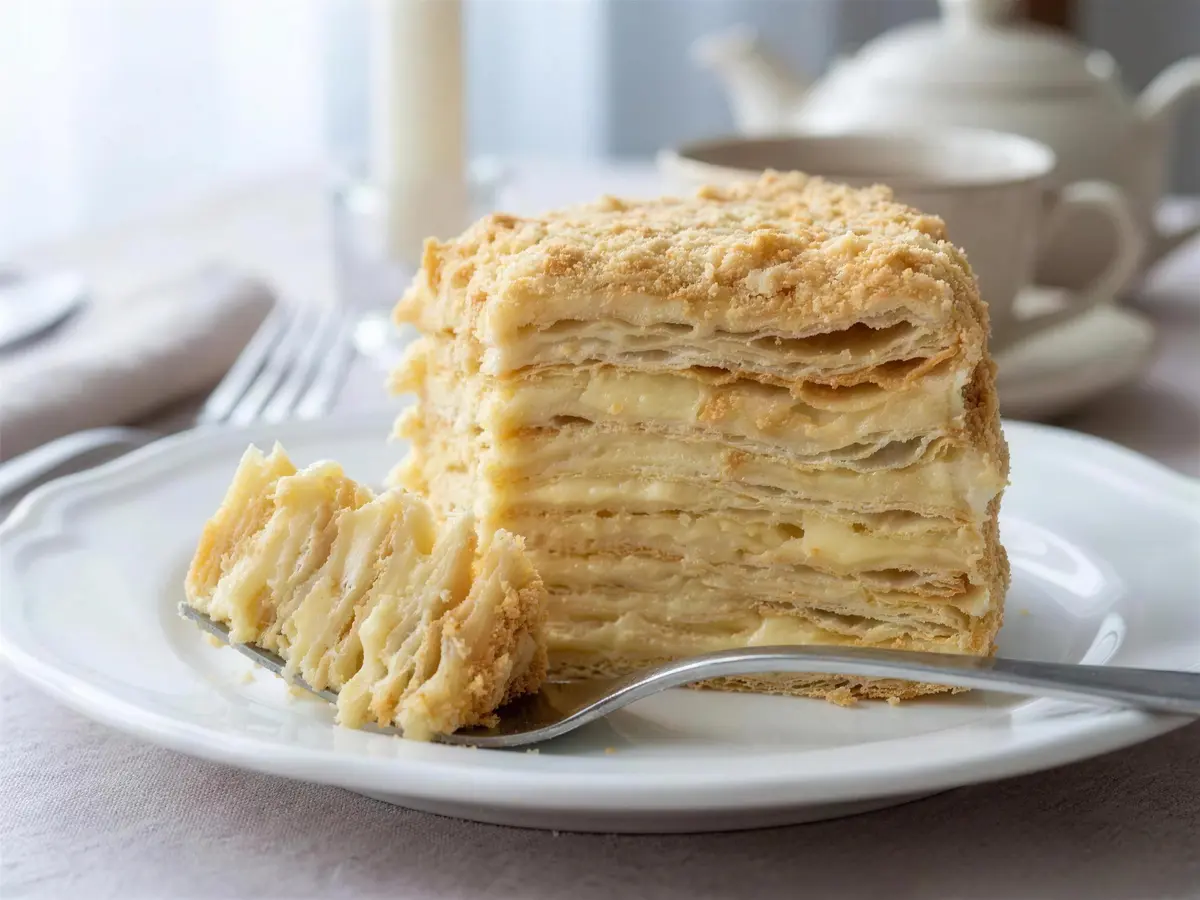
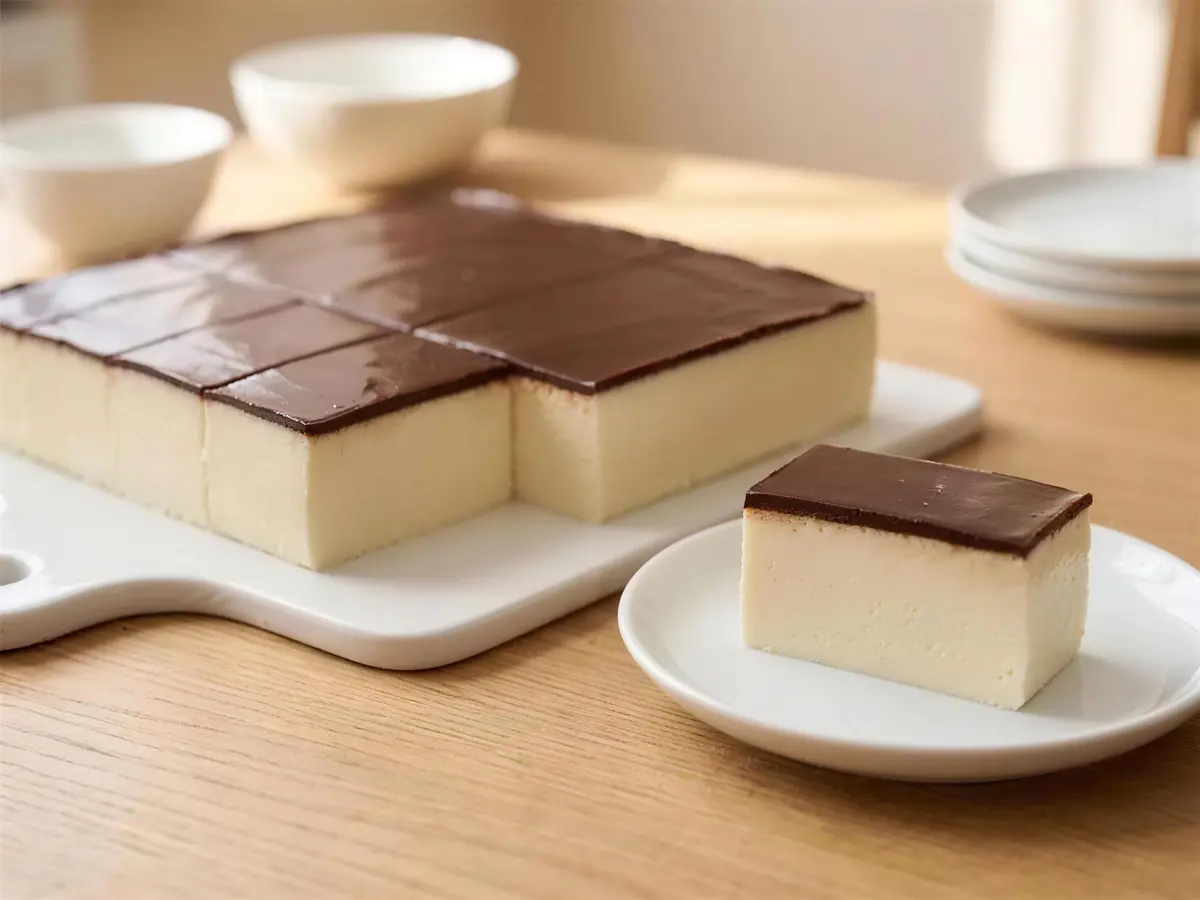
In the textbook shop recipe, kartoshka is sponge crumb and butter cream, with cocoa and icing sugar only in the coating, so it is usually light inside. Soviet shops also made it from chocolate sponge, so it was not always light. Home recipes put cocoa into the mass as well, here 20 g, which makes the cakes chocolate brown all the way through. For a lighter inside, replace those 20 g of cocoa with 20 g more biscuits and keep the coating. If you like Soviet pastries, try Napoleon cake and ptichye moloko too.
Keep browsing
More dishes from the Russian archive — picked by overlap with what you're cooking now.



Recipes by email
One letter a week: a recipe picked for your taste, plus whatever is new on the site. You can stop the letters in one click.
Welcome gift: Sergei's cookbook (e-book).
By signing up for the newsletter you agree to the privacy policy.
Tell us what you like to cook (30 seconds) →
Join the conversation
Comments
No comments yet — be the first!