

A head of cabbage keeps for weeks in the fridge, costs almost nothing, and turns into a completely different dish depending on whose kitchen it lands in. Jiaozi are Chinese boiled dumplings filled with pork and napa cabbage. Golabki soup is the Polish cabbage roll taken apart and cooked in one pot. Shchi is a Russian soup built on sauerkraut and beef on the bone. Mille-feuille nabe is a Japanese hot pot of cabbage and pork belly stacked in layers and stood on end. The German skillet is sausage and cabbage in one pan in half an hour. The Caesar is cabbage roasted in wedges instead of lettuce torn into leaves.
Six of them, from the half-hour version to the one that wants a Sunday.
Thirty minutes, one pan, four ingredients that matter
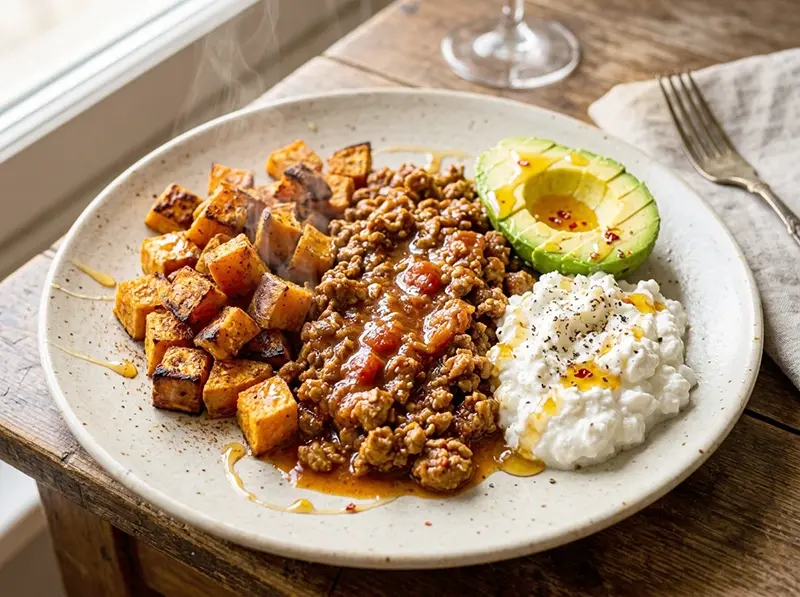
Smoked sausage goes into a hot skillet first and comes out once it has colour. Then the cabbage and onion cook down in the fat it left behind, which is the entire trick and the reason this tastes like more work than it is.
Cut the cabbage into strips one and a half to two centimetres wide. Shredded thin it collapses into something wet and stringy; at this width it keeps a bite. The splash of vinegar at the end is not optional garnish. Cabbage cooked in sausage fat is rich and slightly sweet, and it needs the acid to stop tasting flat.
Cabbage where the lettuce should be
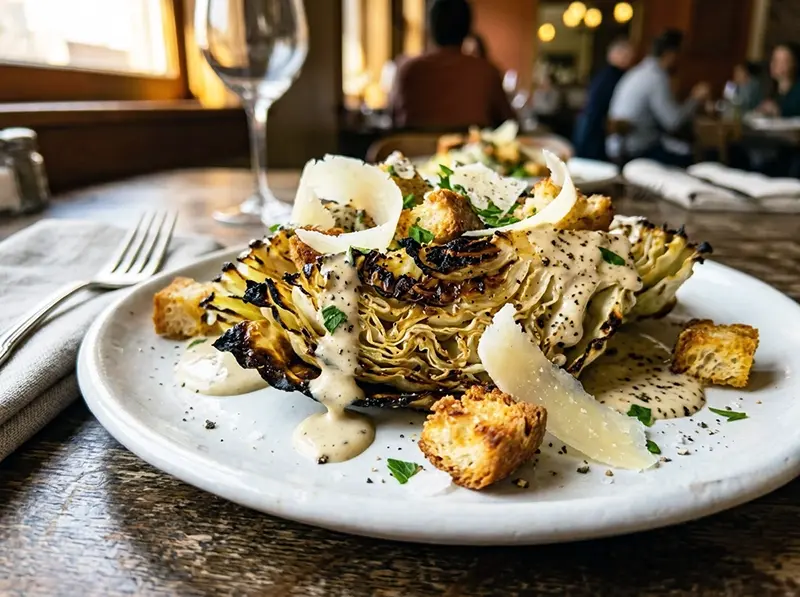
Roasting changes cabbage completely. Cut through the core into three-centimetre wedges so each one holds together, oil them, and put them into a 210°C oven until the outer leaves char and the inside goes sweet and silky.
Keep the core in. It looks like the part you should trim, and it is the only thing stopping the wedge falling into loose leaves on the tray. Dress it while still warm with an anchovy Caesar, add croutons and shaved parmesan. The charred edges do what croutons do in the original, so nothing here is standing in for anything.
Hot pot that looks harder than it is
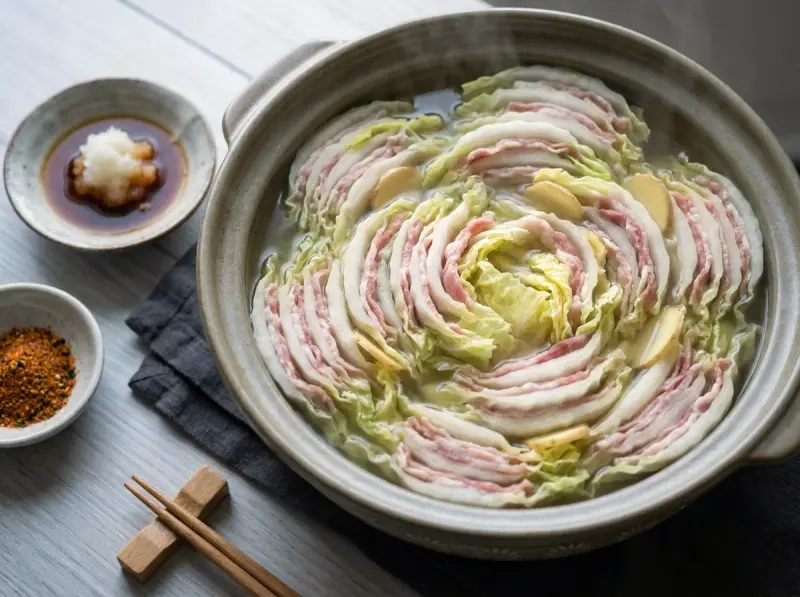
Mille-feuille nabe takes its name from the French pastry of a thousand leaves. Napa cabbage leaves and paper-thin pork belly are stacked flat in alternating layers, the stack is cut crosswise into pieces the height of your pot, and those pieces are stood upright so the cut layers spiral outward from the middle.
Cut the pieces to the height of the pot, not shorter. Packed tight and standing on end they hold each other up, and the dashi simmering underneath steams the cabbage while the pork fat runs down through it. Twenty minutes covered, then daikon and ponzu on the side. It photographs like a project and cooks like a weeknight.
The cabbage roll with the rolling removed
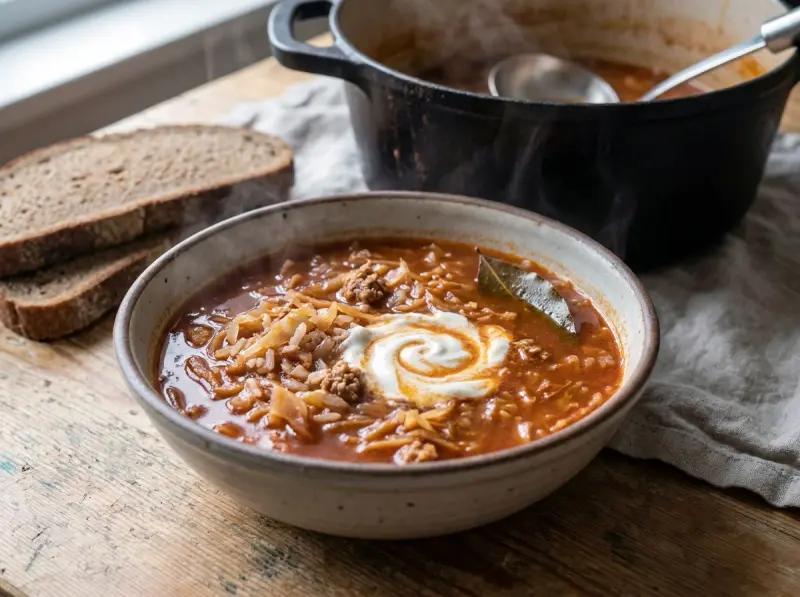
Somebody in Poland worked out that everything good about golabki is in the filling and the sauce, and that blanching leaves and wrapping parcels is an hour spent on presentation.
So the pork gets browned, the cabbage goes in shredded, and the rice cooks in the soup itself. One detail worth keeping: chop the core finely and add it with the leaves rather than throwing it out. It stays firmer than the rest and gives the soup some texture where otherwise everything softens at the same rate. Ready in an hour.
Forty dumplings and one salting step
Jiaozi are the reason northern China grows so much napa cabbage. Thin chewy skins, juicy pork filling, and cabbage running through it in soft green threads.
The step that decides everything takes fifteen minutes and no effort. Chop the cabbage, toss it with salt, leave it, then squeeze it hard. Cabbage is mostly water, and unsqueezed it releases that water inside the wrapper, where it turns the filling into soup and splits the skin in the pot. Squeezed, the same cabbage keeps the pork moist without flooding it. Everything after that is folding, and forty dumplings goes faster with two people.
The one that wants a Sunday
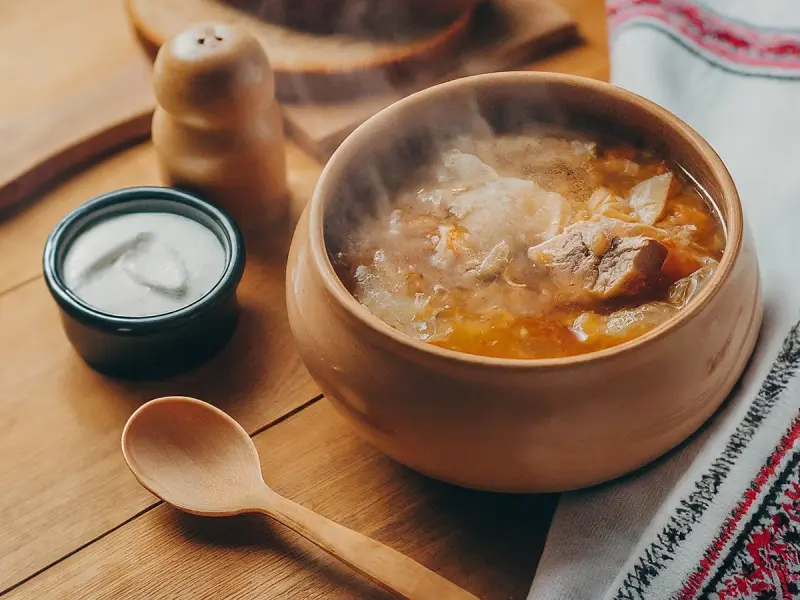
Shchi is sauerkraut and beef on the bone, and unlike everything above it cannot be hurried. Four hours, most of it unattended.
Braise the sauerkraut separately before it meets the broth. Sauerkraut boiled straight into soup stays sharp and slightly aggressive; braised first in a little fat it turns soft, sweeter and deeper, and that is the flavour the soup is named for. Taste before adding salt, because the kraut brings its own. Then leave it overnight. Shchi is one of the few soups that is genuinely better the next day, and Russians will tell you a one-day-old pot is the point of making it.
Buying and keeping it
Pick a head that feels heavy for its size with tight outer leaves. Light means it has been sitting and drying out. Whole and unwashed in the fridge it holds three to four weeks; cut, the exposed face oxidises and it wants using within a week. Napa cabbage is softer and wetter than green and keeps about half as long, so buy that one for the dumplings and the nabe on the day you plan to cook.