There is no single Chinese cuisine, in the same way there is no single European one. China is a country the size of a continent, and its cooking is usually described as eight great regional schools — Shandong, Sichuan, Cantonese, Jiangsu, Fujian, Zhejiang, Hunan and Anhui — each with its own ingredients, techniques and idea of what a good meal tastes like. What a Chengdu cook and a Guangzhou cook share is less a recipe than a way of working: small pieces, fast heat, and a balance of flavours judged across the whole table rather than on one plate.
The simplest division to remember is geographical. The north grows wheat, so it eats noodles, dumplings and steamed buns. The south grows rice, so rice sits at the centre and everything else is built around it.
Sichuan: the pepper that makes your mouth go numb
Sichuan food is famous for heat, but heat is only half of its signature. The other half is má — the tingling, buzzing numbness of Sichuan peppercorn, which is not a pepper at all but the husk of a prickly-ash berry. The combination is called málà, numbing-hot, and once you have tasted it you will recognise it anywhere.
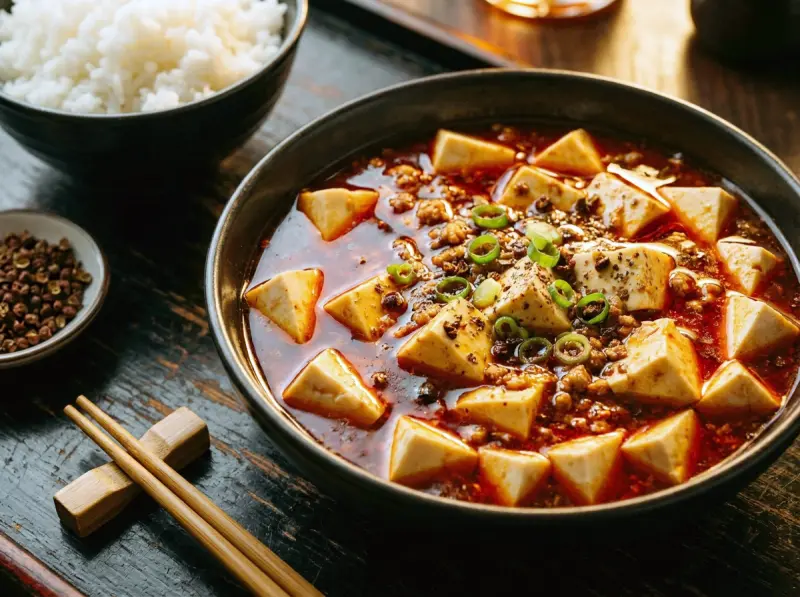
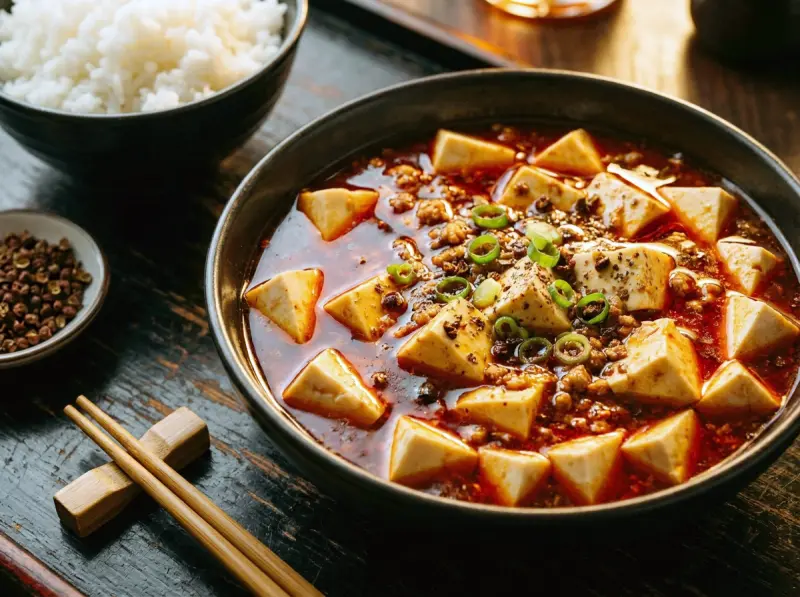
Mapo tofu is the clearest introduction. Soft tofu and a little minced pork are simmered in a sauce built on doubanjiang, the fermented broad-bean and chilli paste from Pixian that Sichuan cooks call the soul of their cuisine, then finished with ground Sichuan peppercorn. The name means "pockmarked grandmother's tofu", after the Chengdu woman said to have created it in the nineteenth century.
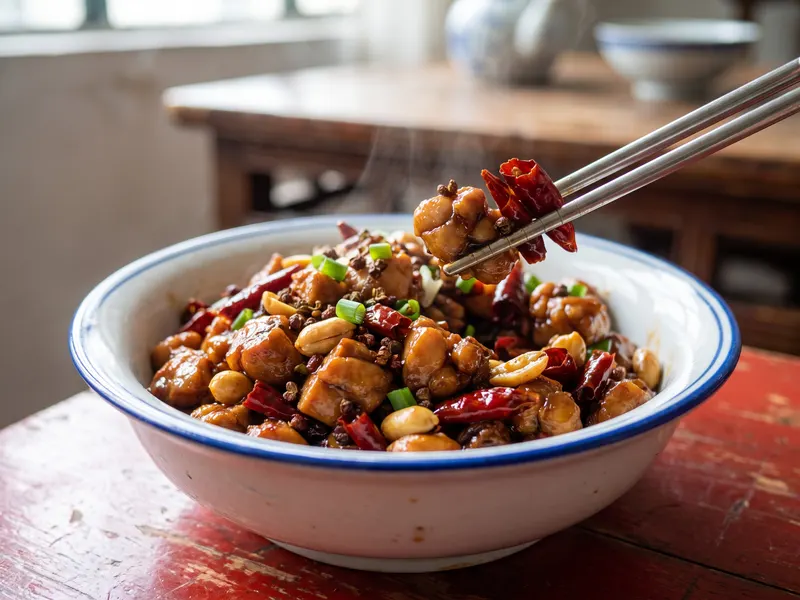
Kung pao chicken takes its name from Ding Baozhen, a Qing-dynasty governor of Sichuan whose official title was gongbao. Its taste is layered rather than simply hot: dried chillies fried until they darken, Sichuan peppercorn, and a sauce that is at once sweet, sour and salty from sugar, Chinkiang black vinegar and soy. The versions served in many Western takeaways drop the peppercorn and add vegetables; the original is mostly chicken, peanuts and chillies.
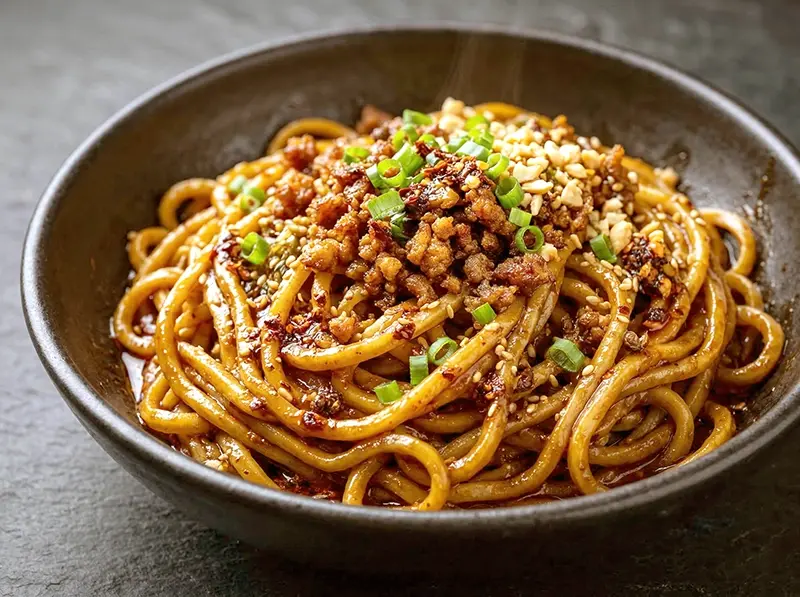
Dan dan noodles were street food, sold by hawkers who carried the noodles and sauce on a shoulder pole — dan dan means "carried on a pole". The bowl is dressed rather than soupy: a little sesame paste, chilli oil, black vinegar and crisp fried pork at the bottom, tossed with the noodles just before eating.
Cantonese: freshness, roast meat and light sauces
Cantonese cooking, from Guangdong and Hong Kong, is the style most of the world met first, because it travelled with nineteenth-century emigrants. Its instinct is the opposite of Sichuan's: let the main ingredient taste of itself, and use sauce to support it rather than cover it.
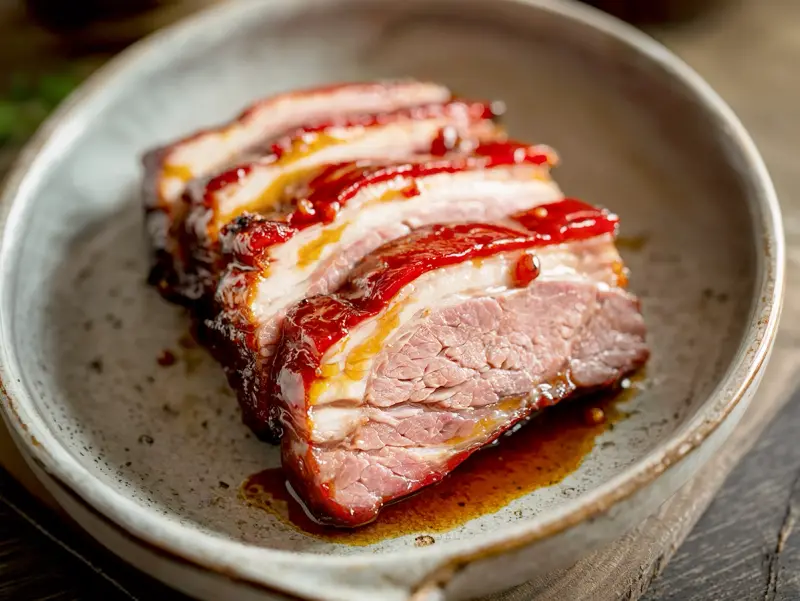
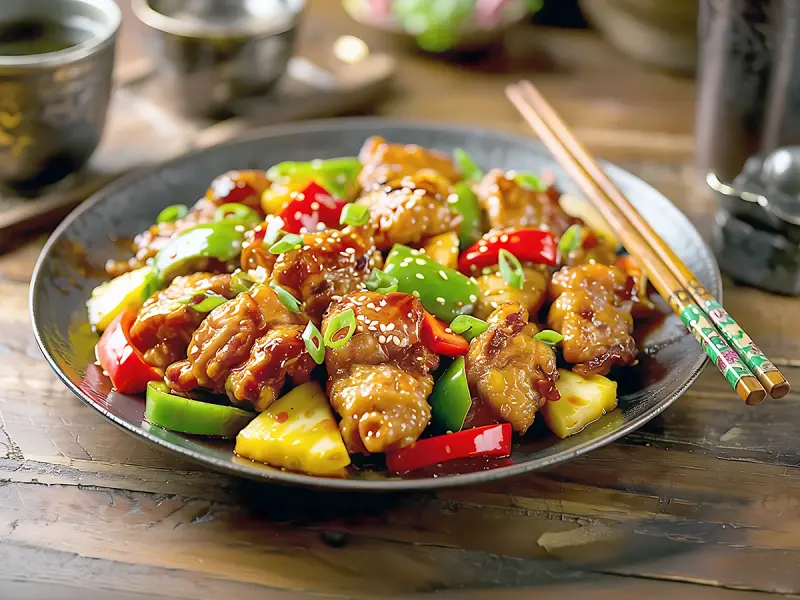
Char siu is the roast pork that hangs in the windows of Cantonese barbecue shops, lacquered red-brown with a glaze of honey, soy, hoisin and five-spice. The name means "fork-roasted", from the way strips of pork were once held over the fire on long forks. Sweet and sour pork — gūlōuyuk in Cantonese — is the original of the dish that became a takeaway cliché: pieces of pork fried in a crisp coating and tossed quickly in a bright sauce, meant to be eaten before the crust softens.
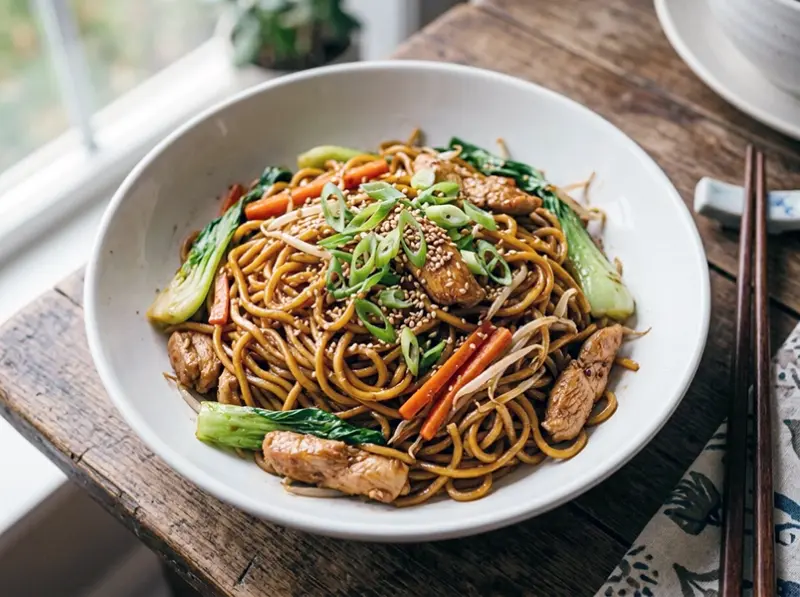
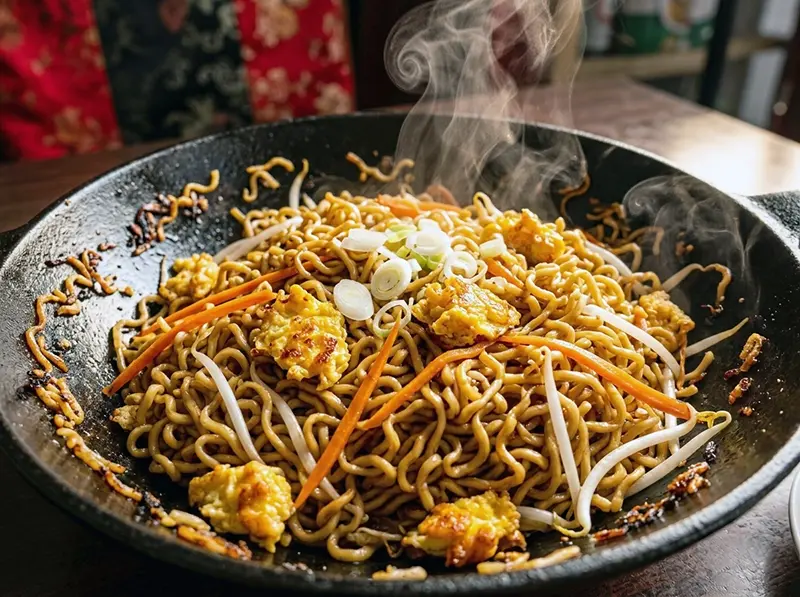
Cantonese kitchens are also where the noodle dishes most people know come from. Lo mein means "stirred noodles": boiled egg noodles tossed with sauce and a few ingredients, soft rather than crisp. Egg fried noodles are the fried relative, the noodles left in the hot wok long enough to catch at the edges.
The wok and the breath of the wok
Most stir-frying depends on one thing a home kitchen struggles to produce: very high heat. Cantonese cooks call the result wok hei, the breath of the wok — a faint smoky, almost charred aroma that food picks up when it is tossed through a very hot pan and brushes the flame.
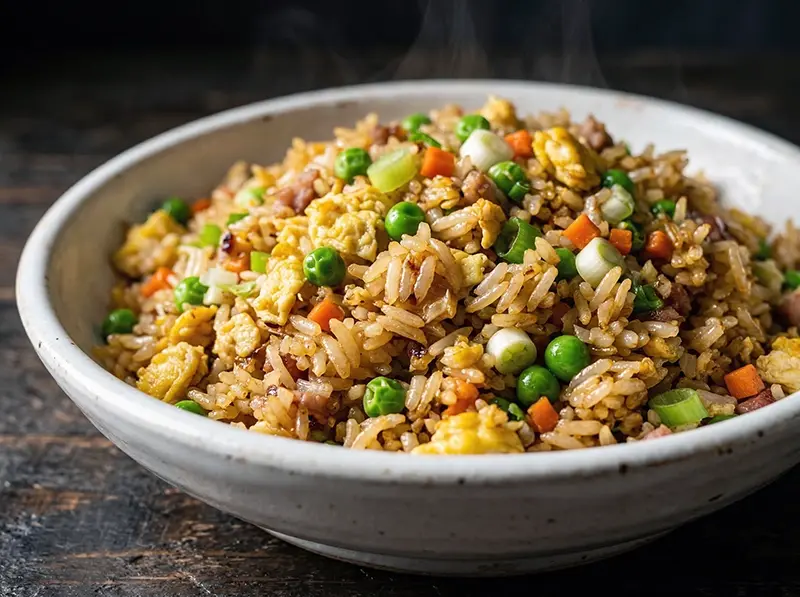
You can get close at home by heating the wok until it just smokes, cooking in small batches so the pan never cools, and having every ingredient cut and ready before you start. Fried rice shows why the details matter: it works best with rice cooked the day before, because day-old grains have dried out and separate in the pan instead of turning into a paste.
The north: wheat, and dumplings for the New Year
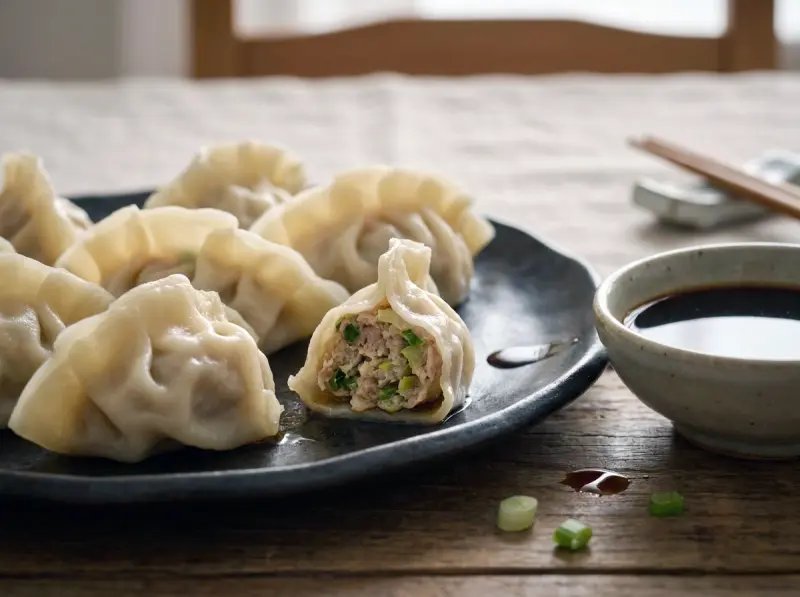
In northern China the staple is wheat, and the dish that stands for the whole region is the dumpling. Jiaozi — thin wheat wrappers folded around pork and napa cabbage, then boiled, steamed or pan-fried — are made in quantity for the Spring Festival, when families sit together folding them. Their crescent shape is said to resemble the silver ingots once used as money, so eating them at New Year is a wish for prosperity.
Cold dishes and vegetables
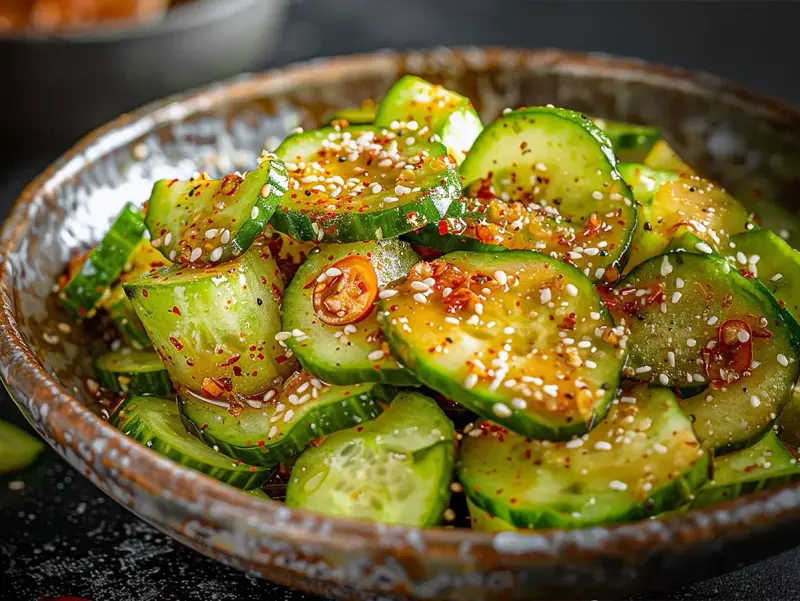
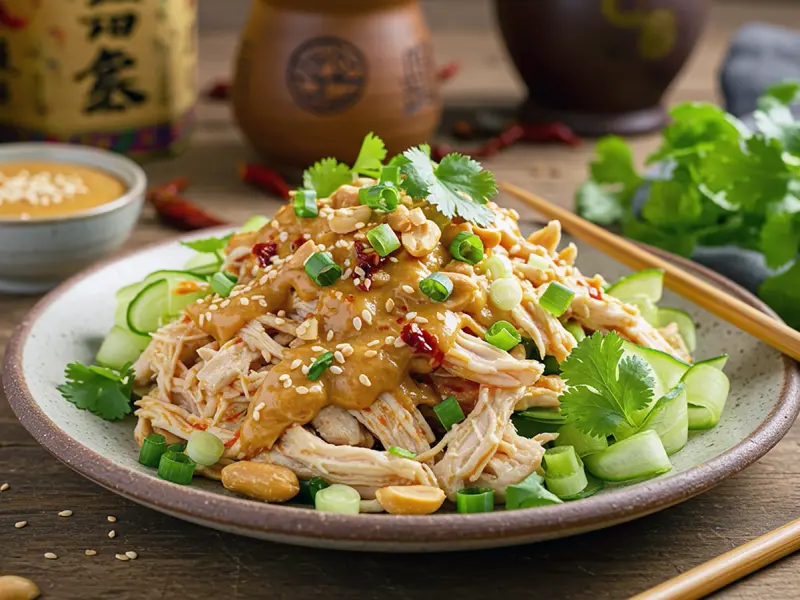
A Chinese table is rarely all hot food. Cold dishes open the meal and sit alongside everything else. Smashed cucumbers are the everyday one: the cucumbers are hit with the flat of a cleaver so they split into rough pieces that soak up garlic, vinegar and chilli far better than neat slices would. Bang bang chicken is named after the stick once used to beat the cooked chicken tender; the Sichuan original is dressed with sesame paste and Sichuan peppercorn, and the version here uses peanut butter, a common home adaptation.
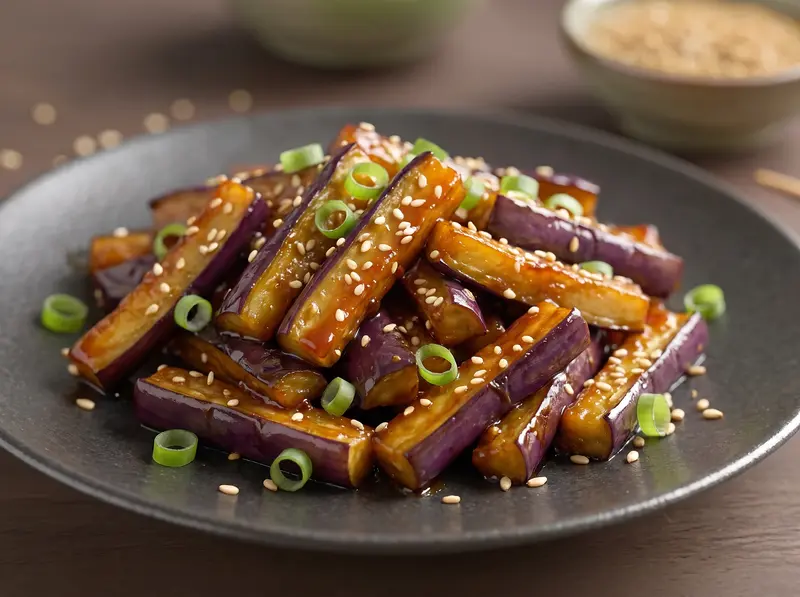
Vegetables are cooked as seriously as meat. Braised eggplant turns silky and dark in a sauce that clings to every piece — the kind of vegetable dish that is ordered for its own sake rather than as a side.
What is Chinese and what is Chinese-American
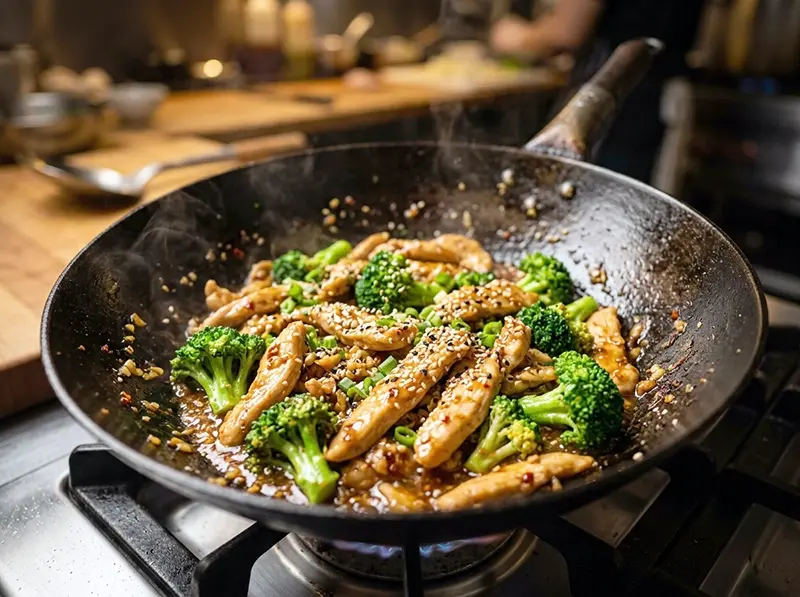
A great deal of what is sold as Chinese food abroad was created abroad. Chop suey, General Tso's chicken and beef or chicken with broccoli grew up in Chinese restaurants in North America, adapted to local ingredients and tastes: sweeter, thicker sauces, more meat, broccoli rather than Chinese greens. They are not fakes — they are their own tradition, more than a century old — but they are a different cuisine from what is eaten in Chengdu or Guangzhou, and it helps to know which one a recipe belongs to.
Sweets and the street
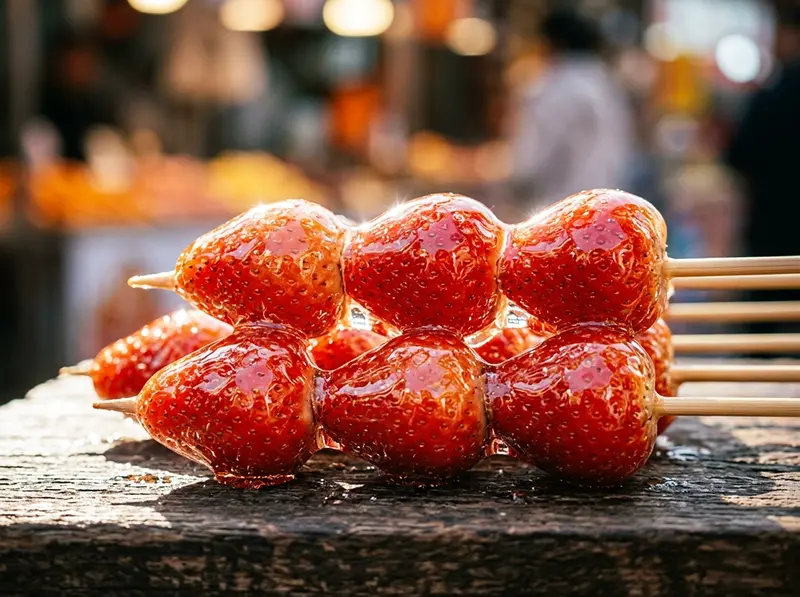
Chinese desserts are lighter and less sweet than European ones, and many of the best-known are street snacks. Tanghulu is the Beijing winter classic: hawthorn berries or other fruit on a bamboo skewer, dipped in sugar syrup that sets into a thin, glassy shell.
The Mid-Autumn Festival
The fifteenth day of the eighth lunar month is the Mid-Autumn Festival, when the moon is at its fullest; in 2026 it falls on 25 September, and mainland China takes a three-day holiday. It is a family festival above all. People gather to look at the moon, and the food everyone associates with it is the mooncake — a dense round pastry filled with lotus-seed or red-bean paste, often with a salted duck-egg yolk at the centre to stand for the full moon. Mooncakes are usually bought and given as gifts rather than baked at home, and autumn is also the season for hairy crab in the lower Yangtze region, the other great luxury of the festival.
Where to start
If you want one dish that shows what Sichuan food is about, make mapo tofu — it takes half an hour and teaches the numbing-hot flavour in a single pot. If you want something you can cook on a weeknight with what is in the fridge, make fried rice with yesterday's rice. And if you are cooking for a table, do what a Chinese family would: several dishes at once — something hot, a cold dish like smashed cucumbers, a vegetable, rice — and let everyone share.