Almost everything gets filed under "Russian pancakes" in English recipe collections. Behind that label sit at least three different dishes with different batters, different thicknesses and different occasions. Knowing which is which settles the important decisions before the pan gets hot.
Bliny or blinchiki: where the confusion starts
Blin is the Russian word for pancake, bliny the plural. Originally it meant a thick yeast-raised round, often made with buckwheat flour and cooked in a small cast iron pan. Blinchiki is the diminutive and refers to the thin unleavened version most Russian kitchens make today.
Everyday speech has blurred the line. Plenty of families say bliny and mean the thin ones. English adds its own spellings, blini and blinis among them, all pointing at the same thing. For cooking, only one question matters: is there yeast in the batter or not.
The batter and the holes in it
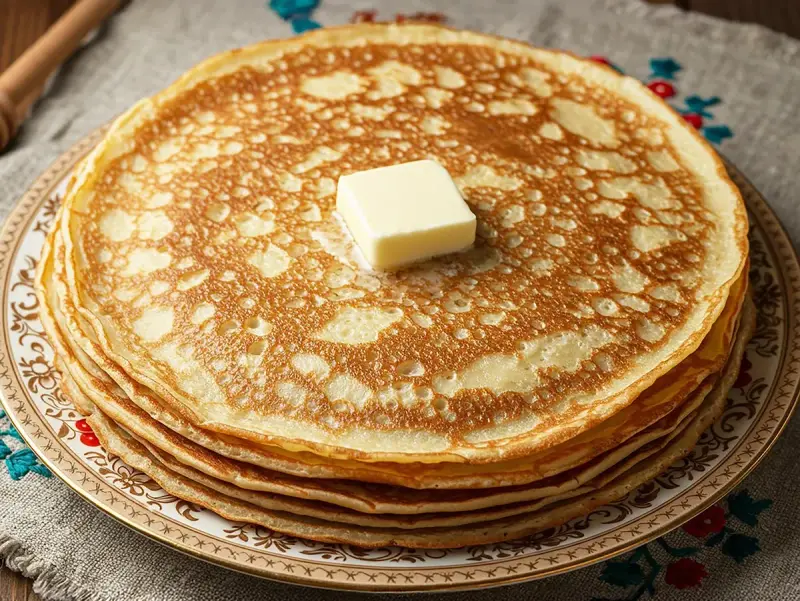
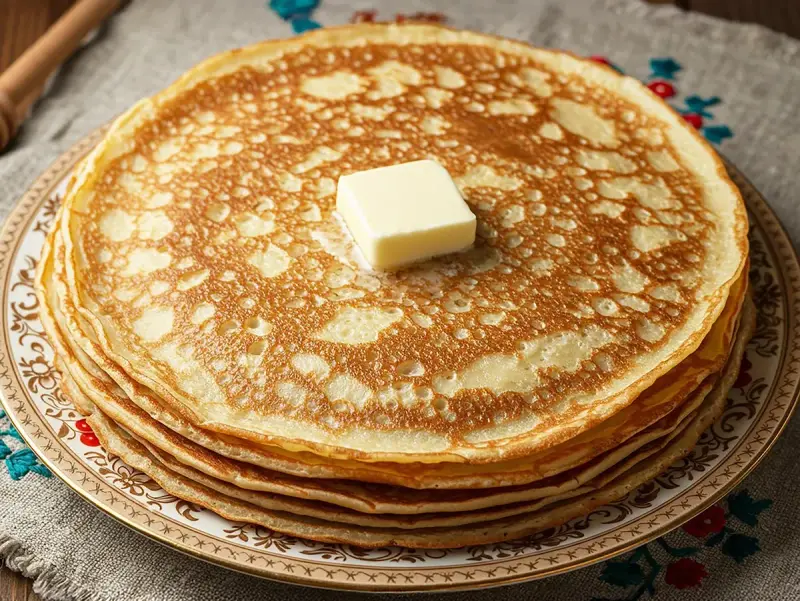
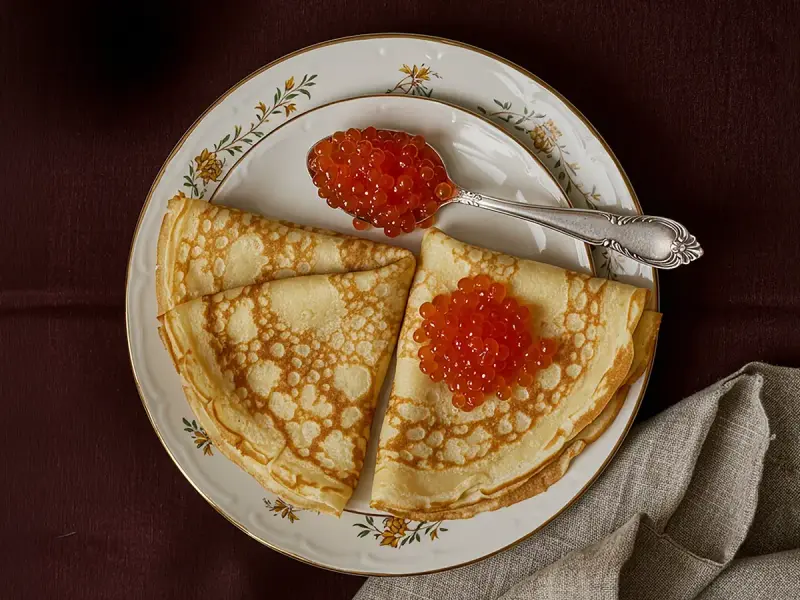
A good thin blin has fine holes and looks almost like lace. They come from baking soda mixed with lemon juice and stirred in at the very end. The gas forms bubbles that burst in the hot pan.
Two things decide the outcome. The batter has to be thin as pouring cream, or it will not spread when you swirl the pan. And it needs 15 to 20 minutes of rest at room temperature so the flour can hydrate. Cook it straight away and the pancakes tear when you flip them.
For bliny that will be filled and rolled there is a second trick: boiling water, stirred in right before cooking. The heat gelatinizes part of the starch, the batter turns supple, and you can pour it paper thin without the edges splitting when you fold them.
The first blin is always a lump
That is a Russian proverb and it describes what actually happens. The first pancake sticks or falls apart because the pan and the batter have not found each other yet. It is the test strip: too hot, too cold, too thick, not enough fat. From the second one on it works. Russian cooks throw the first away without comment or eat it standing at the stove.
Use a pan of 20 to 22 centimetres, medium heat, greased so lightly you barely see it. One to two minutes on the first side until the edges turn golden, then 30 to 60 seconds on the second.
Oladyi: the thick relatives
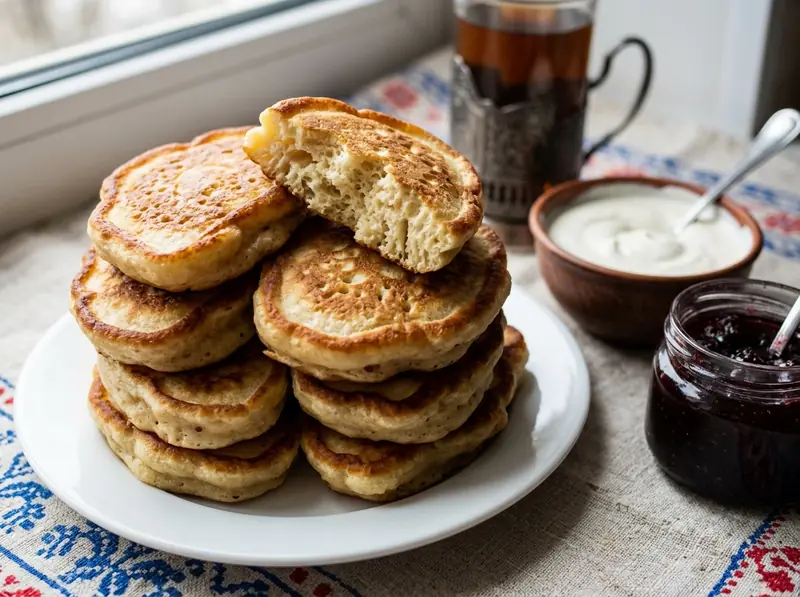
Oladyi are small thick yeasted pancakes, roughly the size of your palm. The batter rises in two stages: first a sponge of warm milk, sugar, yeast and a little flour, then the finished batter, which needs 30 to 40 minutes to double.
The most important rule comes at the end: do not stir once it has risen. Knock the air out and the oladyi stay flat. Spoon the batter off gently, dipping the spoon in cold water between pancakes so nothing clings to it.
Savoury fillings
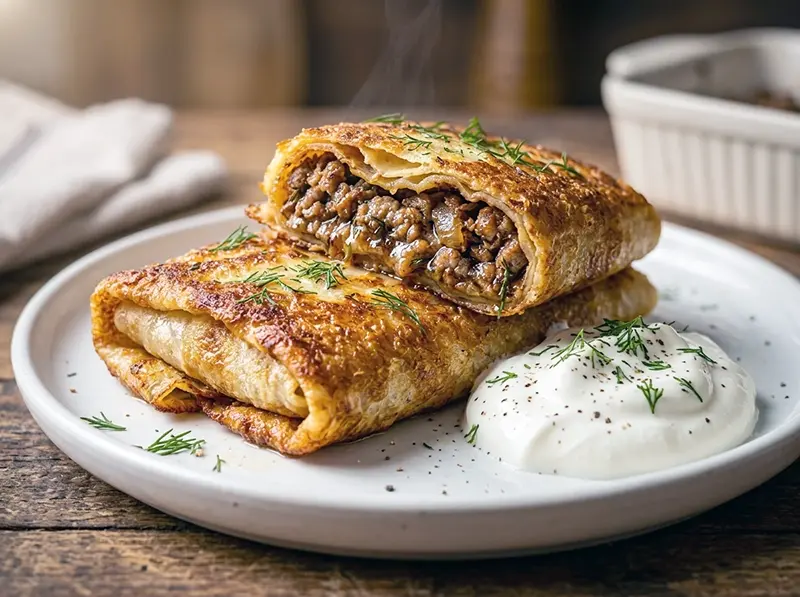
Filled bliny are a full meal in Russia. The classic filling is minced beef and pork, half and half, with onions browned slowly until they are sweet. What goes in at the end decides everything: butter and sour cream, stirred through off the heat. They turn dry mince into something juicy.
The parcels are then fried a second time, seam side down. That second pass is the difference between a filled pancake and something crisp outside and hot through.
The festive version needs no filling at all. Small bliny with a spoonful of sour cream and red or black caviar belong on every Russian holiday table. Serve them warm rather than hot, or the cream slides off.
Sweet fillings
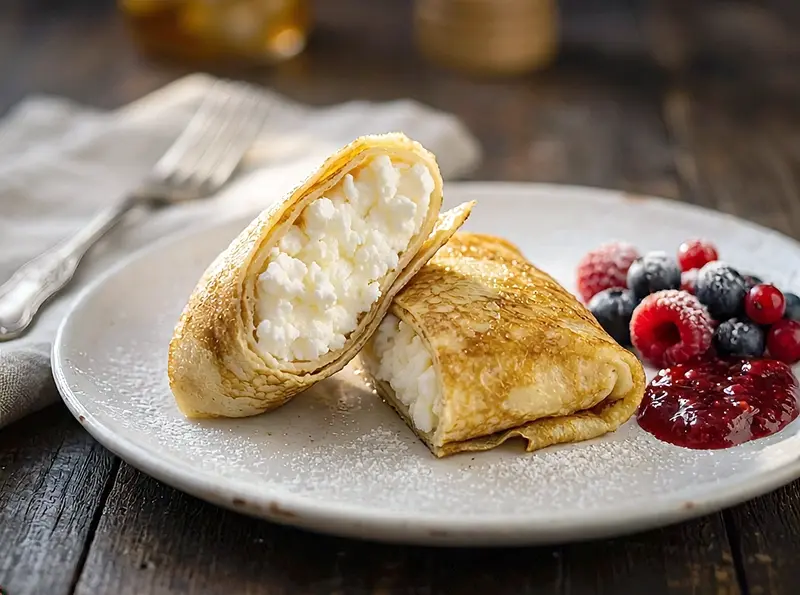
The most common sweet filling is cottage cheese. Blend it smooth so it turns creamy instead of grainy, and bind it with one egg so it holds together in the pan. Lemon zest lifts the weight.
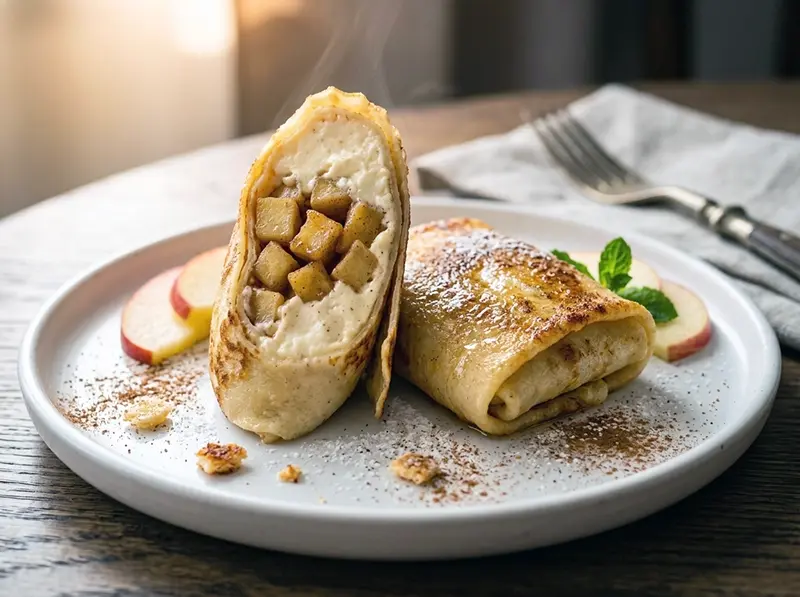
Add apples and it becomes dessert. Cook the diced apples in butter with cinnamon first, until they soften and go slightly translucent. Raw, they release water and thin the cheese.
→ Apple and cottage cheese blini recipe
What gets mistaken for bliny
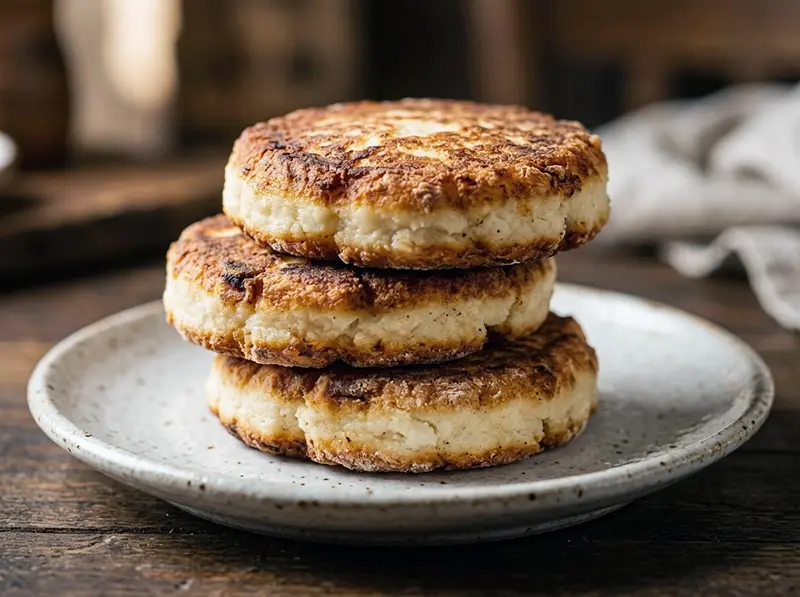
Syrniki look like small thick pancakes but they are not. There is no pourable batter, only cottage cheese, egg and a little flour, shaped into rounds and fried. They stay soft and creamy in the middle.
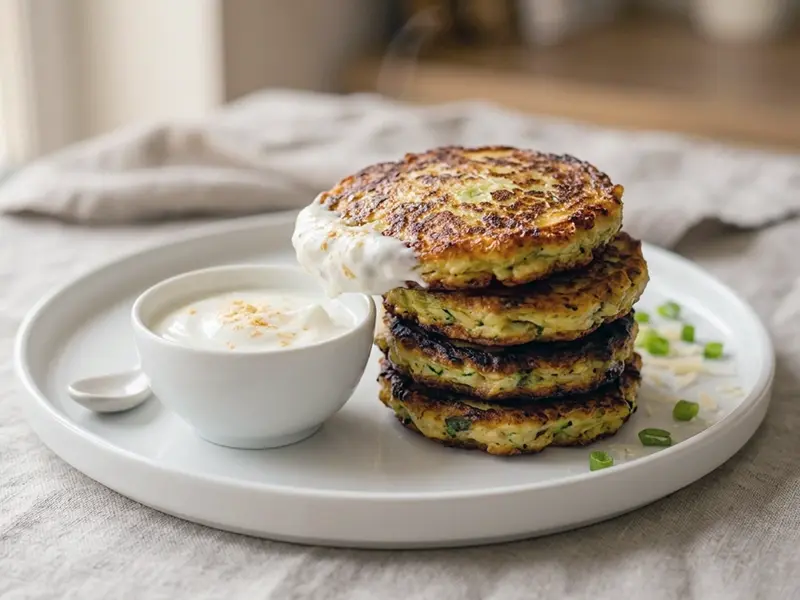
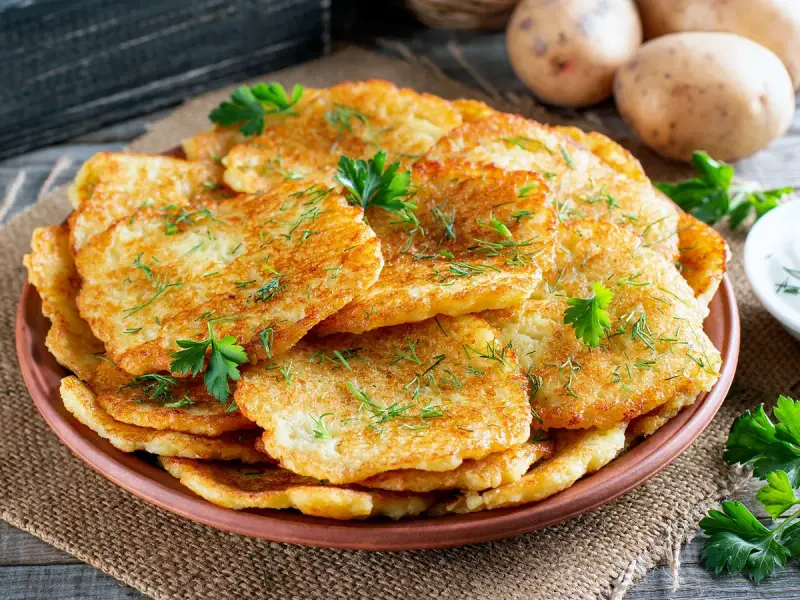
Draniki come from Belarus and are made of grated potato with onion. Anyone who has made potato pancakes knows the method already.
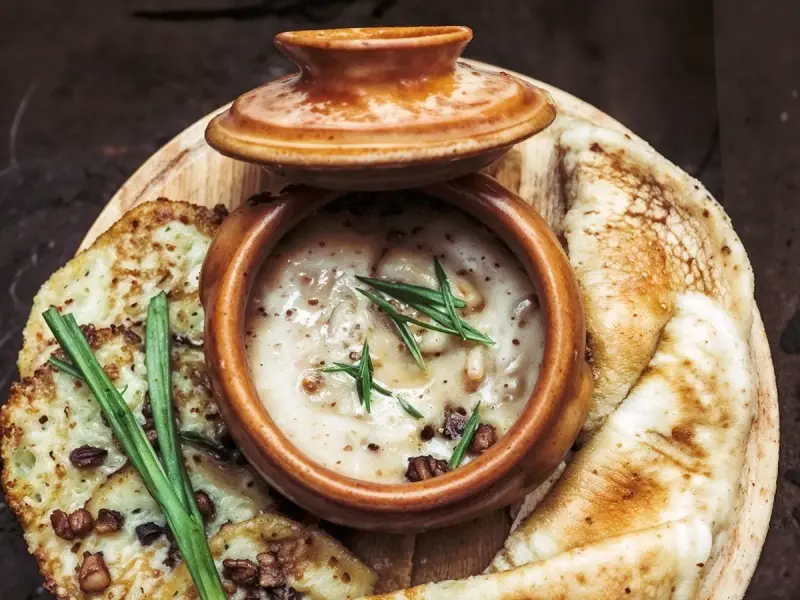
Machanka is not a pancake at all but the thing served alongside: a thick sauce of pork belly and smoked sausage in sour cream. You dip the pancakes into it, which is where the name comes from.
Maslenitsa, the butter week
Bliny have a fixed place in the calendar. The week before Orthodox Lent is Maslenitsa, butter week, and pancakes get eaten in quantity across those seven days. The round golden shape is often read as a sun symbol, which suits an occasion that marks the end of winter. The practical reason is better documented. Butter, milk and eggs were still allowed that week; meat was not.
Bliny, crêpes and pancakes
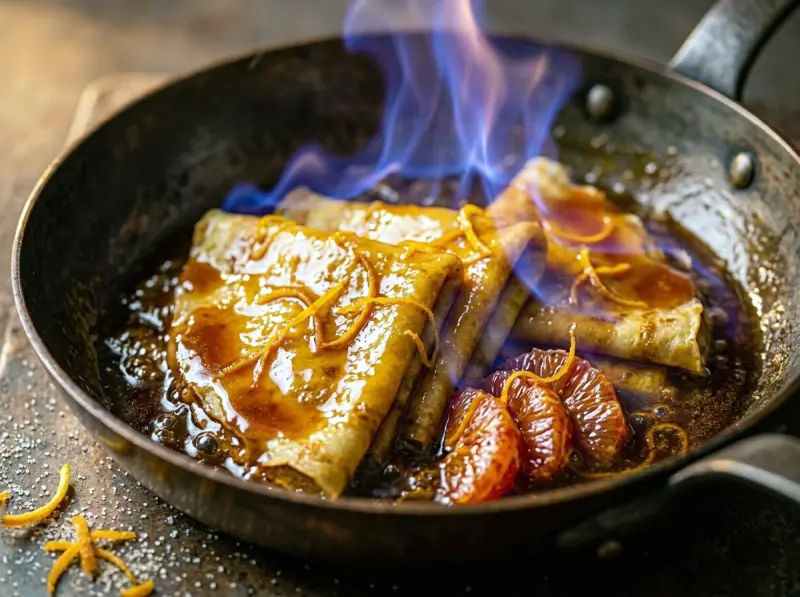
Crêpes are thinner still and use no raising agent, though often more butter in the batter. You taste the difference as texture: crêpes are smooth and tender, Russian bliny a little sturdier and finely pitted from the soda.
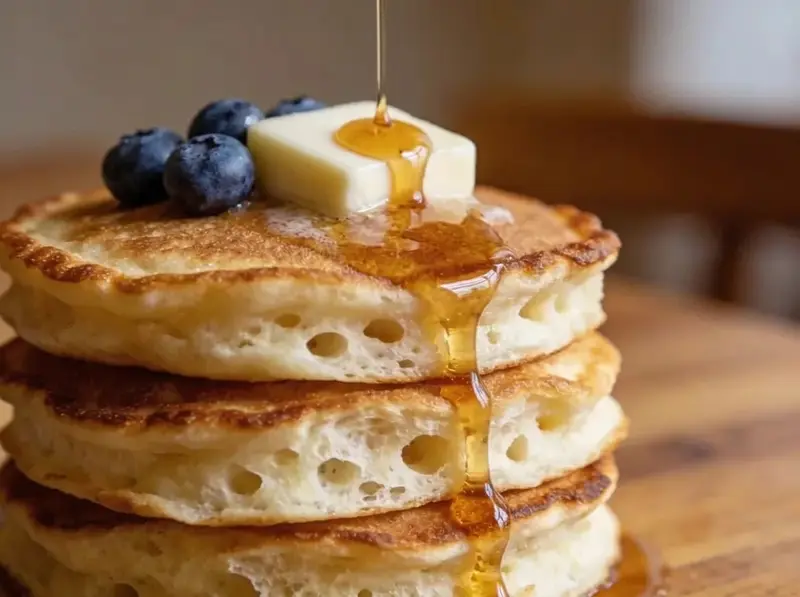
American pancakes go the other way. Baking powder, thick batter, small diameter, stacked with syrup. They are breakfast, not a wrapper for fillings.
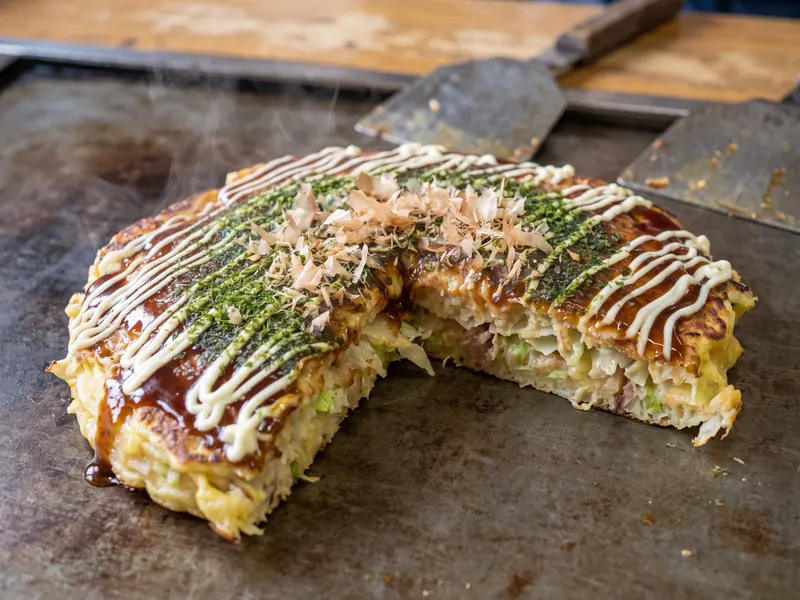
For how far the idea travels, look at okonomiyaki from Osaka, a savoury pancake built on cabbage, or dosa from South India, where the batter ferments overnight before it ever sees a pan.
How to serve them
Stack finished bliny and brush each one with melted butter. They stop sticking to each other and stop drying out. Sour cream, jam, honey and butter go on the table in small bowls, usually all at once.
Leftovers keep two days in the fridge. Warm them briefly in a dry pan the next day rather than the microwave, which turns them rubbery.