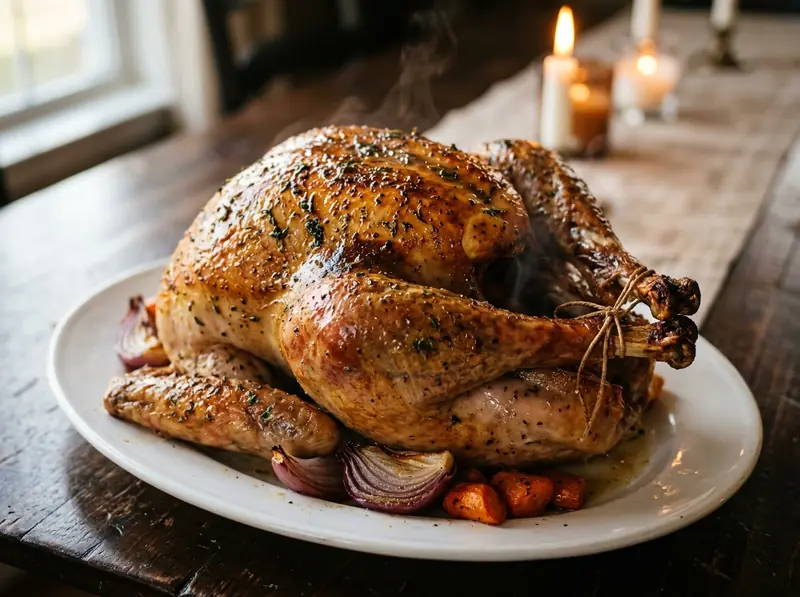
Thanksgiving dinner is the main meal of the American holiday of the same name: a whole roast turkey served with bread stuffing, mashed potatoes and gravy, cranberry sauce, baked vegetable dishes and pie. In the United States the holiday falls on the fourth Thursday of November, which in 2026 is 26 November. Canada keeps its own Thanksgiving on the second Monday of October, 12 October in 2026, with much the same food on the table.
The menu changes little from one house to the next. Britannica calls the dinner "fairly standardized": turkey as the main dish, then mashed potatoes, sweet potatoes baked in a casserole, stuffing, gravy, green bean casserole or Brussels sprouts, cranberry sauce, and pumpkin, pecan or apple pie. This guide explains where those dishes come from, how much of each to cook, and how to get them all hot at once from one oven.
Where the menu comes from
The holiday is modelled on a harvest feast held in the autumn of 1621 at Plymouth, in what is now Massachusetts. About 50 English colonists and some 90 Wampanoag men ate together over three days. The two surviving accounts mention wildfowl, five deer brought by the Wampanoag, and corn. Kathleen Wall, a foodways culinarian at the Plimoth Plantation museum quoted by Smithsonian Magazine, thinks the fowl was more likely goose or duck and says turkey was not the centrepiece. There were no potatoes and no cranberry sauce, and there was no pie, because the colonists had neither butter nor wheat flour for pastry.
The dinner Americans cook today took shape in the 19th century. Sarah Josepha Hale, editor of the magazine Godey's Lady's Book, campaigned for a national holiday and printed Thanksgiving menus and recipes while she did it. On 3 October 1863 Abraham Lincoln proclaimed a national day of thanksgiving, and for decades it was kept on the last Thursday of November. In 1939 Franklin Roosevelt moved it a week earlier to lengthen the Christmas shopping season, and a number of states refused to follow. Congress settled the question with a resolution that Roosevelt signed on 26 December 1941: the fourth Thursday of November.
What is on the table, dish by dish
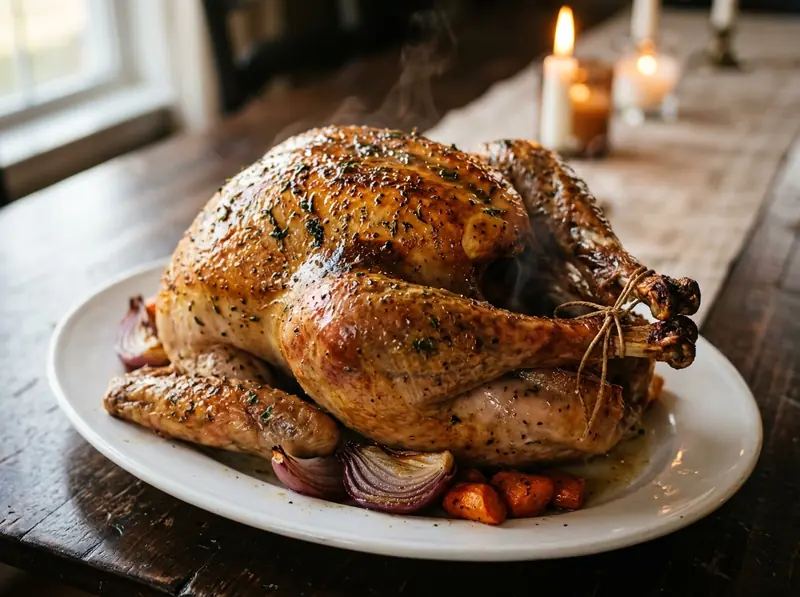
Turkey. The roast turkey is the one fixed point of the meal. Our recipe uses a 5.4 kg (12 lb) bird for 10 people, salted one to two days ahead and roasted until the thigh reads 74°C (165°F), the minimum the USDA sets for poultry.
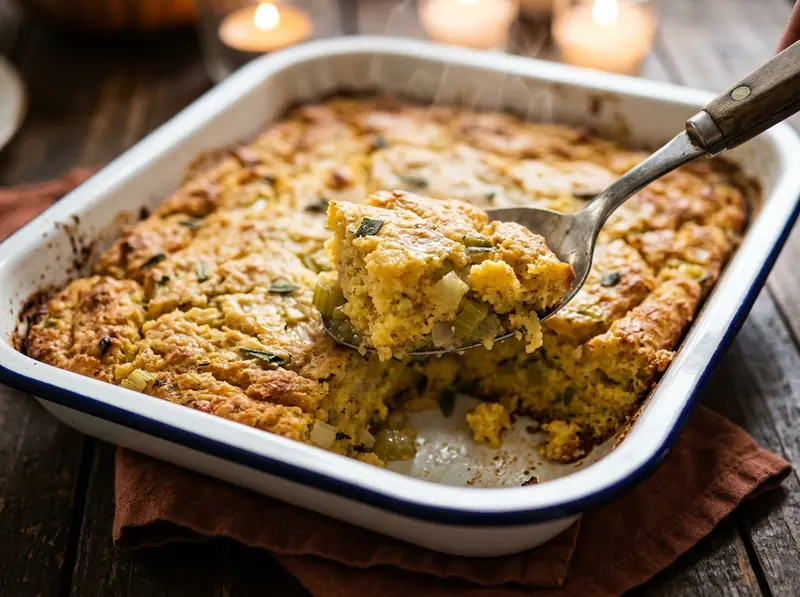
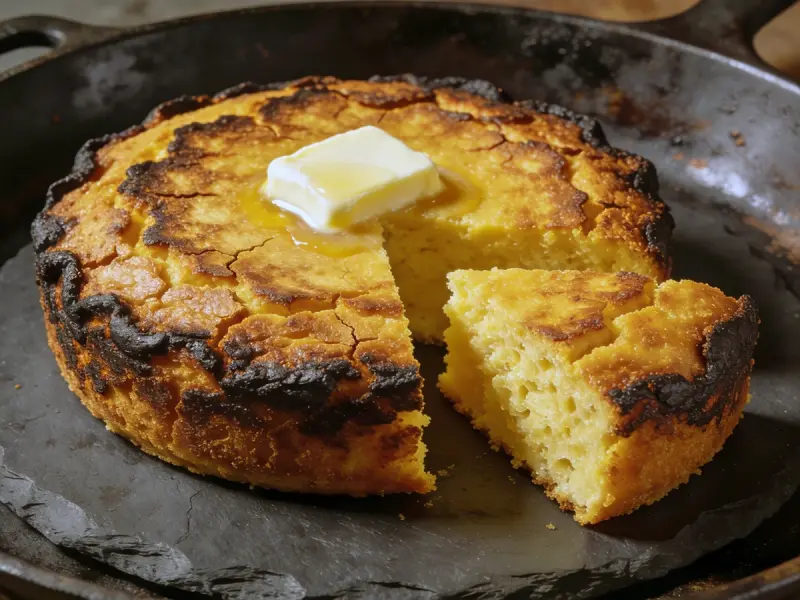
Stuffing, also called dressing. This is a seasoned bread mixture with onion, celery and sage, moistened with broth. It can be cooked inside the bird, but the USDA recommends baking it in its own dish, and that is how our cornbread stuffing is made. It starts with a skillet of plain Southern cornbread, cut up and dried in the oven.
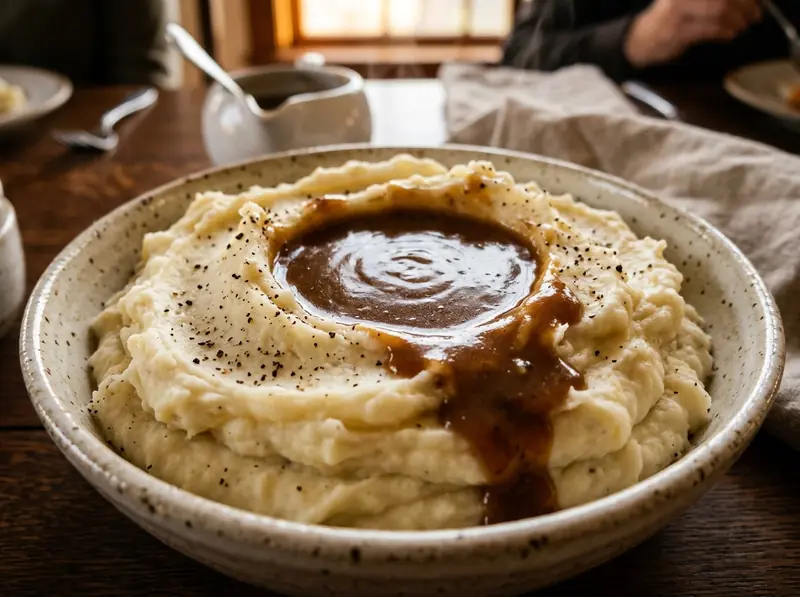
Mashed potatoes and gravy. Gravy is a brown sauce thickened with flour and built on broth and the juices from the roasting tin. In our mashed potatoes and gravy the base is made in advance and the turkey juices go in at the end.
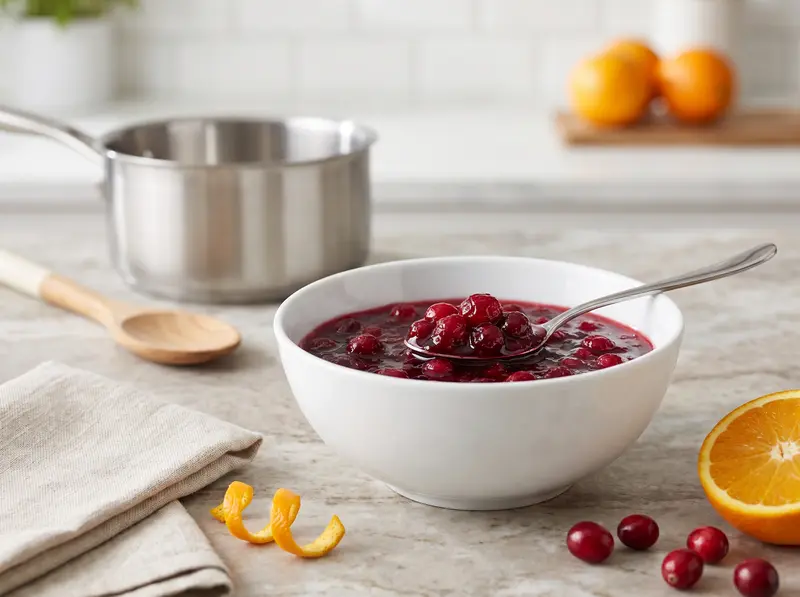
Cranberry sauce. Cranberries are native to New England, and Britannica counts the sauce among the few Thanksgiving dishes that can be traced to the region before the colonists arrived. Cranberry sauce is sweet and sharp, and on a plate full of butter and gravy it is the only acid.
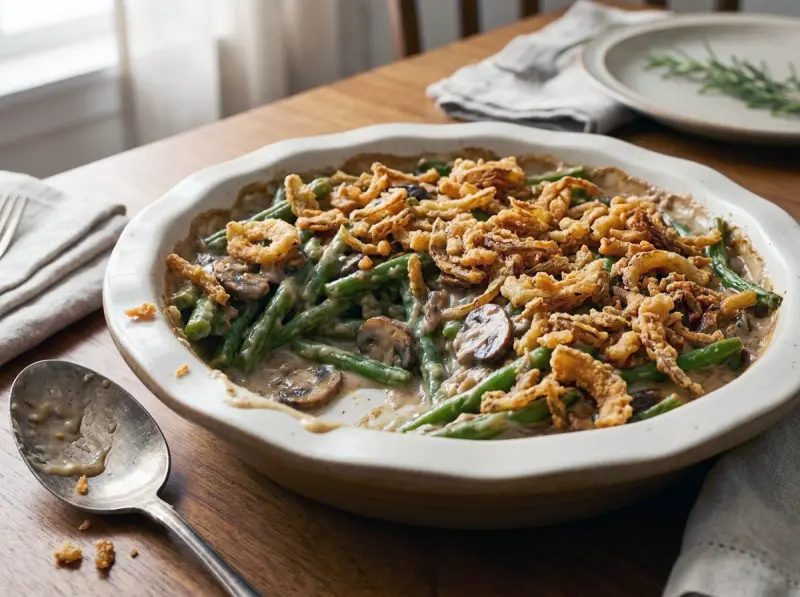
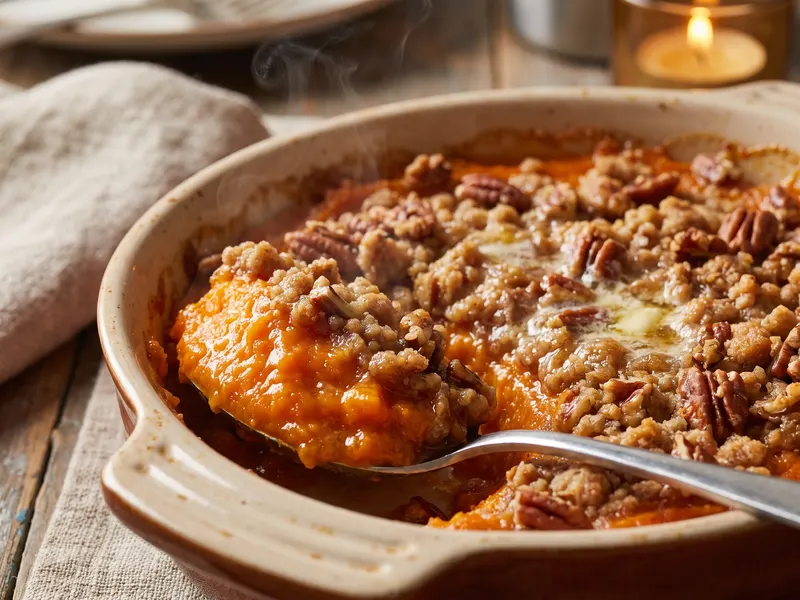
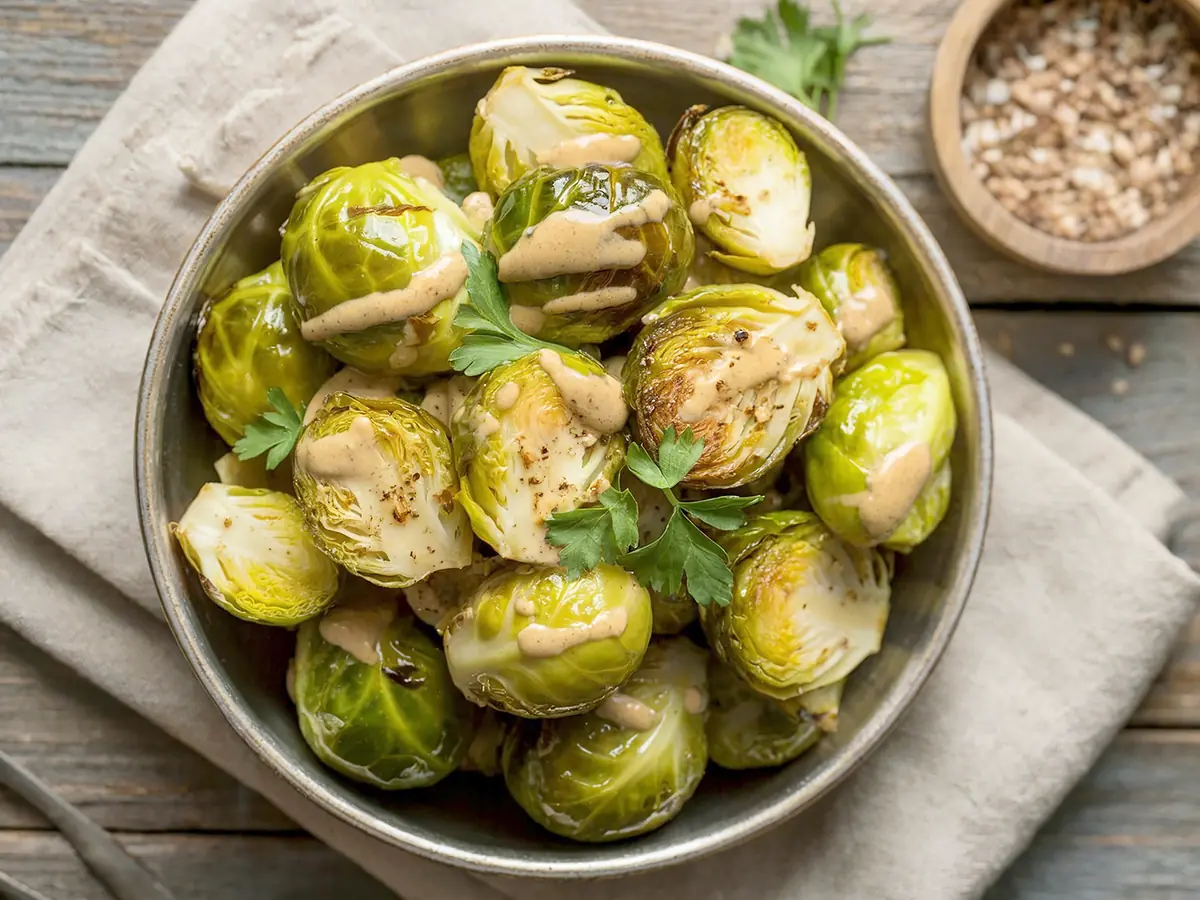
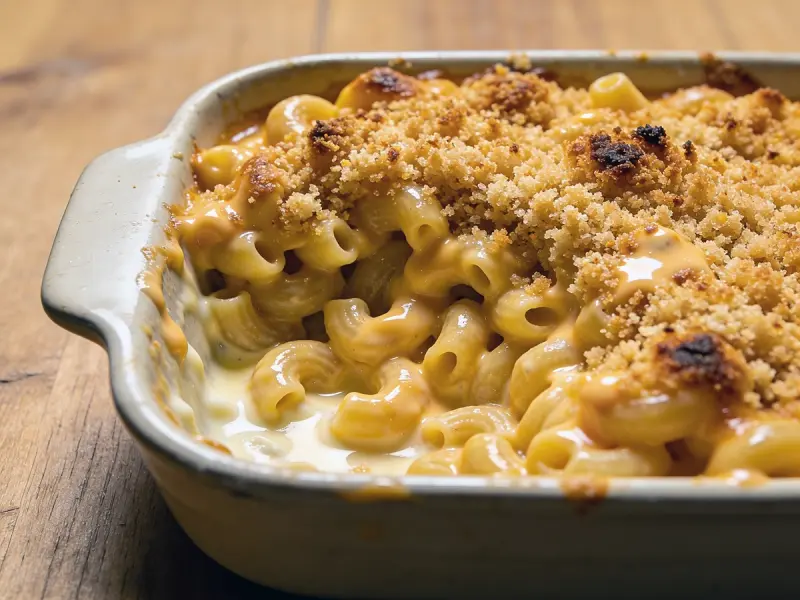
Casseroles. A casserole is food baked and served in the same deep dish. Green bean casserole is the youngest classic here: Campbell's dates the recipe to its test kitchen in 1955. Sweet potato casserole sits somewhere between a vegetable and a dessert. I add roasted Brussels sprouts for something green and slightly bitter, and mac and cheese when children are coming.
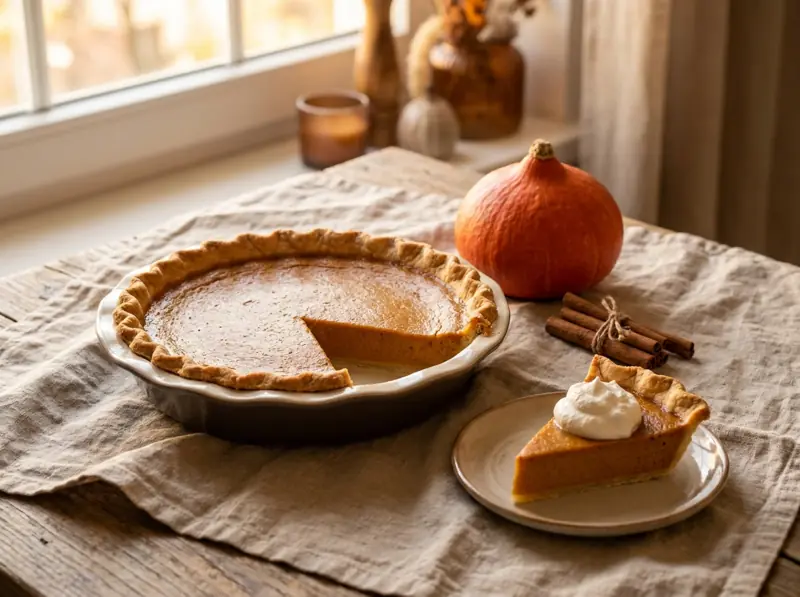
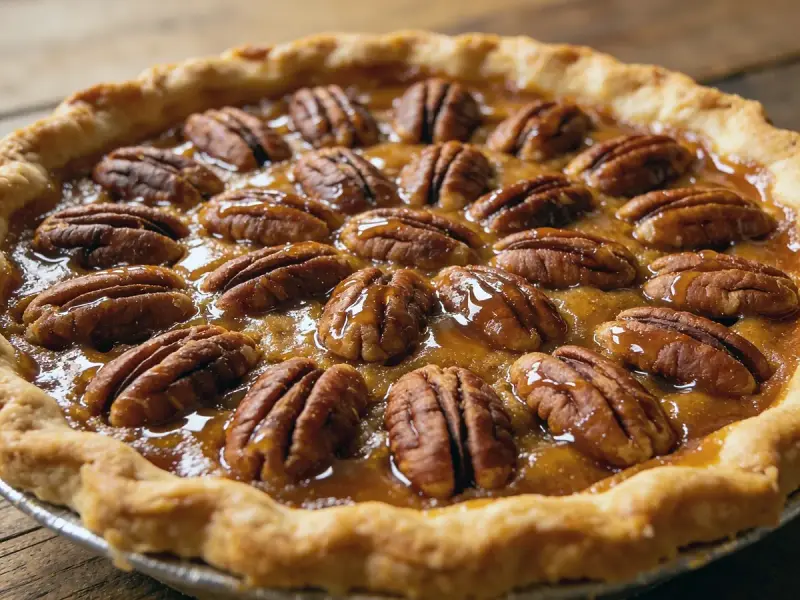
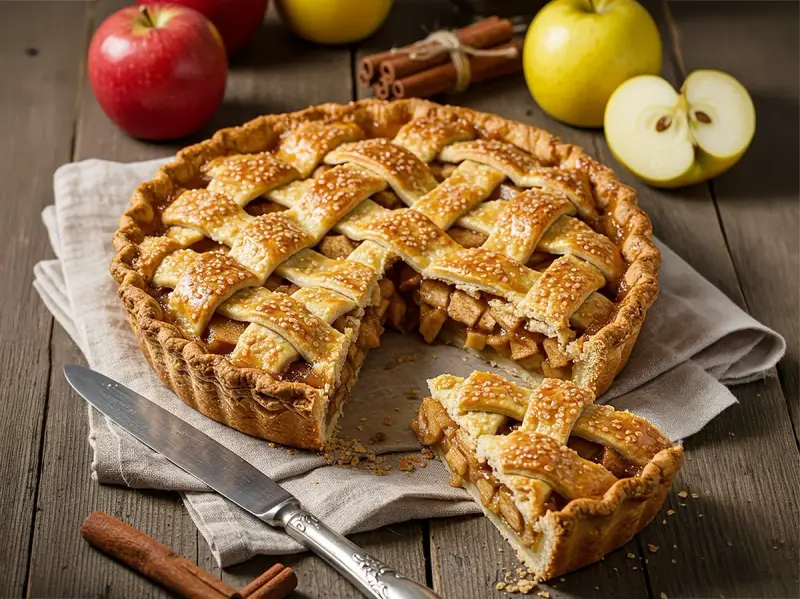
Pie. Pumpkin pie is the standard dessert, and recipes for it were already printed in Amelia Simmons's American Cookery in 1796. Pecan pie and apple pie are the usual company.
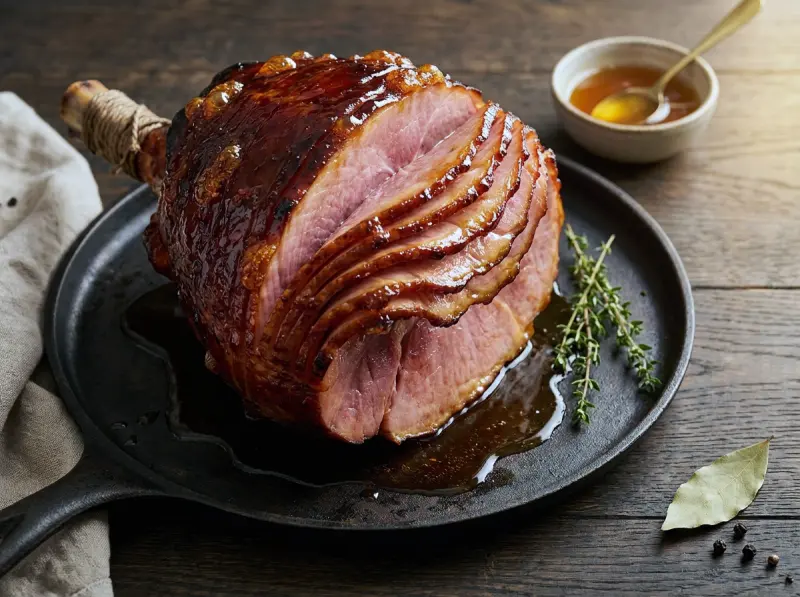
Ham. A honey-glazed ham works as a second main dish for a big table, or as the main dish for guests who do not want turkey. It is sold fully cooked, so the oven only warms it to 60°C (140°F) and sets the glaze.
How much to cook per guest
The USDA rule for the bird is 1 lb (450 g) of raw whole turkey per person. Count up to 680 g if you want sandwiches the next day. For stuffing baked in a dish the USDA gives at least half a cup, about 120 ml, per person. The other rows in the table come from the yields of our own recipes.
| Dish | 6 guests | 10 guests | 14 guests |
|---|---|---|---|
| Whole turkey, raw | 2.7–4 kg (6–9 lb) | 4.5–6.8 kg (10–15 lb) | 6.3–9.5 kg (14–21 lb) |
| Cornbread stuffing (one dish serves 8) | 1 dish | 1½ recipes | 2 dishes |
| Potatoes for mash, raw weight | 1.4 kg | 2.3 kg | 3.3 kg |
| Gravy | 500 ml | 850 ml | 1.2 litres |
| Cranberry sauce (one batch is 500 ml) | 1 batch | 1½ batches | 2 batches |
| Vegetable sides | 2 dishes | 3 dishes | 4 dishes |
| Pies, 23 cm (each cuts into 8) | 1 | 2 | 2 or 3 |
Each of the two casseroles serves 8, the Brussels sprouts recipe serves 4 and the mac and cheese serves 6, so double the sprouts for more than six guests. A bigger bird needs more time: the USDA table gives 2¾ to 3 hours at 165°C (325°F) for a turkey of 8 to 12 lb and 3¾ to 4¼ hours for 14 to 18 lb.
The timeline: from five days out to dinner at 4 pm
Most of this dinner is cooked before Thursday. The plan below assumes the frozen 5.4 kg turkey from our recipe.
| When | What to do |
|---|---|
| 5 days before (Saturday) | Move the frozen turkey to the fridge. It needs 3 days to thaw. |
| 3 days before (Monday) | Cook the cranberry sauce. It keeps for up to 10 days in the fridge. |
| 2 days before (Tuesday) | Salt the turkey. Bake the cornbread and dry it for the stuffing. Bake the pumpkin pie, which keeps 2 days in the fridge. |
| The day before (Wednesday) | Take the film off the turkey so the skin dries. Bake the pecan pie. Assemble the green bean casserole without its fried onions and the sweet potato casserole without its topping; both wait in the fridge for up to 24 hours. Cook the vegetables for the stuffing and chill them. |
Do not mix the stuffing on Wednesday. The USDA says uncooked stuffing must not be refrigerated: the dry and the wet parts are kept apart and combined just before baking.
Thursday runs backwards from 4 pm.
| Time | What happens |
|---|---|
| 11:30 am | Turkey out of the fridge. Make the gravy base on the stove. |
| 12:00 pm | Oven to 220°C (425°F). Herb butter under the skin. |
| 12:30 pm | Turkey into the oven. |
| 1:00 pm | Oven down to 165°C (325°F). |
| 2:30 pm | First temperature check. Peel the potatoes. |
| 2:45 pm | Potatoes on to boil. |
| 3:00 pm | Mix the stuffing with egg and broth, spoon it into its dish, cover with foil. |
| 3:15 pm | Turkey out at 74°C (165°F) in the thigh; it rests under foil. Oven to 190°C (375°F). Stuffing and both casseroles go in. Mash the potatoes. Whisk the pan juices into the gravy and boil it. |
| 3:45 pm | Sweet potato casserole out. Fried onions onto the green beans. Foil off the stuffing, oven up to 220°C (425°F). |
| 3:50 pm | Green bean casserole out. Carve the turkey. |
| 4:00 pm | Stuffing out when its centre reads 74°C (165°F). Dinner. |
How to fit everything into one oven
The turkey's rest is the whole trick. It has to stand for 30 minutes and can stand for an hour, and during that time the oven is empty. Everything baked on the day is assembled beforehand and goes in when the bird comes out.
The three dishes ask for three temperatures: 175°C for the stuffing, 190°C for the green beans, 200°C for the sweet potatoes. I set the oven to 190°C and go by the signs each recipe gives, such as bubbling edges or a browned top, and not by the minutes. Three cold dishes in the oven at once slow each other down, so use the thermometer on the stuffing.
Try the empty dishes in the cold oven on Wednesday. If three do not fit on two shelves, bake the sweet potato casserole in the morning before the turkey and warm it during the rest. Brussels sprouts need 220°C and a preheated tray, so the tray goes in at 3:45 pm and the sprouts follow for 20 to 25 minutes; they reach the table a little after everything else. Mac and cheese can skip the oven entirely, since the recipe works on the stove. The ham needs about two hours at 160°C, close to the turkey's temperature, so check whether your oven holds both before you buy both.
What goes wrong most often
The turkey is still frozen on Thursday morning. Put it in a leak-proof bag in cold tap water and change the water every 30 minutes. The USDA allows 30 minutes per pound (450 g), about 6 hours for a 12 lb bird, and it must be cooked straight away.
The bird is cooked by the clock. Roasting tables are estimates. Measure in the thigh, the wing and the breast. If the breast reads 74°C while the thigh is still near 65°C, lay foil over the breast and keep roasting.
The stuffing turns to mush. The cornbread was not dry enough. A cooled piece should snap, not squash.
The mash is gluey. It was beaten too hard or put in a blender. Mash by hand while the potatoes are hot and stop when it looks smooth.
The gravy is too salty. Juices from a salted bird are salty already. Taste them before they go in and season the gravy last.
The pumpkin pie cracks. It stayed in the oven until the whole surface stopped moving. Take it out while a circle of 7 to 8 cm in the centre still trembles.
The turkey is carved too early. The rest lets the juices set, and the side dishes are not ready before it ends anyway.
What to do with the leftovers
The USDA's rule is two hours: perishable food that has stood at room temperature longer than that should be thrown away. So when the plates are cleared, take the meat off the bones and put it in shallow covered containers in the fridge, where it cools quickly. Leftovers keep for 3 to 4 days in the fridge. Reheat them to 74°C (165°F), and bring gravy to a rolling boil.
Cold turkey needs no reheating. The simplest use for it is a sandwich with cranberry sauce on Friday.