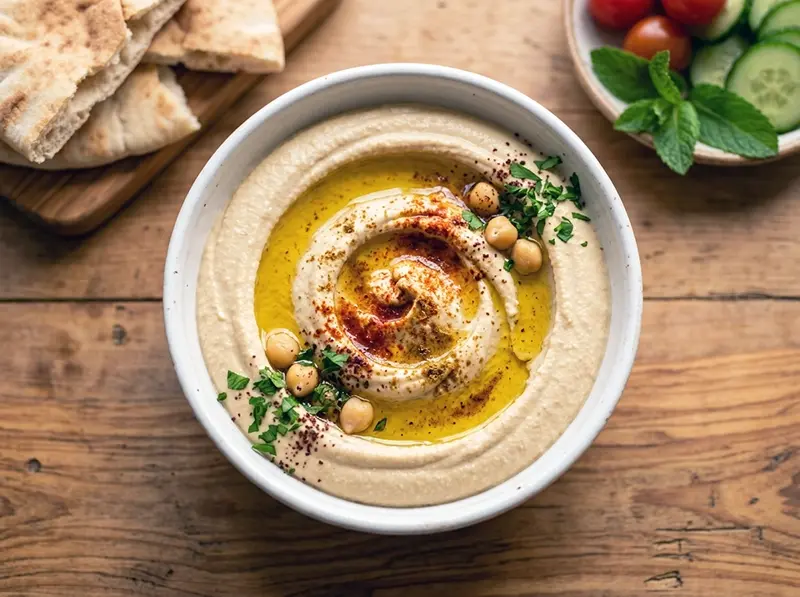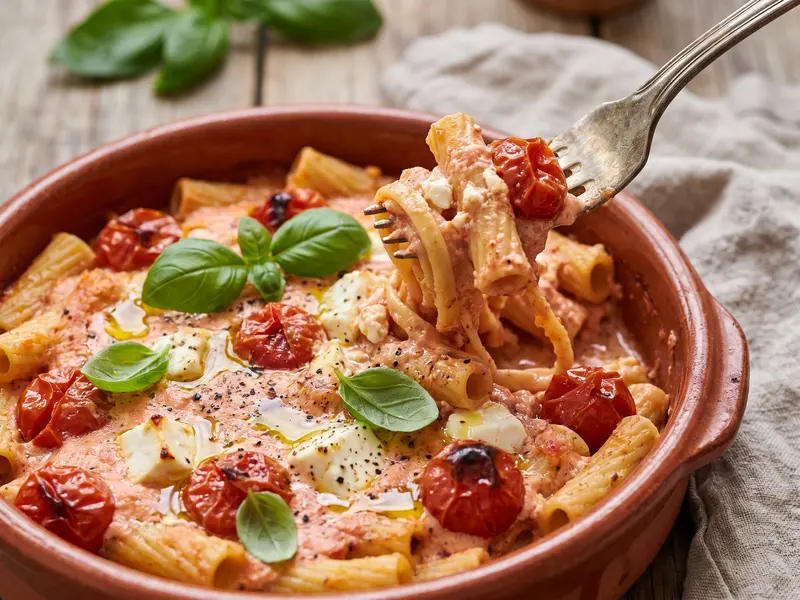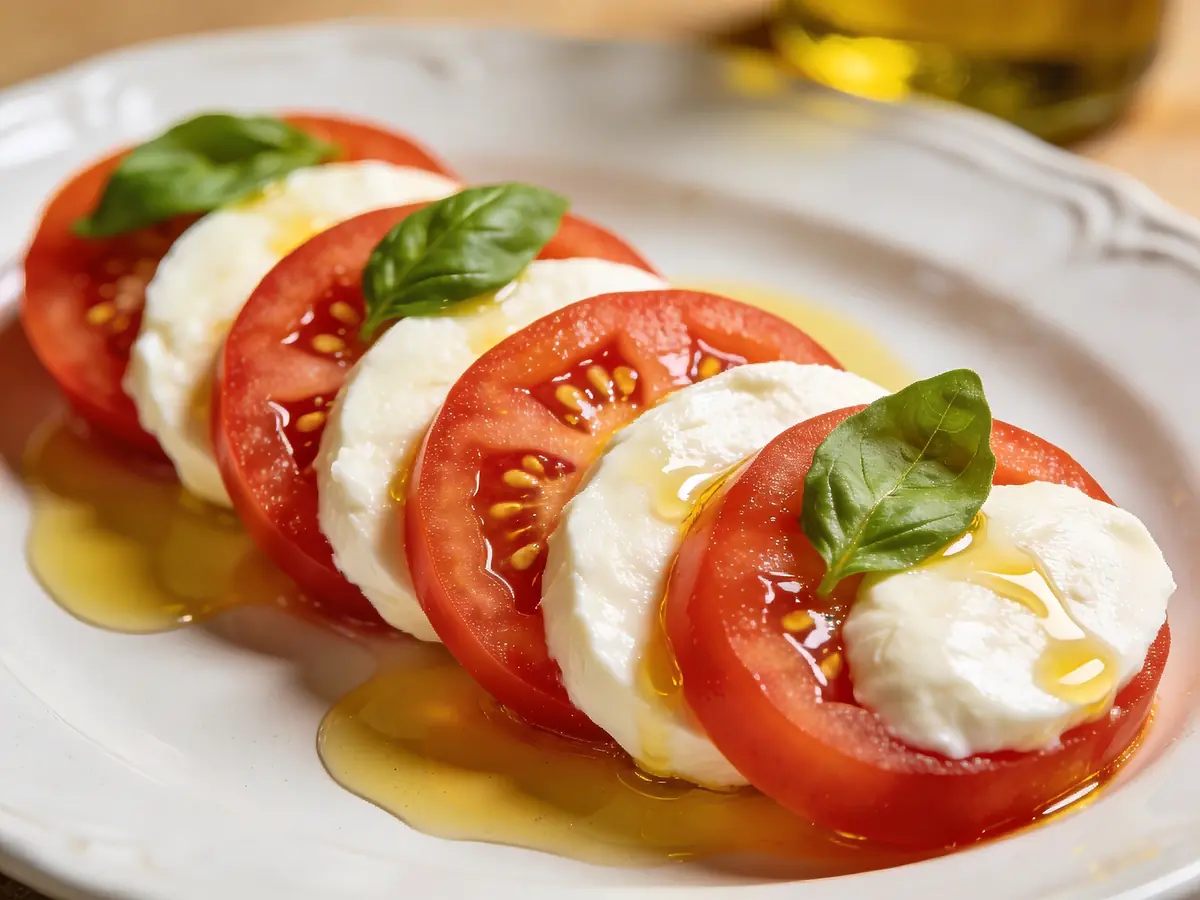
There are about six weeks a year when tomatoes are actually worth eating raw, and we are in them right now. The rest of the year I cook with canned and don't apologize for it. But in August the market tomatoes are heavy, they smell like tomato at the stem, and they give a little when you press them. That window is short. This is what I do with it.
Two rules before the recipes. First: never put a good tomato in the fridge. Below about 12°C the enzymes that make the aroma shut down, and they don't switch back on when the tomato warms up. Countertop, stem side down, out of the sun. Second: salt raw tomatoes minutes before serving, not earlier. Salt pulls water out, and a sliced tomato that sat salted for an hour is a sad, wet version of itself.
One more thing, since the question comes up: a few of the dishes below are written for canned tomatoes, because eleven months a year that is the better call. In August, swap in fresh. I'll say where and how.
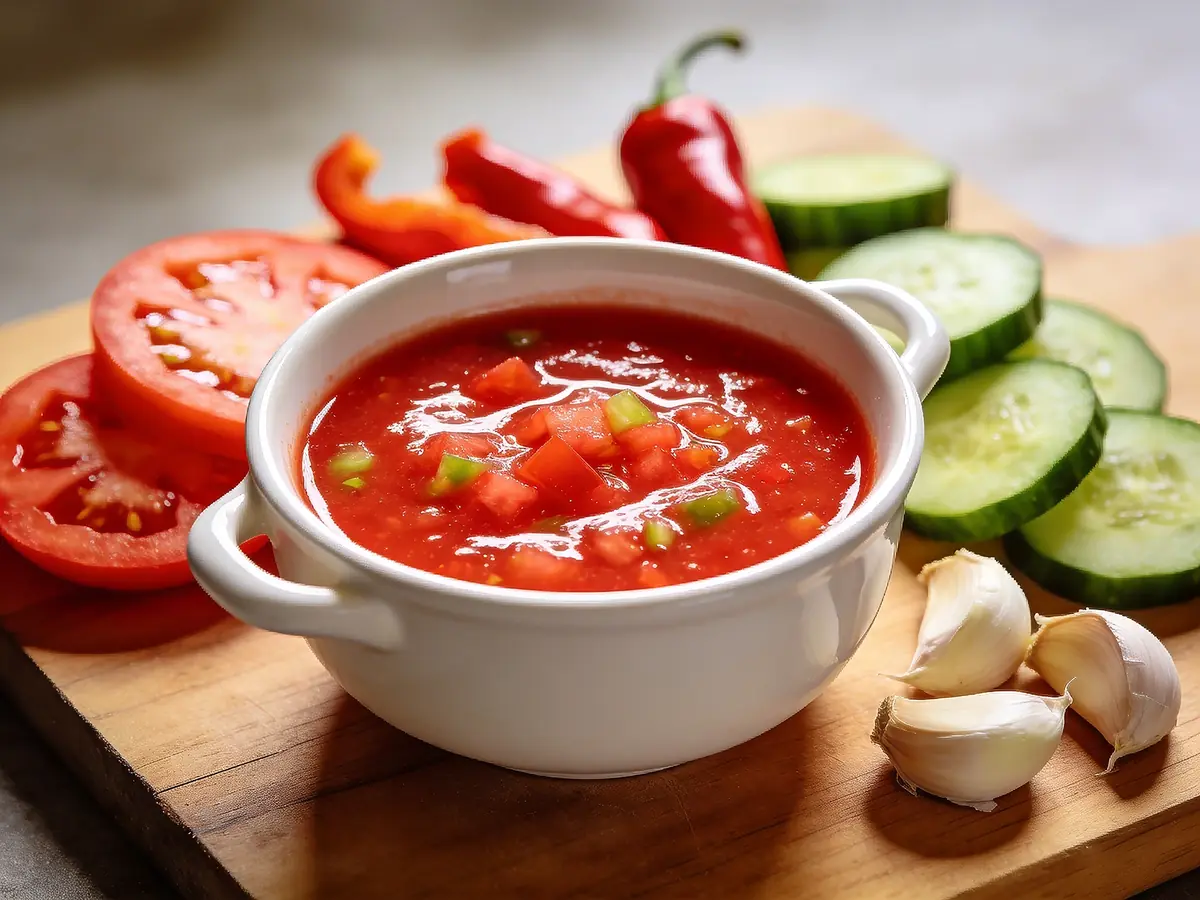
Gazpacho
The dish that justifies buying more tomatoes than you can eat. A kilo of them, cucumber, two peppers, onion, garlic, and the detail people skip: a slice of stale white bread, soaked and squeezed. The bread is not filler. Blended with the vegetables it holds the emulsion together, so the soup comes out silky instead of watery with an oil slick on top.
Blend everything first, then add the olive oil and vinegar slowly with the motor running on low, like making mayonnaise. Then strain it. I know the pulp feels like food you are throwing away. Strain anyway. The difference between strained and unstrained gazpacho is the difference between soup and salsa you drink with a spoon.
It needs at least two hours in the fridge, and it is better the next day. Yes, this contradicts the fridge rule. Once the tomato is blended, the aroma is already out; now you are just chilling soup.
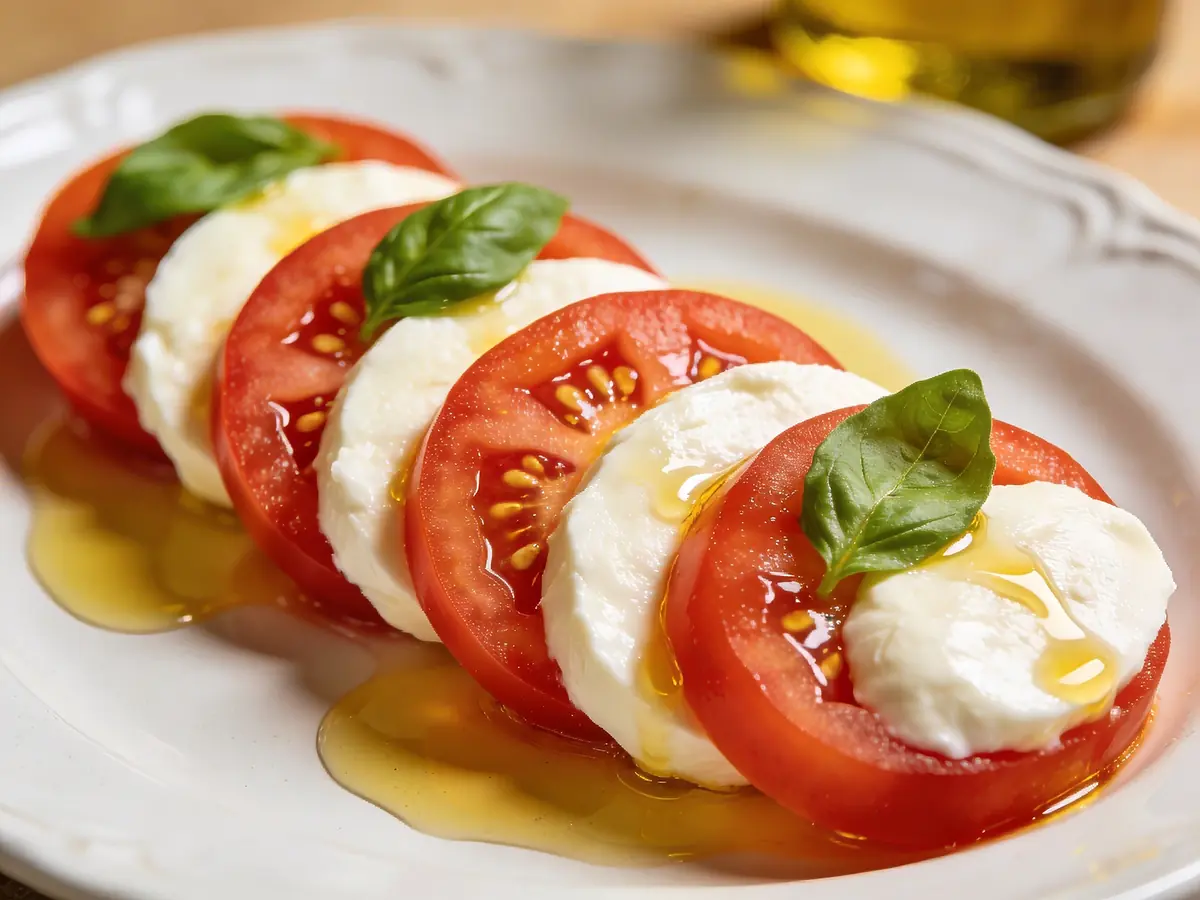
Caprese salad
Three ingredients and nowhere to hide, which is exactly why it belongs to August. The recipe is mostly shopping: tomatoes that are deep red and slightly soft, mozzarella worth eating on its own, basil that hasn't been in a plastic box for a week.
The technique, such as it is: slice tomato and mozzarella to the same thickness, about 5 mm, so they stack instead of sliding. Tear the basil or leave the leaves whole. Cut basil goes black at the edges and turns bitter, and it does it fast. Salt at the table, olive oil last, and if you use balsamic, a few drops, not a puddle.
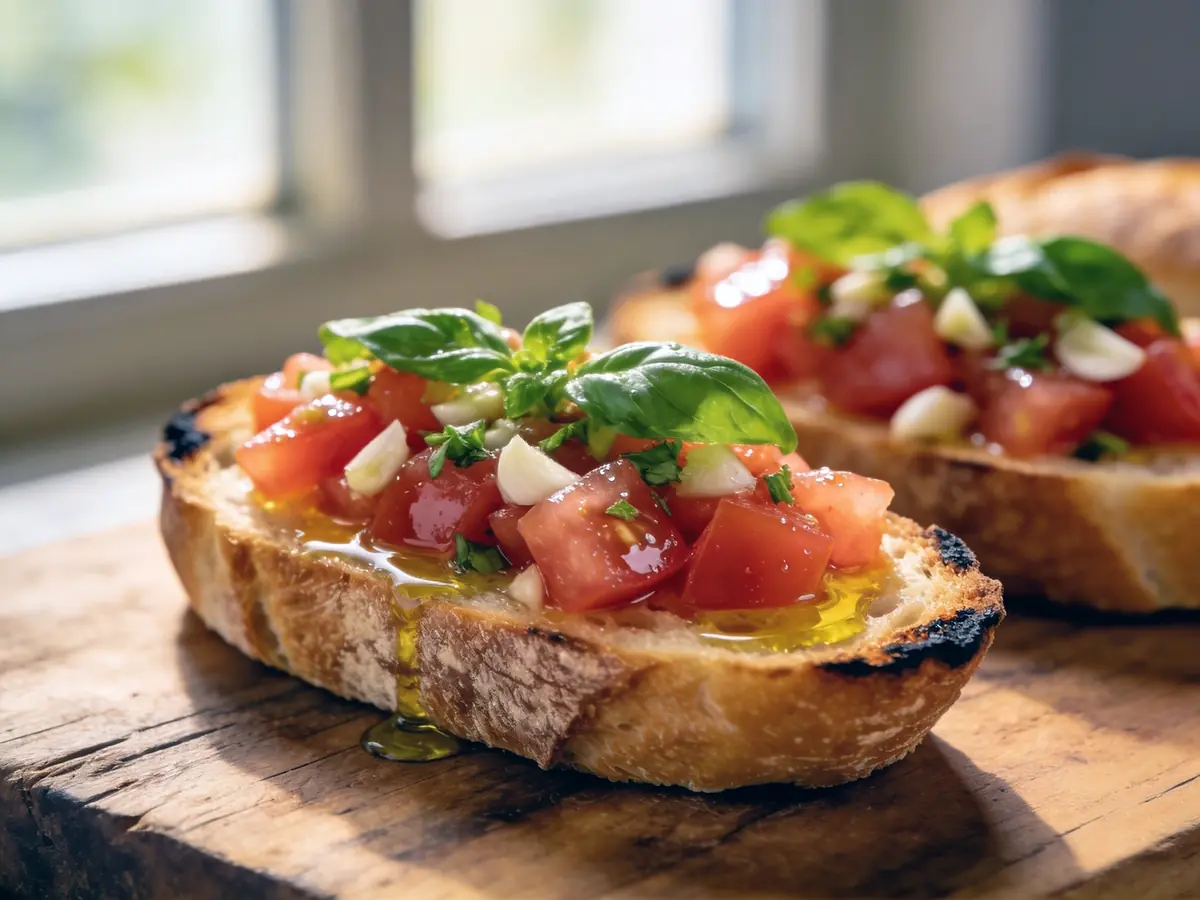
Bruschetta
Bruschetta is a fresh-tomato delivery system, and the bread matters as much as the topping. Slices about a centimeter and a half thick, toasted dry in a pan or on a grill until they have real color, then rubbed with a raw garlic clove while hot. The toast works like a grater; the garlic melts into the surface. That step is the whole dish. Skip it and you made toast with tomatoes on it.
Dice the tomatoes small, mix with torn basil, oil, salt and pepper, and let the mixture sit for a few minutes so the juices start running. Spoon it on just before eating, because the clock starts immediately: five minutes later the bread is soggy. At the table, assembly is the guest's job at my house.
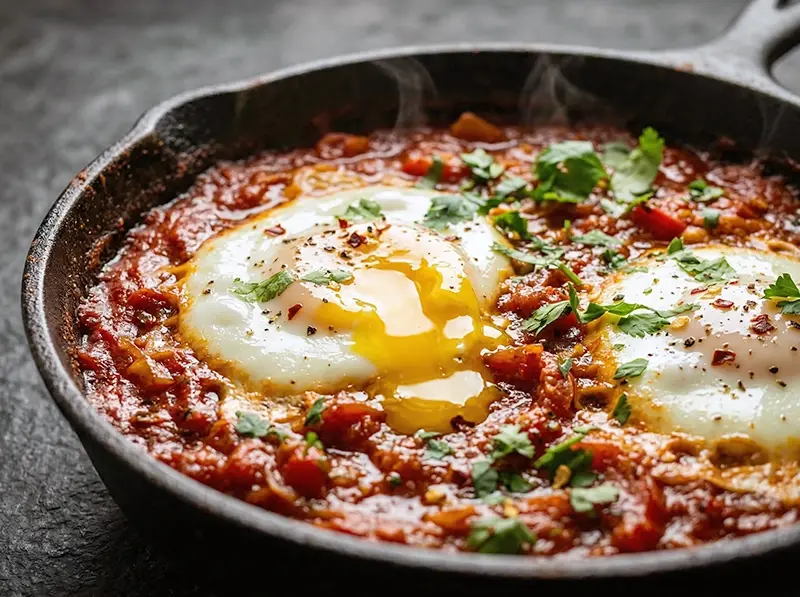
Shakshuka
The recipe uses canned crushed tomatoes, and most of the year that is right. In August, grate fresh ones instead: cut in half, grate the cut side on a box grater, and the skin stays flat in your hand while the flesh falls into the bowl. You'll want about a kilo for a full pan.
Everything else stays the same, including the step that decides whether shakshuka works: reduce the sauce until a spoon dragged through it leaves a trench that doesn't flood back in. Fresh tomatoes carry more water than canned, so this takes longer, sometimes twenty minutes. Only then make the wells and crack in the eggs. Eggs added to thin sauce don't poach, they drown.
Lecsó
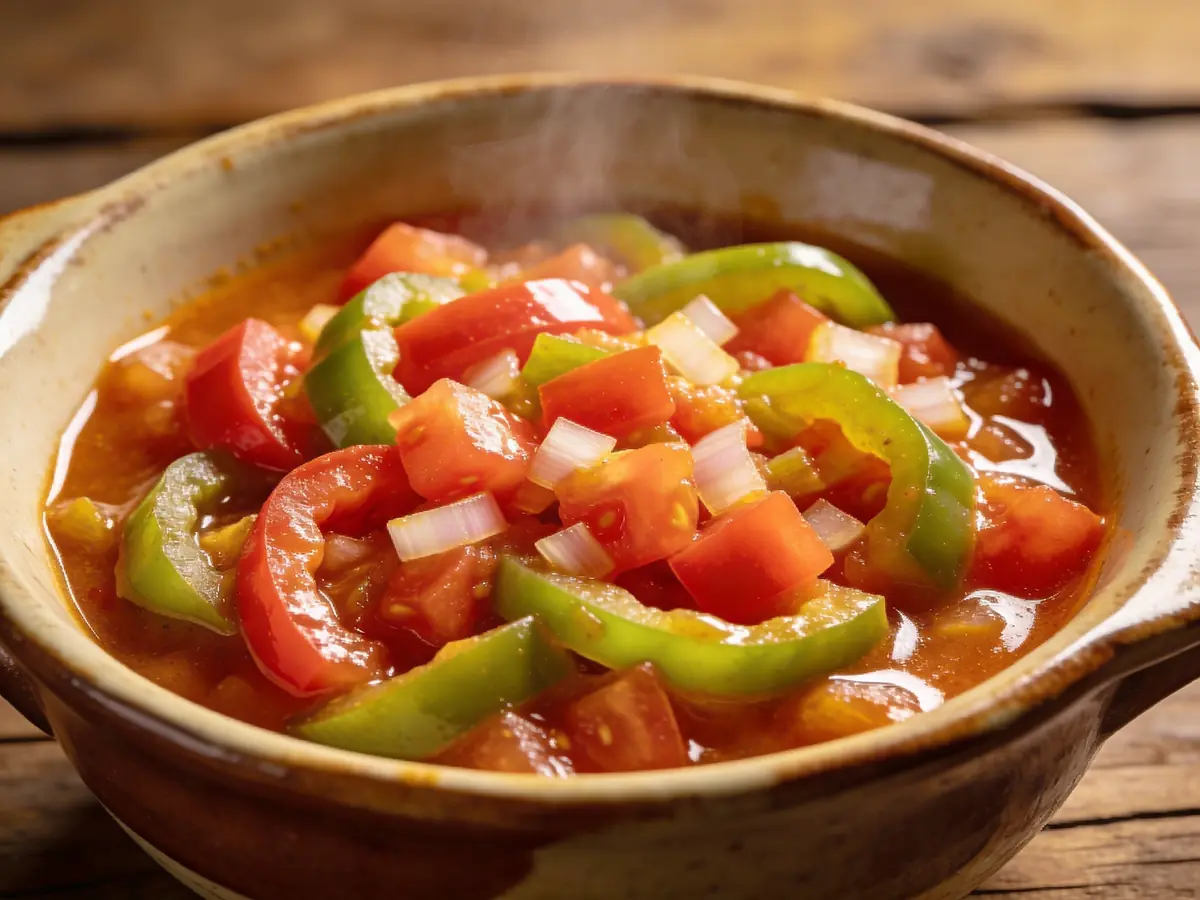
Hungarian pepper and tomato stew, and the honest answer to "what do I do with two kilos of soft tomatoes." Soft is fine here. Better than fine: the dish wants tomatoes that collapse.
Start with bacon cut small, rendered until the fat runs, then onion browned in that fat, then peppers in strips, then quartered tomatoes, then a lid and low heat for thirty to forty minutes. The peppers should go completely soft and the tomatoes should stop being recognizable as tomatoes. Paprika-country food: quiet, cheap, and better reheated the next day. I eat it with white bread and make no claims of restraint.
Salsa rossa
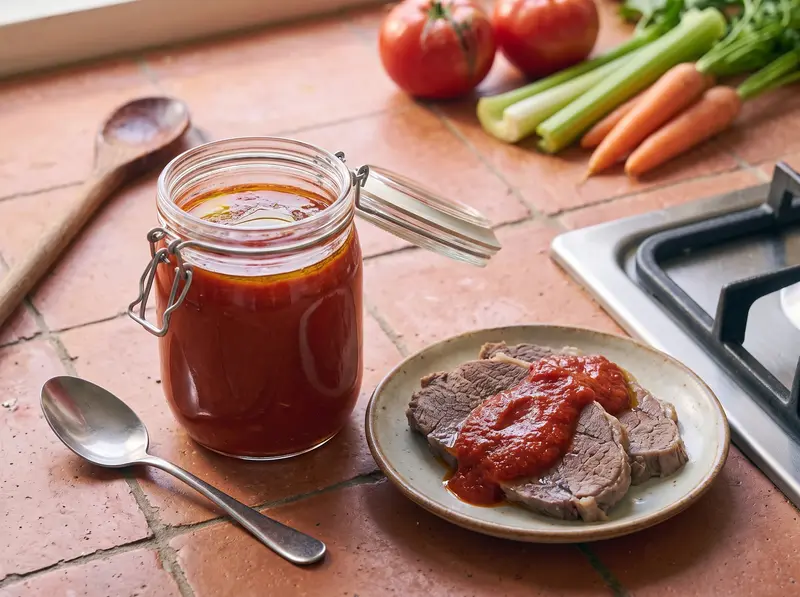
The preserving option, for the week the glut gets serious. Piedmontese tomato sauce with a soffritto of onion, carrot and celery, a spoon of sugar, a splash of red wine vinegar, chili. It cooks for about an hour and it is the reason to buy the ugly discounted crate at the end of the market day.
The prep is the recipe: score an X on each tomato, thirty seconds in boiling water, into ice water, and the skins slip off. Then halve and scoop out the seeds. It feels fussy with two kilos on the counter. Do it anyway; the seeds carry bitterness and water, and this sauce is about concentration. It keeps a week in the fridge, months in the freezer, and it turns grilled meat, eggs, or a bowl of plain rice into dinner.
Penne in tomato sauce
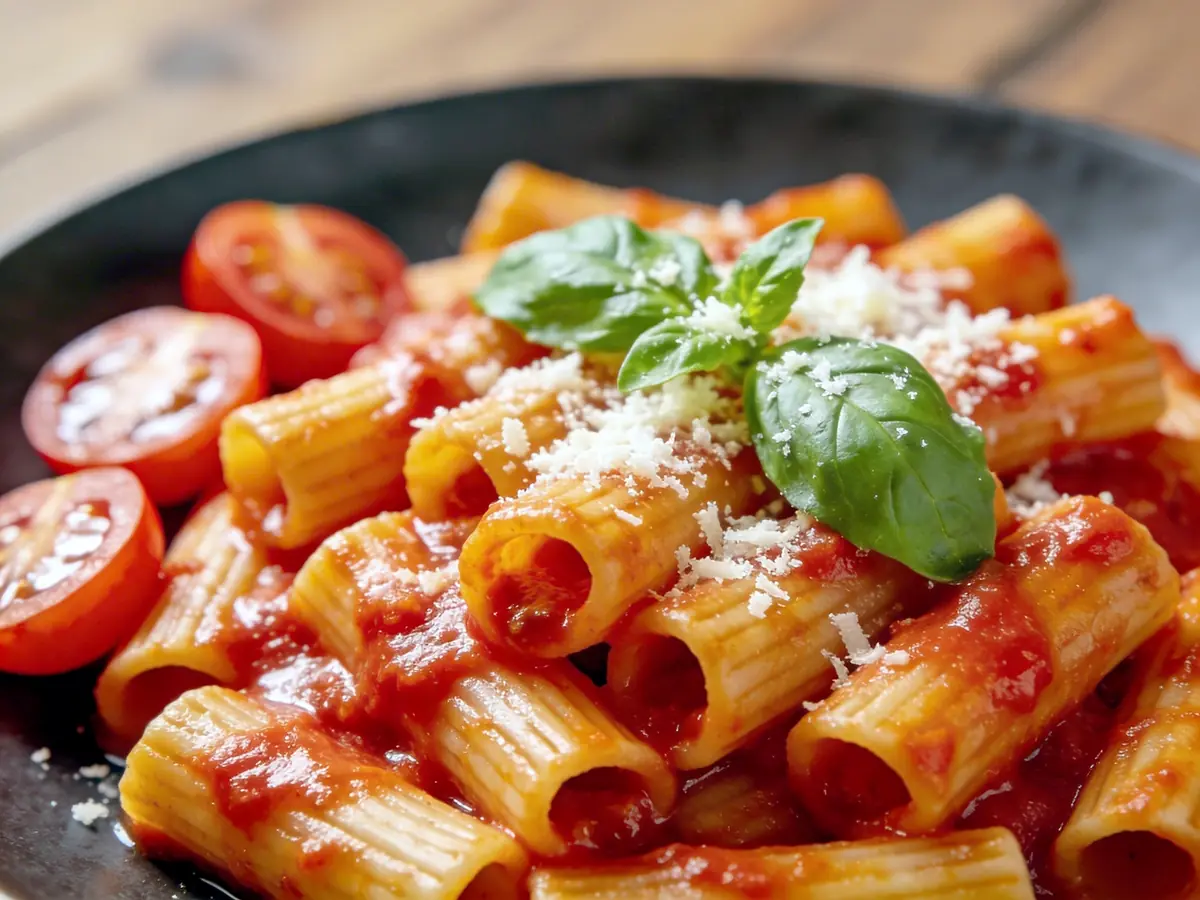
I'm including a pasta with canned tomatoes in a fresh-tomato article on purpose. This is the baseline recipe, the one you make in February, and August is when you learn what the fresh version tastes like so you know what the canned version is imitating. Use the salsa rossa above as the sauce, or grate fresh tomatoes straight into the garlic and chili oil and simmer until thick.
Either way, keep the recipe's one non-negotiable: save half a cup of pasta water before draining. Starchy water is what lets the sauce grip the penne instead of sliding off. Fresh sauce, canned sauce, it makes no difference; skip the pasta water and the sauce pools on the plate.
→ Penne in tomato sauce recipe
Six weeks. Buy more than you think you need, keep them off the fridge shelf, and when the counter starts looking like a problem, that's what the lecsó and the salsa rossa are for.