


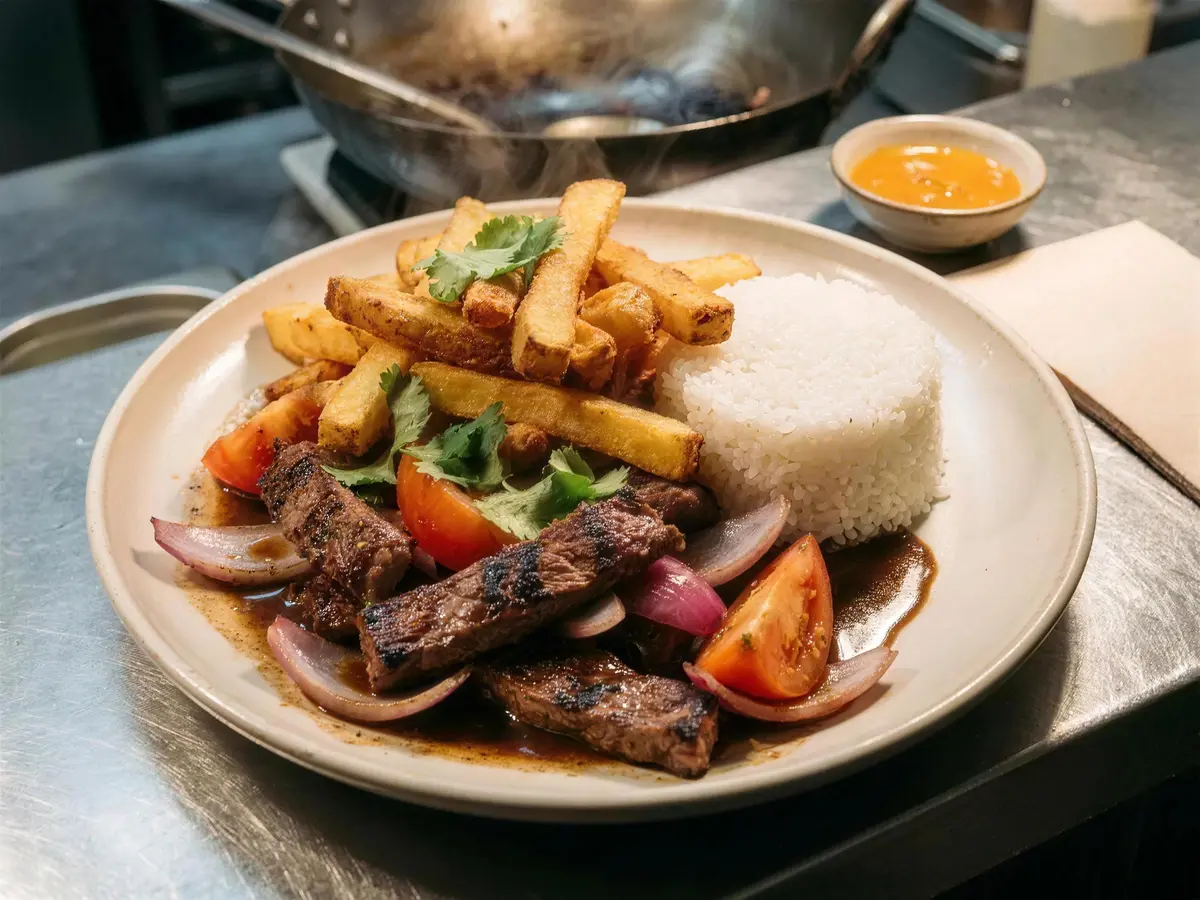
Lomo Saltado
Lomo saltado is a beef stir-fry from the chifa kitchens of Peru, where Cantonese cooking technique met Peruvian ingredients from the late nineteenth century onward. Strips of sirloin are seared in a scorching pan, then joined by red onion, ají amarillo, tomato, soy sauce and vinegar, and the whole thing is finished with fried potatoes folded in at the last second. Serving it with rice puts two starches on one plate, and that is the point: the potato is Andean, the high-heat pan technique and the soy sauce came with Chinese immigrants, and the dish blends criollo and Chinese cooking. Everything depends on pan temperature, so all cutting and measuring is done before the wok goes on the heat.
Ingredients
- 600 gbeef sirloin
- 500 gpotatoes
- 2 piecesred onions
- 3 piecesplum tomatoes
- 1 pieceají amarillo
- 3 clovesgarlic
- 3 tbspsoy sauce
- 2 tbspred wine vinegar
- 3 tbspvegetable oil
- 3 tbspchopped coriander
- 1 tspfine sea salt
- 0.5 tspground black pepper
- 300 gwhite rice
- 1 lvegetable oil for deep-frying
Method
- Start the rice first and cook it according to the packet: it cooks while you prepare and fry the potatoes. Cut the sirloin across the grain into strips about 1.5 cm thick and 6 cm long, then dry them thoroughly on paper towel and season with the salt and pepper. Surface moisture is what turns the meat grey and stewed instead of seared, and no amount of heat compensates for it.
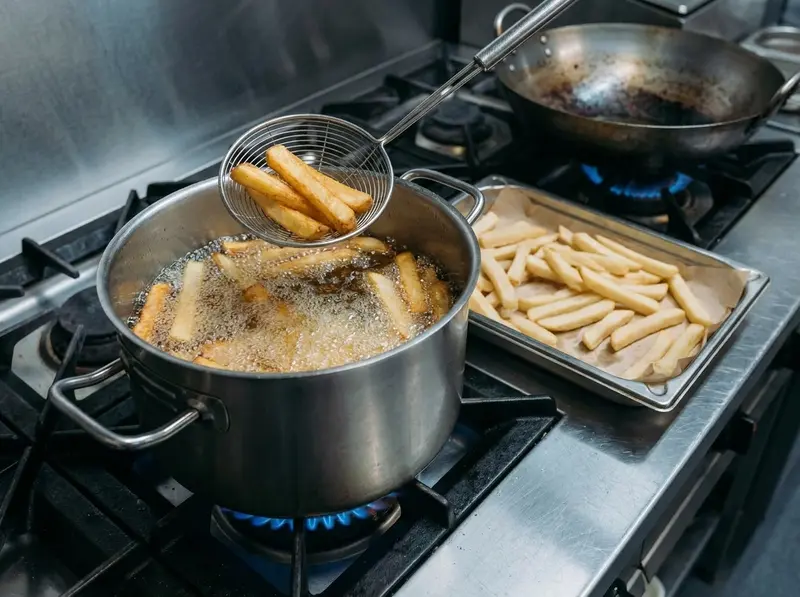
- Cut the potatoes into 1 cm batons and fry them twice: 5 minutes at 150 °C until soft but pale, then a second pass of 3 minutes at 190 °C until they are deep gold and rigid. Drain on a rack, never on a covered plate, or the steam softens them again. Before the first fry, rinse the batons and dry them thoroughly on a towel: water hitting hot oil makes it spit. Use a deep-fry or probe thermometer to hold 150 °C and then 190 °C, and never leave the pot unattended; if the oil ever catches fire, turn off the heat and cover the pot with a lid, never use water. Use separate frying oil for this, not the 3 tablespoons meant for the wok: 1 litre in a heavy pot about 20 cm across gives roughly 3 cm of oil, enough to fry the batons in two batches.
- Cut the red onions through the root into 1.5 cm wedges and separate the petals, cut the tomatoes into wedges and scrape out the seeds and watery centre, slice the ají amarillo into thin strips after removing its ribs, and crush the garlic. Have everything within arm's reach of the stove.
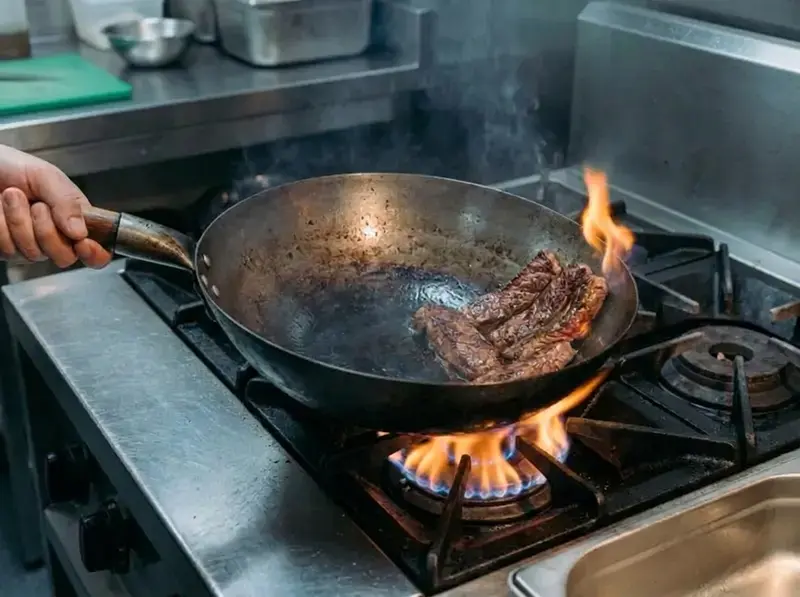
- Heat a wok or a wide steel pan over the highest heat until a drop of water vanishes on contact and the oil shimmers. Sear the beef in two batches with a tablespoon of oil each, leaving it untouched for the first 30 seconds and then tossing for another 30 to 60, until browned outside and still pink inside. Remove to a plate.
- Add the last of the oil, then the onion petals and the ají amarillo, and toss for 60 to 90 seconds. The onion should soften at the edges and keep a crisp core: at this stage it is still meant to snap when bitten.
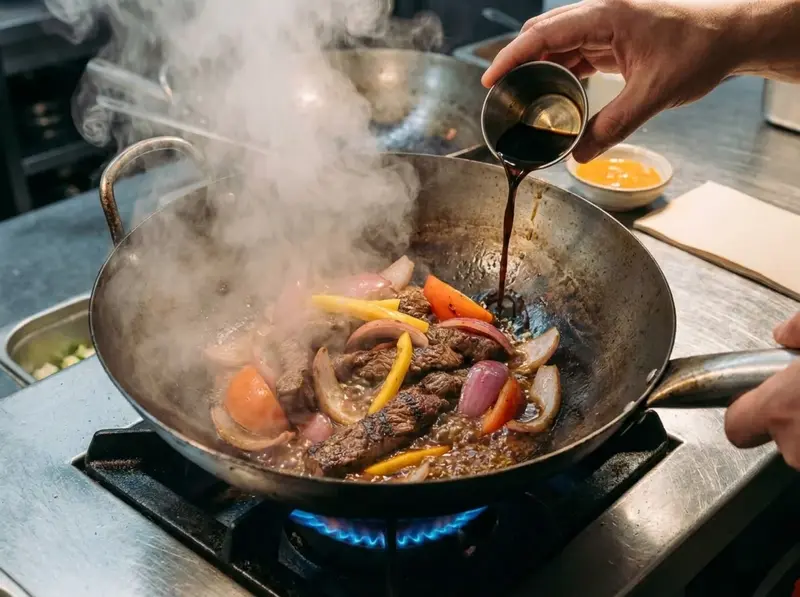
- Return the beef, add the crushed garlic for 20 seconds, then pour the soy sauce and vinegar down the hot side of the pan so they hiss and reduce on contact rather than pooling. Add the tomato wedges and toss 30 to 45 seconds, just until they warm through and release a little juice without collapsing.
- Take the pan off the heat, fold in the fried potatoes and the coriander with two or three turns only, and serve at once alongside the rice. The potatoes are meant to carry the pan sauce for the minute it takes to get to the table, not to sit in it.
Cooked it? Rate the recipe
FAQ
The meat went into the pan wet, or too much of it went in at once, or the pan was not properly preheated. Dry the strips well, cook them in batches that cover no more than two thirds of the pan floor, and wait until the surface is hot enough that oil shimmers and moves on its own.
A tablespoon of ají amarillo paste is the closest substitute and goes in with the garlic rather than with the onion. Failing that, half a yellow pepper cut into strips plus a pinch of cayenne gives the colour and a little heat, though not the fruity note that the fresh chilli brings.
Not really, because the fries lose their crust within minutes and reheating overcooks the beef. What you can do is prep everything up to eight hours ahead and keep the cut vegetables, the seasoned meat and the blanched first-fry potatoes separate in the fridge, then do the second fry and the stir-fry to order. If leftovers do remain, reheat them until they are steaming hot all the way through, 74 °C in the centre.
The technique is Cantonese but the vinegar, the ají amarillo and the fried potatoes are Peruvian, and no Chinese stir-fry puts chips in the pan. Pollo saltado replaces the beef with chicken and takes a minute or two longer per batch, until the strips are opaque all the way through, the juices run clear and the thickest piece reads 74 °C, while tallarín saltado swaps the potatoes and rice for noodles.
On a wide plate with white rice on one side, the meat and its juices in the middle, and the fries on top so they stay crisp for as long as possible. A small dish of ají sauce alongside is standard, and no other garnish is needed.
Keep browsing
More dishes from the Peruvian archive — picked by overlap with what you're cooking now.




Recipes by email
One letter a week: a recipe picked for your taste, plus whatever is new on the site. You can stop the letters in one click.
Welcome gift: Sergei's cookbook (e-book).
By signing up for the newsletter you agree to the privacy policy.
Tell us what you like to cook (30 seconds) →
Join the conversation
Comments
No comments yet — be the first!