
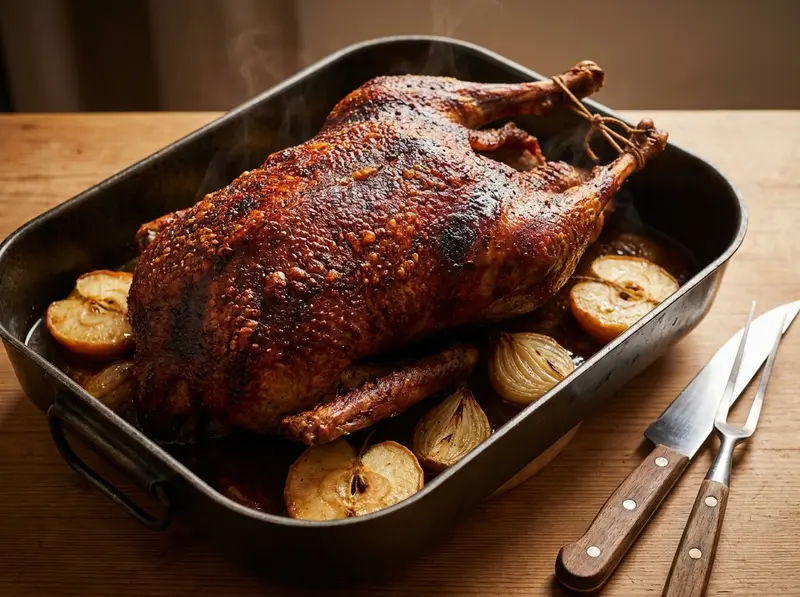
Martinsgans (German Roast Goose)
Martinsgans is the roast goose Germany eats around 11 November, the feast of St Martin, stuffed with apples, onions and mugwort and served with red cabbage and potato dumplings. The same bird reappears at Christmas, but November is when it belongs to a date. The method is slow and then fast: about three hours at 160 to 180°C for a 4.5 kg goose, breast down for the first hour so the back fat bastes the lean meat, then a short blast at 220°C with a brush of salted water to crisp the skin. The bird also gives up half a litre of clean fat along the way, which is a second ingredient rather than waste.
Ingredients
- 4.5 kggoose
- 3 pcsapple
- 2 pcsonion
- 2 tspdried mugwort
- 2 tspdried marjoram
- 2 tbspsalt
- 1 tspblack pepper
- 500 mlwater
- 400 mlchicken stock
- 1 tbspcornstarch
- 1 tbsphoney
Method
- Take the goose out of its packaging, pull the giblets from the cavity and keep them for the gravy. Reach inside and tear out the loose pads of fat around the opening; they render better in a separate pan than inside the bird. Run your hand over the skin against the grain and pull any quill stubs with tweezers. Dry the bird inside and out with paper towel, rub it all over with the salt and the pepper, and if you have the fridge space leave it uncovered on a rack overnight. Dry skin is most of the battle.
- Weigh the bird before you plan anything else, because the roast is timed by weight and not by the clock on the wall: 30 to 40 minutes per kilo plus the crisping stage at the end. A 4.5 kg goose takes about three hours. Measure your roasting tray too. A five kilo bird fits into a domestic oven with very little to spare, and finding that out on the morning of 11 November is a bad way to start the day.
- Quarter the apples and the onions, leave the peel on both, and toss them with 1 teaspoon of the mugwort and 1 teaspoon of the marjoram. Pack them loosely into the cavity and close it with two skewers laced with kitchen twine. Mugwort is not decoration here. It is a bitter herb that German cooks have used with goose for centuries precisely because bitterness cuts through the fat, and a goose without it tastes heavier.
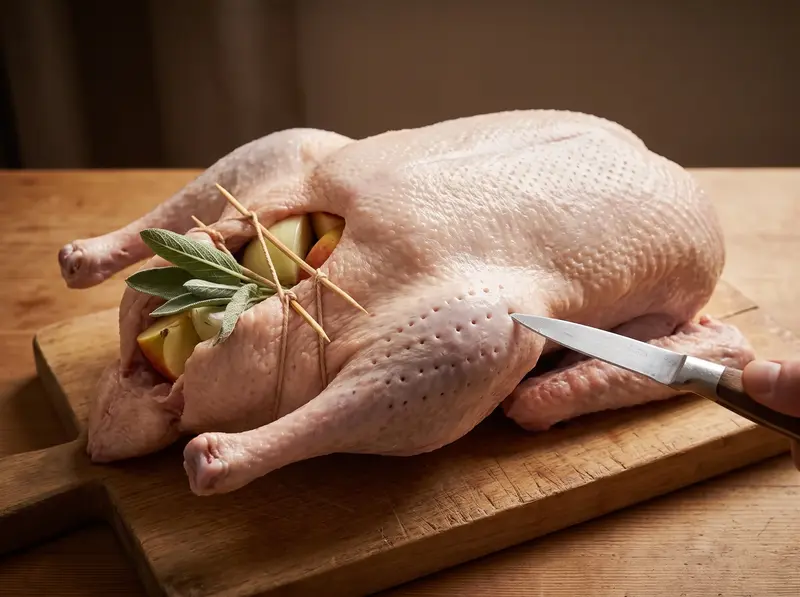
- Prick the skin over the thighs and along the lower sides of the breast, holding the tip of a knife almost flat so it goes through skin and fat but stops short of the meat. Every hole is an exit for the fat that has to leave the bird for the skin to crisp. Puncture the meat instead and you drain the juice you want to keep.
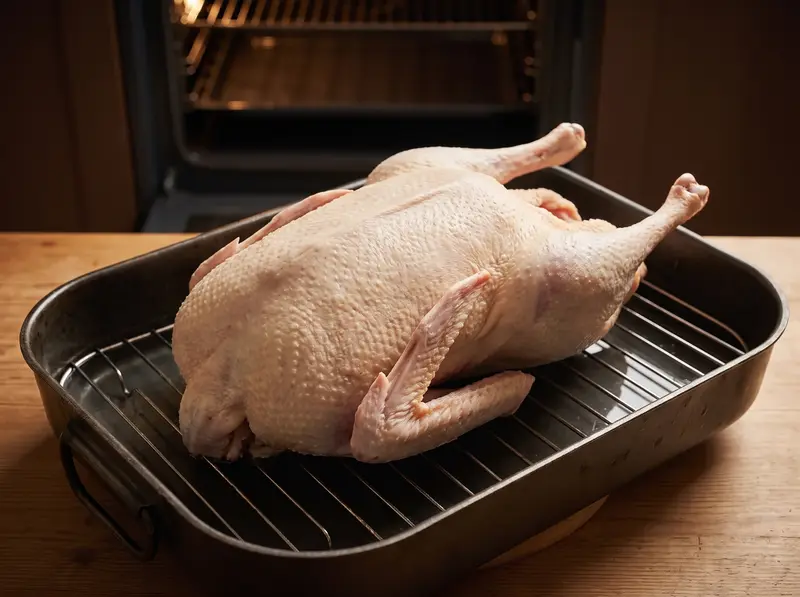
- Set the goose breast-side down on a rack over a deep tray, pour the water into the tray, and roast at 180°C for one hour. Breast down first lets the thick fat layer on the back baste the lean breast meat through the longest part of the cooking, and the water stops the dripping fat from scorching and filling the kitchen with smoke.
- Turn the bird breast-side up, drop the oven to 160°C and continue roasting for another hour and a half, spooning the juices over the breast every half hour. Every 45 minutes ladle the rendered fat out of the tray into a heatproof jar, leaving the darker juices behind. You should end up with 300 to 500 ml of clean goose fat, which is worth more than the effort of collecting it.
- Push a thermometer into the thickest part of the thigh without touching bone: it needs to read 82 to 85°C. Goose is not chicken and does not stop at 74°C, because the leg has connective tissue that only softens in the low eighties. Then stir 1 teaspoon of salt and the honey into 150 ml of hot water, brush it over the whole bird, turn the oven up to 220°C and give it 15 to 20 minutes. Stay in the kitchen for this part, because the skin goes from brown to black faster than you expect.
- Lift the goose onto a warm board and leave it for 20 minutes under a loose tent of foil. While it rests, tip the tray juices into a pan, skim off whatever fat is left, add the stock and the giblets and simmer for ten minutes, then strain. Whisk the cornstarch with two tablespoons of cold water, stir it in and let it bubble for a minute, then season with the remaining marjoram and mugwort. Carve the legs off first, then take the breasts off the bone in one piece each and slice them across.
FAQ
Count 30 to 40 minutes per kilogram at 160 to 180°C, plus 15 to 20 minutes at 220°C at the end for the skin. A 4.5 kg bird works out at about three hours in total. Weight is a guide and not a guarantee, so the number that actually decides it is the temperature in the thickest part of the thigh: 82 to 85°C, measured without touching the bone. An older or leaner bird can take half an hour longer than the arithmetic suggests.
Three things, and all of them matter. Dry the bird thoroughly and if possible leave it uncovered in the fridge overnight, because moisture on the surface steams the skin instead of crisping it. Prick the skin over the fatty areas at a shallow angle so the fat can run out during roasting; skin sitting on a thick layer of unrendered fat will never crisp. Then, 15 to 20 minutes before the end, brush the bird with salted water and raise the heat to 220°C. Some cooks use beer instead of water, which works just as well.
Mugwort, Beifuß in German, is a bitter herb that goes into the cavity with the apples and onions and is the classic seasoning for goose across German cooking. Bitterness is the point: goose is a fatty bird and the herb keeps it from tasting heavy. You can leave it out and the roast will still be good, just rounder and less interesting. If you cannot find it, a teaspoon of dried thyme plus two juniper berries gets you part of the way, and a strip of orange zest in the cavity does a similar job from a different direction.
You can do most of it. Roast the bird fully, let it cool, carve it into legs and breasts and keep the pieces in the fridge with the strained gravy in a separate container. On the day, lay the pieces skin up in a hot tray and give them 20 minutes at 200°C, which crisps the skin again without drying the meat. What does not survive is a whole cooked bird reheated whole: the breast goes to fibre long before the inside is warm. The stuffing should be discarded and the gravy reheated gently.
Strain the fat into a clean jar while it is still liquid and keep it in the fridge, where it lasts for months. It is the best fat there is for roast potatoes, it is the base of the Gänseschmalz that Germans spread on dark bread with salt, and a spoonful of it in braised red cabbage ties the whole plate together. On the table, a Martinsgans comes with braised red cabbage and potato dumplings almost without exception, and a glass of something you would also drink with duck confit rather than anything light. If you are cooking for fewer people, roast chicken uses the same method on a much smaller scale.
Rate this
Keep browsing
More dishes from the German archive — picked by overlap with what you're cooking now.



Join the conversation
Comments
No comments yet — be the first!