
Extra virgin olive oil Recipes
44 recipes with extra virgin olive oil for weeknights, meal prep, and quick ingredient searches. Choose by time, cuisine, and what is in your kitchen.
44 recipes
 🇫🇷FranceMedium
Rouille (Provençal Saffron Garlic Sauce for Bouillabaisse)
Rouille (literally 'rust' in French — for its rusty-red color) is a Provençal garlic, saffron and hot pepper sauce, the usual partner of bouillabaisse. There is no single canonical recipe: older versions are bound with soaked bread or a boiled potato, many modern ones with egg yolk. This one uses both bread and a yolk, with saffron for color and perfume and hot pepper (traditionally cayenne; piment d'Espelette is a milder choice). Spread on baguette croutons floating in fish soup, used as a dip for seafood, or as a sandwich spread. Active work is about 20 minutes; the finished sauce then rests for 30 minutes. Makes about 300 ml; a serving is about 2 tablespoons.
 🇫🇷FranceMedium
Brandade de Morue (Provençal Salt Cod and Olive Oil Spread from Nîmes)
Brandade de Morue is the southern French classic from Nîmes, in Languedoc, an emulsion of desalted cod, olive oil, milk, and garlic. The name comes from Occitan 'brandar' — to stir, to shake — describing the vigorous beating that turns flaked cod and oil into a creamy spread. The first printed recipe is in Charles Durand's cookbook of 1830; the Nîmes version is made without potato. This recipe keeps to that: cod, oil, milk and garlic, nothing else. Spread on toasted baguette, baked into a gratin, or used as a dip with raw vegetables. The spread itself is gluten-free and low in carbohydrates (serve it with gluten-free bread or raw vegetables if that matters; keto-friendly when no potato is added and it is eaten without the croutons). Active time about 50 minutes plus 24–48 hours of soaking the salt cod. Yields about 900 g, serves 8 (roughly 110 g each) as appetizer with crostini, salad, and chilled rosé.
 🇮🇹ItalyEasy
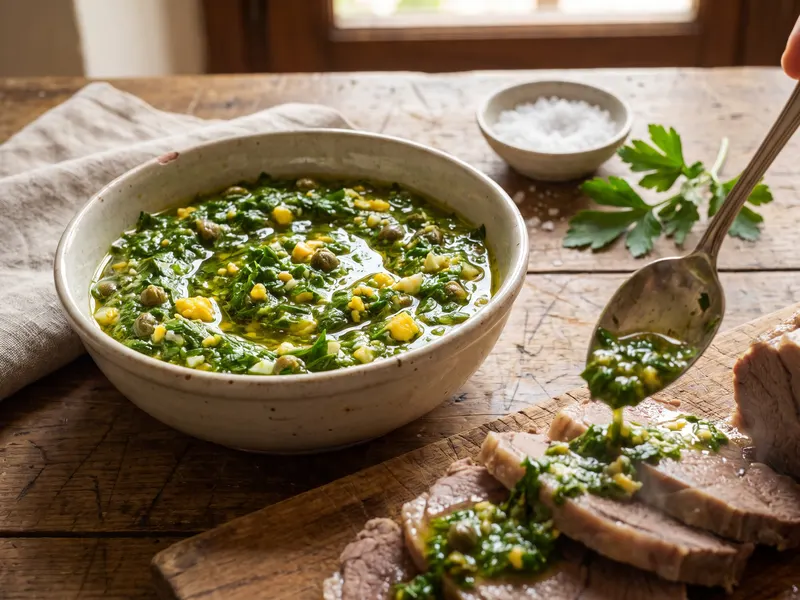
Italian Salsa Verde (Piedmontese Bagnet Verd Green Sauce)
Italian salsa verde — known as bagnet verd in Piedmontese dialect — is the punchy raw green sauce of Northern Italy. Built on flat-leaf parsley, anchovies, capers, garlic, hard-boiled egg yolk, vinegar-soaked bread, and olive oil, it is the obligatory condiment for bollito misto (mixed boiled meats), the wintertime ceremony of Piedmont. It is listed among Piedmont's traditional food products (P.A.T.); local tradition places its birth at the Savoy court of King Carlo Alberto in the 19th century. Bright, salty, sharp, herbaceous — designed to cut through the richness of long-cooked meat. Versatile far beyond bollito: spoon over grilled fish, roasted vegetables, soft cheese, hard-boiled eggs, or crostini. About 30 minutes of work by hand, less with a food processor, plus about 1 hour of resting for the flavours to integrate. Yields about 250 ml, serves 8 as a condiment (about 2 tablespoons each).
 🇮🇹ItalyAdvanced
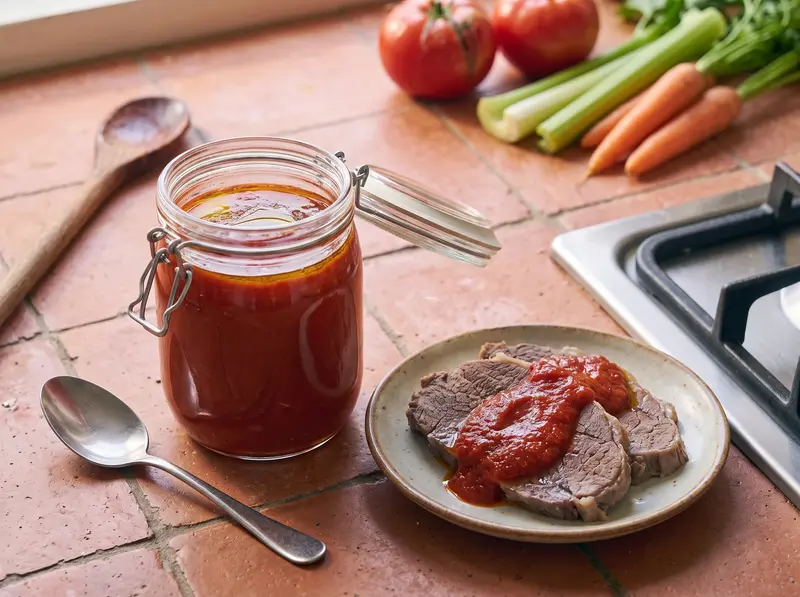
Italian Salsa Rossa (Piedmontese Bagnet Ross Tomato Sauce)
Salsa rossa — known as bagnet ross in Piedmontese dialect — is a slow-cooked tomato sauce from Piedmont in northern Italy, traditionally spooned alongside bollito misto, the region's winter dish of mixed boiled meats. This version keeps to a plain vegetable base: ripe tomatoes, onion, carrot, celery, and garlic simmered until thick, then balanced with sugar and red wine vinegar. Many Piedmontese households build a richer version with roasted bell pepper and a pinch of cinnamon and clove, closer to what's sold as salsa rubra, but the tomato-and-soffritto core stays the same either way. Let it cool for about an hour before serving. Naturally vegan and gluten-free.
 🇮🇹ItalyMedium
Italian Bagna Cauda (Piedmontese Hot Anchovy and Garlic Dip)
Bagna cauda — Piedmontese dialect for 'hot bath' — is the warm dip of olive oil, garlic, and anchovies that defines Northern Italian conviviality. Slowly melted into a single silky emulsion, kept warm at the centre of the table in a terracotta fujòt over a candle, surrounded by raw and cooked seasonal vegetables and crusty bread for dipping. The dish had reached Piedmont by the late 18th century and was first written down in 1875; some trace it to the old salt roads that carried salt and salted anchovies inland from Provence and Liguria. In 2005 the Asti Delegation of the Italian Academy of Cuisine officially registered the recipe with a notary in Costigliole d'Asti. Every November-December Asti celebrates Bagna Cauda Day. This domestic balanced version uses milk-poached garlic for elegance, salt-packed anchovies for depth, and a finishing knob of butter for silky texture. It takes about 55 minutes, most of it gentle simmering. Yields about 350 ml, serves 6 as a centerpiece dip.
 🇮🇹ItalyEasy
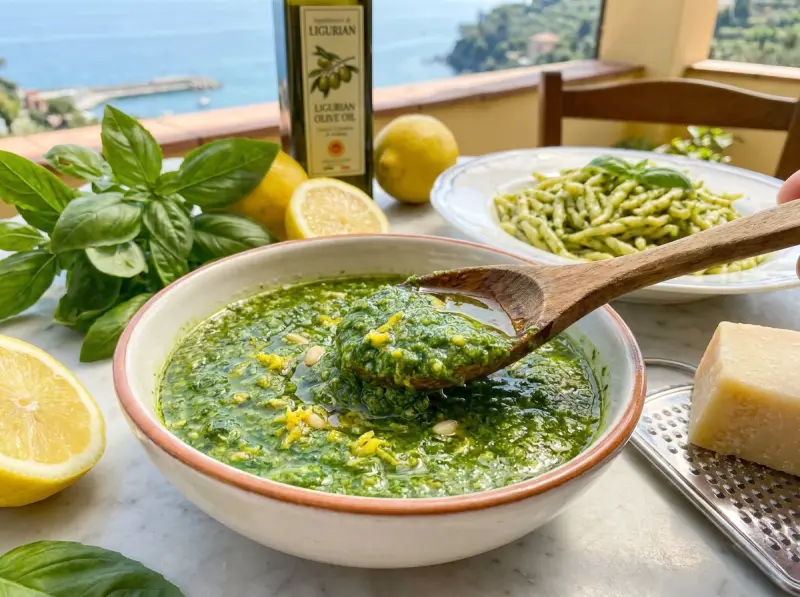
Pesto al Limone (Lemon Basil Pesto)
Pesto al limone is basil pesto with lemon zest and juice worked in — a citrus twist on the Genovese original that shows up along the Amalfi coast and in Campania. The lemon brightens the basil, and the freshly made sauce is a vivid green. Everything is pulsed cold and briefly, never blended smooth — heat from a running motor is what makes pesto taste bitter and dull. Fifteen minutes of work yields about 250 ml, enough for 500 g of pasta.
 🇮🇹ItalyEasy
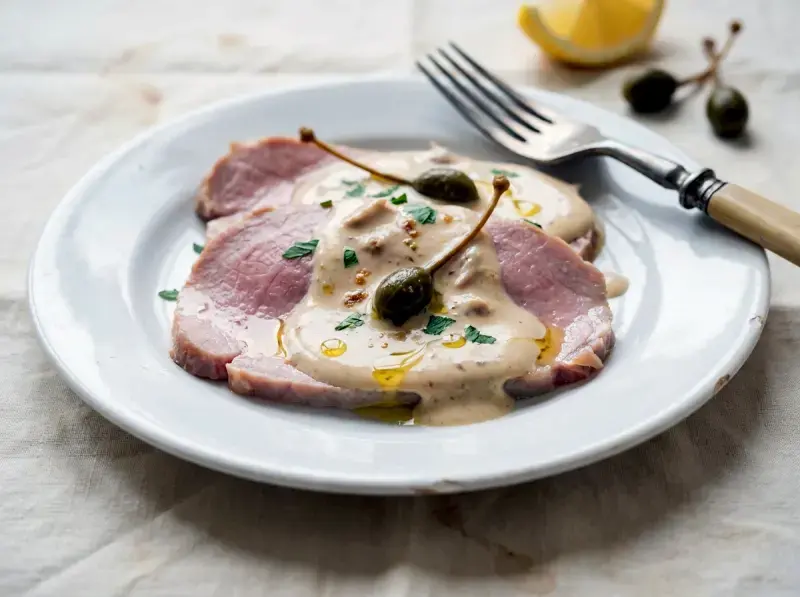
Italian Salsa Tonnata (Piedmontese Tuna Sauce for Vitello Tonnato)
Salsa tonnata is the Piedmontese emulsion sauce of canned tuna, anchovies, capers, hard-boiled egg yolks, olive oil, and lemon juice — the sauce for vitello tonnato (cold sliced veal under tuna sauce). Its roots probably go back to 18th-century Piedmont. Pellegrino Artusi's cookbook 'La scienza in cucina e l'arte di mangiar bene' gives a recipe with no egg at all: tuna, anchovies, plenty of olive oil, lemon and capers. This version thickens the sauce with hard-boiled yolks rather than raw ones, as many Italian cooks do today. It is safer, and closer in body to mayonnaise. Beyond veal: tomato tonnato, egg tonnato, pasta salad, sandwiches, vegetable dressing. Active 25 minutes plus 1–2 hours rest. Yields about 350 ml, serves 8 as a sauce or dip.
 🇮🇹ItalyEasy
Frittata di Spaghetti (Neapolitan Spaghetti Frittata with Leftover Pasta)
Frittata di spaghetti (also called frittata di maccheroni in Naples) is the iconic Italian dish for transforming leftover pasta into a new meal — a thick, golden disc of cold cooked spaghetti bound with eggs, Parmigiano-Reggiano, and melted scamorza, pan-fried until crispy on the outside and tender inside. Born in 19th-century Naples as a quintessential example of cucina povera (peasant cuisine), where nothing is ever wasted. The Italian saying 'La pasta non si butta mai' (pasta is never thrown away) finds its purest expression here. Today, frittata di spaghetti is a mandatory dish for Pasquetta (Easter Monday), the Italian day of countryside picnics, and a staple of beach baskets along the Campania, Calabria, and Sicily coasts — sliced into squares, wrapped in parchment, eaten with hands. The Magnifico Food blog calls it 'omnipresent in the backpacks of Italians on out-of-town trips.' The dish has even spawned a Neapolitan street food relative: frittatina di pasta, small breaded and deep-fried rounds sold at every Naples friggitoria. Key technique: cold pasta is mandatory (hot pasta destroys the egg-cheese binding), the pan must be moderately heated with olive oil, and the frittata is flipped using a plate for the second side — or finished in the oven at 190°C for the timid. Yields 4 servings in 25 minutes. Best at room temperature, served as a main dish with green salad, as antipasto cut into squares, or as picnic food with a glass of Falanghina or Greco di Tufo.
 🇮🇹ItalyAdvanced
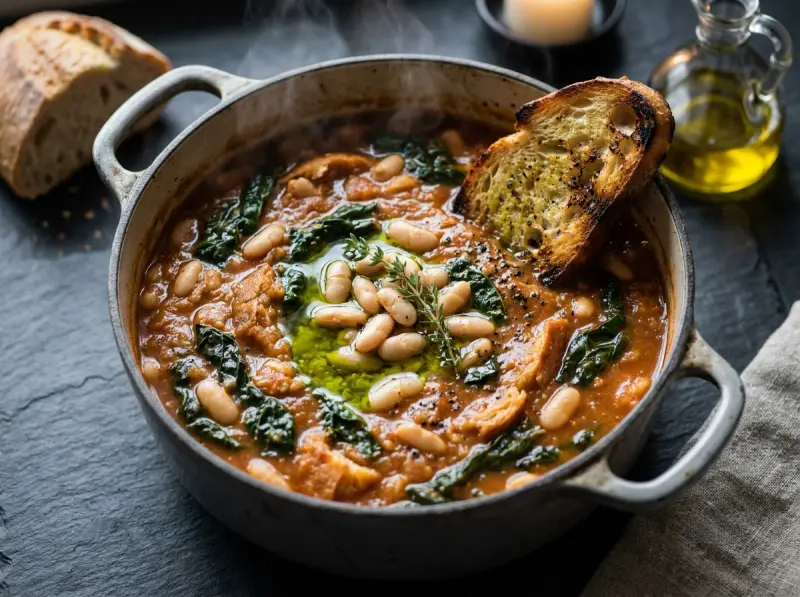
Ribollita (Tuscan Reboiled Bread and Bean Soup)
Ribollita is a thick Tuscan soup of cannellini beans, cavolo nero (black kale), and stale bread — one of the central symbols of cucina povera (peasant cooking). The name means 'reboiled' (from the Italian ribollire), and that is the whole point of the dish: it is born from leftovers. Tuscan peasants would cook a simple vegetable soup called minestra early in the week, then the next day reheat what remained with the addition of stale bread, turning minestra into ribollita. The paradox of the dish is that it gets better the longer it sits and the more times it is reboiled. On day one it is still a brothy minestra di pane; on day two, after reboiling, it becomes true ribollita — dense and almost semi-solid. Its roots reach back to the Middle Ages in the plain of Pisa and the lands of Arezzo and Florence, where it was the main winter nourishment of the poorest. The three non-negotiable elements are cannellini beans, cavolo nero, and saltless Tuscan bread (pane sciocco), which stales within a day. By tradition the cavolo nero should have 'taken the frost,' which makes its leaves sweeter and more tender. Key techniques: blend half the beans for a creamy base without any cream, tear the stale bread by hand, and use potato plus bread as a double thickener until the soup is dense enough to serve almost on a plate. Yields 6 servings in about 2 hours of active and simmering time. Best the next day, served hot over garlic-rubbed toast with a generous pour of extra virgin olive oil and a glass of Chianti.
 🇮🇹ItalyEasy
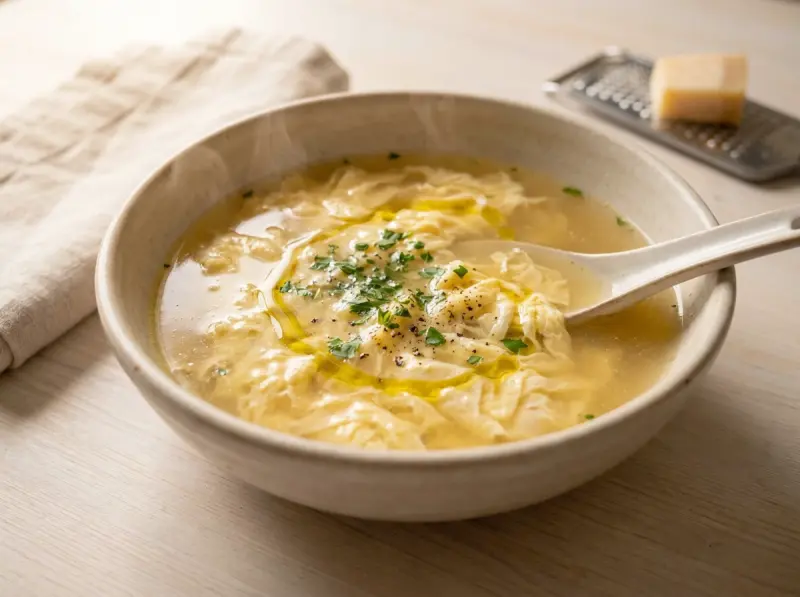
Stracciatella alla Romana (Roman Egg Drop Soup)
Stracciatella alla romana is a Roman egg drop soup: hot chicken or meat broth into which a mixture of beaten eggs and grated Parmigiano-Reggiano is streamed, forming delicate little 'rags' of egg. It is the Italian version of egg drop soup, but unlike the Chinese one, which is often thickened with cornstarch, the Italian stays clear and brothy — the richness comes from the egg and cheese themselves. The name comes from straccetti or stracce, meaning 'little rags,' an apt description of how the beaten egg looks when it hits the simmering broth and breaks into tiny clouds. It is a first course (primo) of the Roman tradition and of central Italy more broadly, especially Marche and Abruzzo. Despite humble peasant origins, today stracciatella often opens holiday banquets at Easter and Christmas, and it is the classic comfort food many Italians remember their grandmother making at the first sign of a cold. The single technical key is heat: the broth must be at a gentle simmer, never a rolling boil, or the egg scrambles into clumps instead of forming silky rags. Stream the egg-and-cheese mixture slowly into the swirling broth, stirring in one direction. Authentic alla romana contains zero semolina — that is a northern variation that turns the delicate rags into porridge. Salt goes in at the very end because Parmigiano already brings its own. Four ingredients, ready in about 15 minutes, served immediately with olive oil, pepper, and parsley.
 🇫🇷FranceMedium
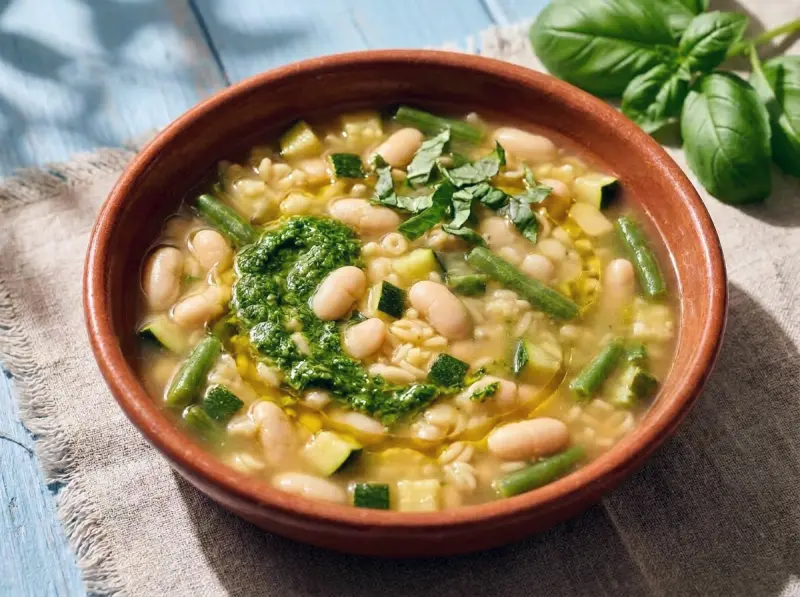
Soupe au Pistou (Provencal Summer Vegetable Soup with Basil Pistou)
Soupe au pistou is a Provencal summer vegetable soup with beans, crowned with a spoonful of pistou — the Provencal paste of basil, garlic, olive oil, and cheese. The dish comes from Provence in southeastern France, especially around Nice and the Cote d'Azur, and it is the essence of summer Mediterranean cooking: made at the peak of the season from the best vegetables at the market. Pistou is the Provencal cousin of Italian pesto; its name comes from the word for 'to pound,' just like pesto. The key difference: classic Provencal pistou traditionally contains no pine nuts — that is what sets it apart from Ligurian pesto. The soup is a close relative of Italian minestrone, since Provence borders Liguria, but the French version is finished with a big dollop of fragrant pistou that each guest swirls into their own bowl. That fresh pistou, added at the end, is what separates this from an ordinary vegetable broth. Technical keys: use summer vegetables at their peak; mash half the beans for body without flour; never cook the pistou (heat kills the basil aroma and turns it bitter); keep the garlic in the pistou raw; and use fragrant, room-temperature basil. In Provence the soup is made with plain water, not stock, so the vegetables shine, though vegetable broth is common. Serves 8 in about an hour with canned beans (dried beans need soaking overnight and about 45 minutes of simmering first), the pistou stirred in at the table, with crusty bread and a glass of Provencal rose.
 🇮🇹ItalyMedium
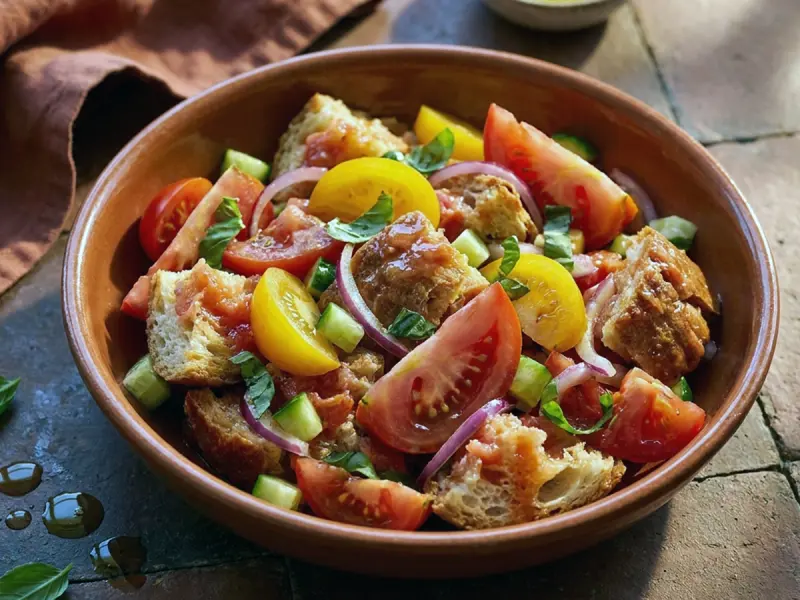
Panzanella (Tuscan Bread and Tomato Salad)
Panzanella is a classic Tuscan salad of stale bread and ripe summer tomatoes, dressed with olive oil and red wine vinegar, with red onion and basil. It is a summer dish of central Italy (Tuscany and around), and a clear example of cucina povera — a way to use up stale bread, like its relatives Pappa al pomodoro and Ribollita. The name comes from pane (bread) and zanella (a deep bowl), reflecting its humble roots, and the dish goes back to the Middle Ages and the Tuscan countryside. A curious fact: the first panzanella had no tomatoes at all — it was made with bread, onion, and purslane, and the tomato only became the central ingredient in the 20th century. Unlike ordinary salads, panzanella is built on bread as its base: pieces of stale bread soak up the tomato juice, olive oil, and vinegar, turning soft but springy — never soggy when made correctly. The technical keys: stale bread, not fresh; soak and wring it out rather than toasting it (the authentic Tuscan way); ripe seasonal tomatoes whose juice becomes part of the dressing; red wine vinegar, not balsamic; and a 15-30 minute rest so the flavors come together. Served at room temperature as an antipasto or a light summer meal, it is summer on a plate — and best eaten the same day it is made.
Goes well with
Other ingredients that appear most often alongside extra virgin olive oil across the archive. Pick one to drill deeper.