Japanese home cooking is not sushi. Sushi is restaurant work, and the version most people picture barely appears in an ordinary kitchen. What appears instead is a shape: a bowl of rice, a bowl of soup, and a few small dishes around them. Once you see that shape, most of the cuisine stops looking like a list of exotic recipes and starts looking like a system with three moving parts. One stock, five seasonings, and rice that everything else is arranged around.
Washoku, the traditional food culture of Japan, went onto the UNESCO intangible heritage list in 2013, and what got listed was closer to that structure than to any particular dish. It is worth learning in that order, because the structure explains the recipes.
The meal is a shape before it is a menu
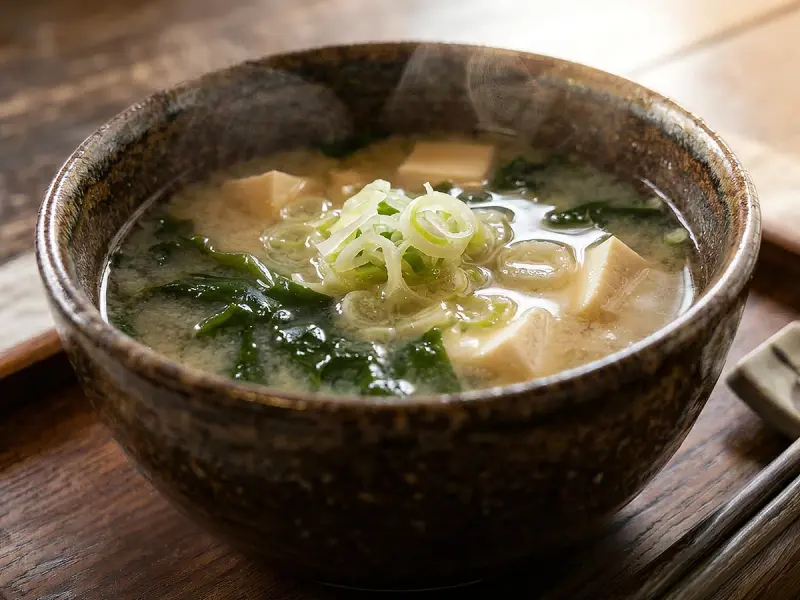
The standard form is called ichiju-sansai: one soup, three dishes, plus rice and pickles, which are counted separately because they are assumed. Nobody eats this way at every meal, but it is the template a Japanese cook improvises against, and it explains portion sizes that look small to a Western eye. The rice is the meal. Everything else is there to make the rice interesting.
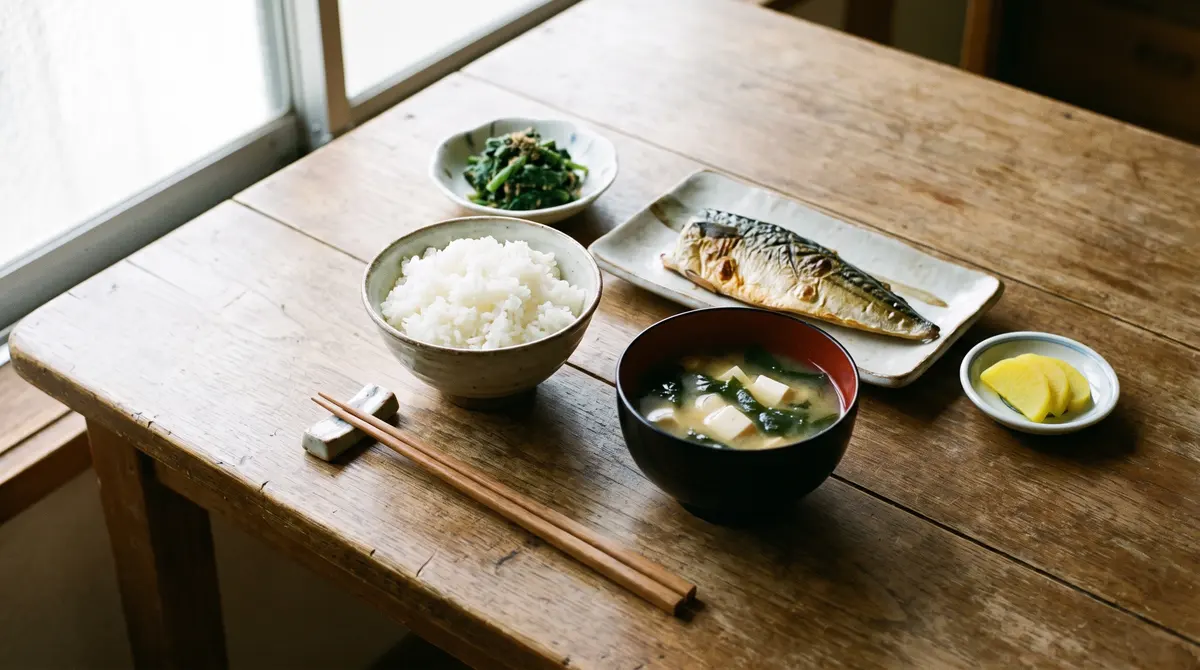
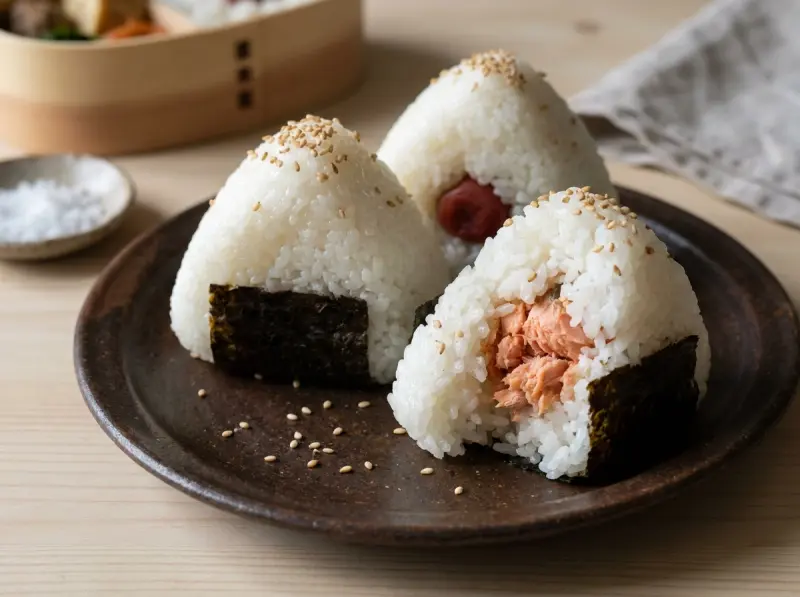
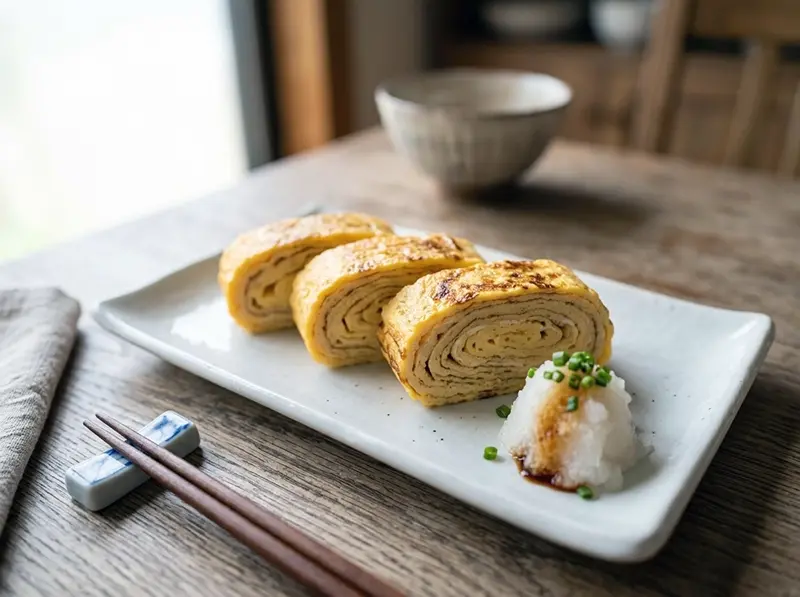
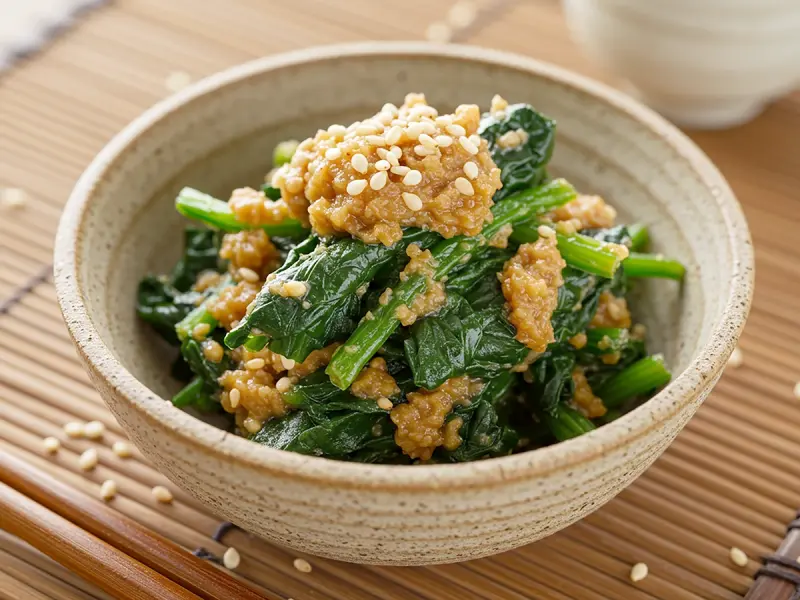
The three dishes are meant to be quick. Miso soup is fifteen minutes. Spinach with sesame dressing is a technique rather than a recipe: blanch a vegetable, dress it in ground sesame with soy, sugar and mirin, and you have a Japanese side dish out of almost anything green. Tamagoyaki, the rolled omelette, is eggs with dashi and a little sugar built in thin layers. And onigiri is the whole meal compressed into one hand: salted rice, a small core of something salty, a sheet of nori.
Dashi is the flavour base, and it takes ten minutes
Almost every savoury Japanese dish starts from the same stock, and it is not a stock in the European sense. There is no roasting, no long simmer, no bones. Kombu kelp is steeped in water below boiling point, then removed; dried bonito flakes go in, steep briefly, and are strained out. Ten minutes.
The reason this thin, pale liquid tastes of so much is a piece of chemistry that was worked out in Tokyo. In 1908 Kikunae Ikeda isolated glutamate from kombu and gave the taste a name: umami. Katsuobushi contributes a different compound, inosinate, and the two together read as far stronger than the sum of the parts. This is why Japanese cooking can get depth without fat and without hours.
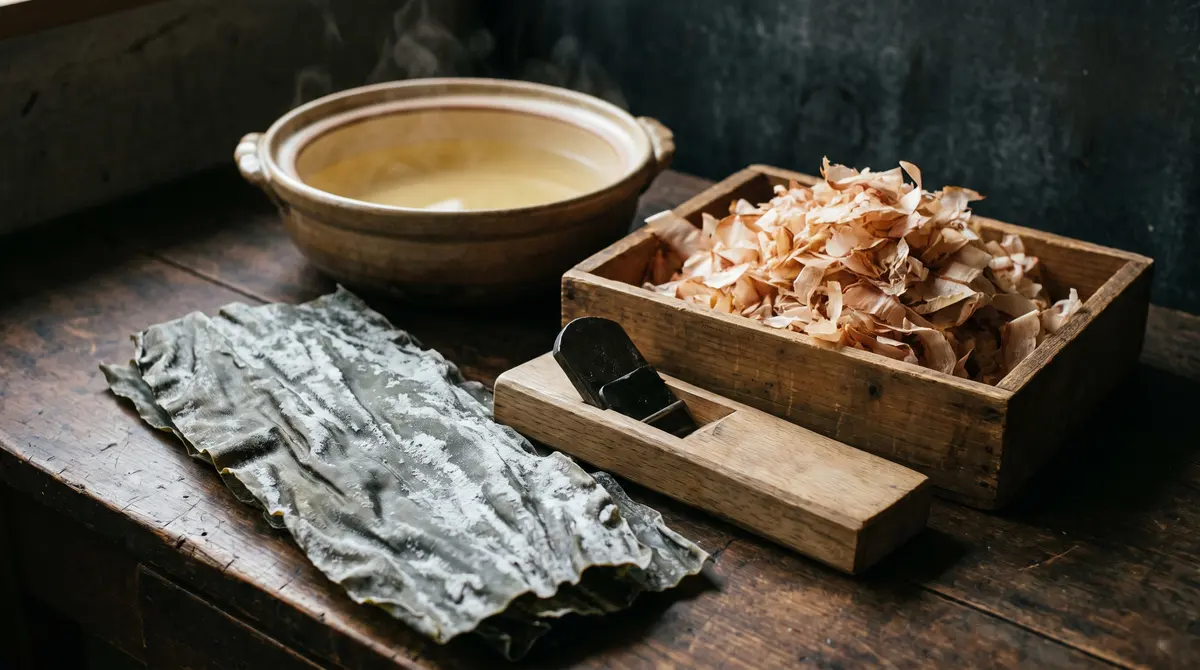
Two rules matter. Do not boil the kombu, because above a simmer it turns the stock slimy and faintly bitter. And do not squeeze the bonito flakes when you strain them, for the same reason. If you buy convenience, buy dashi packets rather than powder: a teabag of real bonito and kombu takes five minutes and tastes like the thing, while granules taste like an approximation of it.
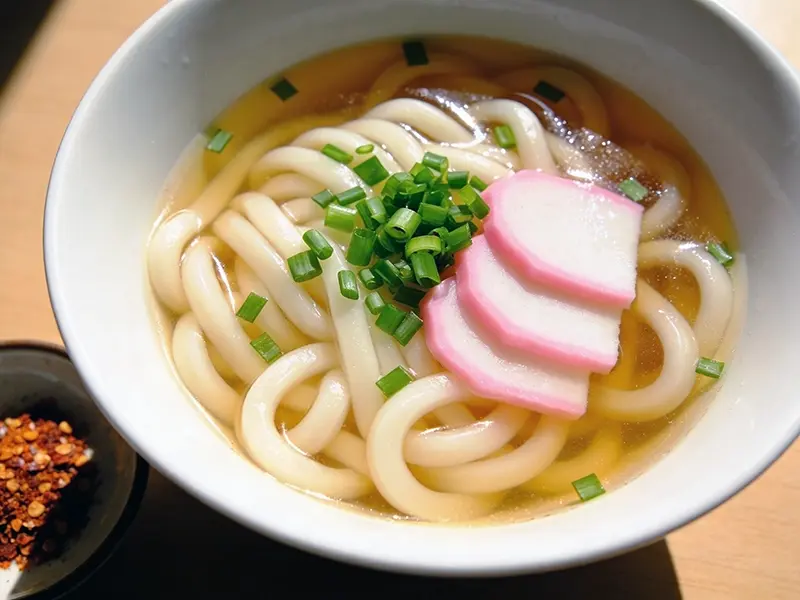
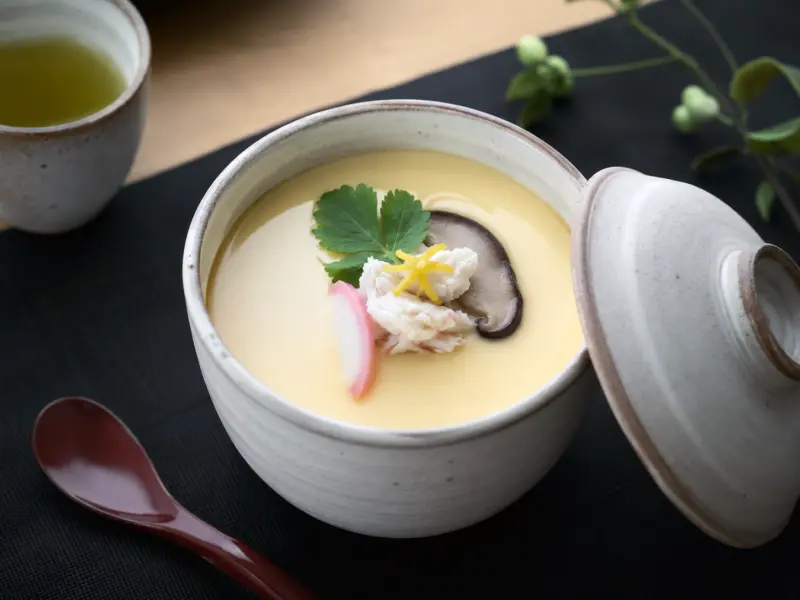
Kake udon is the dish that proves the point, because it is dashi with noodles in it and nothing to hide behind. So does chawanmushi, a savoury egg custard that is roughly three parts dashi to one part egg, steamed so gently it trembles.
Sa-shi-su-se-so: five seasonings, in that order
Japanese cooks learn the seasoning order as a mnemonic running down the kana chart. Sa is satō, sugar. Shi is shio, salt. Su is su, vinegar. Se is shōyu, soy sauce, spelled with an old kana. So is miso.
Sugar molecules are larger and move into food more slowly, so sugar goes first; salt added early draws water out and makes it harder for anything else to get in. Vinegar, soy and miso are the aromatic ones, and heat drives their aroma off, so they go last and briefly. The single most common instruction in Japanese cooking is a version of this: never boil miso.
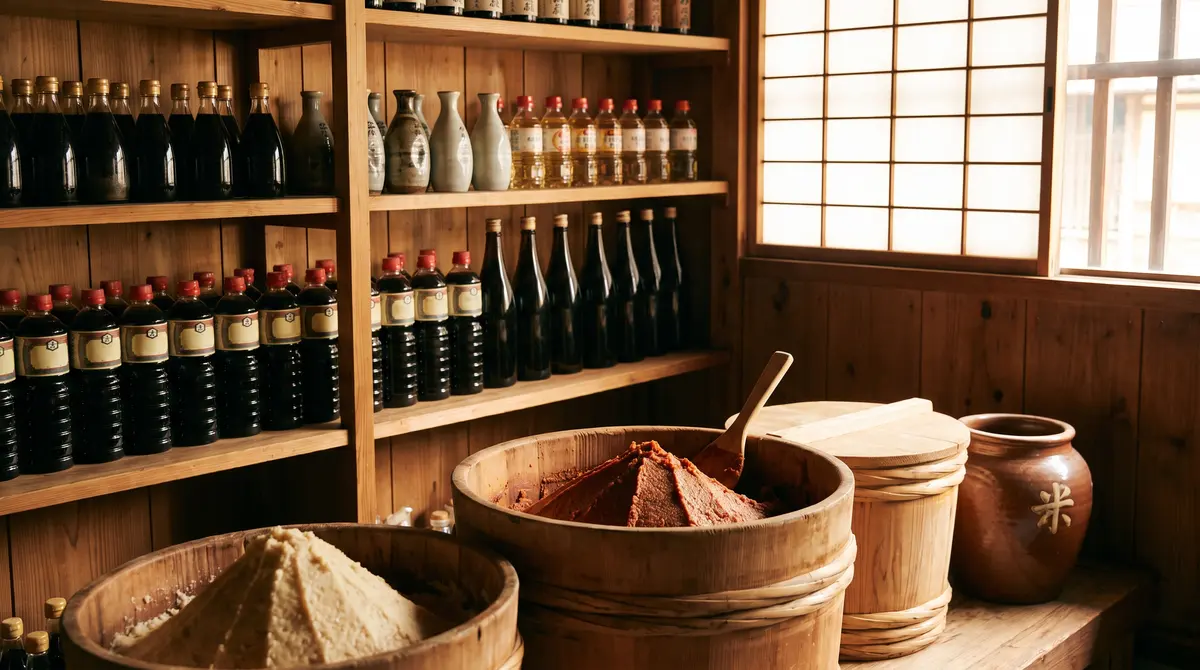
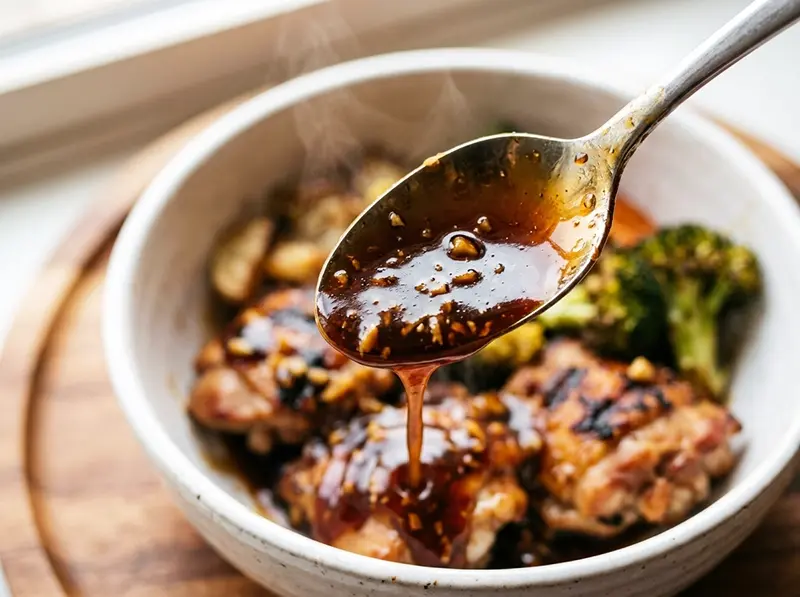
Two more bottles sit alongside. Sake removes odours and adds depth. Mirin is a sweet rice wine at around 14 per cent alcohol, and it is what gives glazes their shine. Read the label: hon-mirin is fermented from glutinous rice, koji and shochu, while the cheaper mirin-fū seasoning is mostly corn syrup with almost no alcohol. Both work, but only the real one gives that lacquered gloss. Watch it happen in teriyaki sauce, which is four ingredients — soy, mirin, sake, sugar — and ten minutes, and which bears no resemblance to the bottled version built on corn syrup and caramel colour.
Wasabi deserves a warning of its own. Most tubes and most restaurant portions outside Japan are horseradish, mustard and green colouring. Real wasabi is a rhizome grated to order, and its heat fades within minutes, which is exactly why the substitute exists.
Sticky by design
Japanese rice is short-grain japonica, and it is meant to be sticky enough to lift in clumps with chopsticks. The word gohan means both cooked rice and meal, which tells you where it sits.
Onigiri is where the properties of that rice become obvious. Shape it at around body temperature: hot rice slides apart, cold rice has already set and refuses to bind. Three or four firm turns is the whole technique, and every extra squeeze after that compresses the grains into a brick. A thousand years of practice, and it is still mostly about temperature and restraint.
Yōshoku: the Western food Japan kept and rebuilt
A whole category of Japanese cooking is imported and thoroughly naturalised. It is called yōshoku, Western food, and Japanese people describe it that way even though nowhere in the West would recognise it.
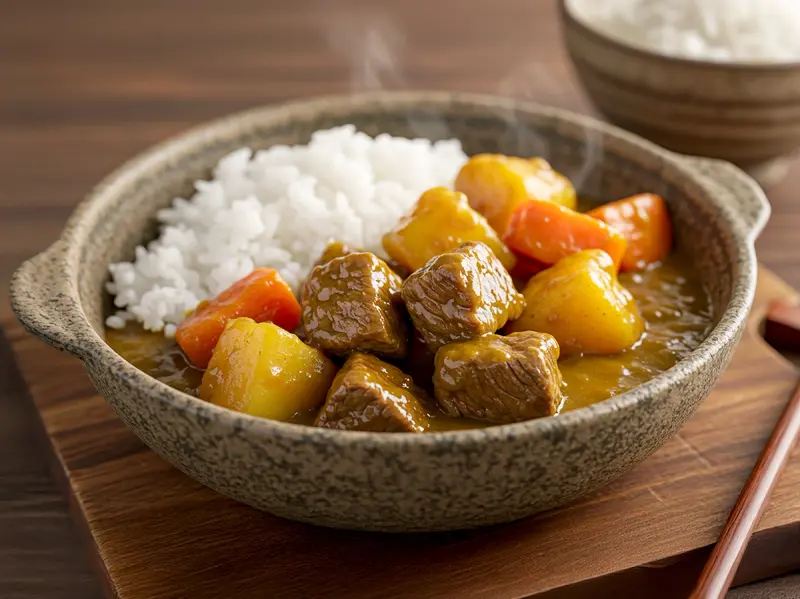
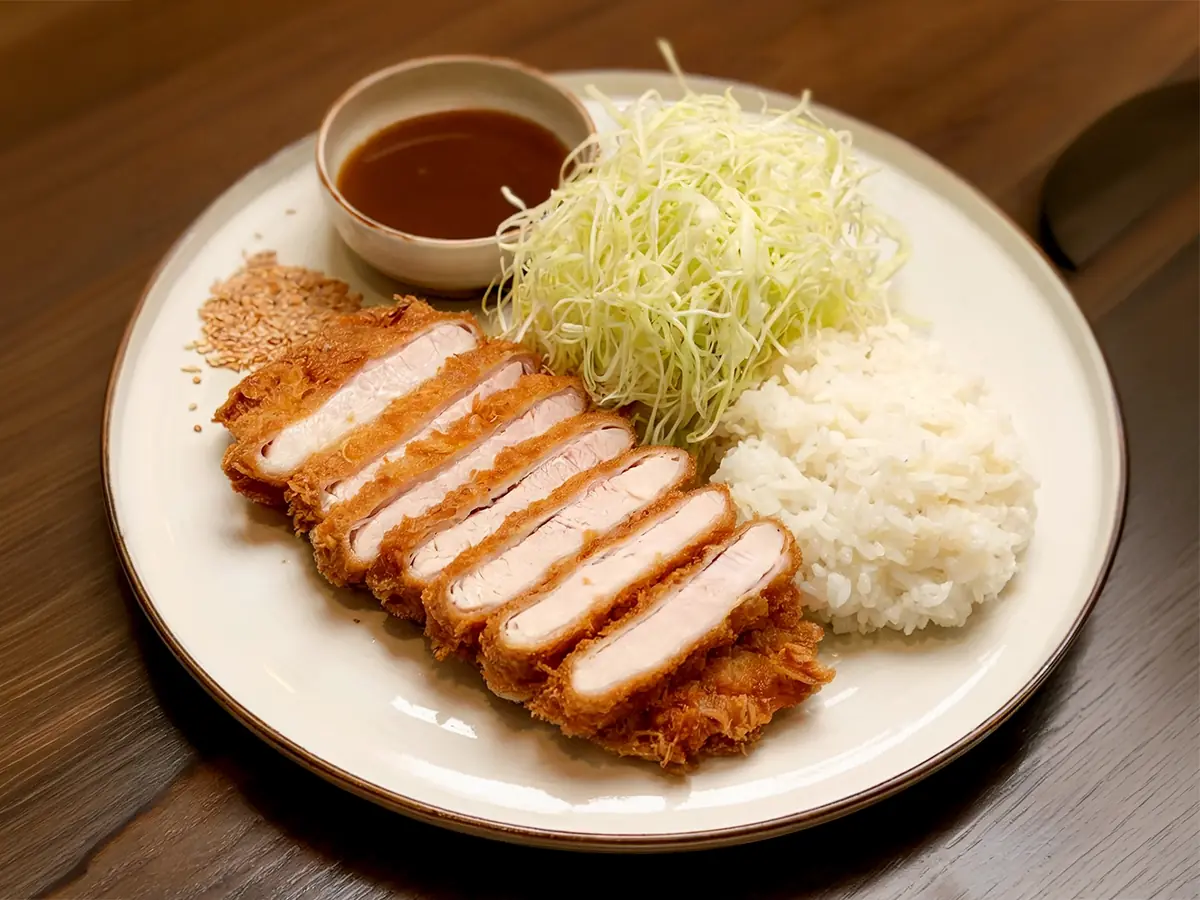
Japanese curry came from India by way of the British navy in the nineteenth century and turned into something else entirely: thick, mildly sweet, thickened with a flour roux, and closer to a stew than to anything on the subcontinent. Tonkatsu is a breaded pork cutlet that started as a côtelette and became a dish eaten with shredded cabbage and a fruity brown sauce. Both are among the most cooked dishes in the country, and neither is old.
Two starches explain most of the crunch
Panko is a different material from breadcrumbs. It is made from bread baked without a crust and then torn rather than ground, so the flakes are large, jagged and airy. They absorb less oil and stay crisp much longer. Swap in fine dried crumbs for tonkatsu and you get something dense and greasy instead.
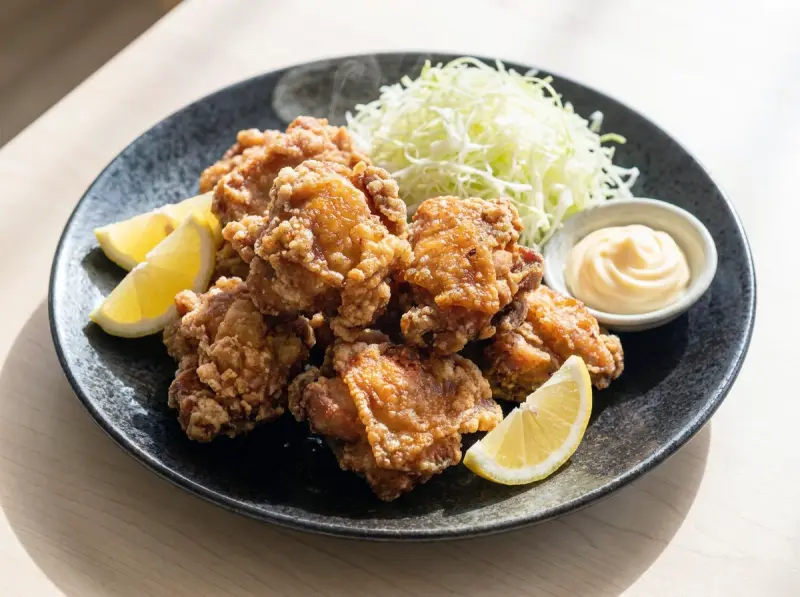
Potato starch, katakuriko, does the other half. It is what gives karaage its pale, craggy, glass-thin shell, where flour would give you a bready coating. The other half of karaage is frying twice, low then hot, with a rest in between while the crust sets.
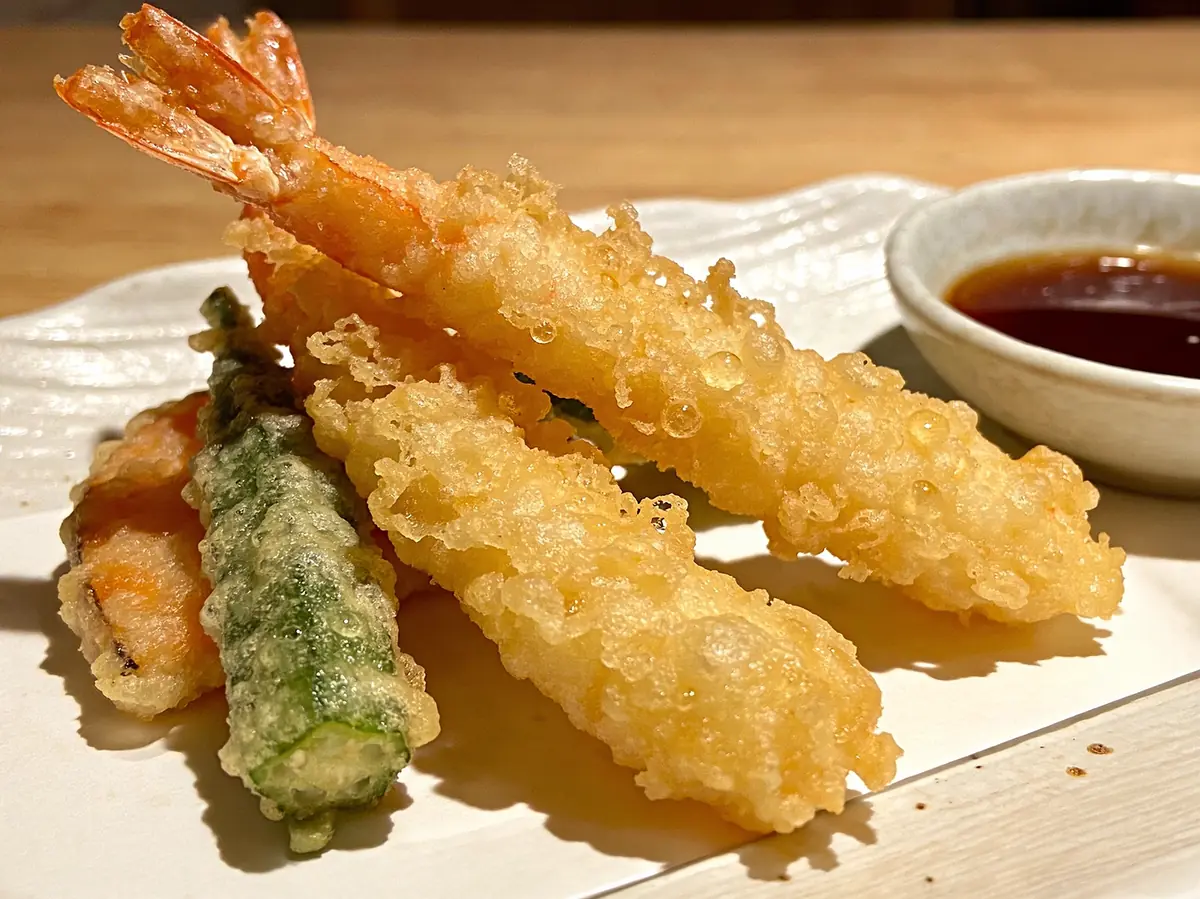
Tempura is the third variation and works on the opposite principle: keep the batter so cold and so under-mixed that gluten never develops. Lumps of dry flour in the bowl are correct. The batter should be thin enough to see your fingers through, and the oil at 170 to 180°C.
Noodles run on their own rules
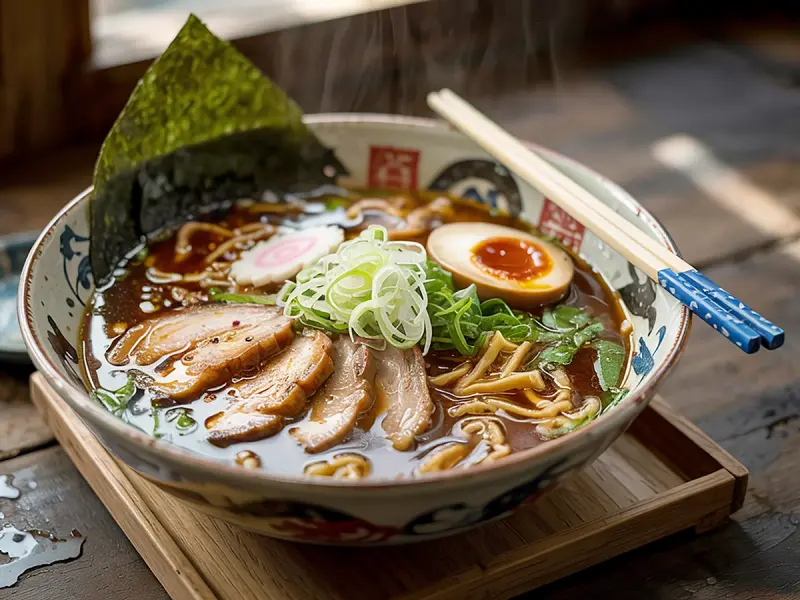
Ramen is not a soup with noodles in it. It is three components assembled in a bowl: the broth, the tare seasoning concentrate that carries the salt, and the noodles, which contain kansui, an alkaline water that makes them yellow and springy and is the reason ramen noodles cannot be replaced with spaghetti. Building all three on a weeknight is not realistic. Build the broth properly, buy good noodles, keep the toppings to a marinated egg.
Udon is the opposite: thick wheat noodles in a broth that is almost entirely dashi. The regional split is worth knowing. Kansai uses pale usukuchi soy, which colours the broth barely at all; Kanto uses the darker koikuchi and lands somewhere much browner and more assertive.
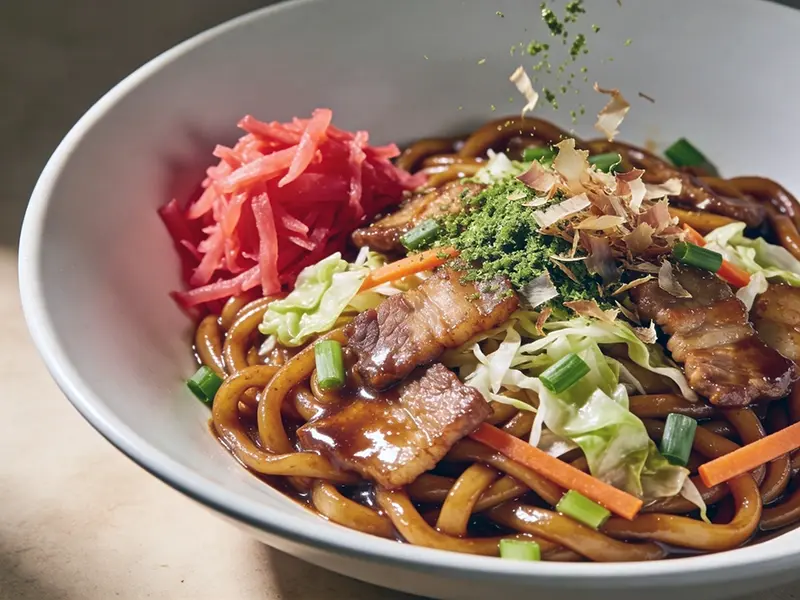
Yakisoba is not soba at all, since the noodles are wheat. It came out of post-war street stalls, and the sauce is the whole identity: Worcestershire for the tang, oyster sauce for depth, ketchup for fruitiness, soy for salt. Tangy first, sweet second, savoury third.
Konamono and the pot on the table
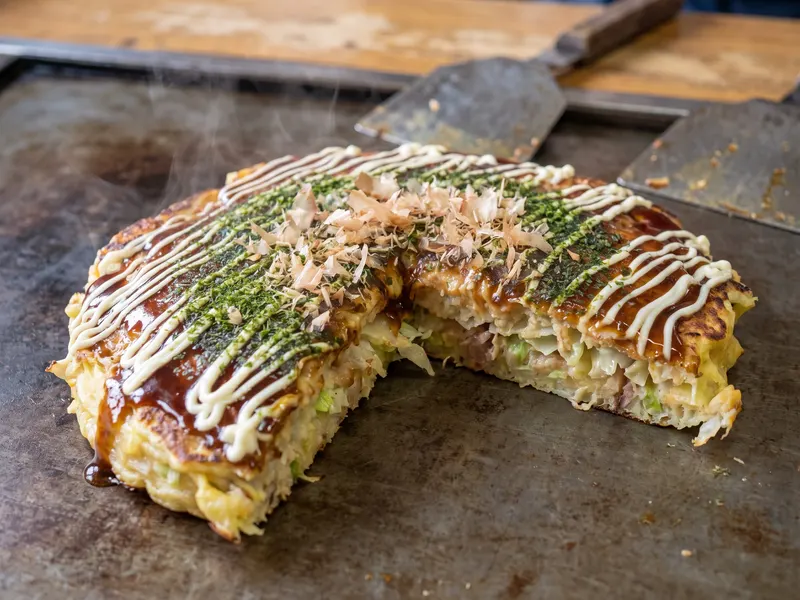
Osaka has a name for its flour-based street food, konamono, and okonomiyaki is the flagship. The name means roughly grilled as you like it, but that freedom starts after the batter is right, and the batter should barely be there. Cabbage dominates the bowl and the flour only binds it. And never press it with a spatula: that squeezes out the steam that is cooking the cabbage from inside.
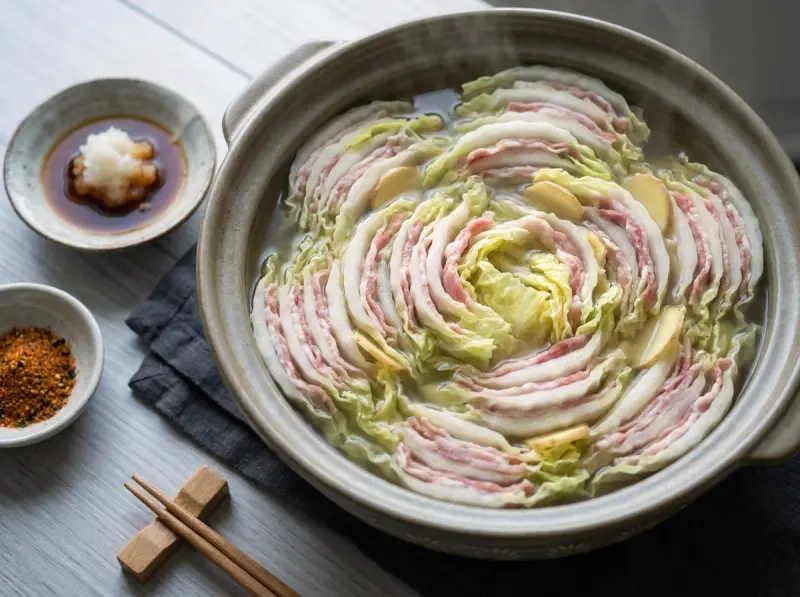
Winter moves the cooking onto the table. Nabe is a pot of dashi with things simmered in it as people eat. Mille-feuille nabe is the version that looks like far more work than it is — napa cabbage and paper-thin pork packed upright so the cut edges spiral outward. Pack it tighter than looks sensible, because the cabbage loses most of its volume. And keep the broth at the end for the shime, the finish: noodles or rice cooked in what the pot has become.
Sweet things stay quiet
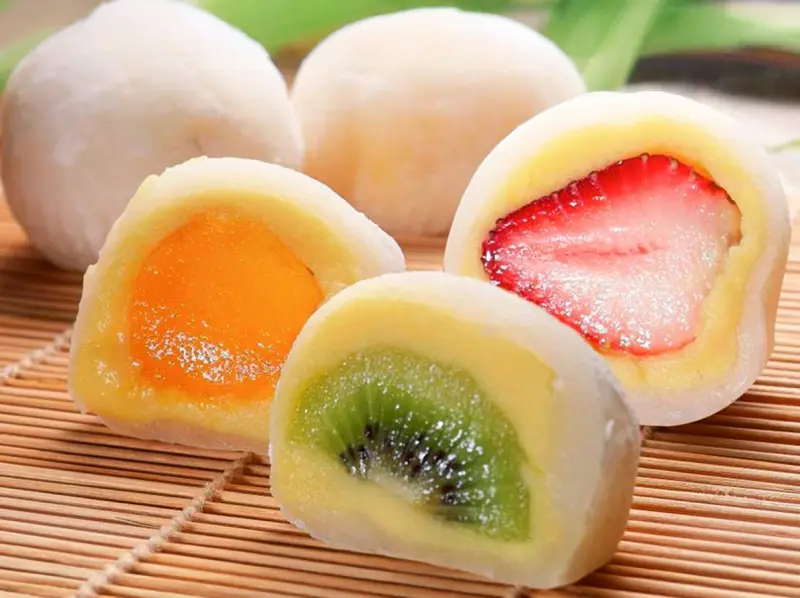
Japanese desserts are less sweet than Western ones and lean on texture instead. Mochi is the clearest case: pounded glutinous rice whose whole appeal is the chew. Ordinary rice flour will not do it, and neither will less dusting of starch than you think you need. For the green side of this subject we have a separate piece on matcha at home.
Where to start
Make dashi once from kombu and katsuobushi, even if you never do it again, so you know what the packets are approximating. Then make miso soup with it, and the difference will be obvious enough to be slightly annoying. After that, karaage teaches you what potato starch does, and udon teaches you how little a broth needs when the base is right.
If you would rather start from the everyday end, we have a shorter piece on what Japanese people actually cook at home.